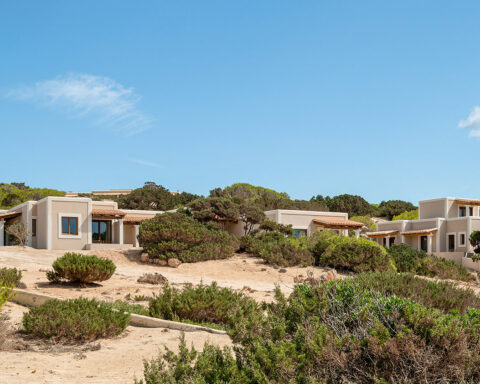


We present this project by architect Izaskun Chinchilla for the developer Somium Properties, which focuses on the creation of sustainable single-family homes, integrated into the natural surroundings of a housing development in Orihuela (Alicante). The proposal, with a strong environmental commitment, has implemented construction solutions that use ecological materials, such as wood in the interior structure and thermo-clay in the exterior envelope. These decisions not only seek to improve energy efficiency, but also to recover the native vegetation by planting holm oaks and pines, controlling erosion and using materials with low environmental impact.


The architecture of this one-person house has as a priority the well-being of people, promoting a healthy design. The raw materials that have always been used in the construction of buildings – clay, stone, lime, wood, textiles – are increasingly being used.”We have selected these materials for their ability to improve air quality and contribute to the physical health of the inhabitants, avoiding the use of industrial products that can be harmful,” say the architects, adding that “the use of materials of natural origin not only benefits people, but also avoids soil pollution and makes it easier for the building to integrate into a regenerated natural landscape“.
Architectural design
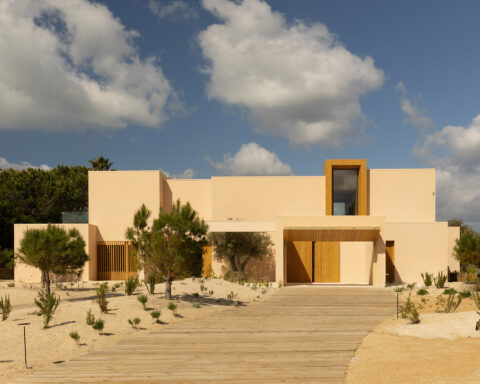
As for the design of the house, the architects have opted for a solution that is organised on the basis of spaces oriented to pure cardinal points, optimising solar orientation and natural ventilation. Pergolas and textile awnings are used to protect the rooms from excessive solar radiation, while at the same time allowing natural light to enter and air to circulate.
One of the key aspects of the architectural design is the interior-exterior integration of all the rooms. “We like to say that each room in the house is composed of an interior space, inside the building, and a garden area, which functions as the other 50% of the room. All the rooms lead outside to a space whose use and configuration completes the interior use.” says the architect.


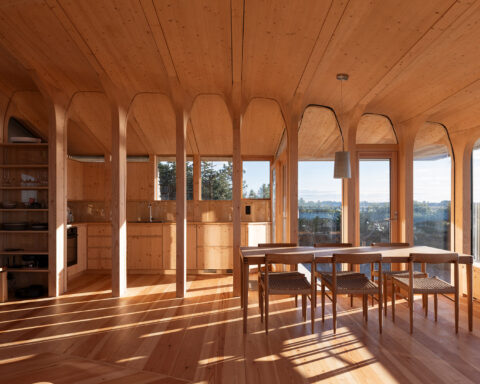
The structure of the house combines laminated wood, steel and OSB beams, which optimises the structural performance and sustainability of the project. On the other hand, the walls have been whitewashed with natural lime using a system of applying the plaster in fans, an aspect very common in local vernacular architecture and which gives it great resistance.

The façade is a multi-layer composition of considerable thickness, about 45 cm, with great insulating capacity and maintaining interior comfort. The render is followed by a layer of SATE insulation and thermo-clay. The joinery, like the structure of the house itself, combines two materials: metal on the outside and wood on the inside, mixed joinery.

The day area faces west and south, mainly overlooking the swimming pool. The kitchen, living and dining room form an open-plan space, with cross ventilation, thanks to secondary openings on the E and N sides. The kitchen is designed to enhance outdoor living: its exposure in a polygonal bar to the outside allows it to function as a beach bar, with the entire glazed enclosure running along a system that does not require any vertical subdivision. The outdoor kitchen area, open to the swimming pool, has a fireplace and an outdoor barbecue, making it an attractive space for the family’s social life.


The living room also creates a close indoor-outdoor relationship: the east side opens onto the sunken courtyard and the views from inside are direct to the treetops. To the west, from the living room there is direct access to the swimming pool, the south-west facing pergola and the main entrance to the house.


The sleeping area is organised on the north side of the plot with 3 bedrooms on the ground floor, with an interior toilet, views of the garden and direct access from the garden. The master bedroom is south facing with its openings protected by a canopy, and allows a view from the bed of a small garden of seasonal flowers and a tableau of native succulent plants.

The north-facing bathroom in the master bedroom allows you to take a bath with the window opening onto a bed of aromatic medicinal plants. This bedroom has an outdoor hot bath, inspired by the Japanese onsen, and great intimacy achieved by the density of ficus trees and the protection of a natural stone wall invaded by local plants.


Los otros dos dormitorios disponen de acceso a terrazas exteriores con un ajardinamiento de plantas aromáticas y trepadoras diferenciado.
El uso de domótica para controlar la ventilación y las protecciones solares asegura un ambiente confortable, minimizando el uso de sistemas de climatización artificiales.
Planta sótano. Además de la planta principal se habilita una planta sótano, con abundante entrada de luz natural, que constribuye a generar una amplia zona de sombra y con una temperatura espontáneamente reducida por el efecto natural de inercia térmica de cualquier terreno. Se dota a esta zona de un acceso mediante una rampa curva y un patio triangular ajardinado y rodeado en planta primera de jardineras con plantas colgantes. En este nivel se ha reservado un espacio para un pequeño apartamento que puede ser personalizado por el cliente pero que, por las características de su envolvente y la resolución de sus instalaciones puede funcionar como una vivienda aparte y cumplir estrictamente el estándar passivhaus.


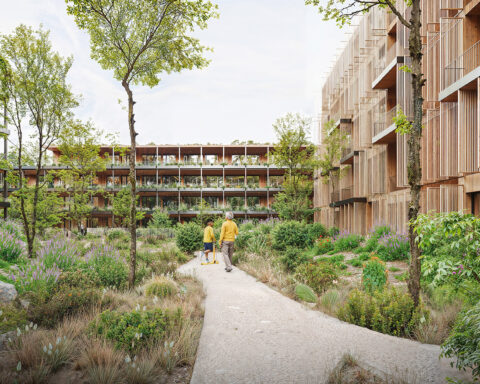
The landscape design is designed to integrate with the natural environment, using vegetation that encourages biodiversity and creating gardens that invite local birds to inhabit the area, thus maintaining the ecological balance. The landscape surrounding the homes is inspired by the Levantine orchard and low-water-use Mediterranean gardens. Traditional irrigation techniques such as irrigation ditches and ponds have been incorporated, and indigenous species such as pines, carob trees, olive trees and aromatic plants have been planted. These plantings not only contribute to the aesthetics of the site, but also encourage the preservation of biodiversity, especially for the birds protected in the Sierra de Escalona. The landscaping design also incorporates a Mexican-inspired crassia and palm garden, which minimises the use of lawns and promotes a natural and sustainable environment.


Project: Terrazza Eco-Housing.
Architecture and Landscaping: Izaskun Chinchilla Architects.
Location: Orihuela (Alicante).
Completed: 2024.
Photography: David Frutos.
Furniture in photos: Sancal.
Developer: Somium Properties

Izaskun Chinchilla
Izaskun Chinchilla holds a degree in Architecture from the Polytechnic University of Madrid. 2001. 2001. PhD in Architecture. 2015. International Honorary Fellow. Royal Institute of British Architects. 2018. Professor of Architectural Practice. Bartlett School of Architecture, University College of London 2019. Visiting Professor. University of Hong Kong. 2020.
With 22 years of experience, she specialises in project design and on-site construction supervision for various types and scales of architecture. Her work has been widely awarded internationally. His thesis, “The structure of the ecological crisis in architecture”, is a remarkable text in the field of design innovation to increase sustainability in the building sector.
Chinchilla’s studio has a group of architects, and brings together for each project a specific interdisciplinary team with frequent collaborators in areas such as: sociology and citizen participation, energy assessment and certification, landscaping, product design, marketing and institutional communication, graphic design, circular economy, art curatorship, or placemaking among others.
It is a studio committed to improving the environmental performance of the architecture, public space, installations, art and cultural products they work on, through innovation. They believe that the way artists and designers do things matters and influences the penetration of ecological principles in society. With a commitment to public engagement and social participation their professional approach the studio seeks to connect society by offering people to work together in their construction, make communal decisions with their movement, use or location and share experiences and knowledge around them.
Reflection on public space and the collective construction of the city has been crucial in Izaskun Chinchilla’s work. In 2020 she published “The City of Care”, a reference book on the design of public spaces and facilities that prioritise the well-being of users.
Chinchilla believes that women have played a distinctive cultural role in the production of crafts, art and design throughout history. In her projects she seeks to investigate and promote women’s cultural products, made both individually and collectively, showing how they can bring new innovative uses for the future.
Fuente: Izaskun Chinchilla Architects
Izaskun Chinchilla Architects
Cyesa, 3
28017 Madrid
info@izaskunchinchilla.es
izaskunchinchilla.es
22 Gordon Street
WC1H 0QB
Londres
Project by Izaskun Chinchilla