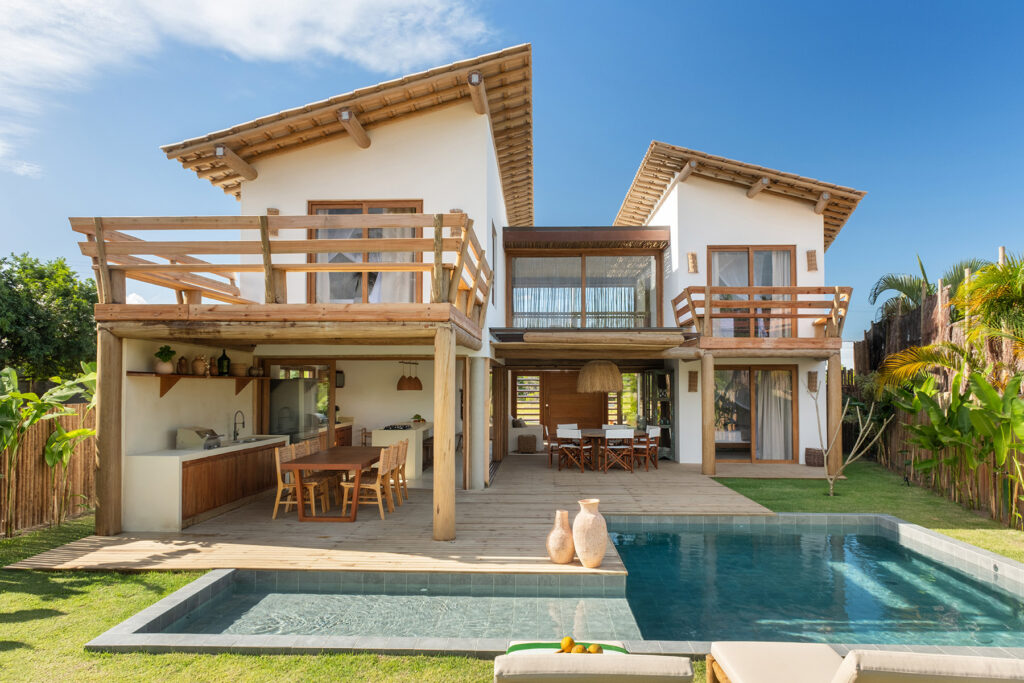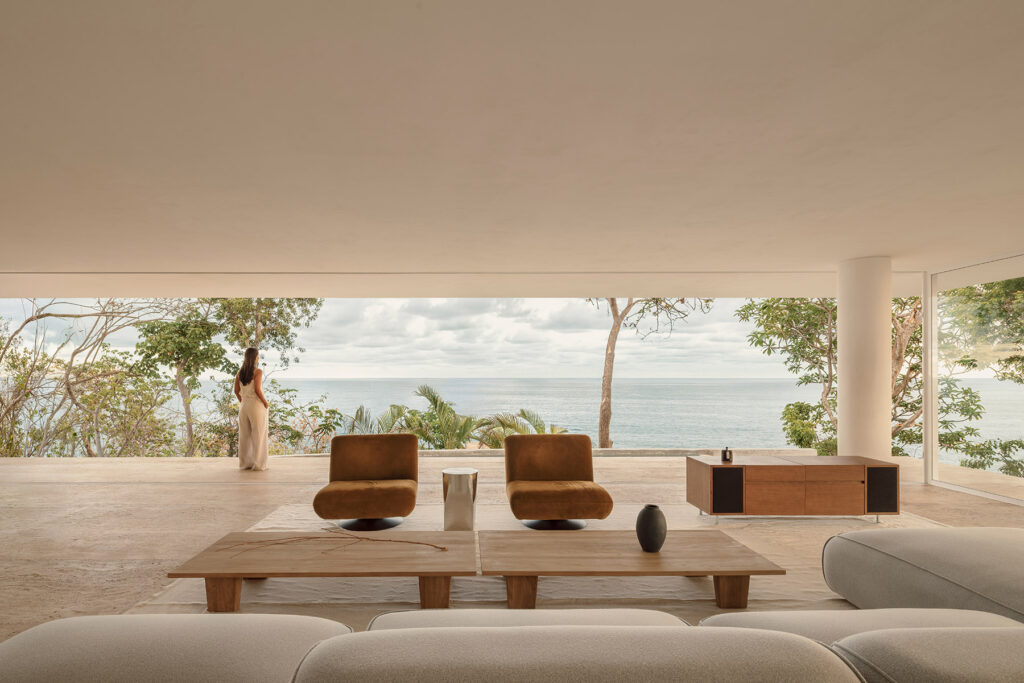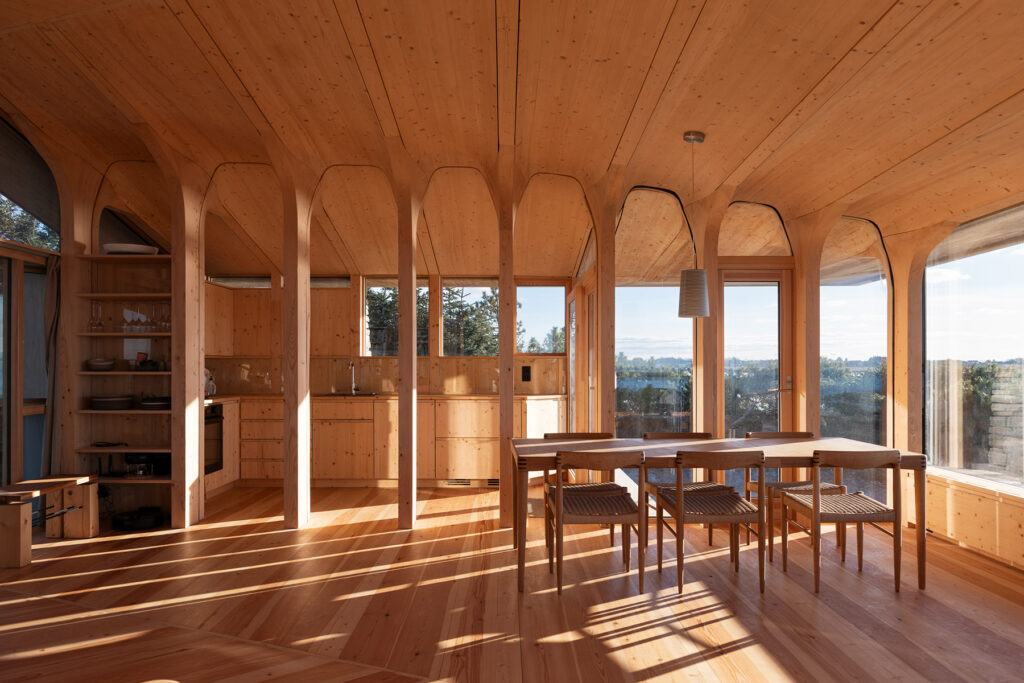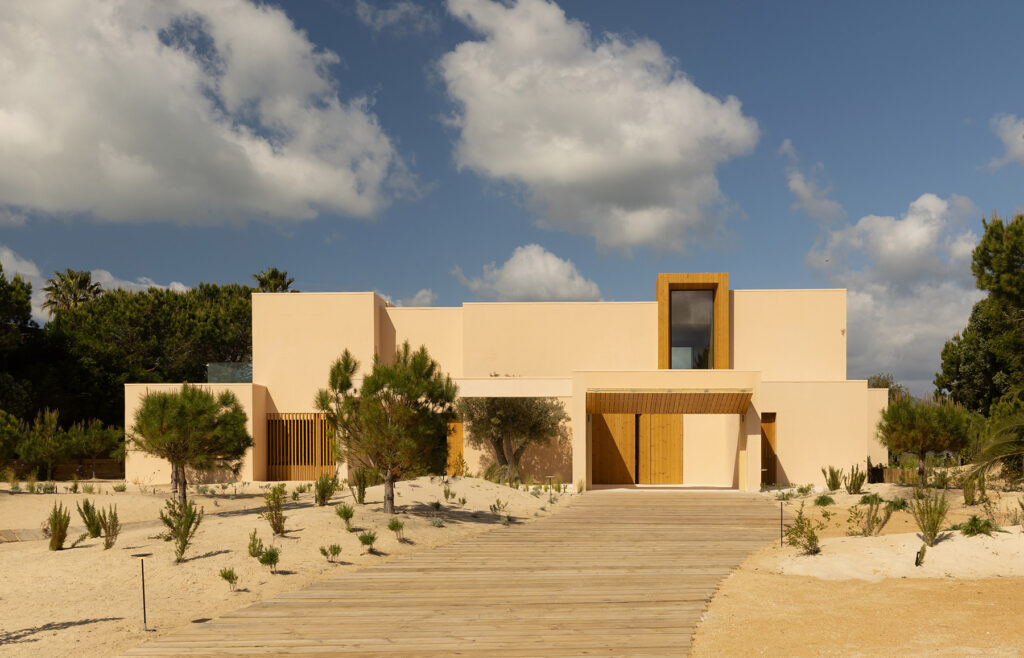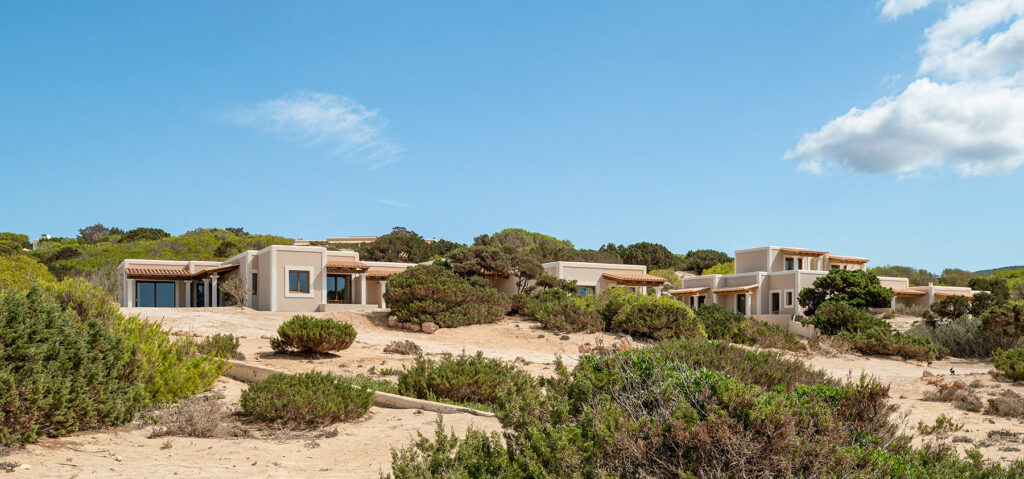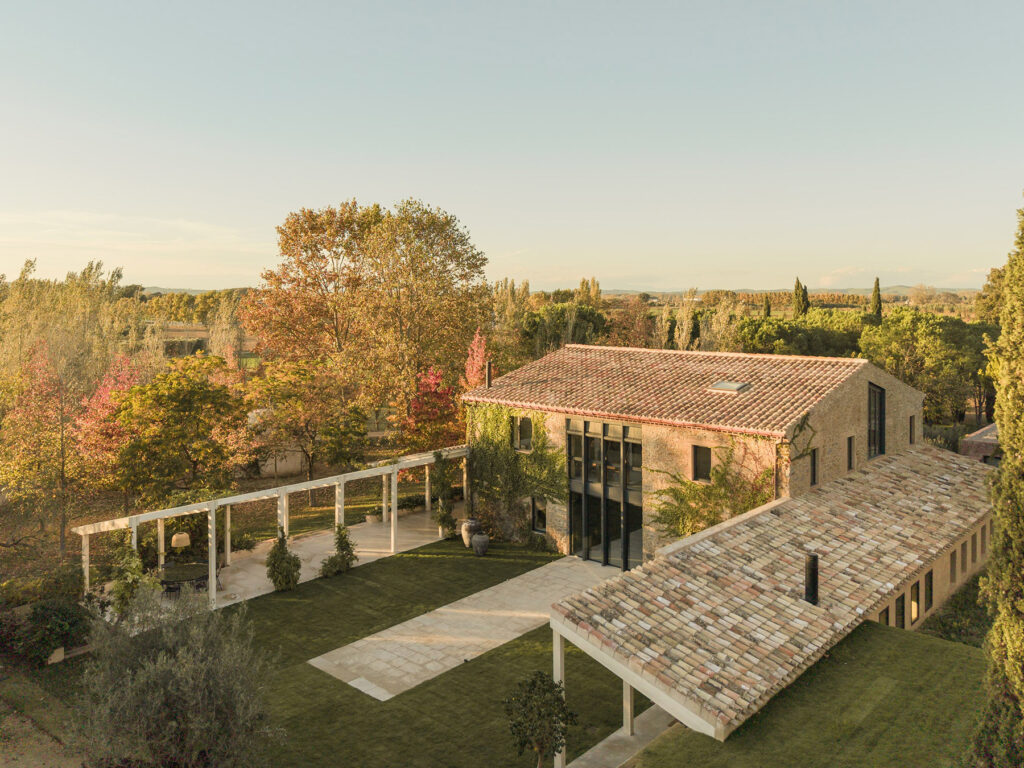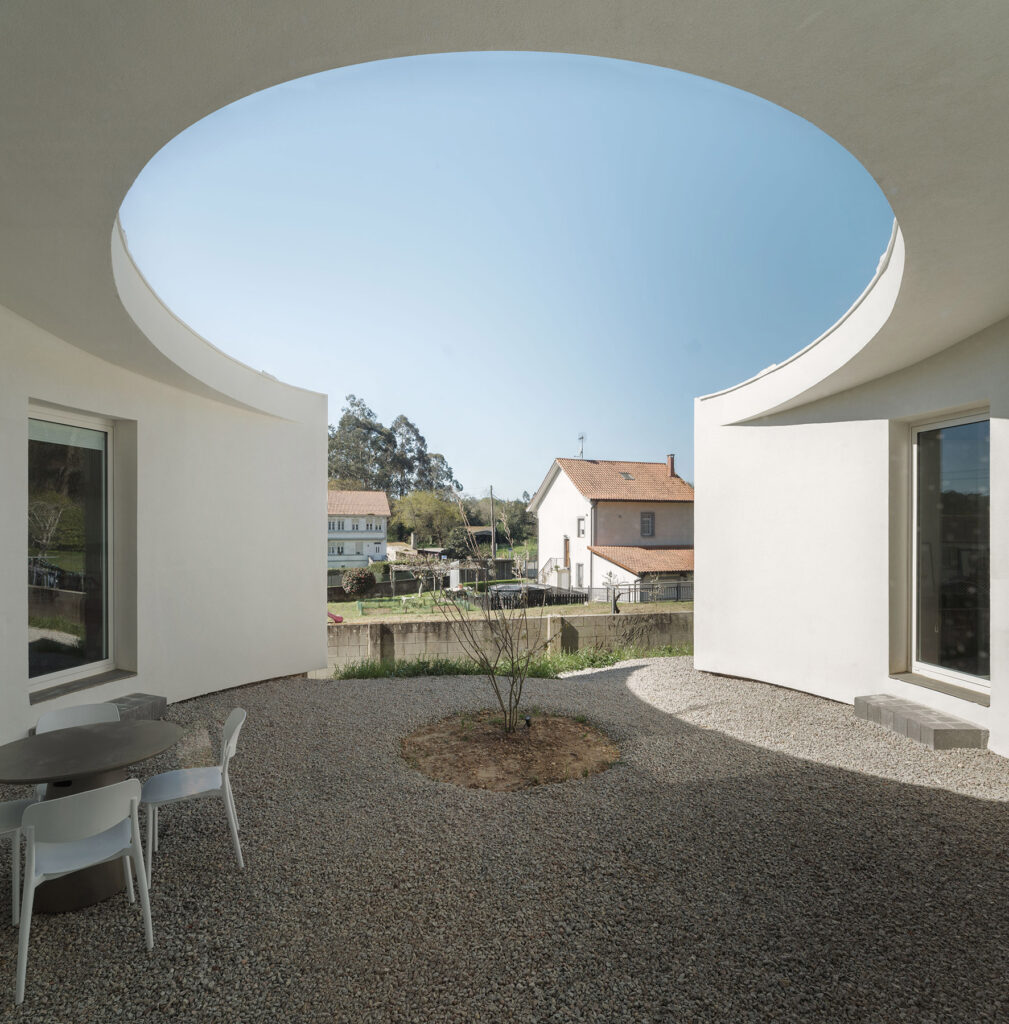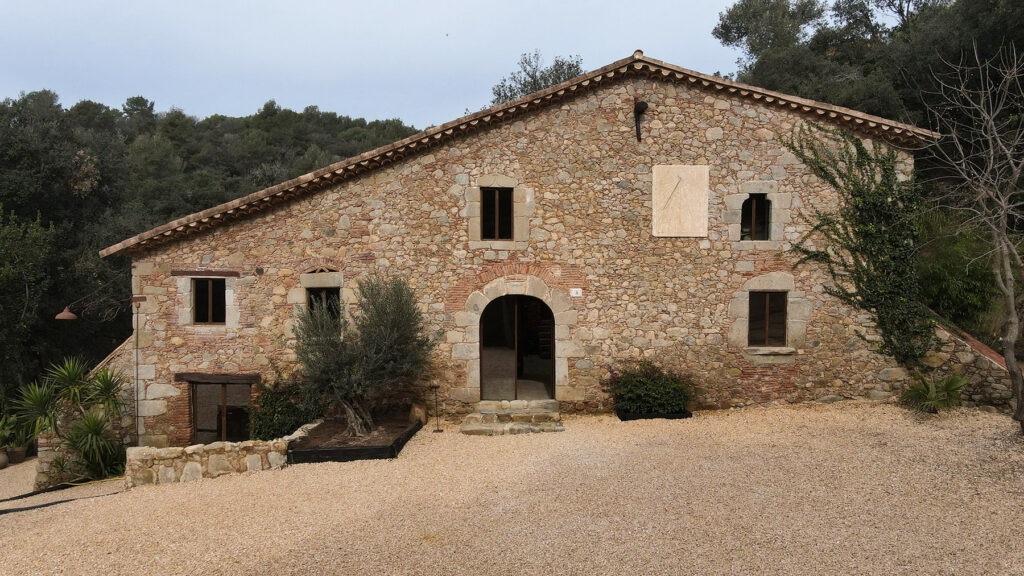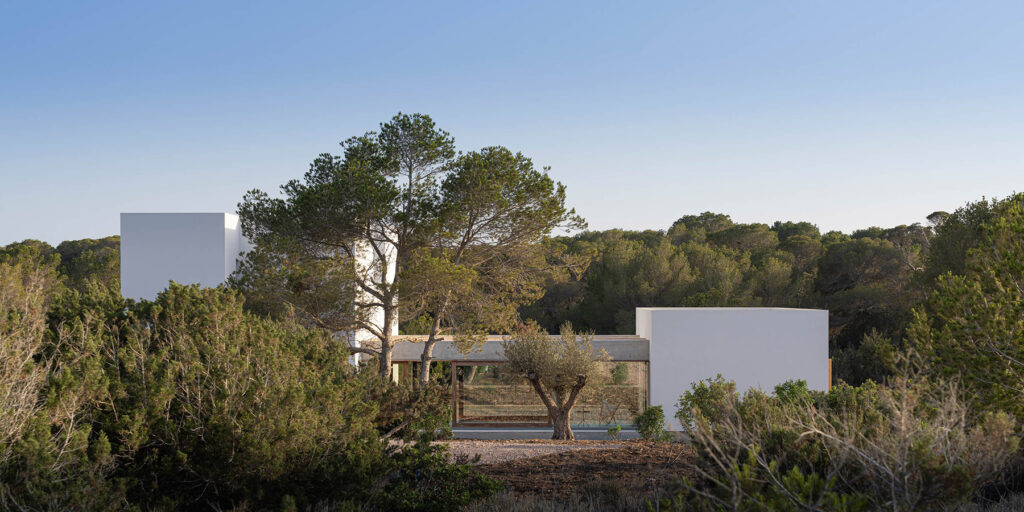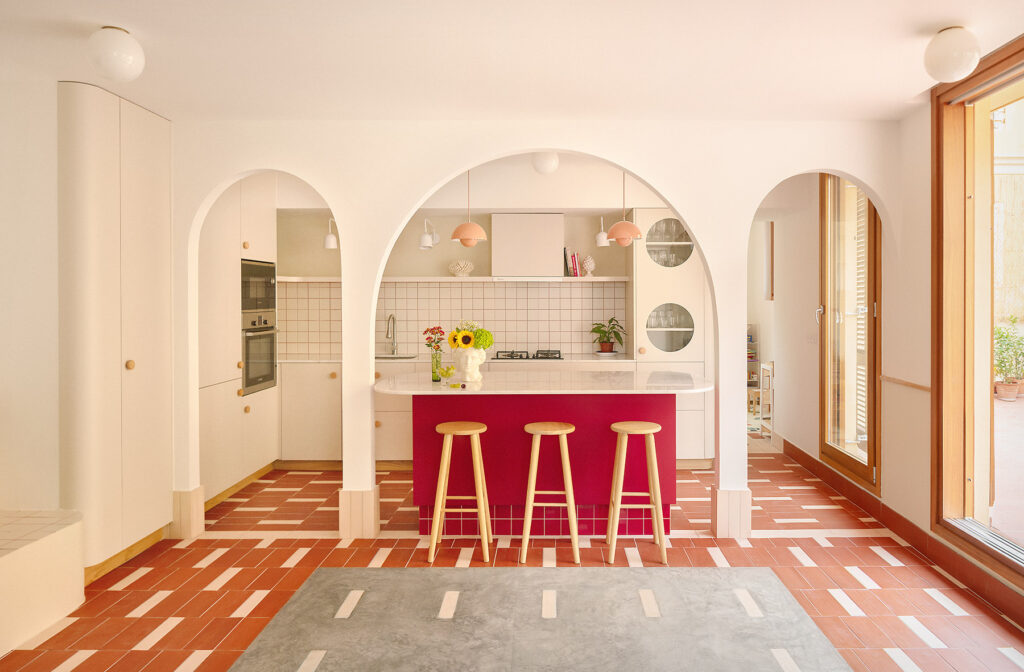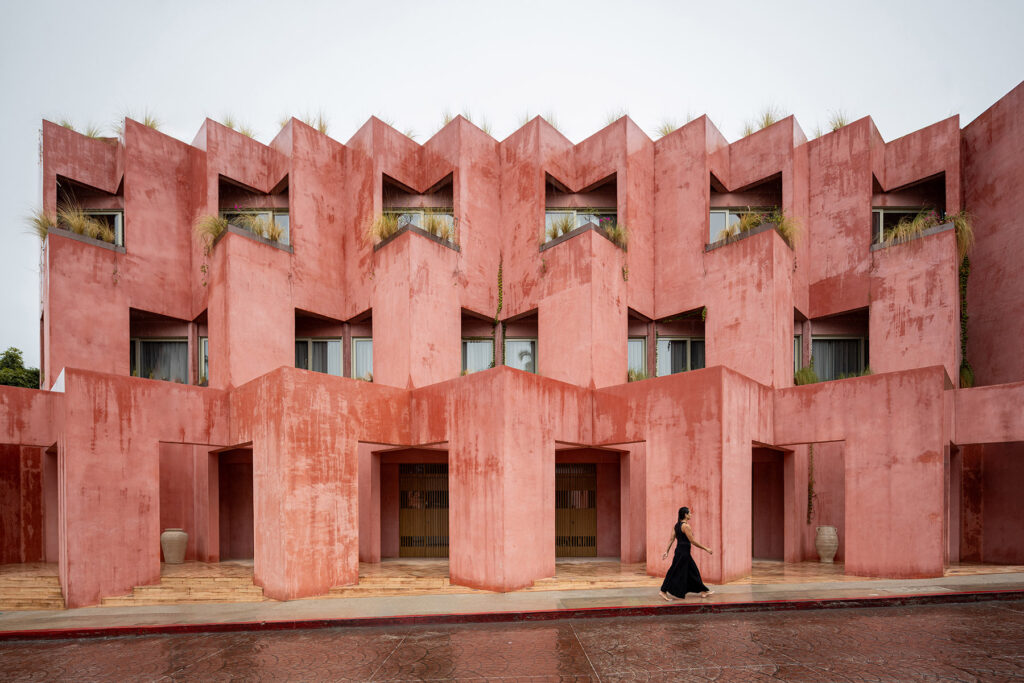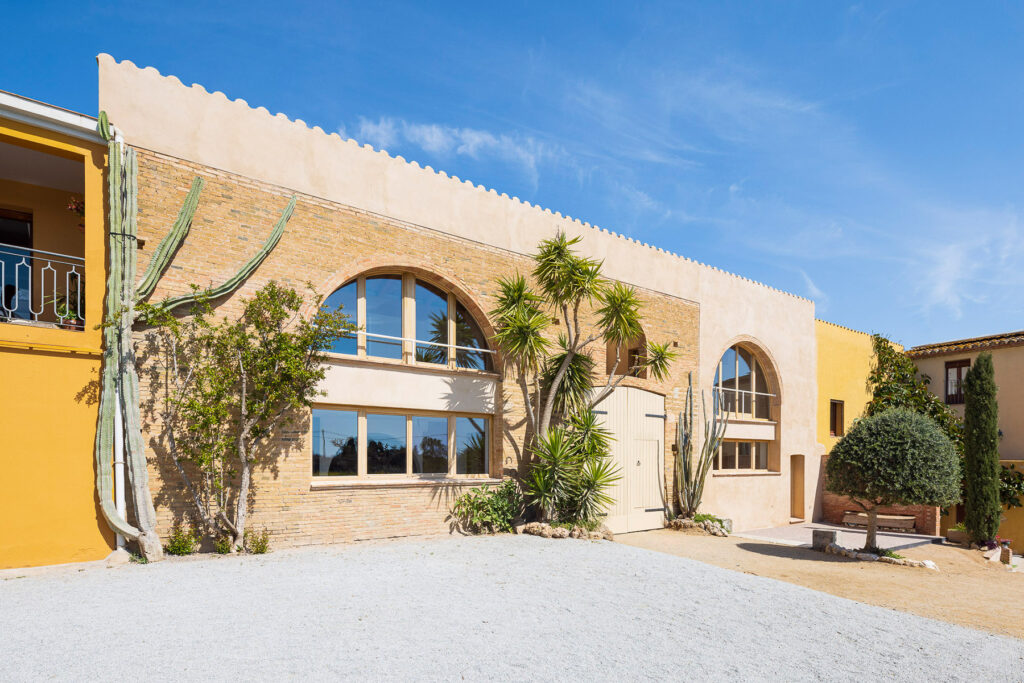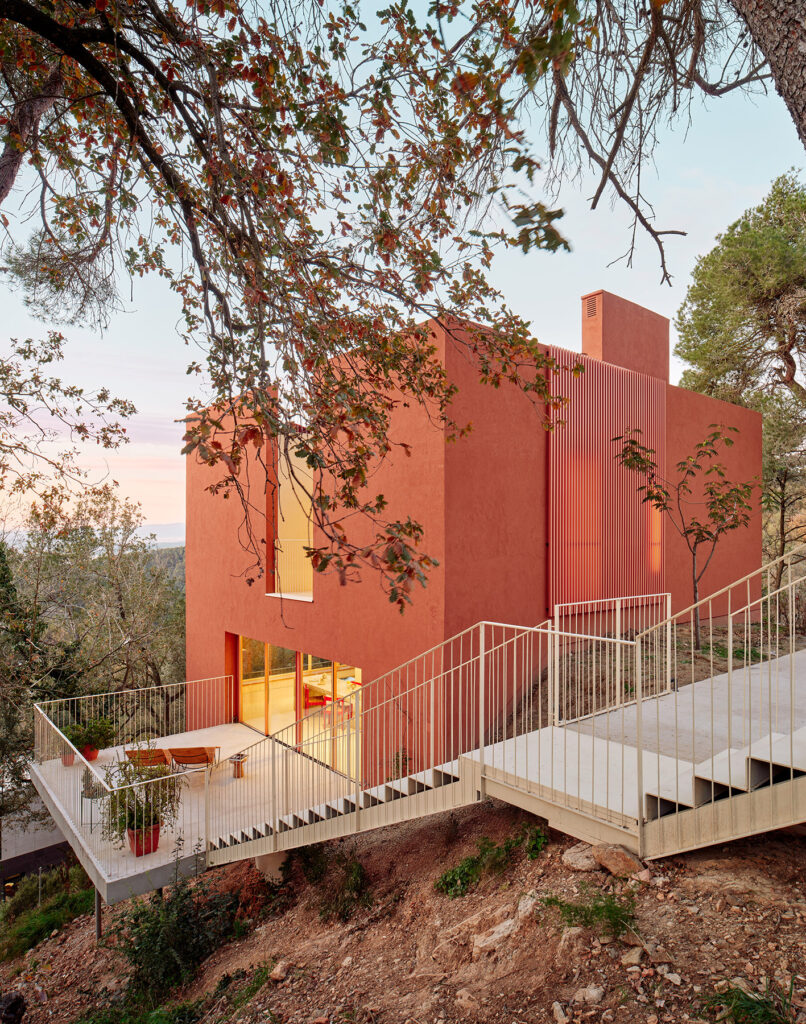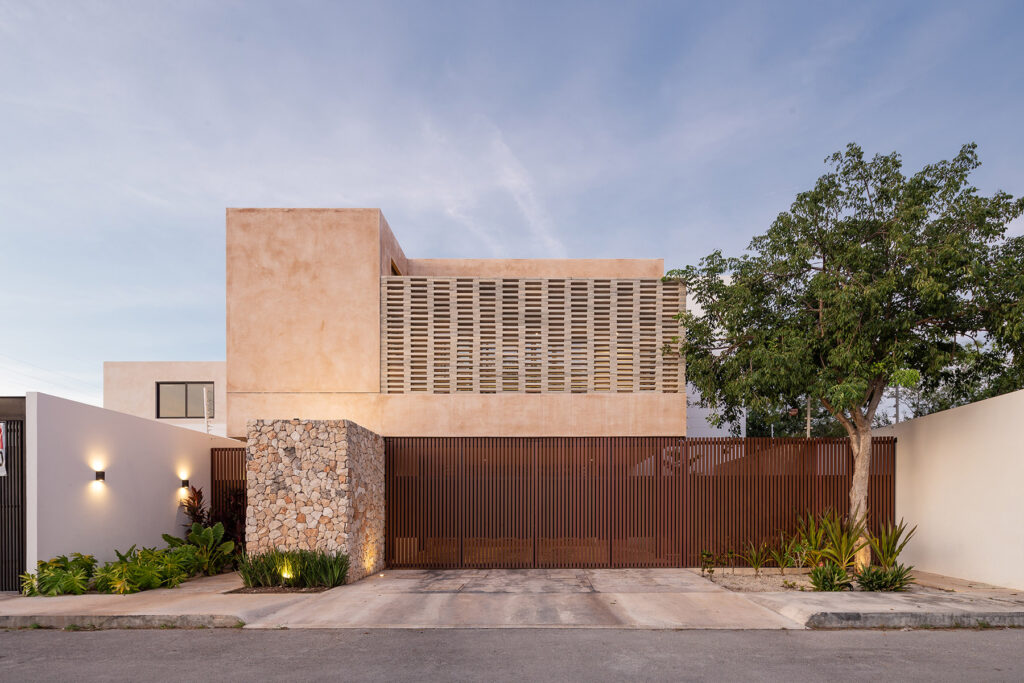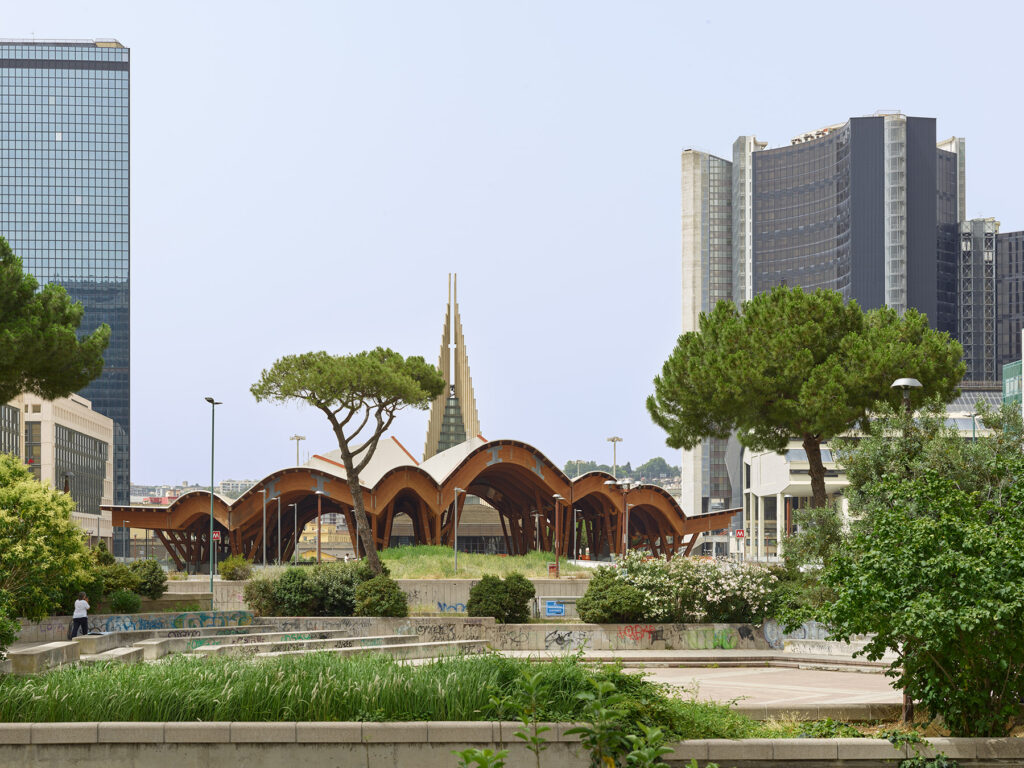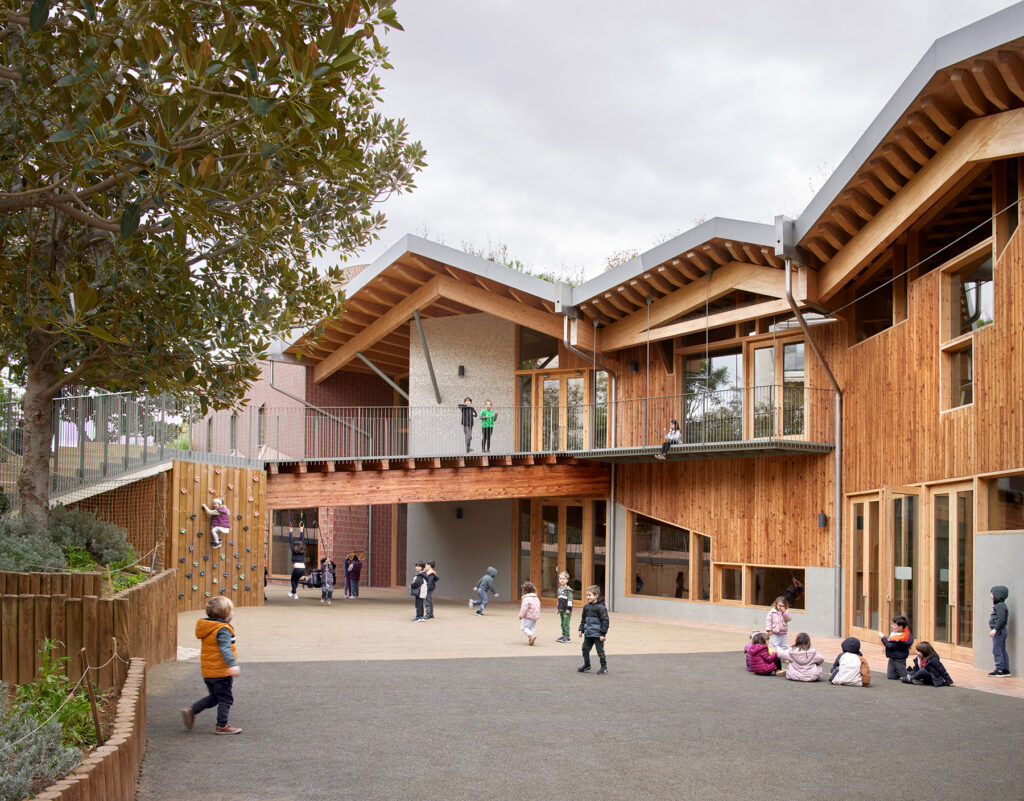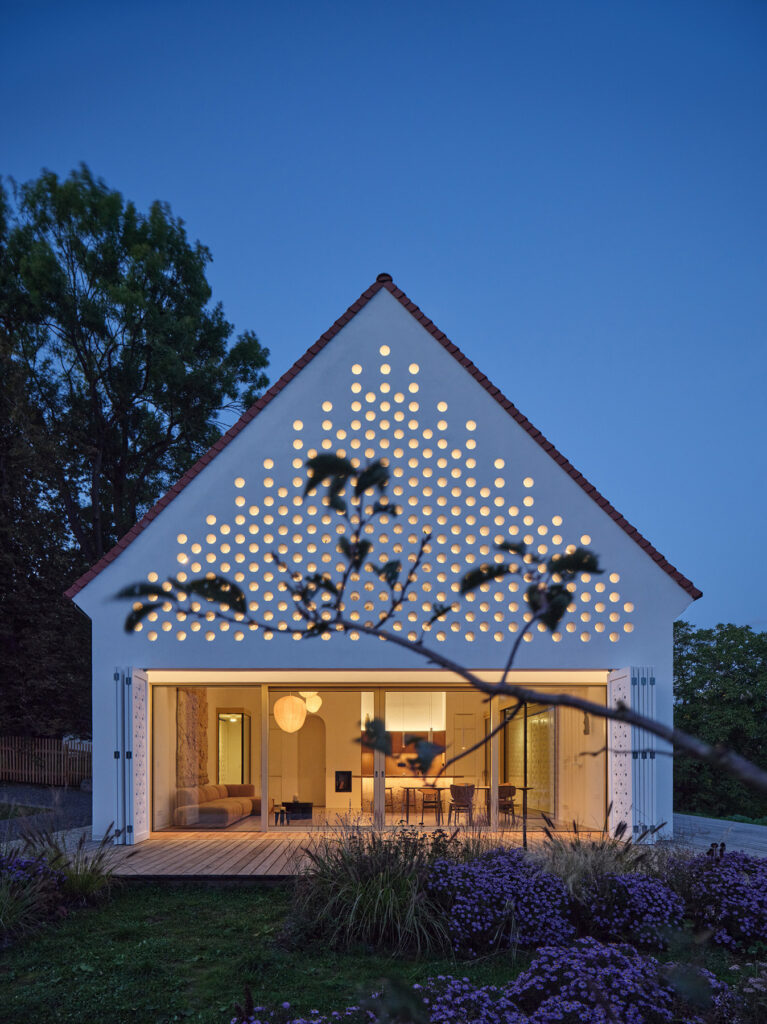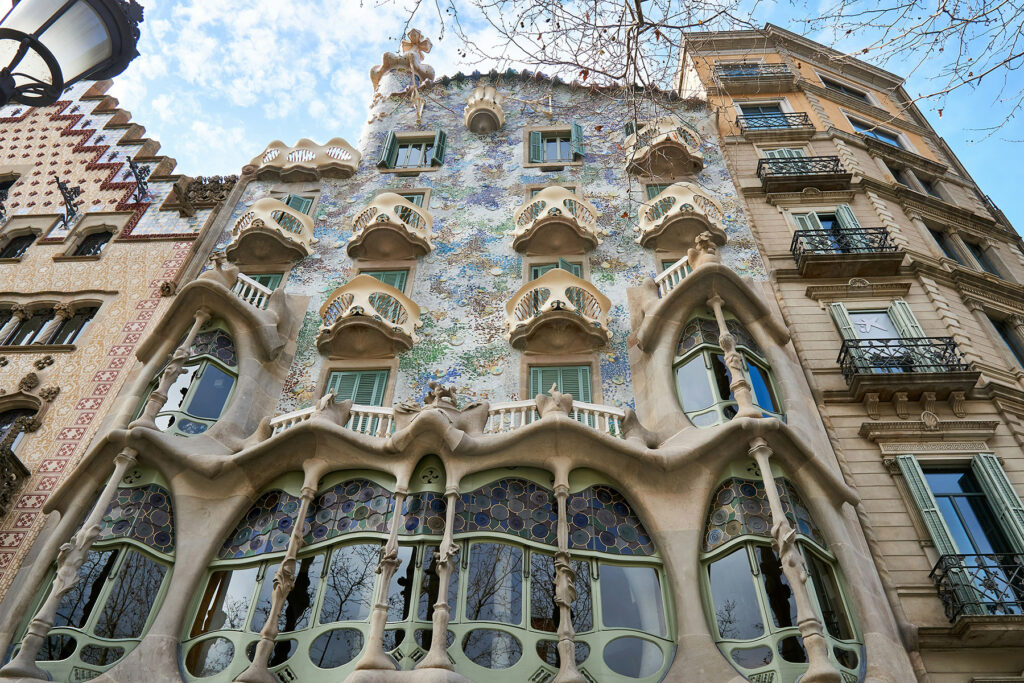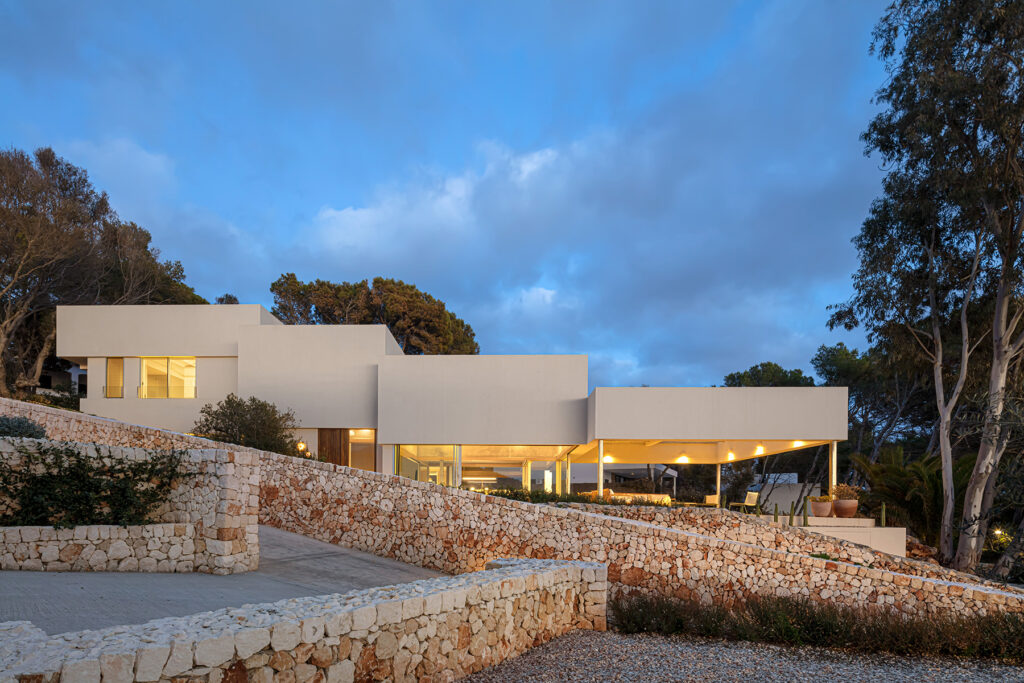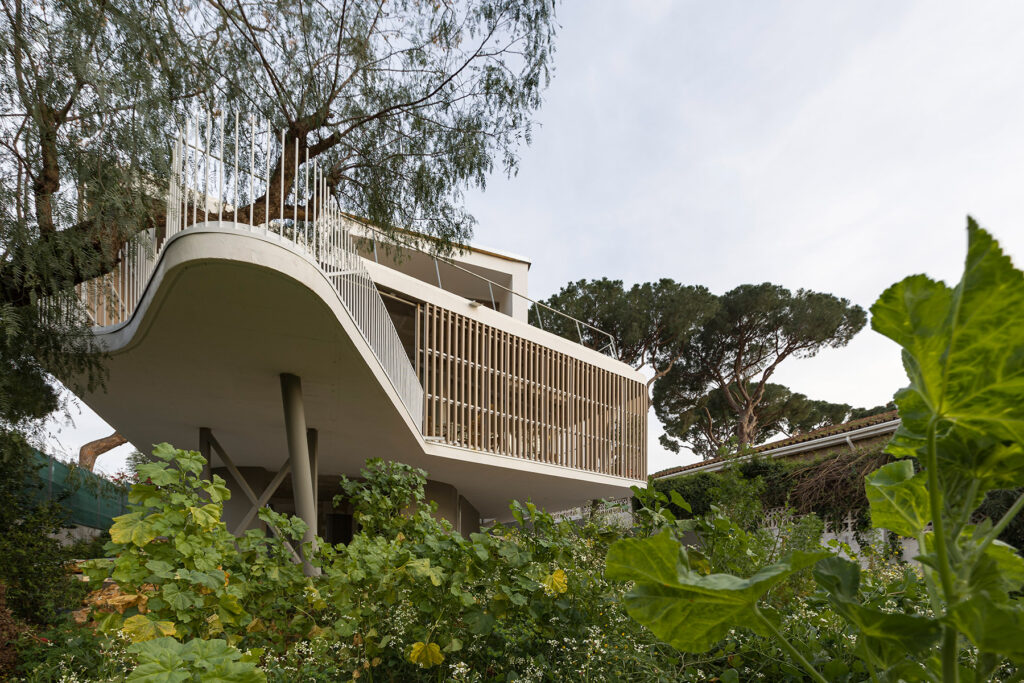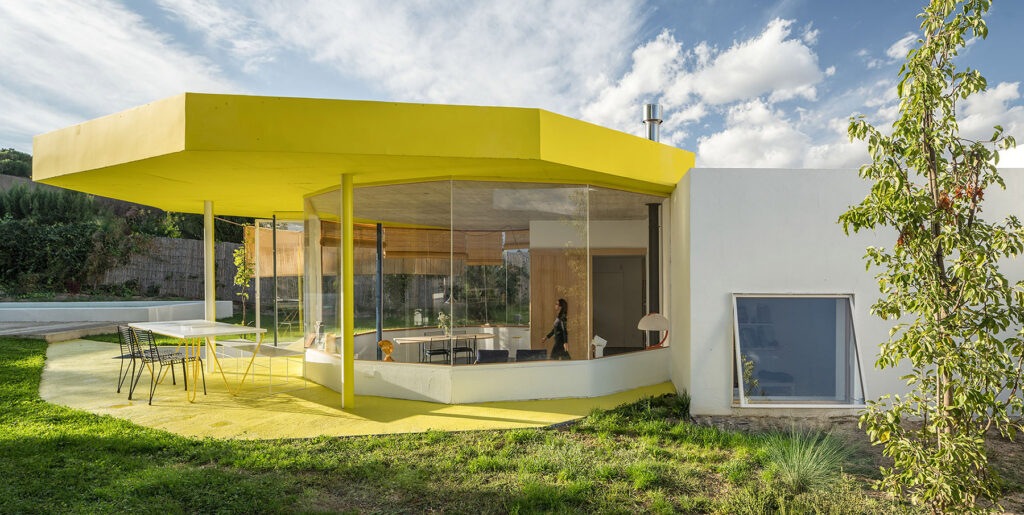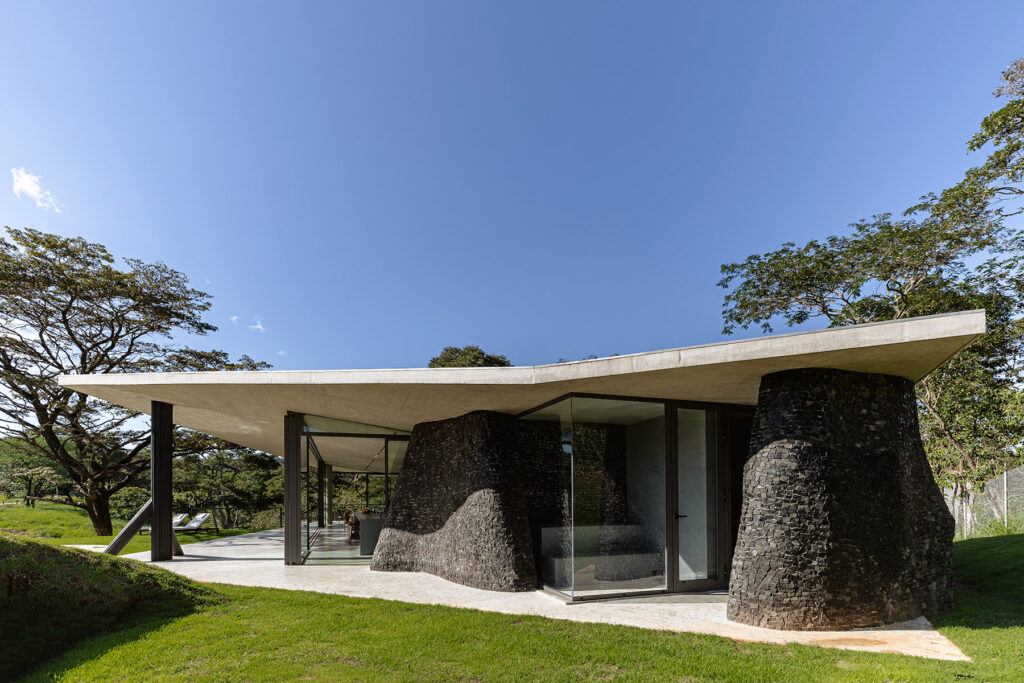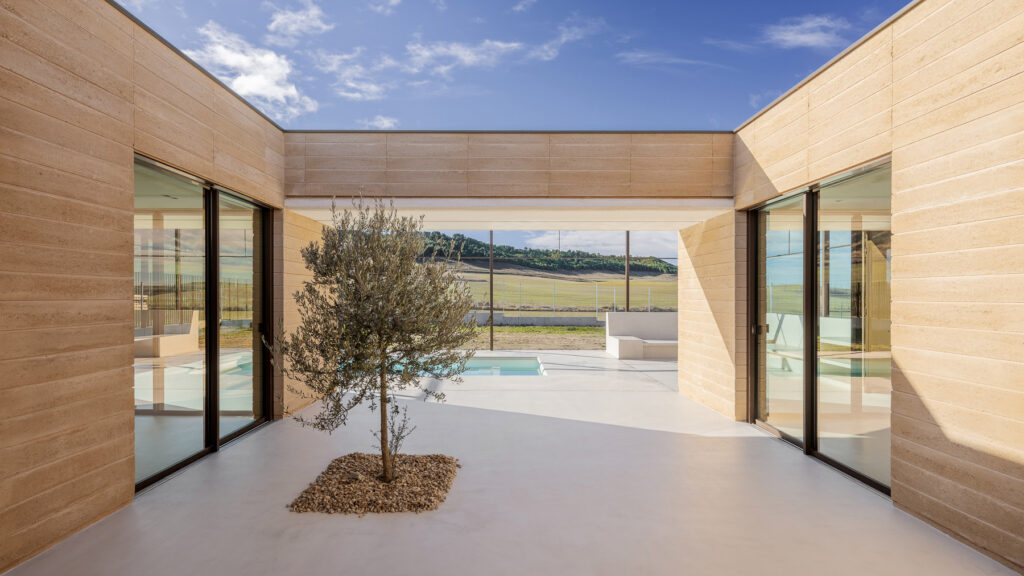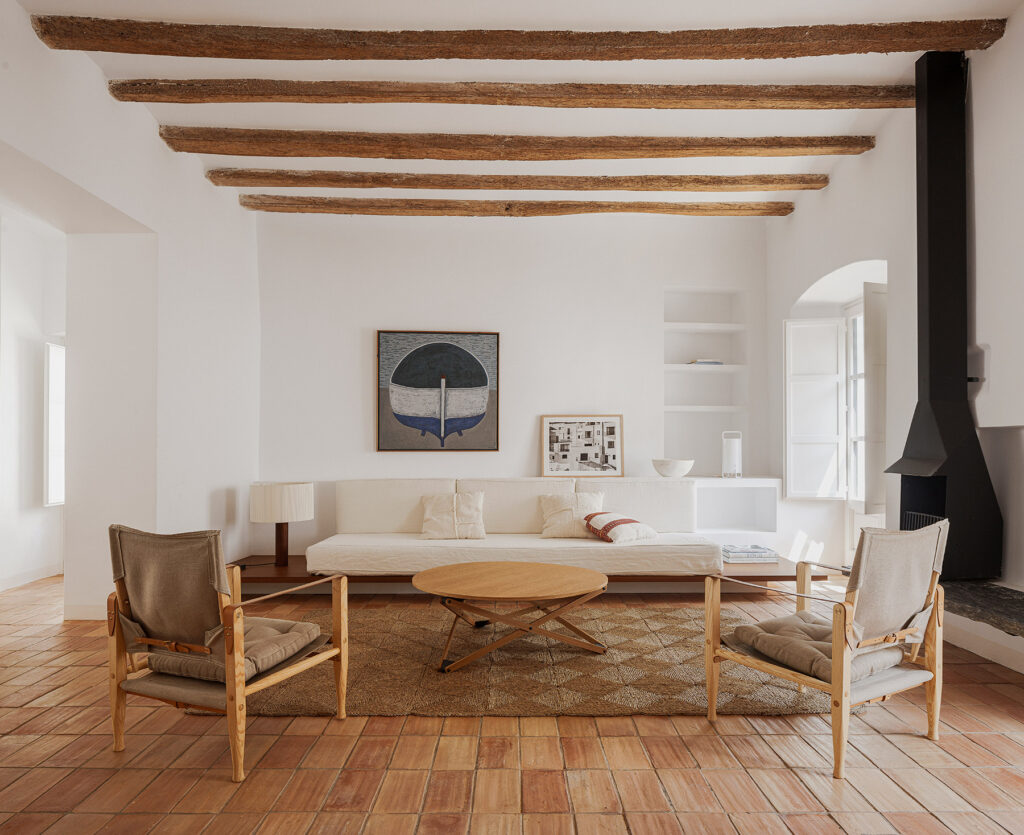

The architects propose a delicate balance between architectural restraint and artistic expression: a house conceived for living, contemplating and sharing.
Fieldwork Architects has designed Wishing Well from matter and place, as an exercise in rootedness within the landscape of this island set in the middle of the Atlantic.
The intervention by Atelier Sérgio Rebelo proposes a form of contemporaneity that reinterprets inheritance through technique, sustainability, and experience — an architecture that understands time as project matter.
Initially designed as her own home, the house has become a natural extension of the studio, a place from which to explain her way of designing. “Architecture is not meant to be seen in photographs — it has to be experienced,” says the architect.
Jose Costa’s intervention explores architecture’s capacity to recover memory, restoring the house as a space for life: a place where intimacy and togetherness find a natural balance.
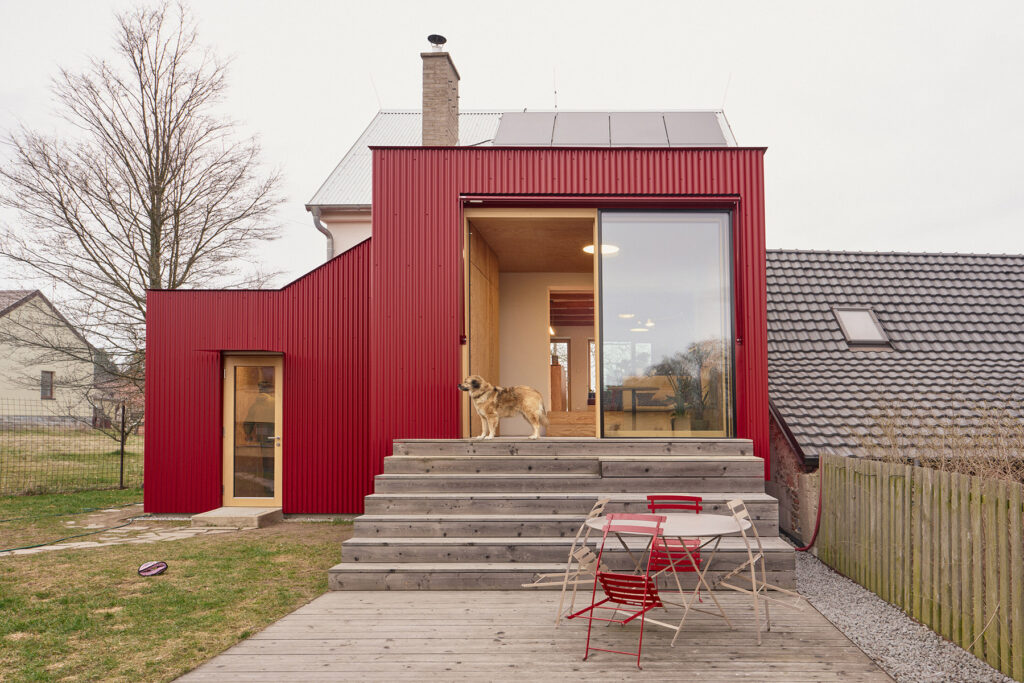
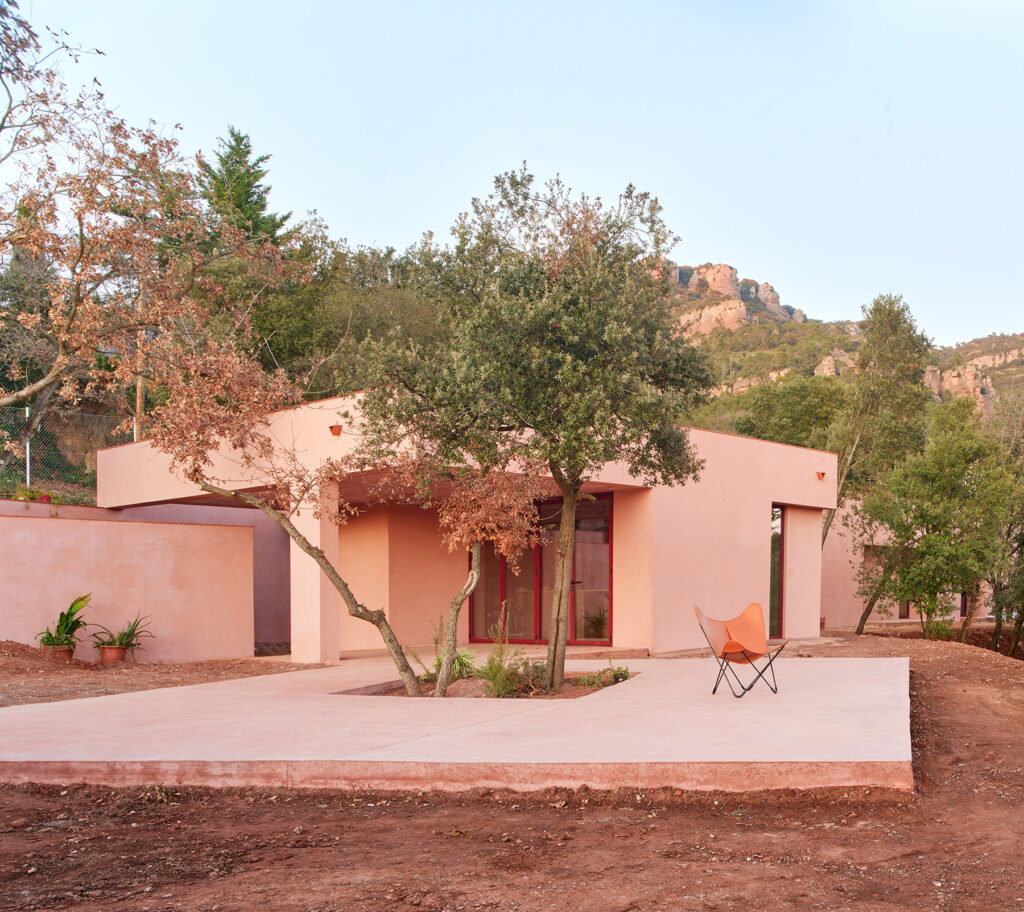
This small house rises on the footprint of a ruin that had been part of the architect’s everyday surroundings for years. The project emerges from an inhabited memory, conceived as an act of continuity rather than insertion.
In just 70 m², Macarena Carrascosa and Adrián López, founders of Corrigan Arquitectos, have designed and built a live-work home that completely rethinks architectural methodology.
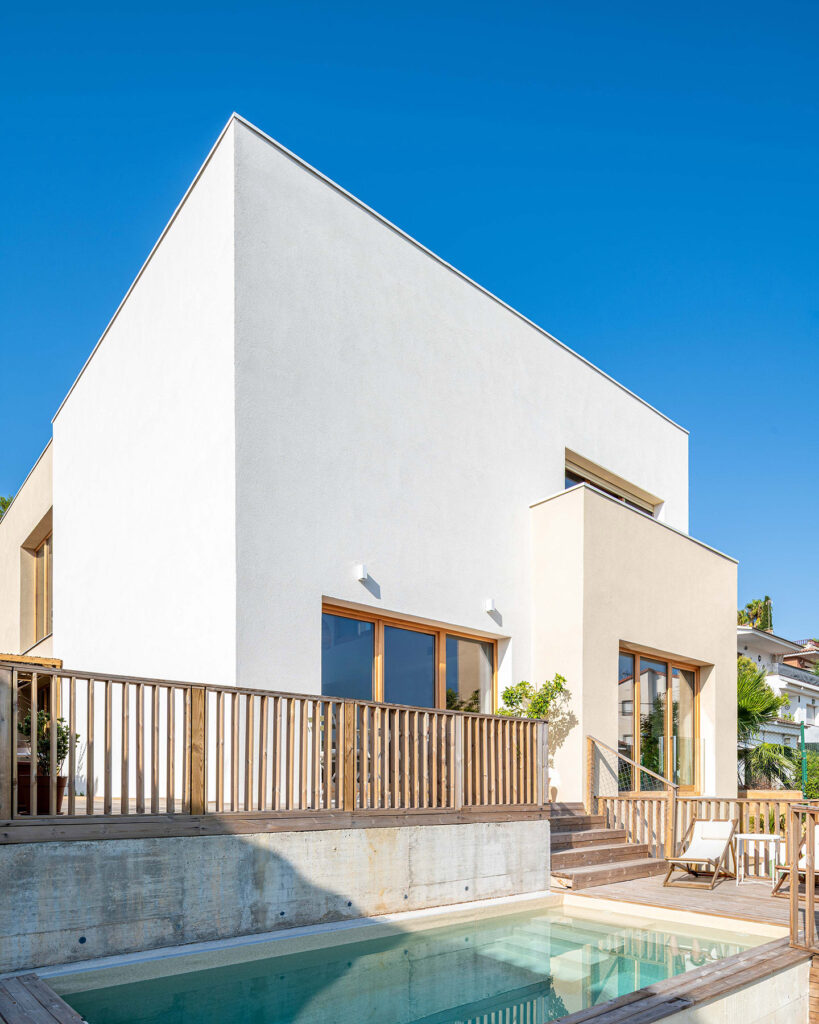
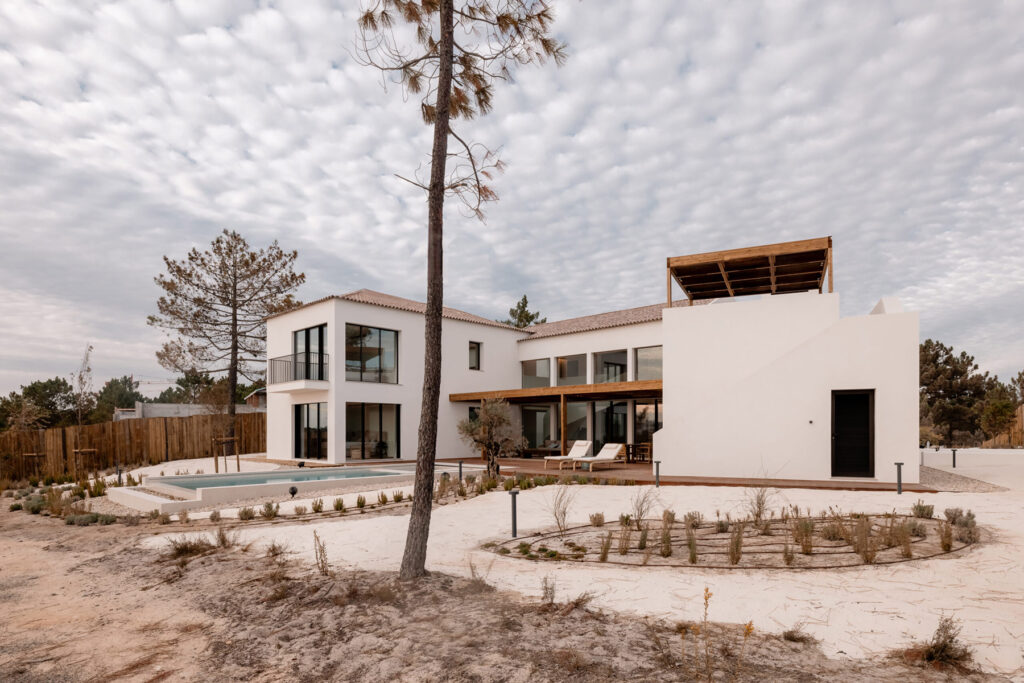
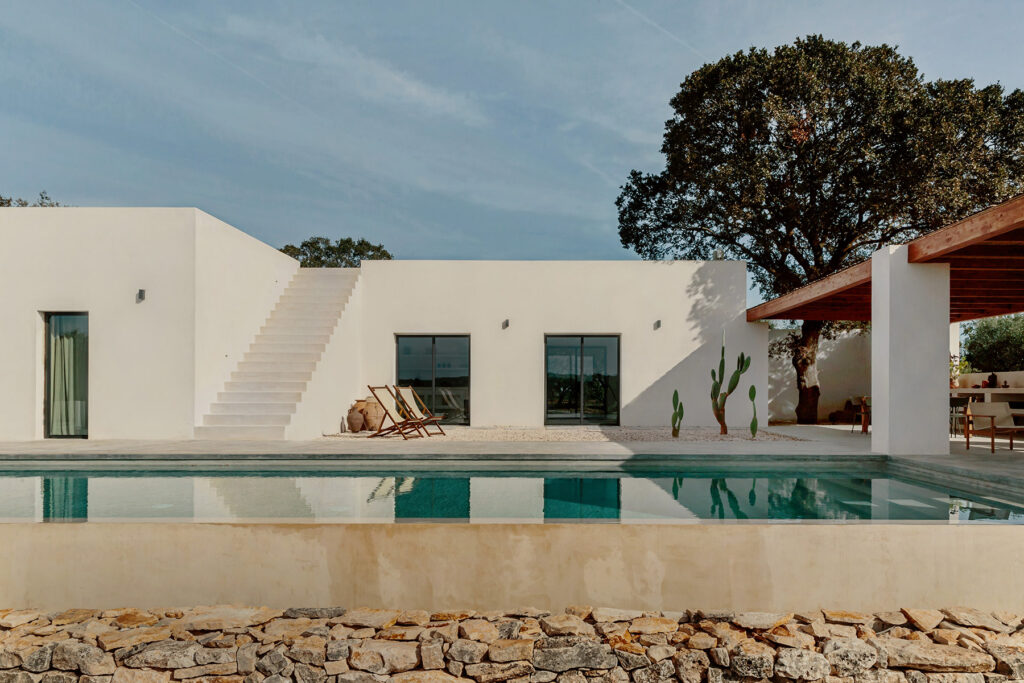
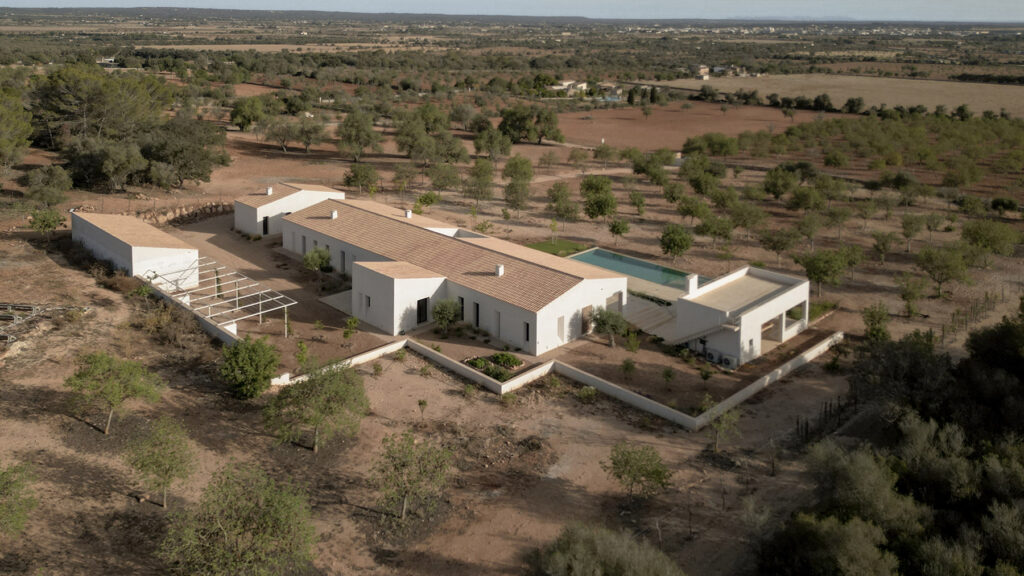
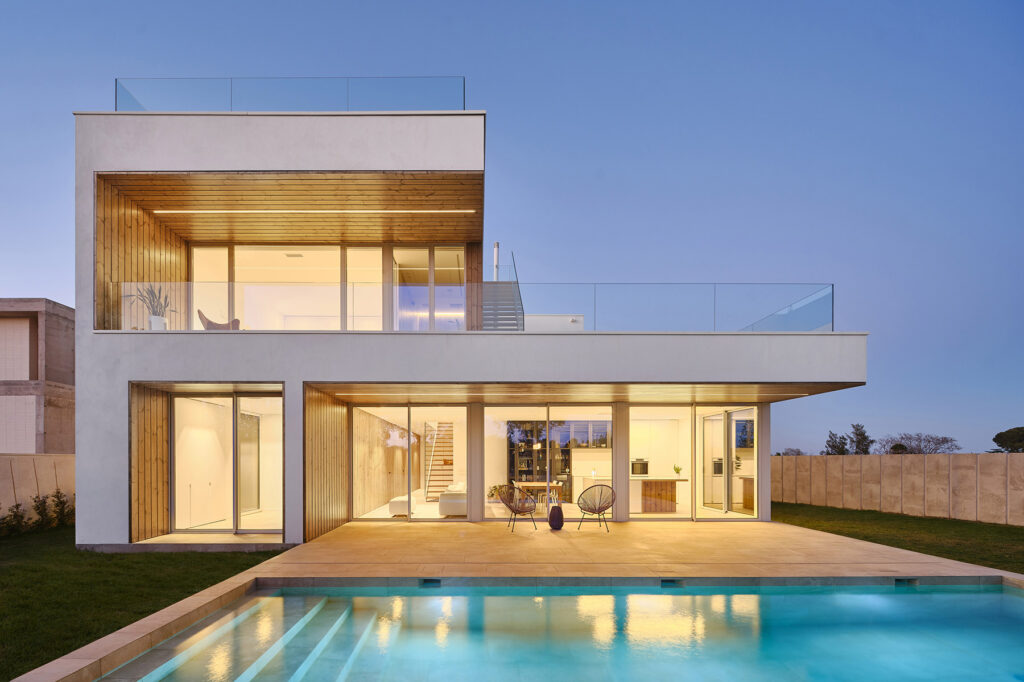
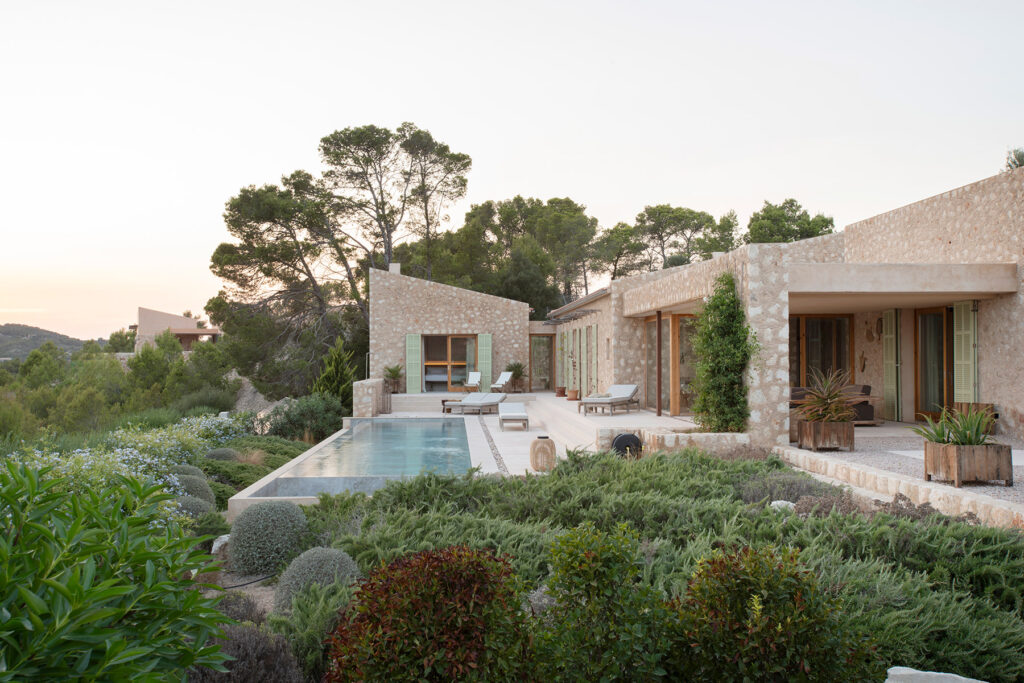
With its L-shaped plan, the house organises the programme while opening the main living spaces towards the garden and the swimming pool, generating a sequence of rooms visually and physically connected to the outdoors.
The rehabilitation does not seek to reinterpret the past, but to make it habitable once again, understanding architecture as an attentive support for memory and for those who choose to bring it back to life today.
“Casa Oasis is the jewel I had always dreamed of. It is that goal for which many of us begin studying architecture: without knowing whether someone will ever commission a project from you, but with the certainty that, at the very least, you will be able to build your own.” —Júlia Marbà
The architecture proposed by Pablo Luna Studio unfolds as an extension of the forest and the flow of water, shaping a permeable refuge where introspection emerges from a direct relationship with nature.
A project by the young Portuguese architect João Completo, demonstrating how a restrained, well-sited and materially honest architecture can establish a lasting dialogue with its privileged surroundings.
The project integrates an extensive programme without sacrificing spatial generosity, outdoor areas or environmental conditions, through an architecture that prioritises clarity, a strong relationship with the surroundings and coherence between form, use and materiality.
This project confirms the line of work developed by Twobo Arquitectura, an architecture that emerges from the dialogue between climate, place and ways of living.
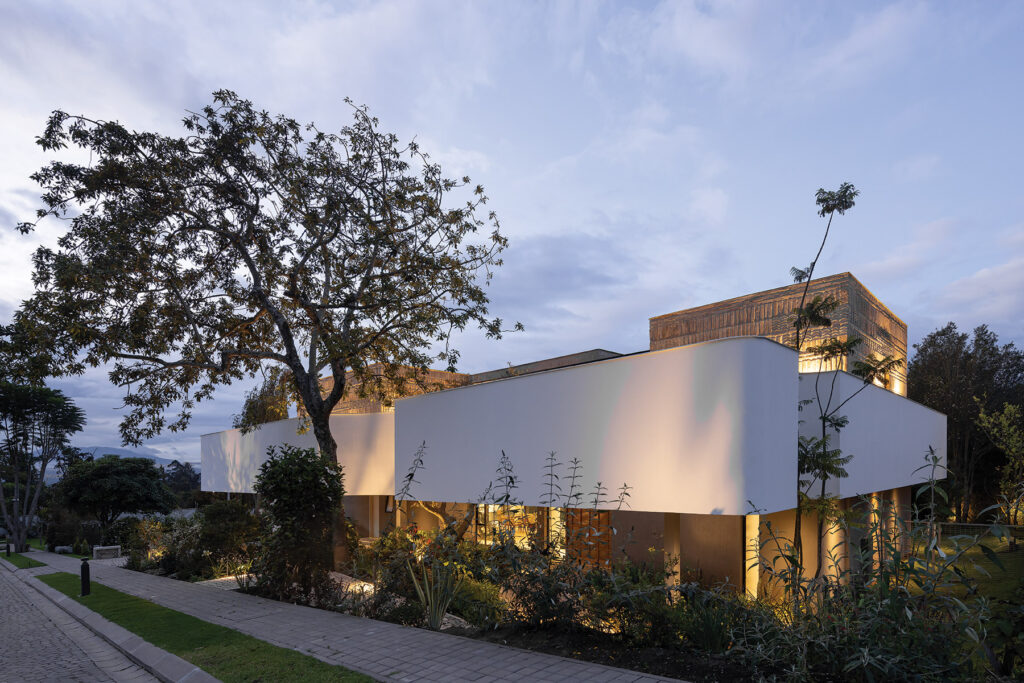
Casa Barro Negro draws inspiration from the traditional rural architectures of the Andean region, where attached courtyards organise domestic life and naturally regulate ventilation, daylight and thermal comfort.
A sequence of connected spaces, without rigid hierarchies or isolated rooms: the house operates as a continuous system in which each place responds to a specific way of living.
The architect revisits this ancestral legacy and translates it into a contemporary language, where architecture conceals its gestures in order to give prominence to the landscape
The rehabilitation brings together tradition and sustainability with a naturalness that defines the work of the architecture and interior design studio.
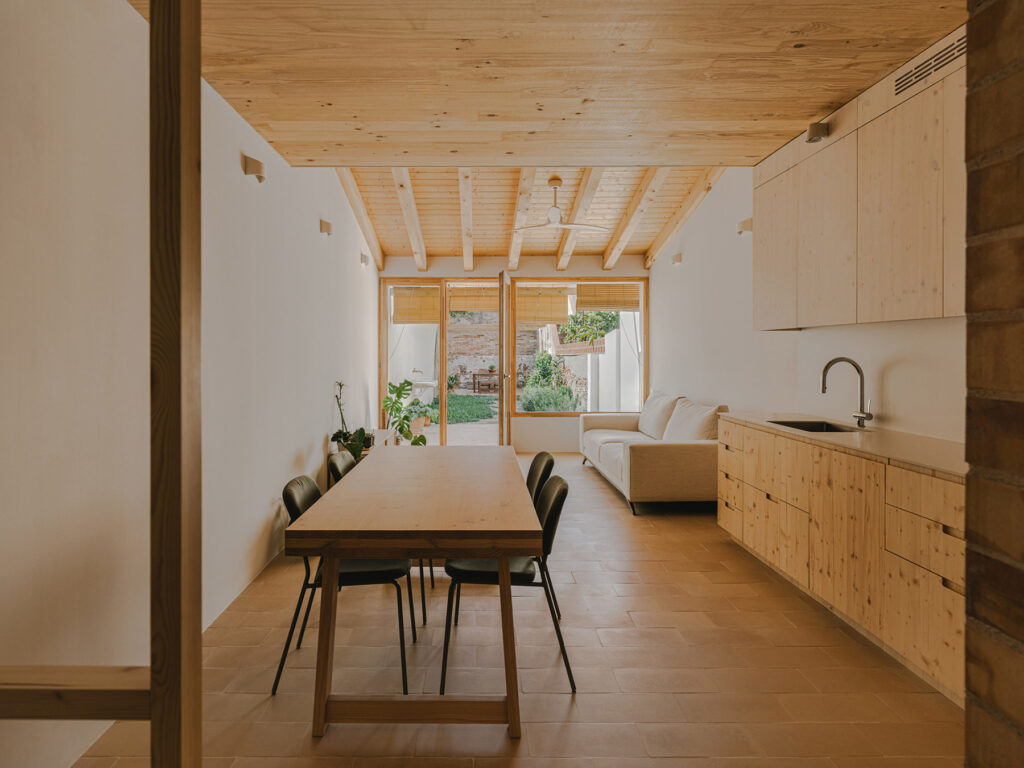
In this 1925 residence, the architects reinterpret the Catalan building tradition through honesty and emotion, recovering textures, amplifying the light, and reclaiming interior calm as the foundation of contemporary living.
Today, as the world bids him farewell, the words he never needed to say resound clearly: that architecture, when sincere, can become a celebration of the human spirit. And in that celebration, Frank Gehry will remain, illuminating our cities. Photo: Frank Gehry in Bilbao. AFP Archive.
Ranch Outpost is a contemporary retreat set between the forest and the horizon of the Salish Sea in British Columbia, nestled among coastal pines and blooming Nootka roses at the start of summer.
Between two exhausted party walls, an extremely long, almost blind house learns to breathe again through courtyards, light, and bare materials, becoming a home that stretches out like a walk between interiors and vertical gardens.
In a fast-paced world, the architecture of this house invites a pause; and in the digitalised environment in which its owners work, it offers an intense, physical experience.
A renovation in which architecture reclaims its essential vocation as refuge, balance and dialogue with its surroundings, guided by natural light, the proximity of the landscape and the sincerity of materials.
More than grand formal statements, this project proposes small yet meaningful decisions. Evolving layouts that allow for future adaptations, reinterpreted local materials, and an attention to the surroundings that seeks not mimicry but freshness.
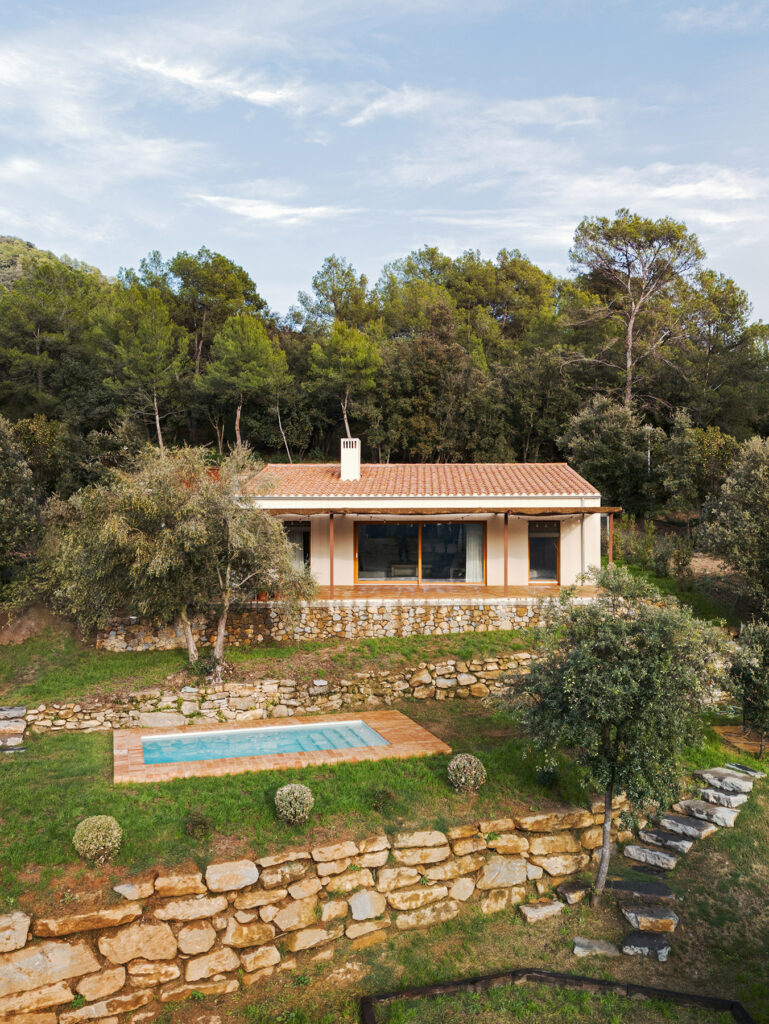
With a gaze that unites technique and sensitivity, Isern & Associats has created a hotel where human scale, texture and light become the main protagonists. A project that interprets the coastal landscape through the sobriety and natural elegance of noble materials.
The intervention, precise and silent, seeks to rescue what time had left in suspension. The result is a house that breathes truth, where every corner and every surface preserves the memory of the place and transforms it into the present.
At the Doshi Retreat, Khushnu and Sönke translated Doshi’s thought into an architecture that transcends form to reach the soul: a gesture of continuity and gratitude toward the one who taught them that architecture is something to be lived and listened to.
RA Apartment transforms a historic flat in Bilbao’s Ensanche district into a manifesto of classical modernity. Between century-old moldings and sculptural lighting, BAT builds a home where technological comfort and design coexist with architectural heritage.
An architecture that listens to the place, to history and to light, responding without ostentation, with the sensitivity of someone who understands that to build is also to preserve, and that to inhabit is to prolong the legacy of a landscape.
A home that breathes with its surroundings, uniting innovation and warmth, technology and emotion, with sustainability as the starting point for an architecture that is more responsible, more human and more enduring. Foto Belén Imaz
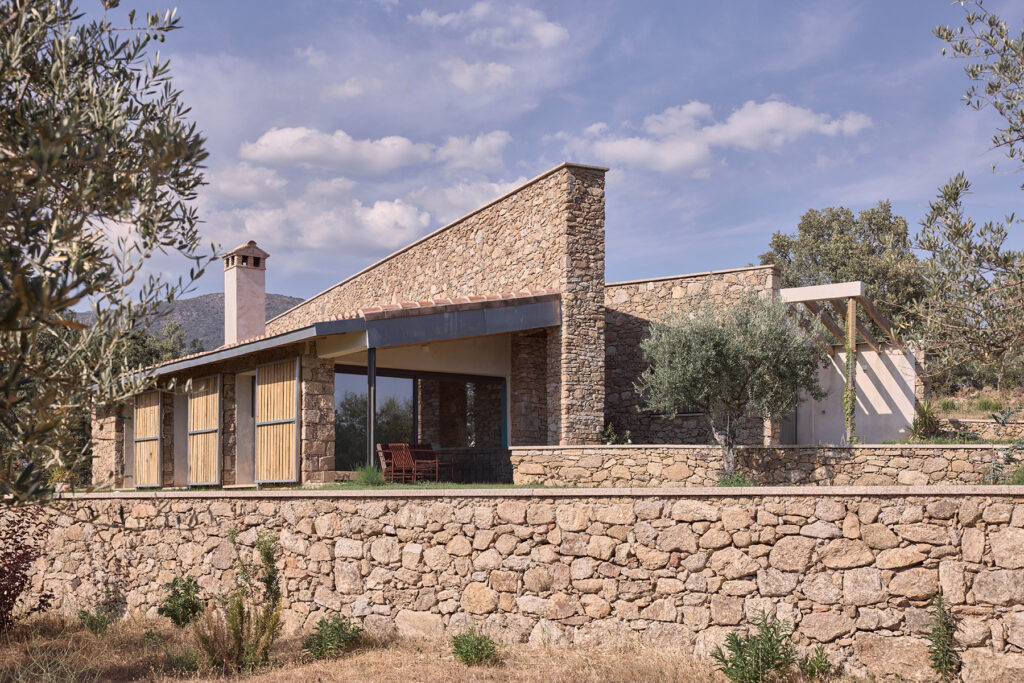
Architect Damián Ribas and interior designer Júlia Casals have transformed this house into a dwelling that embodies the spirit of l’Empordà — an architecture that is honest, respectful of its surroundings, and true to its time.
Tetris House blends serenely into the built landscape of the island. Its white, modulated, and restrained volumes engage in a quiet dialogue with the changing light of the Aegean, proposing a discreet way of living.
The house blends into a setting of traditional manor houses with tiled roofs, surrounded by green meadows and silos that form the essence of the Cantabrian rural landscape.
Open to the jungle, beyond the limits of the ordinary, letting architecture be infused by the life that surrounds it—where home and nature merge until they become one—this is Studio House.
This project is an essay on coexistence between architecture, nature and everyday life. A work that shows how beauty and sustainability can grow from the same root.
This project is a beacon of hope, a living story of international cooperation, a symbol of sustainability, and once again demonstrates that design and architecture can be tools for social transformation.
Perched on the eastern crest of a hill, the house seems to float in the air with the majesty of the Teton peaks and the silhouette of Sheep Mountain as a backdrop.
Ca’n Gallineta: a dwelling on rural land, turned into a manifesto of how to build today in Mallorca: light architecture upon the earth, attentive to the climate, faithful to tradition and open to the future.
Here, the architect and interior designers have unfolded a form of luxury that does not seek ostentation but rather comfort, spatial quality, the emotion it awakens and the calm it conveys.
Developed in Segovia, it inaugurates their new line Case Study Tini: predefined homes designed with the highest architectural standards, far from prefabricated house catalogues and close to the pursuit of essentiality and clarity that defined the Case Study Houses.
The project begins with an emblematic building of strong symbolic value for the community, whose identity had been altered over time through various interventions.
The architects build an identity that connects people with nature and with the crafts of their land, proposing an architectural model that unites sustainability and culture.
An architecture that opens to the sunset and the valley that surrounds it, and immerses itself in the shadowy, silent forest, illuminated by the light filtered through the vegetation.
For those who believe that architecture must serve the spirit as much as function, Casa Jacaranda stands as a contemporary model: innovative, committed to its surroundings, sensitive, and profoundly human.
A place where time slows down, a space for reuniting with family and friends, where hospitality becomes art and the house becomes a stage for shared life.
A home that embodies the ceremony of slow living, a refuge that converses without noise, that inhabits the present with serenity, where simplicity rises as the collective song of the Mediterranean.
The architecture of Hacienda Wabi recalls the ancient ruins of the region: blocks rise gently, set back towards the sky, evoking the ancestral settlements that once inhabited these lands.
Dorothée Meilichzon, deeply in love with Cargèse, poured into this project a vision infused with emotion. For her, interior architecture had to tell a story: that of a village suspended between sea and mountain, between the present and myth.
More than a house, Modular Bahia is a manifesto: an architectural gesture that unites industrial precision with the poetry of inhabiting a tropical landscape, responding with beauty and responsibility to the climatic and constructive challenges of our time.
With a gaze that is both contemporary and deeply rooted, the architects have honoured the legacy of the baserri while opening it up to new ways of inhabiting, new standards of energy efficiency, and a renewed dialogue with the landscape.
African Flow is not a Western import, nor an exercise in philanthropic exoticism. It is a place where knowledge is passed on not only in the classrooms, but also through the walls, the shadows, the paths and the materials.
Like a whisper through the leaves, like a light filtering through the latticework, this house confirms what the architect has been building for decades: spaces where beauty is also a form of care.
Patio House does not reveal from the outside the richness of its interior. Its mystery lies in the sequence. The way it is inhabited becomes a nearly ritual act. This is a house that breathes with the spirituality of temples.
Since their creation in 2021, these awards have become a meaningful act of active listening towards a discipline that evolves alongside society, responding with creativity and responsibility to the challenges of our time.
The intervention, which feels more unearthed than designed, builds its narrative between the original materiality and a newfound vertical vocation: to look upward and breathe the sky.
Through this intervention, the National Museum of Performing Arts in Almagro, and with it, the city itself, recovers not only its theatrical past, but also the ability to host the scenes of the future, from within a refuge of light, silence, and emotions waiting to be rediscovered.
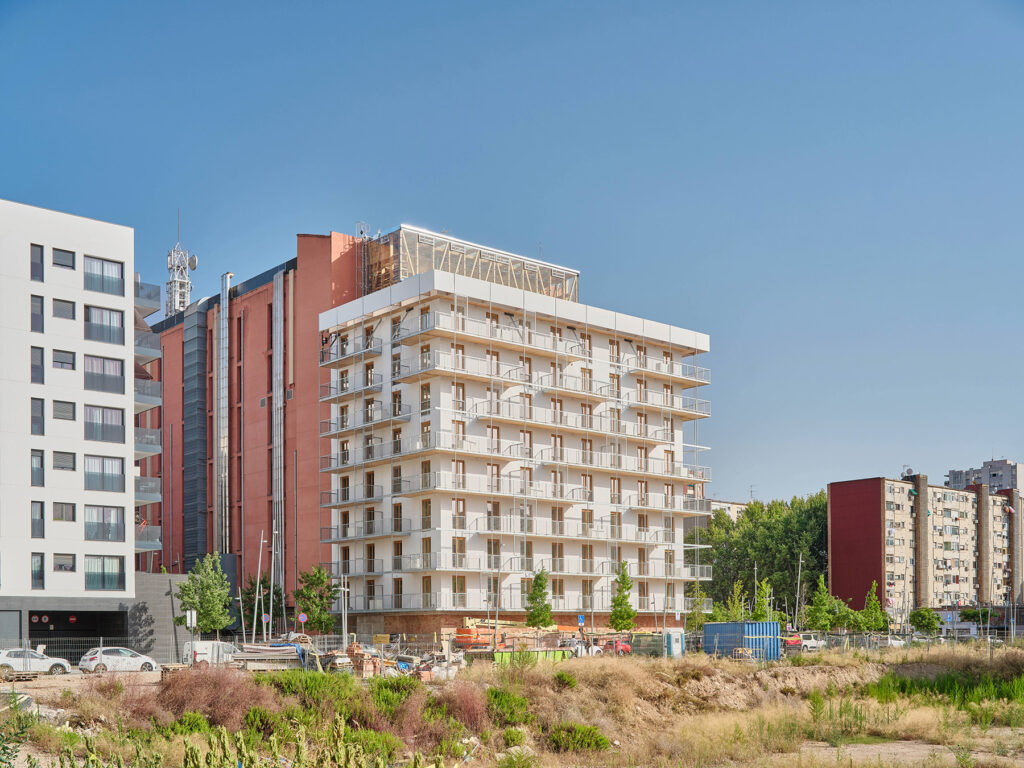
A tangible example of how the principles of sustainability, reuse, and bioclimatic design can be integrated into public housing without renouncing beauty or memory.
The architect has designed this home while preserving the natural profile of the terrain, through a precise and silent architecture: a lesson in how to inhabit without harming the landscape.
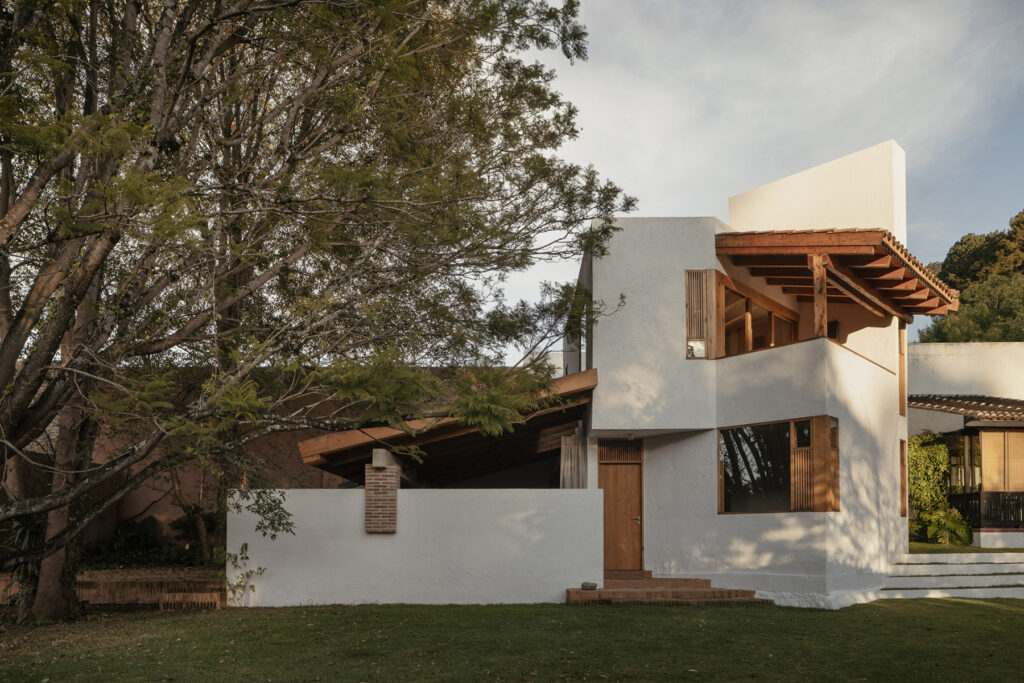
In Temozón, Yucatán (Mexico), a place whose name evokes a “whirlwind of wind", this contemporary residence rises from the landscape as if it had always belonged to it.
Between timber vaults and buried memories, the new station engages in dialogue with archaeological history and modern urban planning to reconnect the city with its most human dimension.
The school reveals itself at the end of a walk through a Mediterranean pine forest. This transition is not just physical but symbolic: children leave the city behind and enter a space that breathes calm, openness and freedom.
This residential complex is part of a broader effort to build a greener, more resilient and inclusive city of the future. A city where design is not limited to solving functional needs, but aspires to transform daily life through a deep, committed and radically contemporary lens.
“I consider myself a lover of austere design that highlights what is essential. I always seek the simplicity of form and the nobility of natural materials to shape calm, warm and pure environments,” says the architect.
On a privileged plot in La Moraleja (Madrid), this project embraces the natural slope, daylight and surrounding vegetation to unfold a home that flows seamlessly between interior and exterior, between the everyday and the extraordinary.
Set in the heart of Argentine Patagonia, on the shores of Lake Correntoso and surrounded by a dense forest of coihues and arrayanes, this collection of compact dwellings was created to host two or three guests at a time.
An architecture filled with intention, as if born from the desire to merge with its surroundings and offer a space for introspection without giving up openness.
The city becomes a living network of experiences: exhibitions, guided tours, ephemeral installations, workshops, lectures and encounters that invite us to see, differently, what we thought we already knew.
Designed by Nomo Studio, this house on the island of Menorca adapts intelligently and sensitively to its landscape, unlocking spectacular views of the sea.
Parapimi is not just a tree house. It is a piece of architecture that engages in dialogue with its site, shaped by both sensitivity and technique. It offers a different way of inhabiting: more mindful, lighter, and more respectful.
In the words of the architects: “A refuge where one can enjoy family, nature, and the passage of the seasons, while adapting to everyone’s daily needs.”
This project advocates for an architecture that honours local identity. The result is a home that doesn’t reproduce tradition—it updates it with honesty and sensitivity.
In Casa Loredo, every design decision builds a bridge between vernacular tradition and contemporary life. There’s no mimicry or literal reproduction, but rather a lucid reinterpretation.
“We wanted a truly Mediterranean home, in the traditional architectural style of the area: reddish stone walls, lime render, curved edges and pitched roofs,” says Paloma Bau.
The renovation balances tradition and modernity with bright, fresh and authentic spaces. A new layout, strategic openings that link indoors and outdoors, and a thoughtful material palette enhance functionality while maintaining the home’s original spirit.
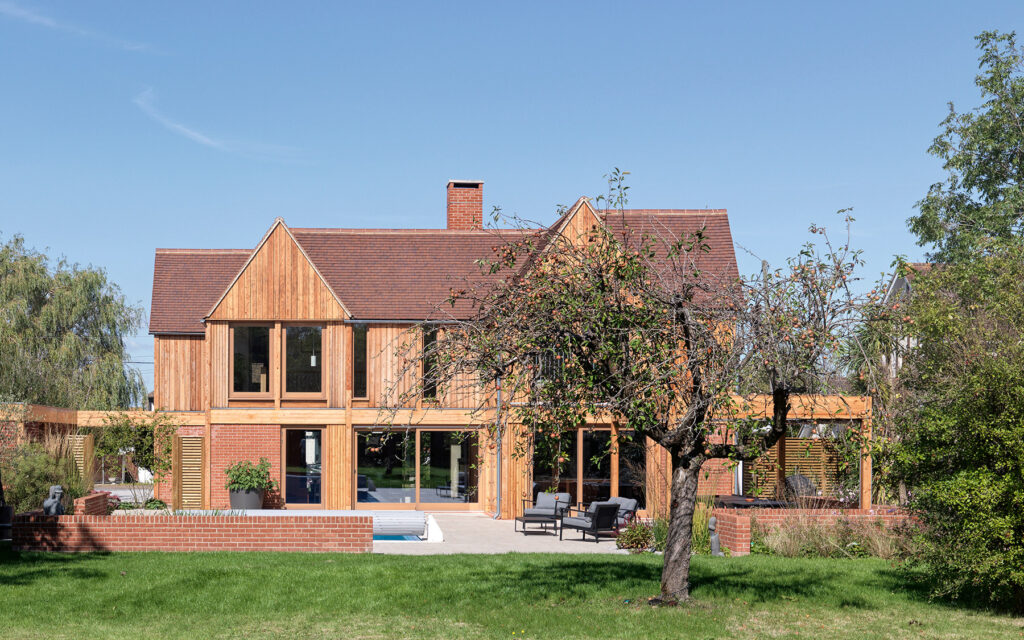
Built almost entirely of wood, the house respects both its environment and the planet, offering a generous and stimulating home that blends seamlessly with the surrounding mature garden.
The main volume is broken into separate structures with different functions, reducing the house’s scale and integrating it into the garden through large windows that invite the outside in.
Set in a forest rich in native species, the school is designed to harmonise with nature. Classrooms are scattered like a small village, placed strategically within woodland clearings.
These compressed earth materials combine the ancestral beauty of natural elements with cutting-edge technology, redefining what sustainable architecture means today.
“Identity is tied both to the individual and the collective sense of belonging to a place,” says Liu Jiakun, who revisits Chinese tradition without nostalgia or ambiguity, using it as a springboard for innovation.
The project’s first strategy was to eliminate negative impacts on the existing buildings; the second and most vital was to create new spaces that give the complex a unique and representative identity while encouraging interaction between research and education across the institutions on campus.
In Picanya, Valencia, Viruta Lab designs a new-build home that blends contemporary residential architecture with the artistic legacy of Ángela García Codoñer, an icon of feminist art in 1970s Spain.
The interior designer preserved the house’s structure and openings using traditional techniques and materials in line with the building’s typology—highlighting the visible stone, wood and iron that define its identity.
Architects and interior designers combined technology and craftsmanship in a harmonious dialogue between old and new—preserving the soul of the original building with a touch of timeless luxury.
“My work often seems magical, dreamlike, even surreal—and that’s because I’m not just creating beautiful spaces, but designing spatial experiences for visitors,” says Li Xiang.
‘We create spaces that awaken emotions in homes that have already been lived in or in those that are yet to be lived in. We like to vibrate and make people vibrate by spreading our passion for architectural heritage, historic neighbourhoods, culture and people’, say architects Ana Beltrán and Eva Sanjuán.
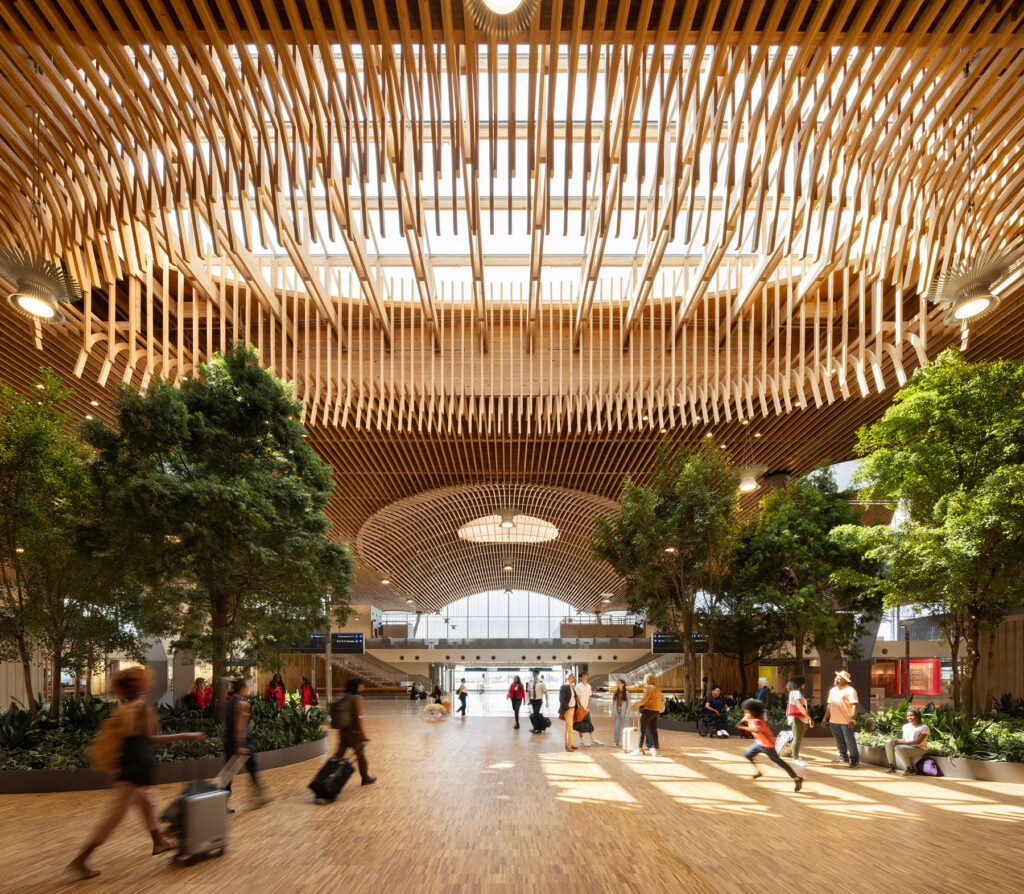
The use of wood celebrates Oregon’s history and its future of innovation, craftsmanship and forestry. Since timber captures carbon, it’s also a key element in sustainability.
Created to achieve the perfect balance between modern comfort and immersion in nature, the house is a model of understated elegance—a true family refuge.
The challenge was to meet the client’s brief for a contemporary, iconic architecture that blends with the terrain, using organic geometries and topographies to create sensitive, subtle spaces.
For over twenty years, Marta Peris and José Toral have been reshaping how we build homes, adapting to society’s evolving needs. In this project, they use local, eco-friendly materials such as lime and marés stone, along with strategies that promote social interaction among residents.
Located in Zurich-Lengg, at the foot of Burghölzli Hill, alongside medical buildings from various eras, this is Switzerland’s largest centre for children and adolescents. It comprises two buildings: the acute care hospital and the research and teaching centre.
ZHA continuously refined the station’s design for structural efficiency and environmental performance. The façade’s composition echoes wind-shaped desert sand patterns, with multiple frequencies and reverberations that create complex, natural repetitions. The composition of the station's façade echoes the patterns generated by desert winds in the sand, where multiple frequencies and reverberation generate the complex repetition of patterns evident in the natural world.
Architects José Roberto Paredes and Paula Cabrera Gil have transformed this house, located in the El Zonte resort (El Salvador), one of the world's surfing meccas, by using local materials and the natural environment.
The building, which resembles a ceramic mountain, is inspired by Shushan Mountain, which is located near the project site and was cherished by the Northern Song dynasty writer Su Dongpo.
The surroundings are characterised by an extensive pine forest and an atmosphere of silence and serenity. The layout takes advantage of the surroundings, with a predominance of maritime pines and a dense vegetation cover, transferring this atmosphere to the interior of the house.
Recently awarded by The Mies Crown Hall Americas Prize, Las Tejedoras aspires to become a space that fosters productive development, connecting unemployed women through active participation, the revitalization of local artisan techniques, and the promotion of learning as a tool for empowerment.
The Jingyang Camphor Court Hotel offers a new type of hospitality experience, with a spacious, publicly accessible cloister at its heart. The strategy of preserving, renovating, and revitalizing the existing building was fundamental in designing the hotel’s new spaces, serving as an example of adaptive reuse—a highly significant sustainable architectural practice.
The project aligns with the Parc de la Villette and Bernard Tschumi’s original design. It has been conceived around a generic structure where uses and activities create the identity of the place, blending nature with architecture and sharing space to add value. 
The project not only pays tribute to the winery’s past but also creates a warm and functional home. Without losing its original essence and character, the space honors its legacy while adapting seamlessly to contemporary life.
The design by Foster + Partners reinterprets the winery as a whole, creating a stronger connection between the existing buildings and the surrounding vineyard. The vaulted roof draws inspiration from the winery’s industrial heritage, reimagined as a lightweight timber structure. Its catenary profile enhances structural performance while minimizing material use, and its earthy color palette allows the building to blend seamlessly into the landscape.
The materials used in the construction blend seamlessly with the natural surroundings, emphasising sustainability and harmony with the environment. Earth, lime and stones come together to form the structure, reflecting a commitment to traditional building techniques and local resources.
The Katajanokan Laituri building designed by Anttinen Oiva Architects is the latest example of Finland's impressive achievements in the field of new-generation large-scale wooden architecture.
The architecture of this school is unique in its structural expression, its design innovation and the resolution of its unconventional approach, in which every part has been carefully designed to reinvent the concept of educational spaces and leave an impression on its users.
An intervention that has managed to give a second life to Mas Carpi as a home, making the most of everything that exists, using natural materials from the site, with low environmental impact and using passive bioclimatic strategies that make the most of the site's conditions.
Snøhetta wanted the building to be as close to nature as possible, using natural materials such as wood and stone. The building follows the shape of the land and the roof slopes down to the ground to meet the landscape.
Following the profile of the terrain, it is designed in a staggered form and with interior courtyards covered with vegetation that facilitate its integration with the surroundings.
With an exhibition space of 4,500 m2, offering a complete journey through Volvo's history, and large spaces prepared to host cultural events, talks and conferences, with capacity for 1,100 attendees.
Architect Sebastián Machado, CEO of Mano Arquitectura, created three different types of houses, in which views and natural light are the protagonists in each room.
The project is based on the criteria of the Leed v4 certification, placing value on all the natural resources and materials available on the site, interacting with them in the decision-making process.
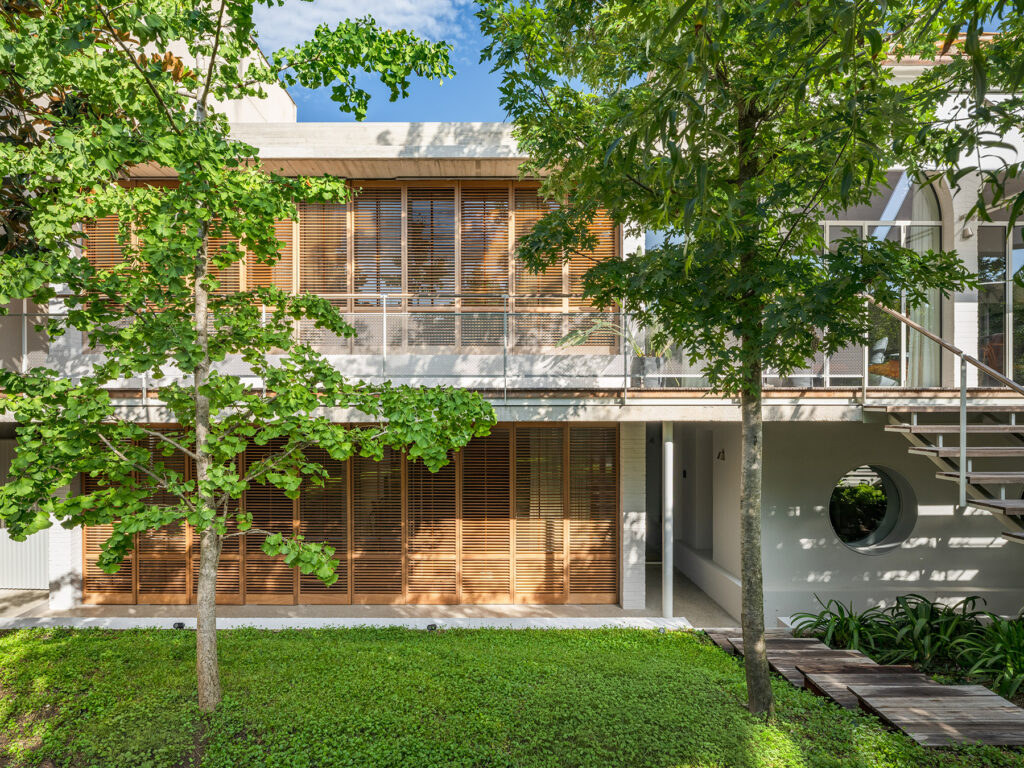
The geometric composition of the house responds to a fragmentation of prisms that join and separate to form the spaces. They are aggregated to generate amplitude and disintegrated to withdraw into solitude.
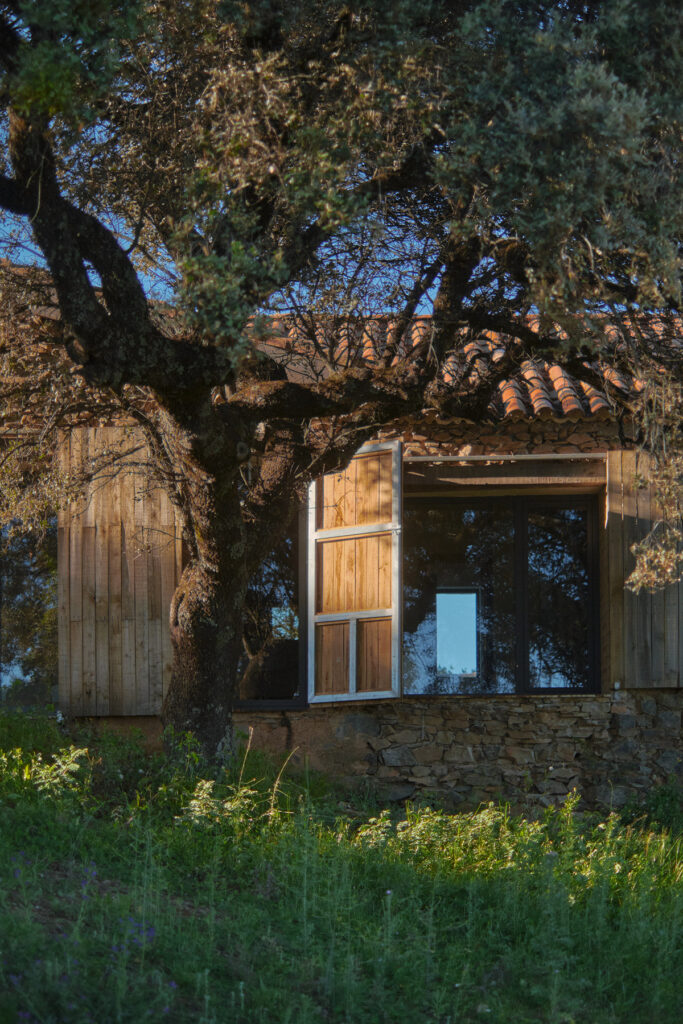
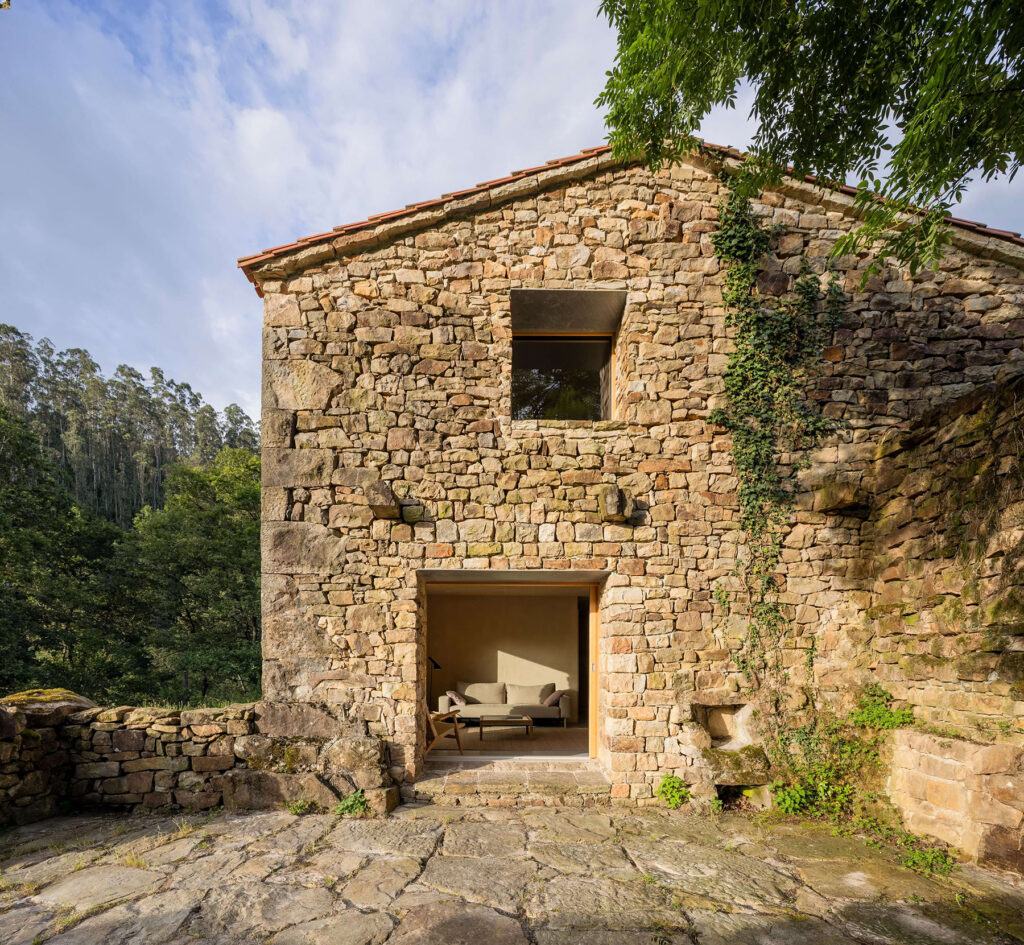
The project aims to create a destination with a unique experience capable of attracting visitors and showcasing the owner's identity. To achieve this, the architect has focused on the concepts of birth and growth, giving symbolic prominence to the trees.
This inspiring project is guided by principles of environmental responsibility and nature conservation, and embraces values such as social inclusion and local economic development.
From British Columbia (Canada), architect Laura Killam shares with us a project nestled on a dreamlike island—an ideal place to write, meditate, or simply listen to the sea and bask in its breeze. She tells us the story herself.
Nordest Arquitectura faced the challenge of designing two village homes in harmony with the natural setting of Empordanet, reimagining the traditional Ampurdanese house using local materials and a sensitive architectural language.
Sharanam exemplifies the creative potential and social value of human-centered architecture in communities where design expertise is most urgently needed.
The project follows the model of a sprawling patio house, with a central garden-courtyard around which the five homes are quietly rooted—creating a private, peaceful, and welcoming environment.
Winner of the 2024 FAD Architecture Award, the building is the public face of a new energy network for the city of Palencia, promoted by pioneering renewable energy company DH Ecoenergías.
From Hurley, New York, architect Alessandro Ronfini of Demo Architects—an active member of the Passive House community—shares this thoughtful renovation project with Exágono.
A house that seeks to restore our connection with the world around us—through spaces designed to embrace and elevate natural light, the stratification of air, and the force of gravity.
For this project the architects propose the construction of deliberately ambiguous habitats, between exterior and interior, very diverse, as spacious, communal and sunny as they are intimate and shady, offering corners, topographies, porches, swimming pools and gardens, with a spatial linkage that endows this holiday landscape with vitality.
Key interventions include a new atrium that unifies the architectural ensemble and provides a bright, open space, a central rehearsal room and a cafeteria designed to encourage interaction between students and teachers.
The peace, austerity, serenity, precision, humility, balance, harmony, sustainability, order, restraint and ingenuity, typical of the island's original character, inspire and colour his work, which we deeply admire.
The architects have achieved a constant interior-exterior dialogue, with a very balanced and serene Mediterranean style, essentially natural and minimalist, where pure lines and open, fresh and very luminous spaces with great visual warmth predominate.
Its position with respect to the rectangular plot stands out, unfolding along the greatest length in order to achieve a good orientation and generate better views, thus giving greater privacy to the porch and swimming pool area.
The atmosphere of the environment is based on an experience of beauty, refinement and absolute comfort. The use of materials such as exposed concrete, glass, metal, oak and acacia wood is clean and direct and supports the organic form of the building.