
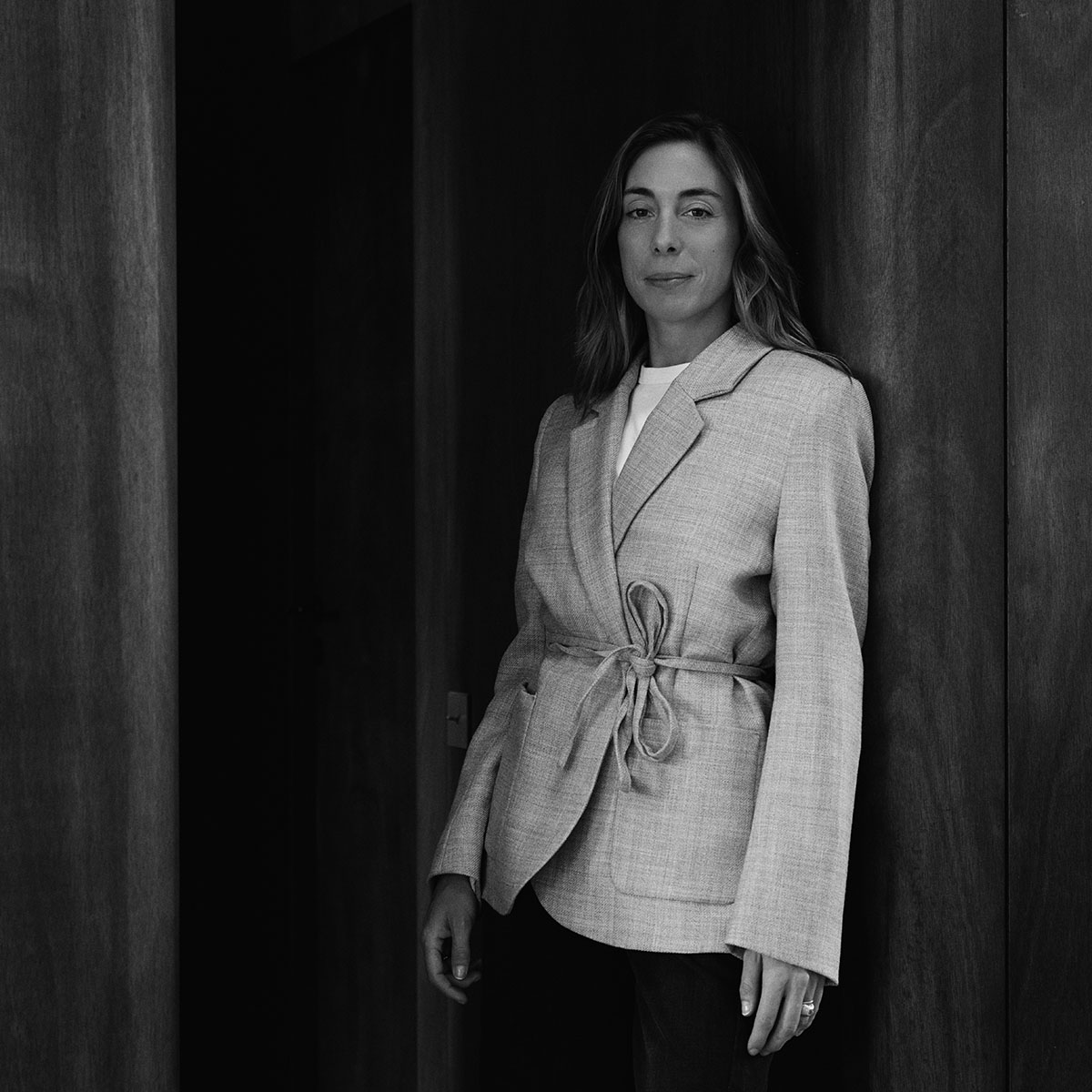
Sara Skalli’s career begins in Paris and takes a long detour across the Atlantic before returning. She studied interior architecture at the Penninghen school between 2014 and 2017. It was there that an intuition she had carried from early on took shape: spaces define the experience of those who inhabit them, and that effect can be thought through, measured and built with care.
Shortly after graduating, she joined Selina as an interior architect. The hospitality brand, born in Panama, was expanding across Latin America at the time. Working from Panama between 2017 and 2018, she designed two of its hotels, one in Guatemala and another in Puerto Escondido, on the coast of Oaxaca. It was a very different school from the academic one. It taught her to understand the hotel as a complete organism, where interior architecture is part of a story that includes the arrival, the stay and the memory of the place.
Puerto Escondido turned out to be more than a commission. Skalli stayed, and in 2018 she founded Dao Habitat, her own guest house project, which began with Casa Leone and continued with Casa Ohma. Being both designer and host, she could see every day how the spaces she had designed were actually lived in. At the end of 2023 she co-founded Casa Yuma, a 25-room hotel facing the Pacific. Across these three projects a language of her own took shape, at once rustic and sophisticated, attentive to the landscape and to the experience of those who arrive. In it, climate, light and local crafts took the place of any imported repertoire.
In 2024 she founded Sara Skalli Studio, and in 2025 she returned to Paris, where she now leads residential and hospitality projects across Europe. The studio works as a creative agency for hospitality, bringing together interior architecture, brand development and strategic consultancy. It is the natural outcome of more than a decade devoted to hospitality. Her return has also brought a more radical signature, with cleaner lines and bolder materials, as seen in the duplex on rue de Beaune.
Her work moves between architecture, matter and emotion. She conceives each project as a story to be inhabited, where the simplicity of the line rests on the richness of textures, and where proportion, light and atmosphere carry as much weight as the brief. What she learned in the hotels of the Pacific, hospitality understood as a form of care, is what she now brings to the domestic scale: places designed to be lived in rather than merely looked at.