

The designer Emilio Gil needs no introduction. He is one of the key Spanish graphic designers of the last 40 years. Thanks to the projects he has carried out at the Tau Diseño studio, which he founded in 1980, we can understand and evaluate the evolution of graphic design in Spain. In addition, his continuous work of study and research also allows us to know the work of the pioneers in this profession, collected in his book Pioneers of Graphic Design in Spain and on his website Pioneros Gráficos. Those of us who have worked with him in his studio and the students who have enjoyed and continue to enjoy his teaching work can attest to his passion for graphic design and communication and his dedication to a profession that has a great social transcendence that is not sufficiently recognised. In this article, Emilio presents us with a little-known facet of his, his artistic activity, silently developed over the years in his collages, recently brought together in his book Capas en el tiempo. He himself talks about this activity in the following lines, which we accompany with a selection of images of these extraordinary collages. Andrés Moratinos.
You can see all the collages of Emilio Gil in the exhibition:
Un Tintín en Argüelles. Los collages de Emilio Gil.
Bookshop hall El Halcón Maltés.
Fernando el Católico, 3. Madrid.
1 to 31 March. see vídeo
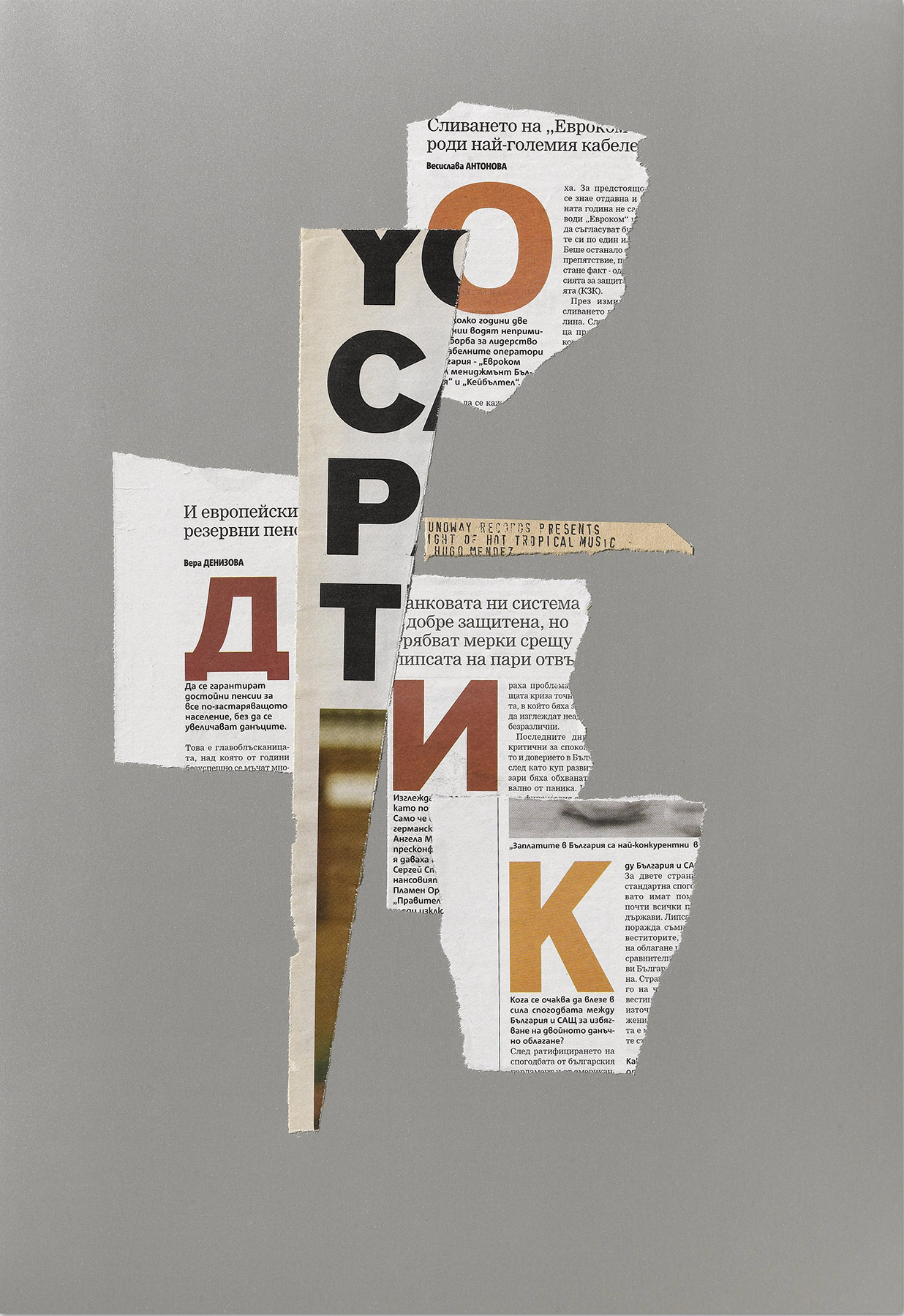

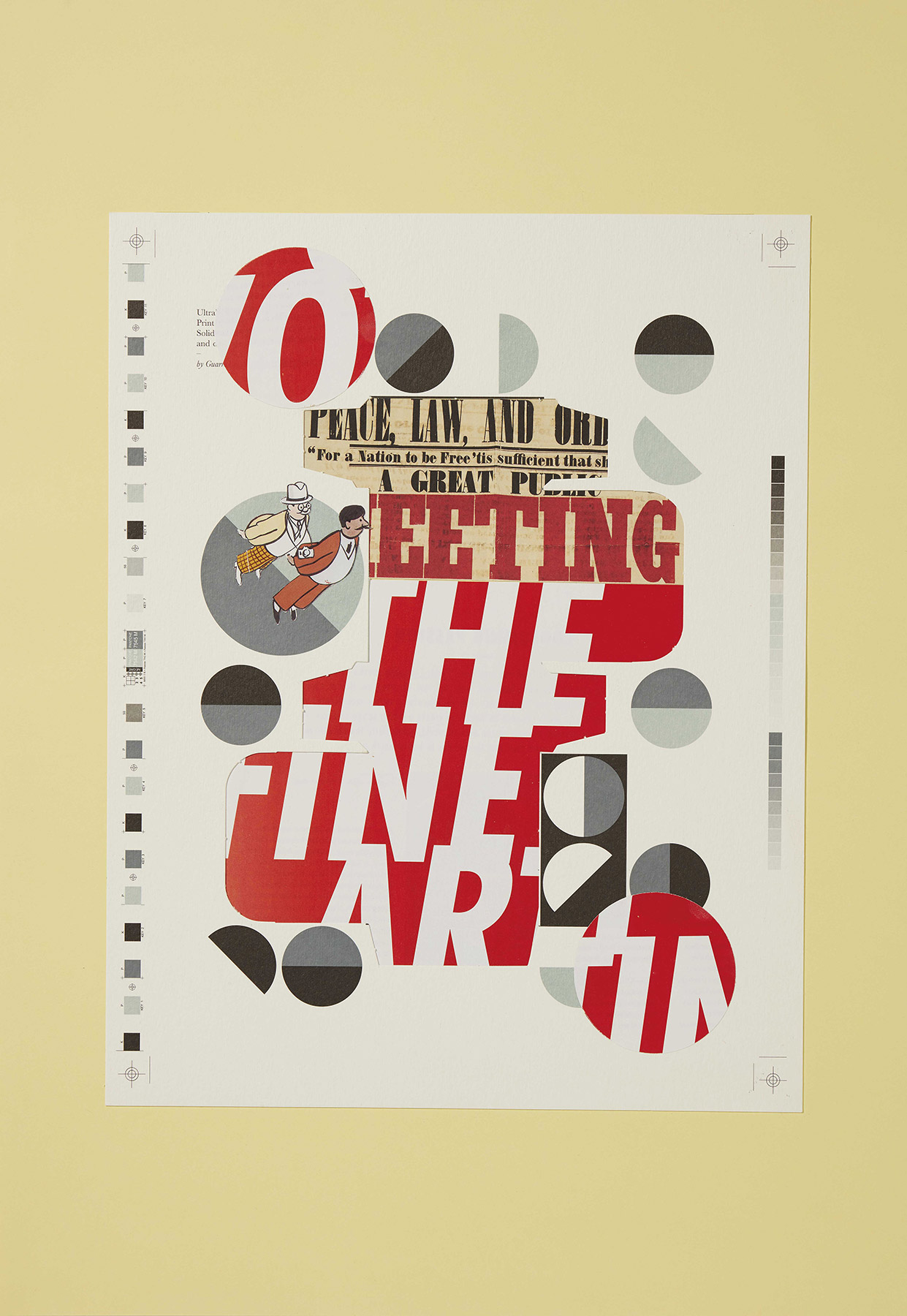
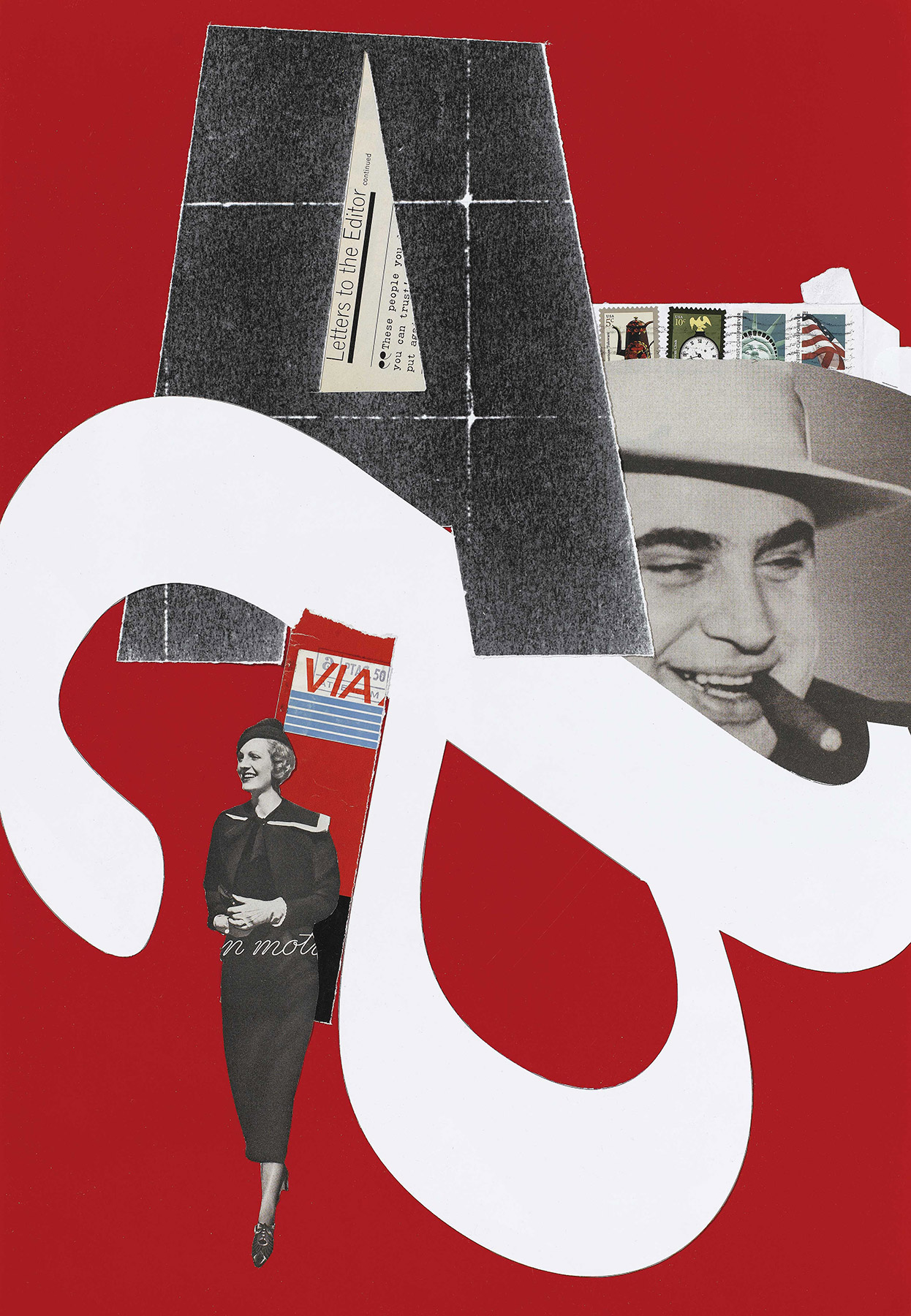
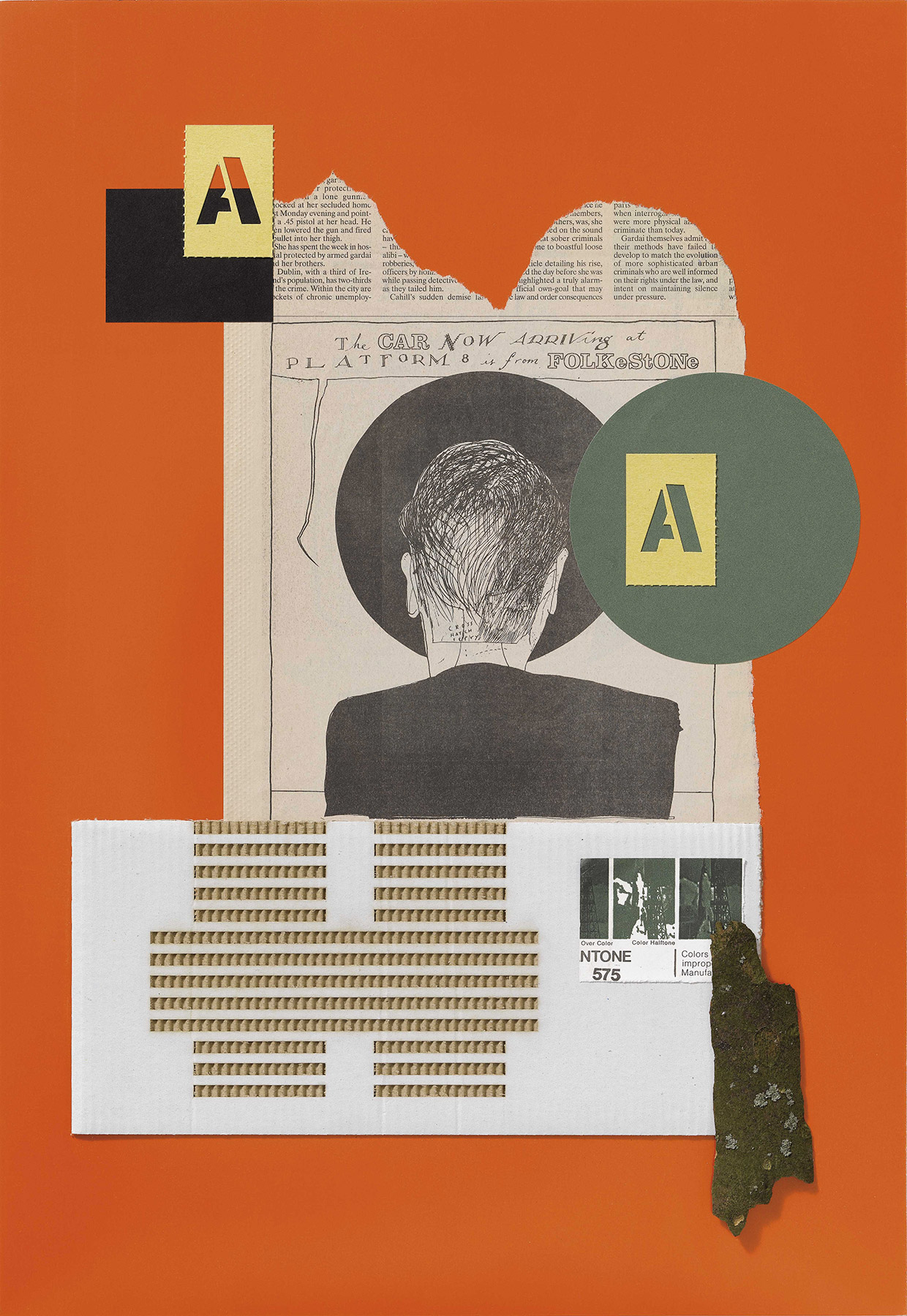
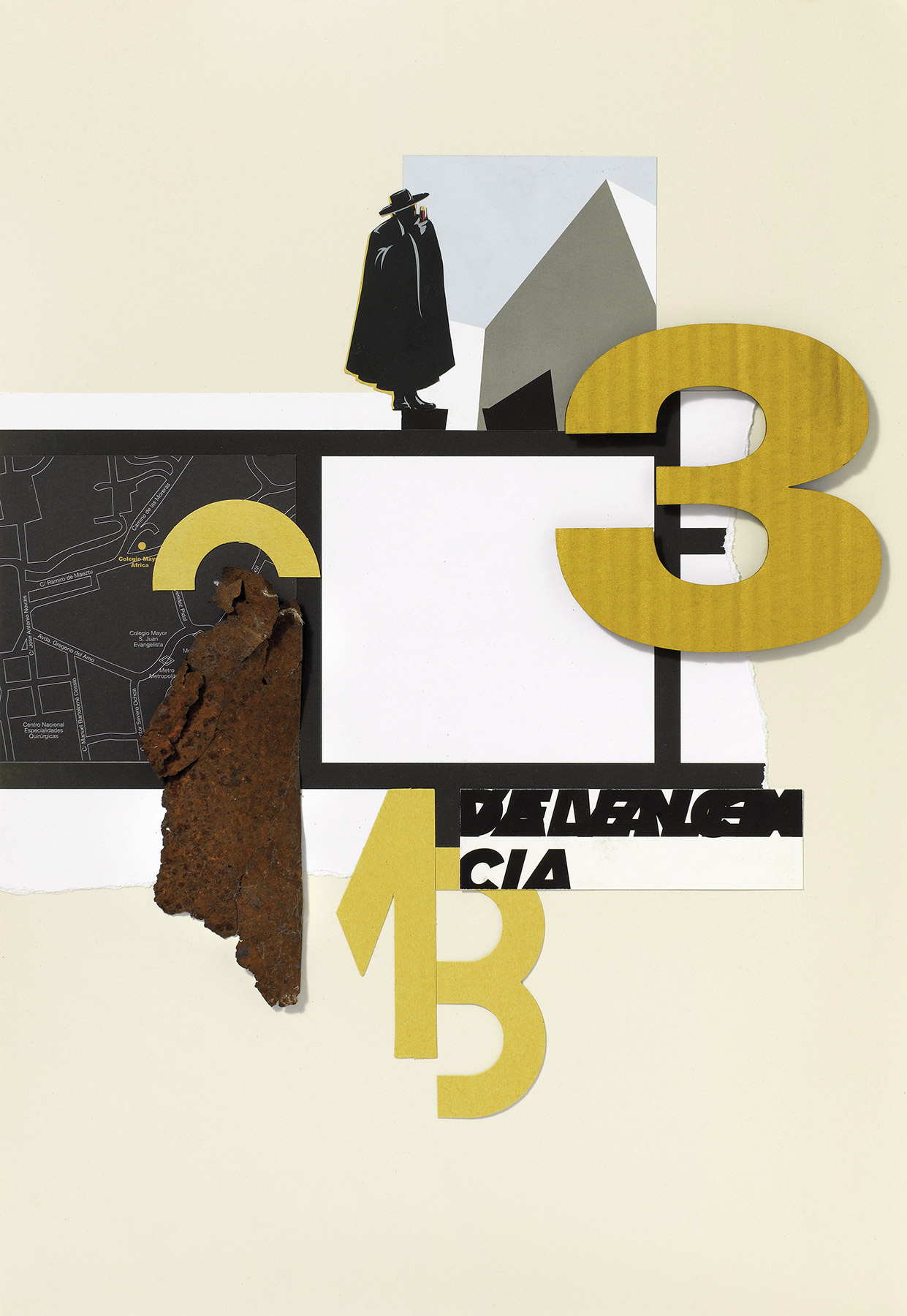
“When talking about the resources of the graphic designer – at least the analogue graphic designer – the first things mentioned are letter, typography and image; then there is colour and also materials: paper, cardboard with its different textures and its consequent expressive capacity. For this reason we could ask ourselves – since it is paradoxical – why in graphic design the collage technique has not been used more profusely. The answer is related, at least in recent years, to the fact that the irruption of the computer as a working tool was one more reason – not entirely justified – to consider that physical materials, and with them collage, in the preparation phase of sketches, were no longer necessary.
If we wanted to establish recent historical stages in the work of the graphic designer, we could classify them in this way: an initial analogue period without the computer as a resource. A later time, starting in the second half of the eighties, in which a new tool appeared that replaced drawing and the expertise in artistic or illustration skills of designers, but which provided an extraordinarily precise and fast tool: the computer. And finally, up to now, a new stage in which design is fundamentally oriented towards the digital world. Well, in the first of these times, the designer – especially the designer without a great mastery of illustration – used the collage technique to make the sketches that he presented to his clients. They were generally compositions that, in an attempt to get as close as possible to what would later be a printed result, were made with cardboard, coloured screens, transferable lettering and glued photographs that were, in short, literally collages“.
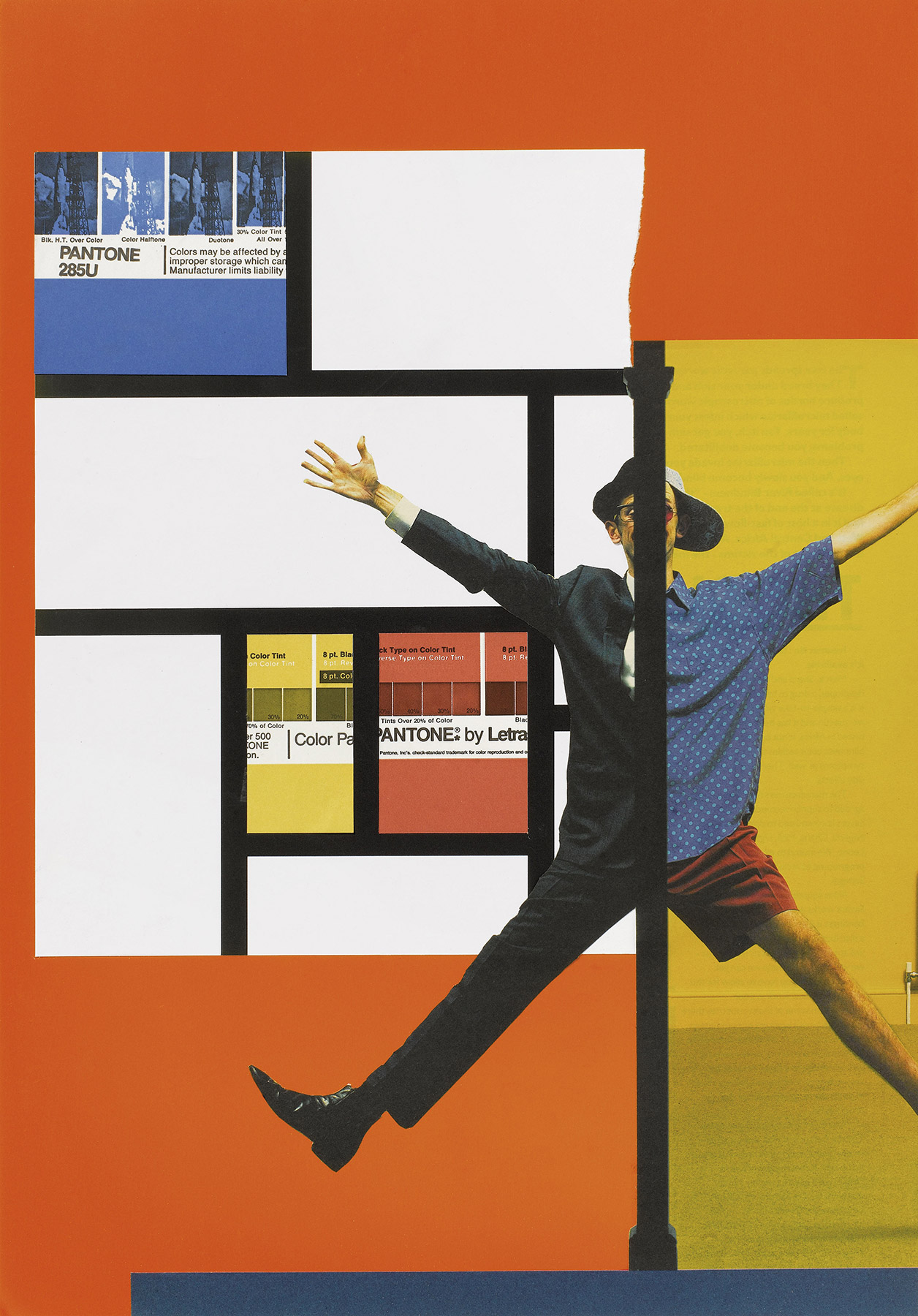
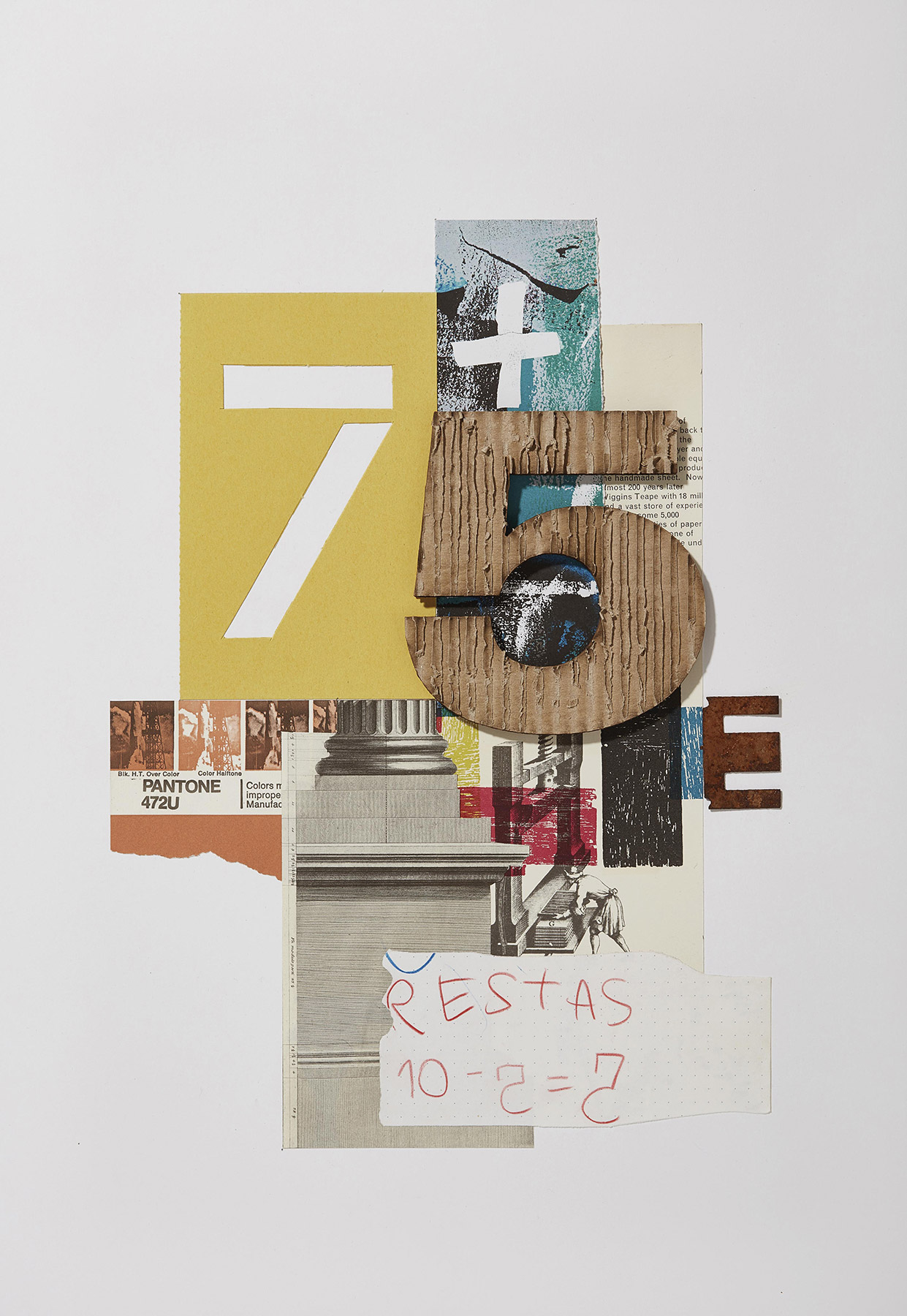


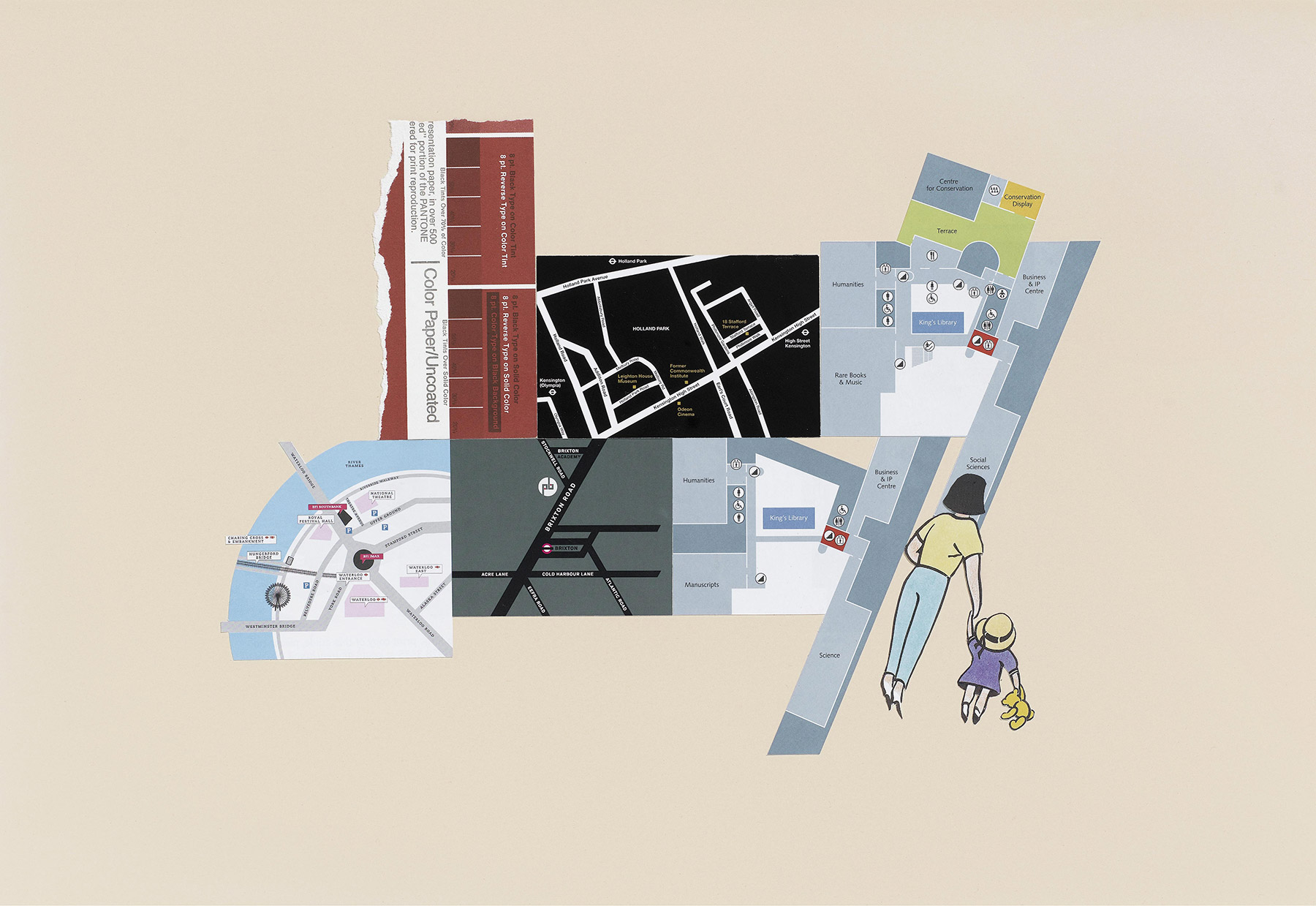
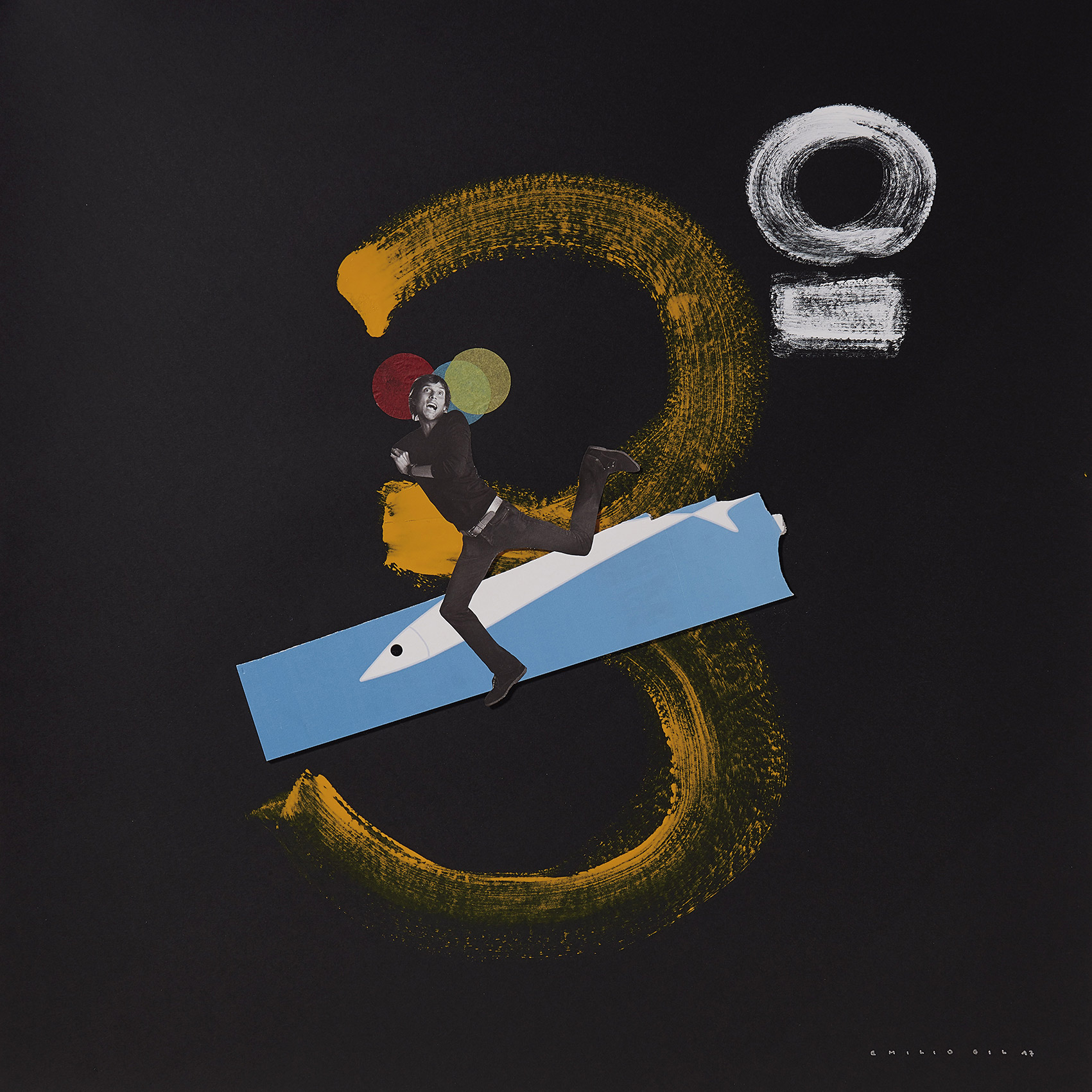
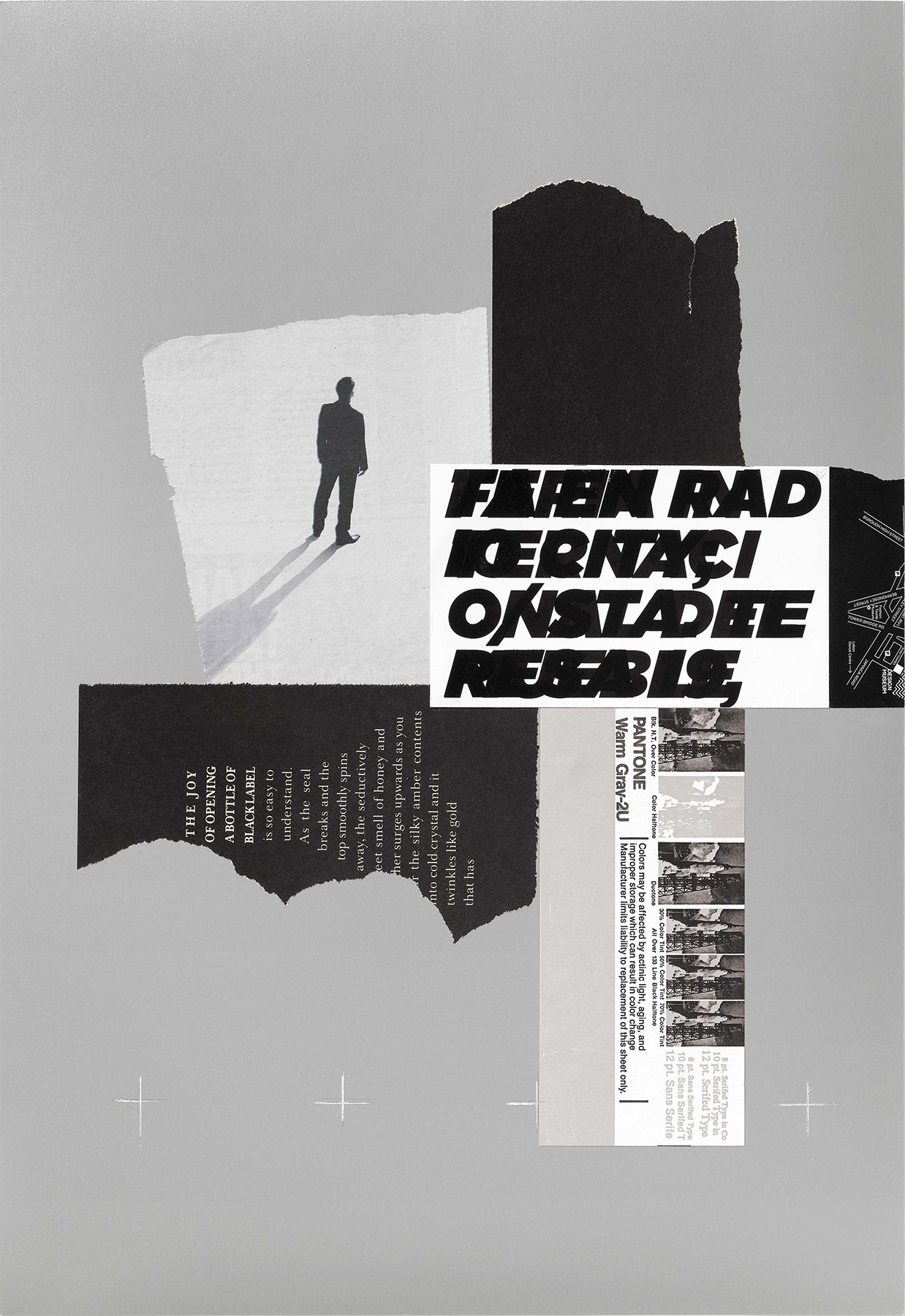
“My introduction to the continuous practice of collage comes from a time when every Sunday, on a fairly regular basis, I used to buy the British newspaper Independent on Sunday at a newsagent’s in Puerta de Alcalá in Madrid. At home I would go through it with a “graphic eye”, with the intention of selecting what seemed most relevant to me from my profession as a designer. I cut out the headlines, logos, typographic blocks or compositions that seemed to me to be of greatest interest and kept them in a messy drawer. As the pile grew, I began to paste them on sample cardboard from a well-known paper company with a more or less artistic intention. These first collages, not intended as such, formed part of the exhibition Sin límites. Visiones del diseño actual (Exhibition curated by Raquel Pelta and Paco Rallo. Sástago Palace. Diputación de Zaragoza, 2003). In a way, that was the beginning of my career as an artist who uses the collage technique, in a parallel and separate way to my activity as a designer.
The title of my book Capas en el tiempo (Editorial Experimenta. 2022), comes from a reflection by the painter David Hockney, who considers collage to be a great 20th century invention of profound significance, “it consists of placing one layer of time on top of another.
In that book I set out to write about some of my collages. And I did so because I consider that the information provided by these compositions could be of interest to any lover of art and design. A collage is, as we know, the sum of pieces, of pieces, of fragments of diverse origin that were not created as artistic elements but which, when brought together from a distance, provide information of interest both in the part and in the whole. The aim of Layers in Time is to provide data on the when of the pieces, on their origin and on the information provided in their formal aspects by each of their fragments, and to encourage further reading, to provide clues that introduce the reader to new themes, to interesting paths related to different aspects of visual communication and graphic design“.

Emilio Gil
Emilio Gil is a Graphic Designer. He trained at the SVA School of Visual Arts in New York with Milton Glaser, James McMullan and Ed Benguiat as teachers and at Central St. Martins in London as an exhibition curator. In 1980 he founded the Tau Diseño studio, one of the pioneering Spanish companies in design services, institutional communication and the creation and development of corporate visual identity programmes, a studio which he directed for more than 40 years.
Emilio Gil received the Gold Medal for Merit in Fine Arts 2015. He is an Academician of the Royal Academy of Fine Arts of San Telmo, Malaga, Advisor to the Higher Council of Artistic Education of the Ministry of Education, President 2009-2015 of the Spanish Association of Design Professionals (AEPD), Trustee of the Manolo Prieto Foundation, President of the Plastic Arts Section of the Ateneo de Madrid, Member of the Scientific and Advisory Board of the Centre for Renaissance Studies in Úbeda.
Teaching. Emilio Gil is a collaborating Professor at the Carlos III, Autónoma and European Universities of Madrid and the Master’s Degree in Publishing at the University of Salamanca and Santillana Formación, Director of Summer Courses and Workshops at the Complutense University of Madrid, Rey Juan Carlos and UIMP.
Exhibition curatorship. Signos del siglo. 100 años de Diseño Gráfico en España. Museo Reina Sofía, ¿Dissenyes o Diseñas? Madrid, Berlín, Sofia. 24×365. Diseño Gráfico para la Comunicación pública. Círculo de BBAA de Madrid. 2008. Grafistas. Diseño gráfico en España 1939-1975. MNAD, 2011. Aliadas. Centro Centro, Madrid. 2016. Lo que cuenta Novelas y Cuentos MNAD Madrid. 2017, curated together with Juan Aguilar. La huella de Manolo Prieto, Málaga, Segovia, 2022. Granada, 2023. 10+10 x el Ateneo. Ateneo de Madrid, 2024.
Publications. Author of the books Pioneros del Diseño Gráfico en España. Experimenta, 2021. Edición en USA Mark Batty Publisher. Capas en el tiempo. Experimenta, 2023. Co-author of the book Lo bello de las cosas. Gustavo Gili. 2007. Translation and foreword of the book Palabra de Diseñador. Gustavo Gili. 2015.
Awards received. Donside Special Award, Gran Bretaña 1994, Diseño editorial. Laus de oro 1994, Diseño gráfico editorial, España. Certificate of Typographic Excellence, 1995. Type Directors Club, New York. Premios Anuales de Diseño de la AEPD 1995, España. Premio Laus de oro 1995 en Diseño Editorial. Diploma Laus 1996, Diseño gráfico editorial, España. Premio Donside en Gran Bretaña y Certificate of Excellence del Type Directors Club de Nueva York en 1995. Donside Awards, Gran Bretaña 1997. Oro a la mejor revista internacional y mejor trabajo español en conjunto. Certificados de Excelencia en las convocatorias 1996, 1998 y 1999. The European Regional Design Annual, Print-Rotovision. Letra 2003, Premios Nacionales de Comunicación Visual y Gráfica de Entorno. Premio Anual de la AEPD 2005 en el apartado de Packaging. Premio a la Calidad en el Sistema Nacional de Salud por el Sistema de Señalización para discapacitados del Hospital Virgen de la Nieves, Ministerio de Sanidad, Edición 2009. Primer Premio al Informe Anual Mapfre 2013. IV Edición Premios Torras Papel/Arjo Wiggings. Primer Premio al Informe Anual Mapfre 2014. V Edición Premios Torras Papel/Arjo Wiggings. Silver Award en los Premios icma, International Custom Media Award, para el Informe Anual Mapfre 2016. Award of Excellence en los Premios icma, International Custom Media Award, para la revista El Canon. Amic de la Librería Blanquerna de la Generalitat de Catalunya.
Project by Emilio Gil