

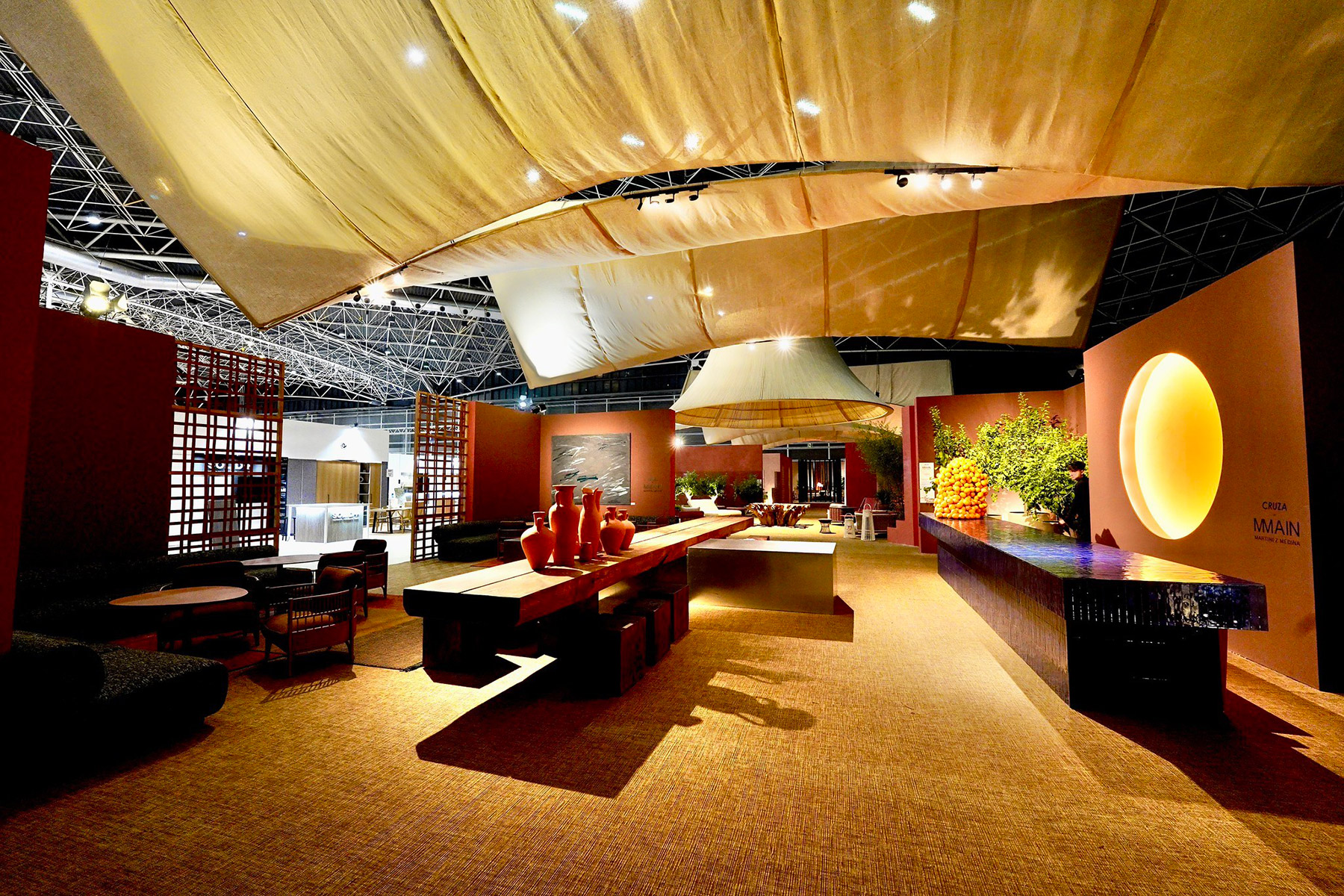
The experience of designing a contemporary space — a hotel, a home, a restaurant — demands a global outlook, a continuous dialogue between architecture, interior design, furniture design and the choice of materials. Architects, interior designers, product designers, artisans and manufacturers have been practising that continuous dialogue in their projects for many years. That is what Feria Hábitat València now offers with València Inspira Diseño, the great platform that, from 28 September to 1 October, will bring together at Feria Valencia Feria Hábitat València, Textilhogar, Espacio Cocina SICI and the new area 360 by Cevisama.
More than 1,200 exhibiting firms, ten pavilions and a surface area of over 110,000 square metres turn the venue into a temporary map of contemporary design, where international brands, manufacturers, textile publishers, kitchen companies and ceramic firms coexist. The figure impresses, but the real change lies in the itinerary: for the first time, professionals can discover new furniture collections, select textiles, review kitchen proposals, explore ceramic surfaces or research emerging materials in a single place, without moving from one trade fair to another.
That continuity also carries over into the event’s own ephemeral architecture: for the first time, all the common areas answer to a single creative direction, in the hands of the studio Odosdesign, which builds a shared visual narrative for the gathering as a whole.
A hotel conceived as the navel of the world
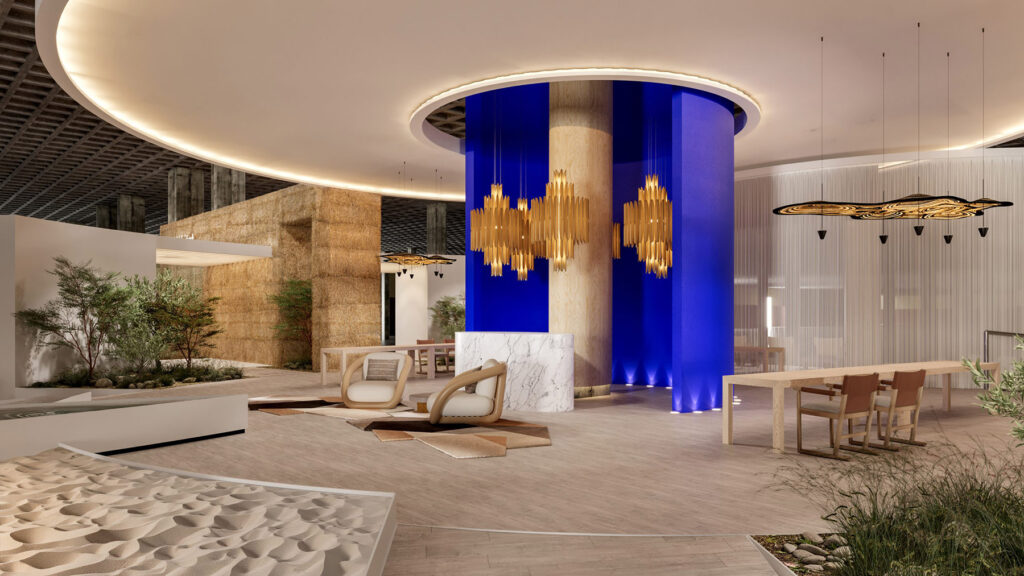
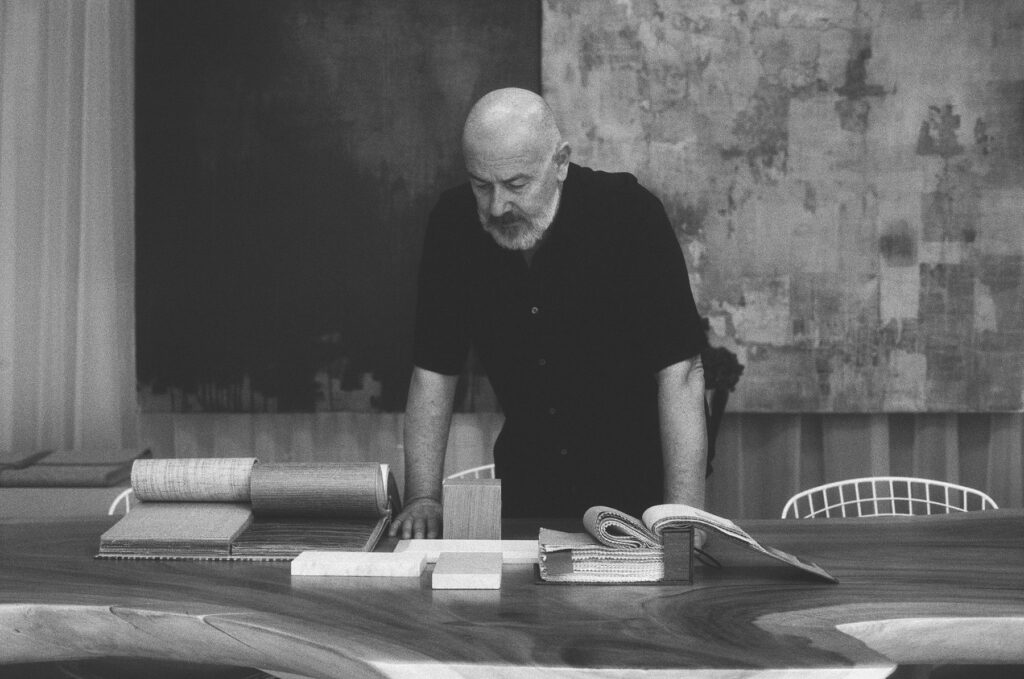
The project that best sums up this global outlook is Hotel Hábitat 2026, the immersive installation signed this year by Mexican architect Joaquín Homs, following the editions by Héctor Ruiz in 2024 and Tomás Alía in 2025. Homs does not propose an exhibition space, but an architectural and emotional reflection on the act of inhabiting: a “universal hotel, a place capable of belonging simultaneously to the sea, the mountain, the desert or the city”, as his studio explains. The reference is an ancient one — the “navel of the world”, the point where numerous cosmologies place the meeting of sky, earth and underworld — and it translates into almost 550 square metres organised from stillness: a white atmosphere intervened by natural materials, mineral textures, sands and woods in organic tones, and a pond with a central garden that acts as the ensemble’s inner breath. Above that landscape rises a vertical element in cobalt blue, a symbol of the connection between earth and sky, while a wall built from blocks of natural straw seeks to “activate the visitor’s sensory memory through the texture, the scent and the warmth of the material”, turned into a statement on sustainability and the recovery of ancestral techniques. Homs, with more than forty years of career and projects for Grupo Vidanta and Grupo Mayan in the Riviera Maya — among them the interior design of the first permanent Cirque du Soleil theatre outside Canada — brings together here interior design studios and Spanish habitat firms with international reach in what he defines as “a great choral project” to redefine how we inhabit the present.
The generational handover takes over the Salón nude
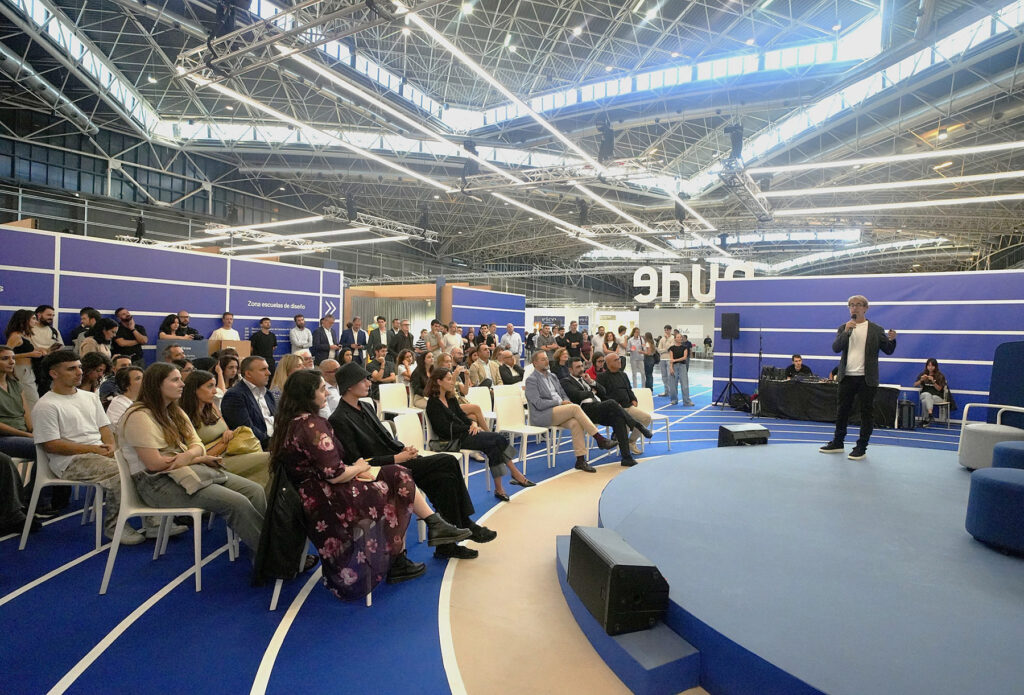
If Hotel Hábitat looks towards sensory experience, the Salón nude has for more than twenty years sustained the fair’s other great commitment: emerging talent. The 2026 edition brings together fifteen proposals — six emerging professionals and studios and nine schools and training centres — selected by a jury of broad professional and institutional standing, made up of Henar Díez, of the Centro de Coordinación de Industrias Culturales del Ministerio de Cultura; Ángela Montagud and Jordi Iranzo, of Clap Studio, a studio distinguished with the 2023 National Design Award; multidisciplinary designer Ester Cruz, a participant in several editions of nude; Clara del Portillo, co-founder of Yonoh Estudio Creativo and historically linked to the show; and Javier Pastor, designer, researcher and professor at the Universitat Politècnica de València.
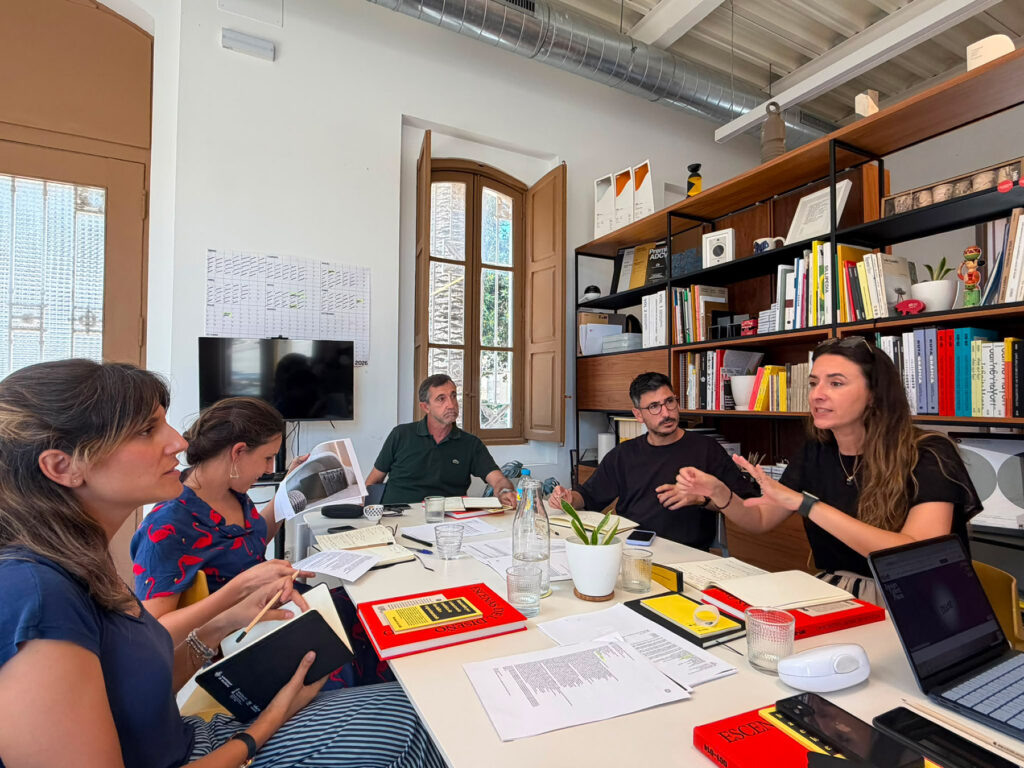
In the Emerging Professionals category, nude 2026 will feature six participants: Somos Jumat, by Juan Pedro Gutiérrez Giracca; faBle.xyz, by Moisés Lázaro; Kaimok Design, by Prospero Risiglione; Bam Furniture Design, made up of Benoit Paul Huguenin, Ana Cristina Chavez Martinez and Maitu Green; Archivo Carmenati, by Nicolau Furriol Carmenati; and Melón de ideas, by Yolanda Pérez and María José Manzano.
As for the schools, participants will include Barreira Arte y Diseño, with Click; Universitat Jaume I, with Naturaleza que cuida con sentido; Escola d’Art i Superior de Disseny de València, with Projectes alumnat 2026; Escuela Técnica Superior de Ingeniería Aeroespacial y Diseño Industrial, with NU2, with Yudesign; Escola d’Art i Superior de Ceràmica de Manises, with Territorios cerámicos; Elisava, Facultad de Diseño e Ingeniería; Escuela Superior de Enseñanzas Técnicas de la Universidad CEU Cardenal Herrera; Centro de Referencia Nacional en Producción, Carpintería y Mueble de Andalucía; and Anáhuac Puebla (México), with the work Rethinking the Past, Rethinking the Pattern.
It is worth noting that Anáhuac Puebla’s participation also reinforces nude’s international dimension and the connection of its talent platform with new design centres and schools across Latin America.
Four days of professional conversation
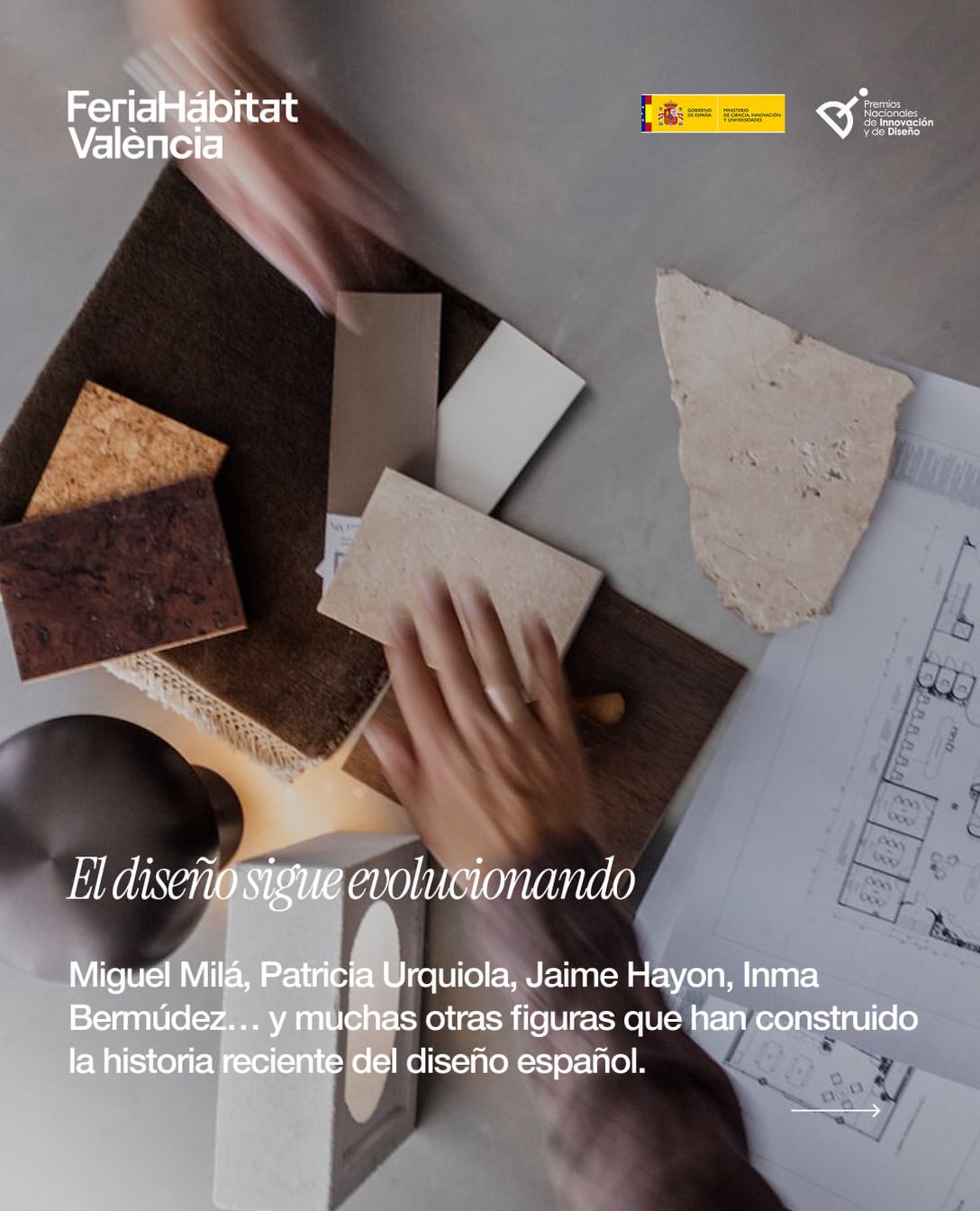
The activities programme organises the gathering around three stages that function as chapters of a single conversation. Ágora nude addresses innovation and the values of contemporary design — it opens with the Jornada de los Premios Nacionales de Innovación y Diseño and hosts the presentation of Tiempo + Materia, the project by the Fundació del Disseny de la Comunitat Valenciana that champions craft as a bridge between tradition and innovation. The Foro Hotel Hábitat carries that reflection into the contract sector, with talks on hotel design and brand experience. And the Foro AMC Kitchen Lab, set within the space designed by Francesc Rifé, places the kitchen as one of the great centres of contemporary life, with one especially anticipated moment: the conversation between chef Martín Berasategui and former basketball player Fernando Romay on food, rest and wellbeing. Alongside all this comes the materials installation by Matter, conceived to touch and understand how new materials are transforming the project, and the proposal by Andreu World, which once again turns its exhibition into a manifesto on innovation, sustainability and the culture of the project.
With the Salón EXCO joining the fair’s professional agenda for the first time, and the parallel programme of València Design Fest, the whole city joins this week dedicated to design. València Inspira Diseño proposes, with Feria Hábitat València as its driving force, a single language for thinking about habitat, capable of sustaining both commercial ambition and reflection on how we want to live.
Valencia Inspira Diseño
Feria Valencia
+34 96 386 11 00
+34 96 386 12 00
feriavalencia@feriavalencia.com
www.feriahabitatvalencia.com


