
In a tailor’s workshop there is one line that decides whether a jacket accompanies the body or confines it. It is the armhole, the curved path that runs down from the shoulder to the bottom of the armpit and defines the opening into which the sleeve is set. When it is well drawn, the arm moves freely and the garment stays in place; when it fails, the cloth pulls and betrays the error with every gesture. It is a line invisible to the person wearing the suit and decisive for the one who cuts it, and from it comes Ondula, the chair that José Manuel Ferrero has designed through estudi{H}ac for Actiu.
Between Ontinyent, the designer’s hometown, and Castalla, where Actiu has its headquarters, lie just a few kilometres of inland Valencia: the distance that separates a textile tradition from an industrial one. Ondula covers that distance both literally and figuratively, carrying the craft of garment-making to the scale of mass-produced furniture.
A tailor of industrial design
Few Spanish designers have turned a personal reference into a working method with Ferrero’s consistency. Discreet, cultured and elegant, he understands design as a way of life and practises it with the care, precision and patience of a tailor. His admiration for tailoring has two clearly located roots: the textile industry of Ontinyent, which he has known since childhood, and Savile Row, the London street where the world’s most prestigious bespoke suits are cut. From England he is also drawn to a way of being that combines conservatism and transgression, and that same tension runs through his work, which seeks simplicity and elegance in form and then introduces a twist in the finishes, textures or materials.
Over more than twenty years, the Valencian studio has built a language that connects the industrial with the handcrafted and memory with innovation, applied to product design, interior design and creative direction. Tailoring is one of its central references, and its work has received many awards.
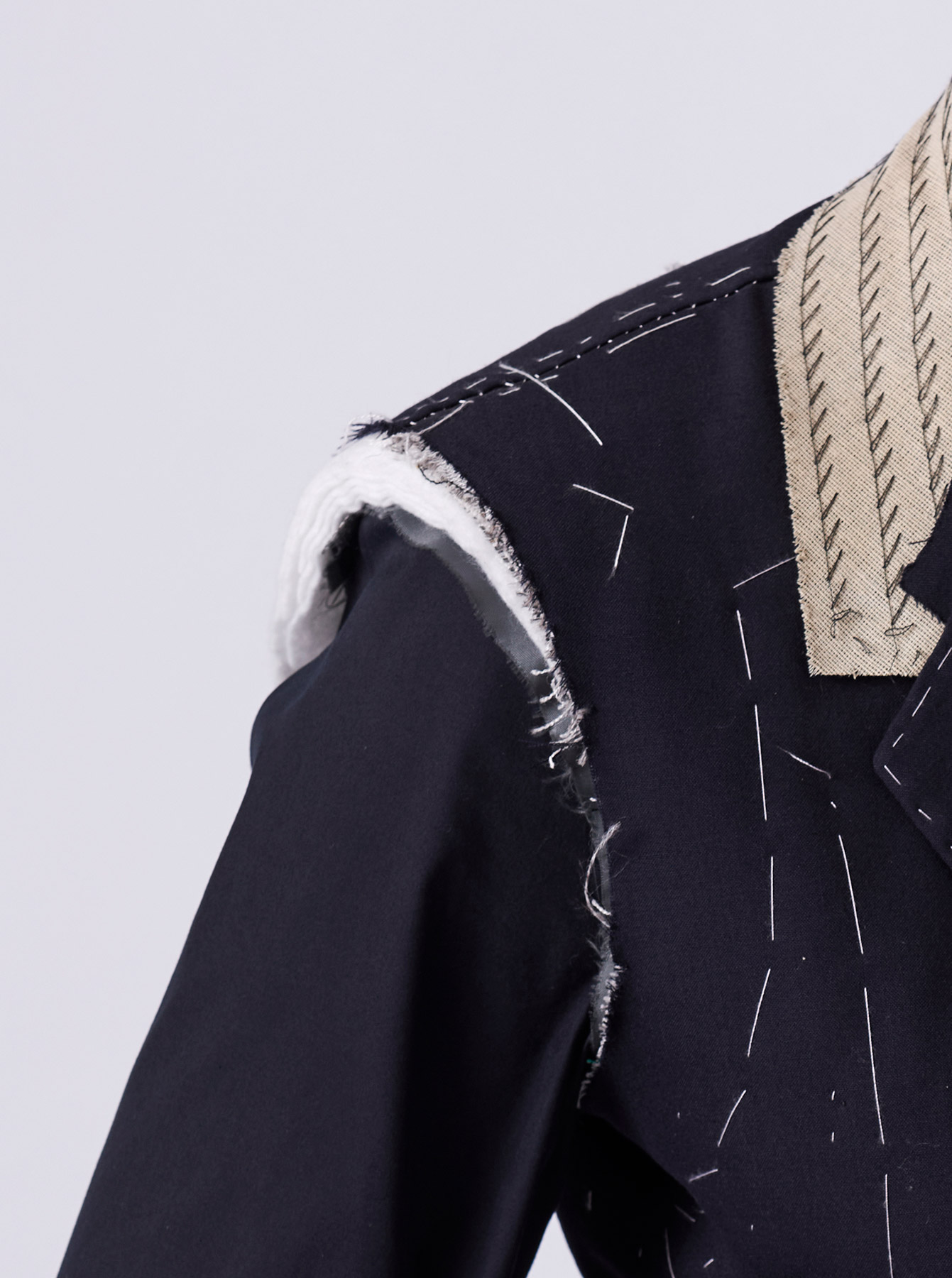
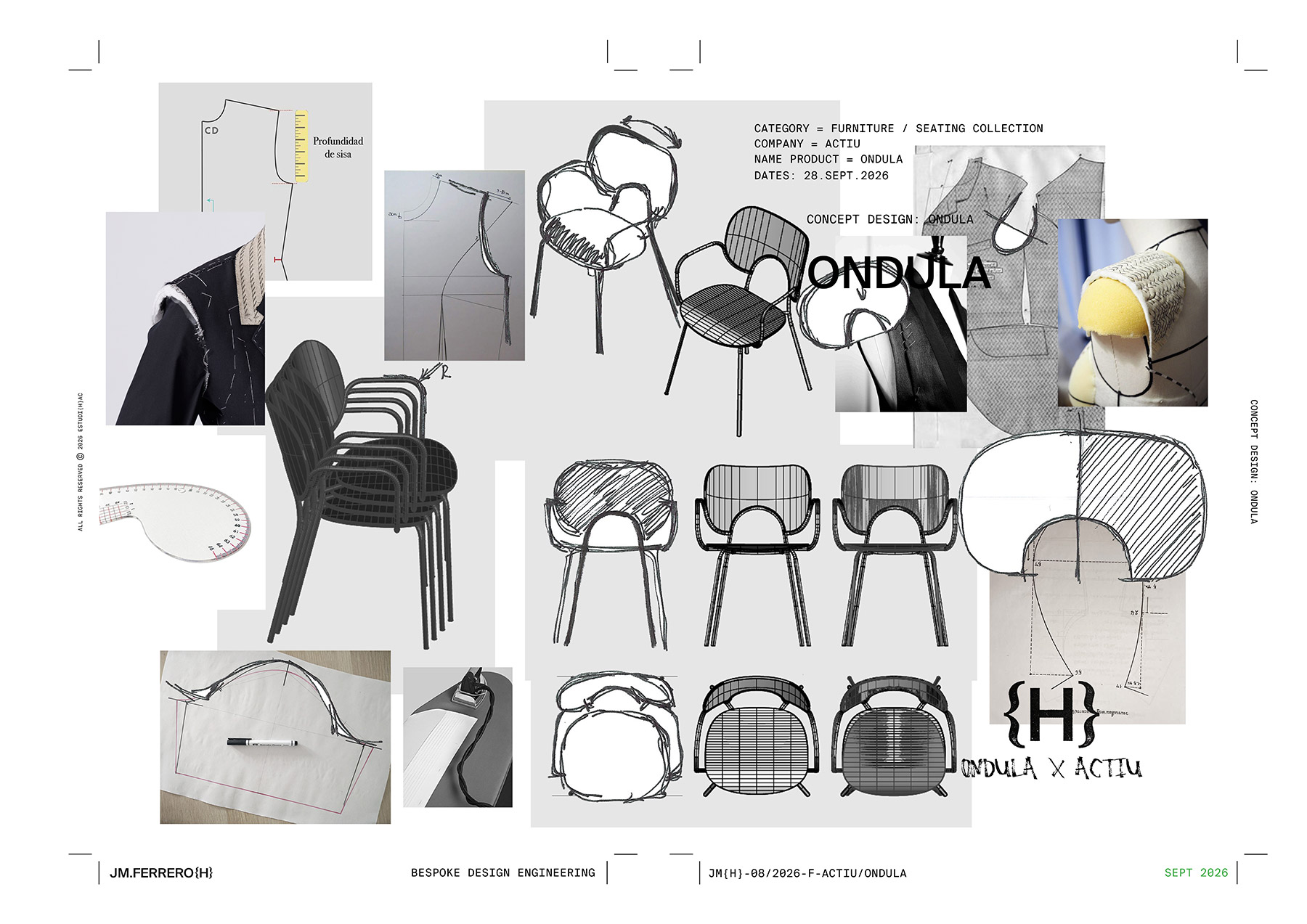
One of the images accompanying the presentation of Ondula neatly sums up Ferrero’s conceptual design for this project: a navy blue jacket half-constructed on the mannequin, its white basting stitches still visible, the shoulder padding peeking out from the armhole and the collar canvas covered in pad stitching. It is the suit before it becomes a suit, the inner structure that later disappears beneath the cloth. Ondula starts from that structure and chooses to reveal it.
From armhole to backrest
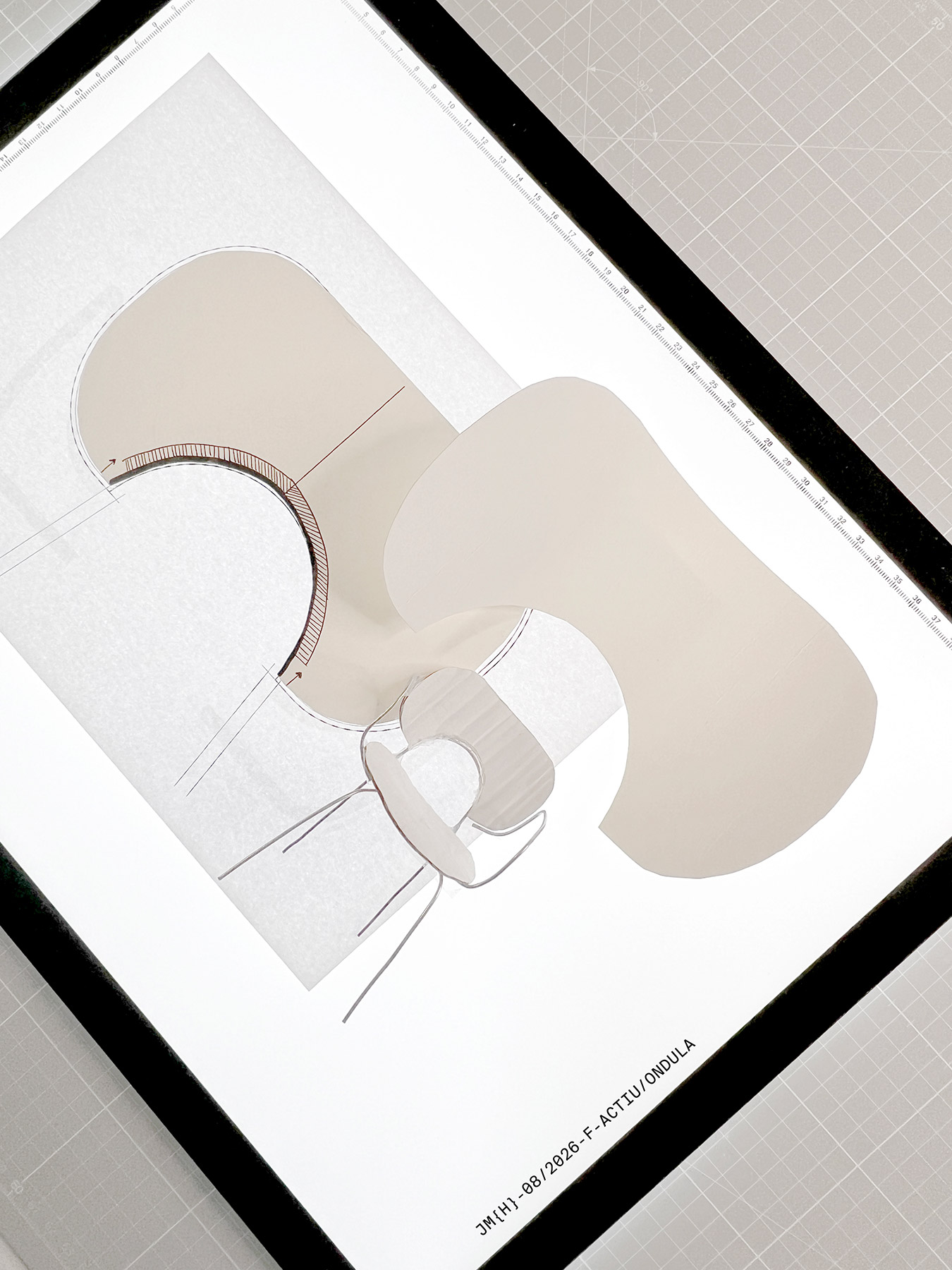
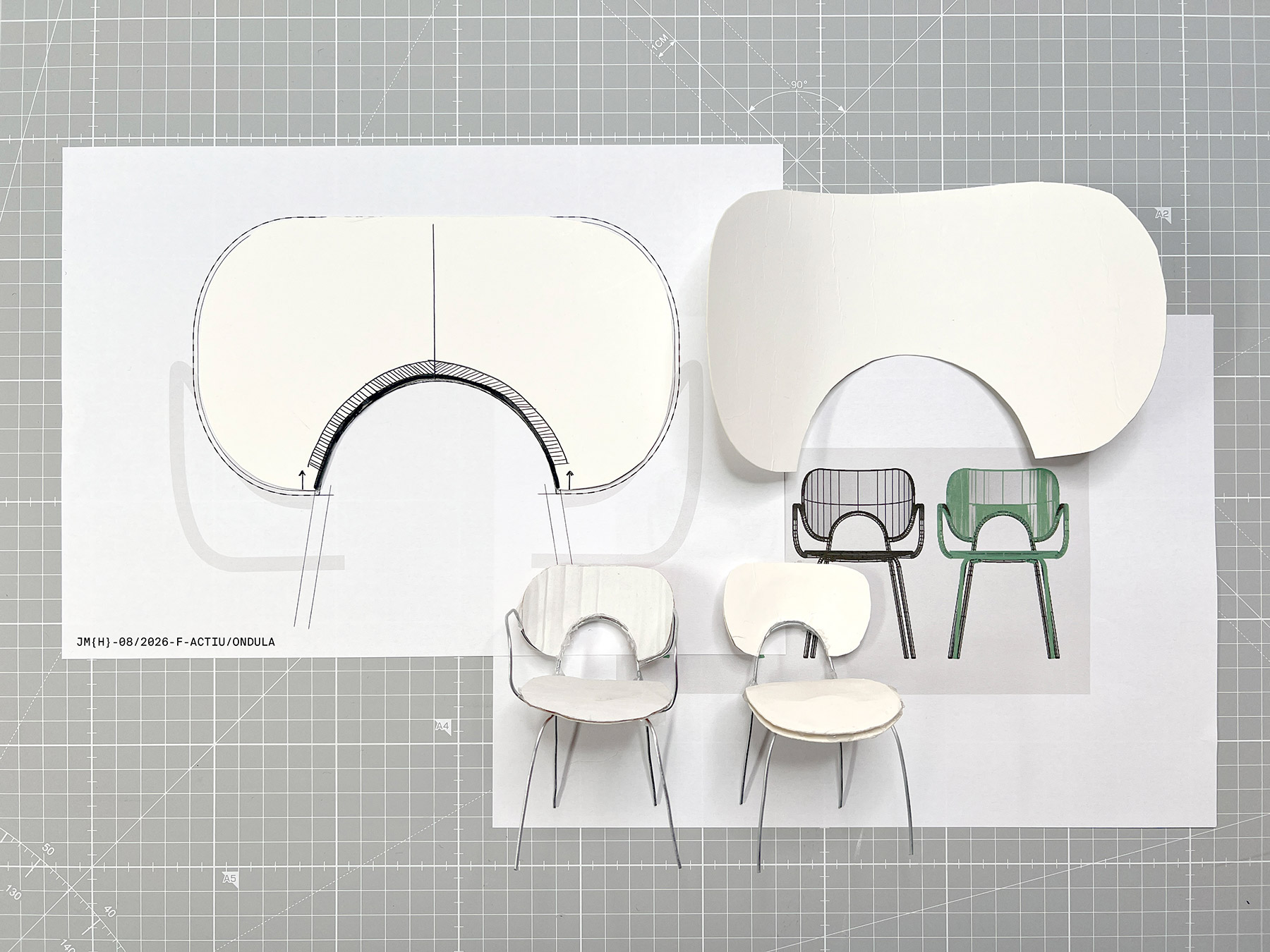
Ondula’s backrest reads as a textile piece cut from an armhole curve. The studio’s sketches explain it with the logic of pattern-cutting. In them we see a template with a rounded outline, traced by a line of stitches, at whose base opens an arch hatched like a seam allowance, with small arrows indicating the direction of assembly. Even the reference that identifies each sketch, JM{H}-08/2026-F-Actiu/Ondula, has something of a workshop label about it. Alongside the drawings, card and wire models test the proportion between backrest, seat and structure, in versions with and without arms.
Ferrero explains that the interest of the reference went beyond form: “a reference to pattern-making has helped us resolve both the form and the construction of the piece”. The armhole determines the profile of the backrest and, at the same time, the way in which wood and steel meet.
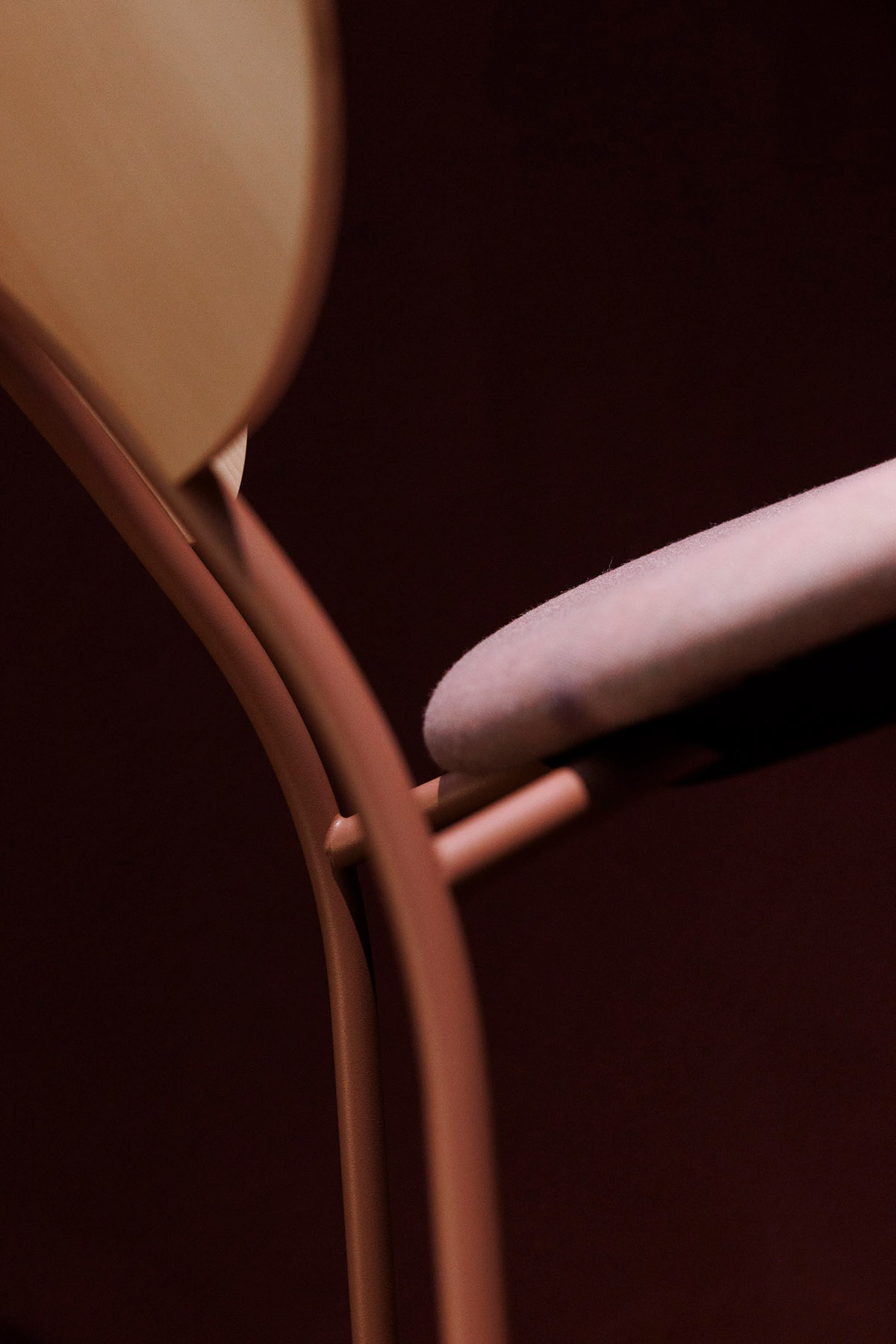
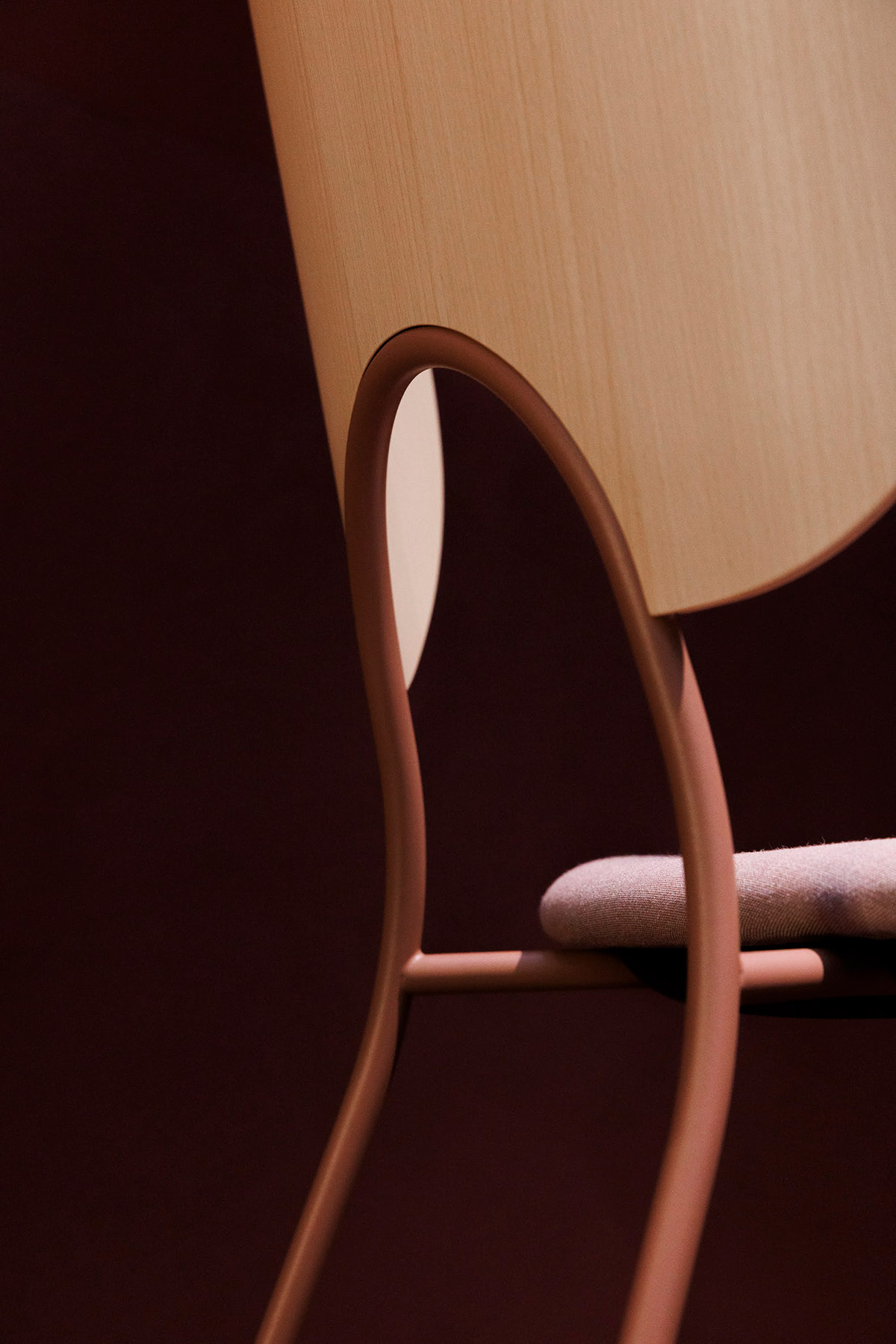
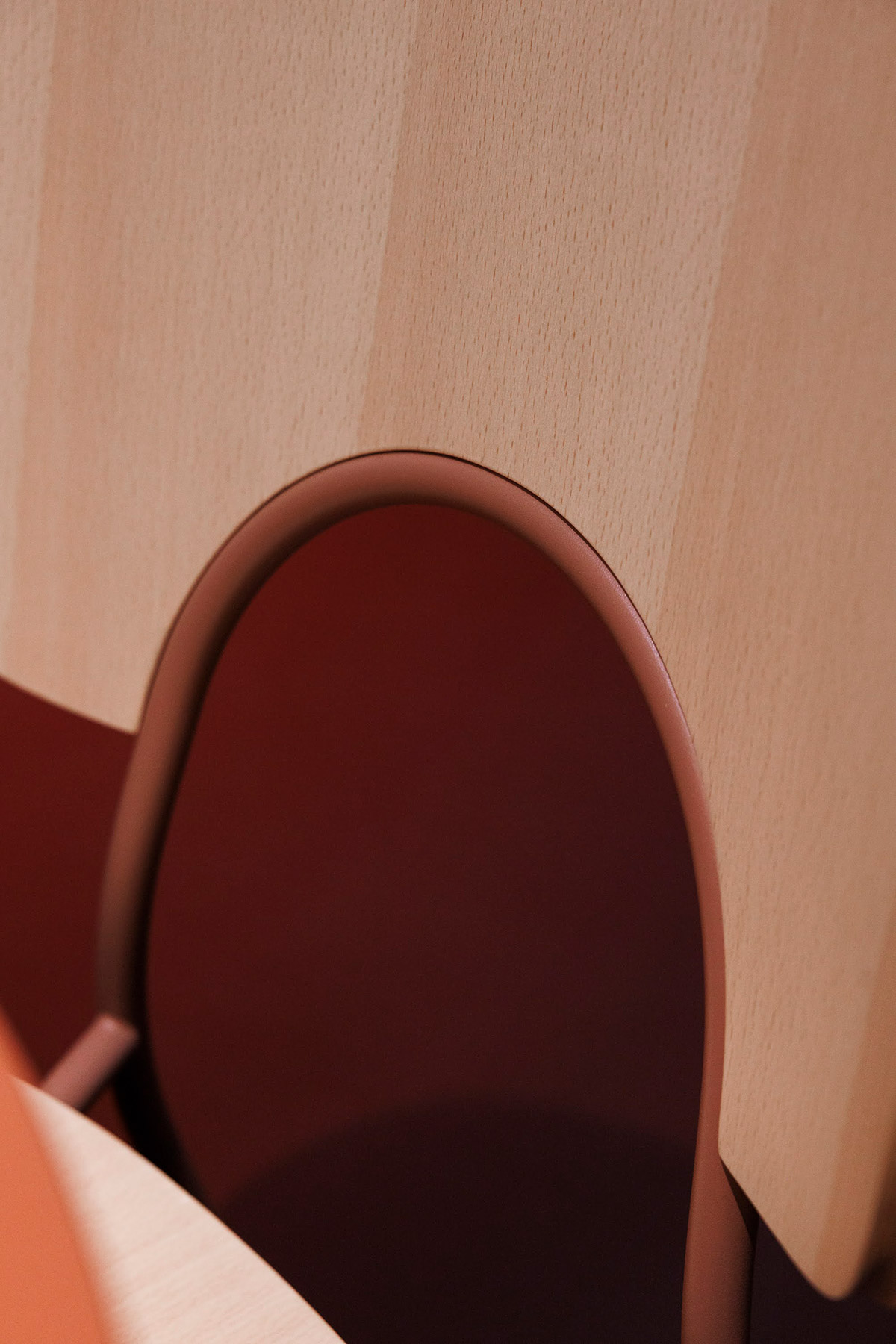
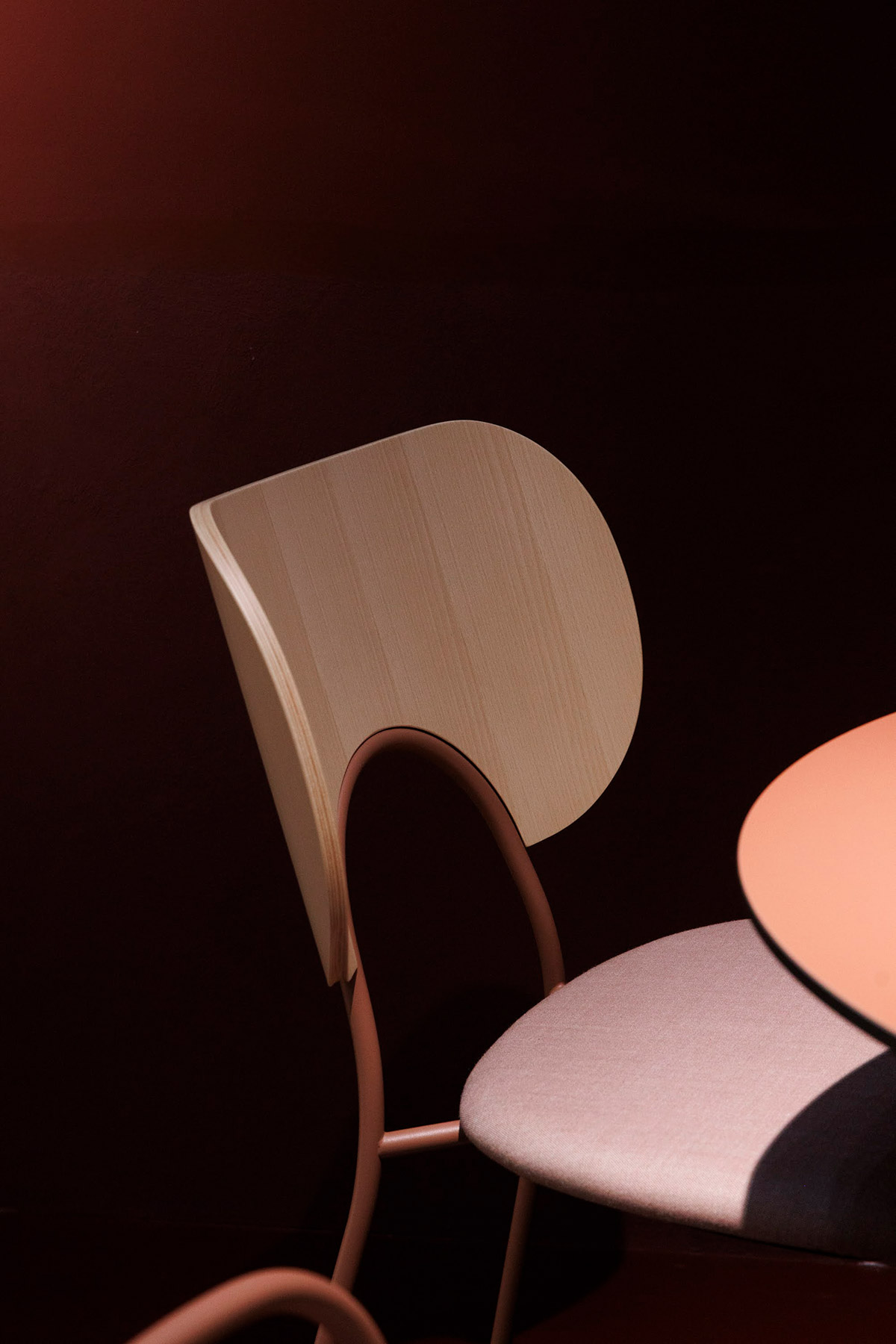
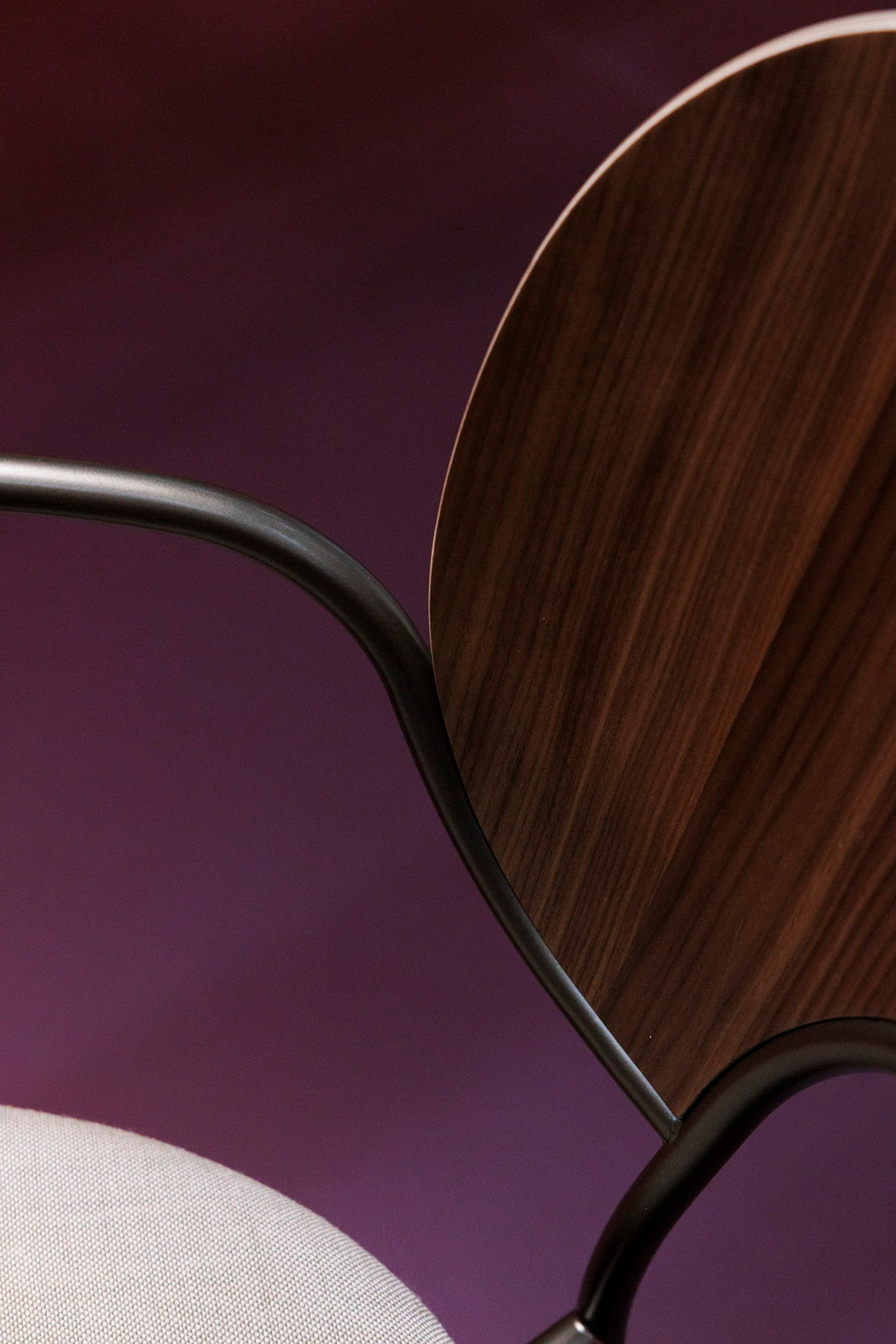
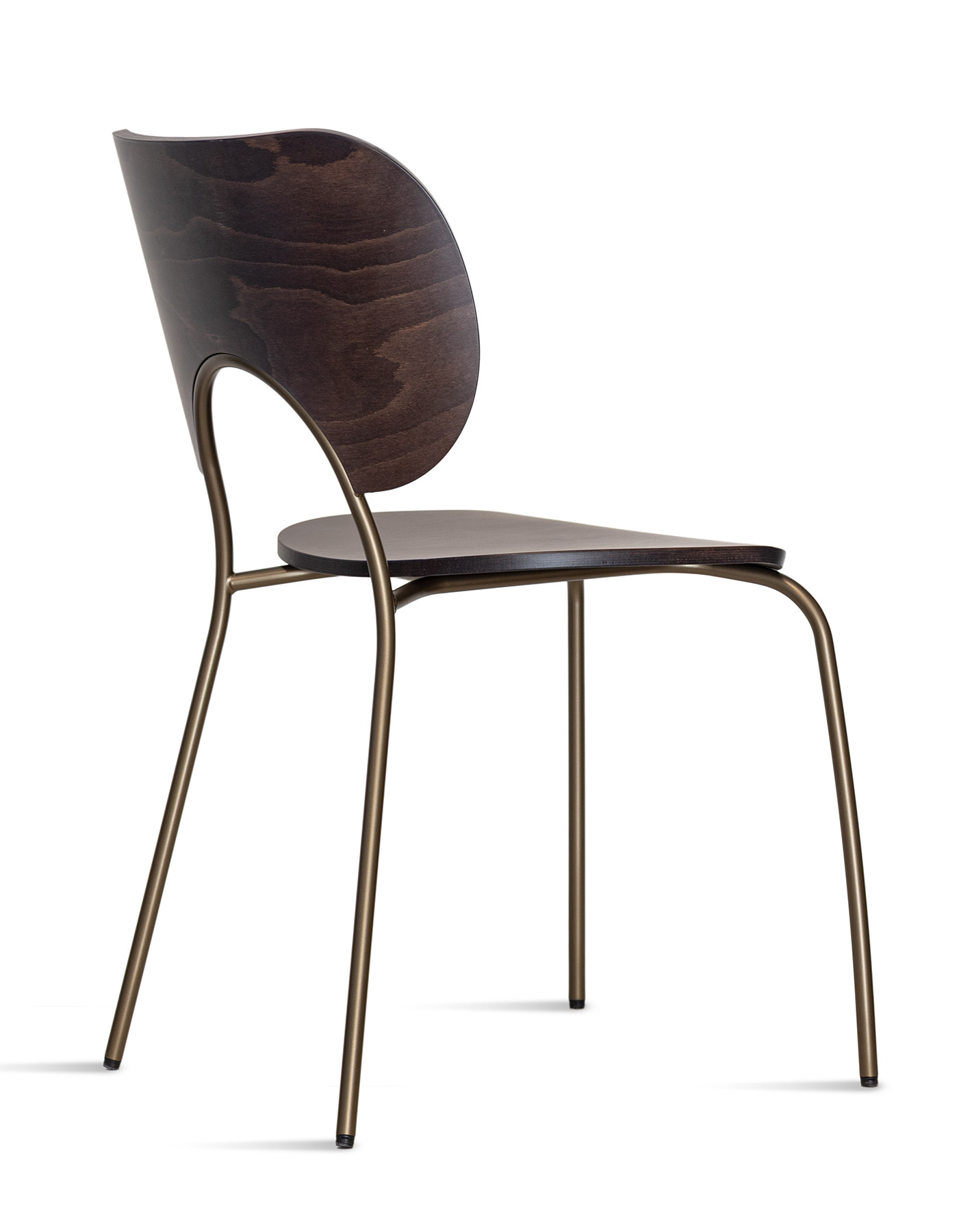
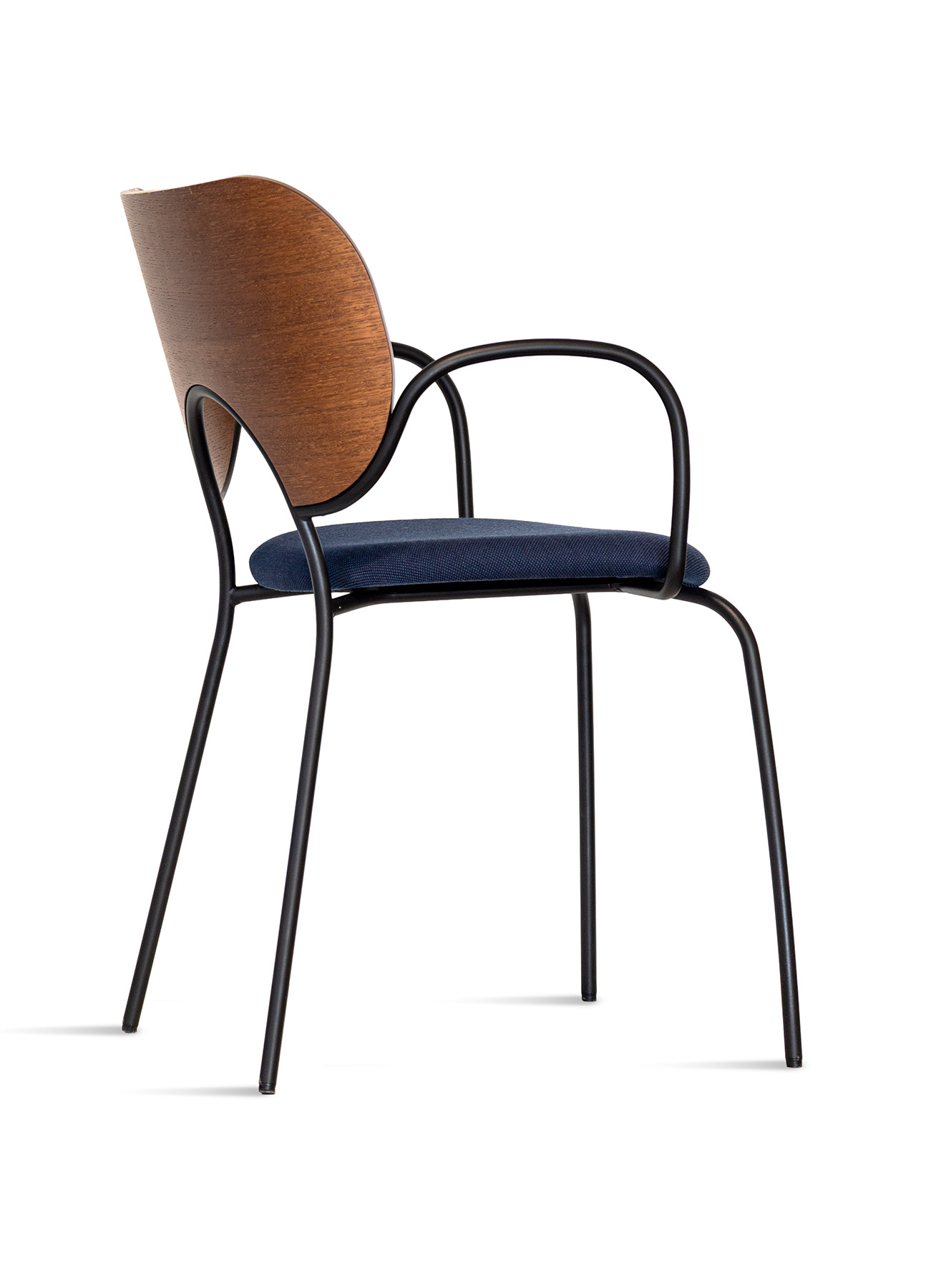
That meeting is the heart of the design. A steel tube rises from the rear legs, follows the arch cut into the base of the backrest and embraces it as a visible seam would, reinforcing the piece and evoking the internal reinforcements of tailoring. The curved wood rests on that arch just as cloth rests on the shoulder of a well-constructed garment. In the version with arms, the same tube extends its path forward and draws the armrests in one continuous line, with no apparent breaks or changes of section, so that the chair seems to have been drawn in a single gesture.
Wood, steel, plastic and textile
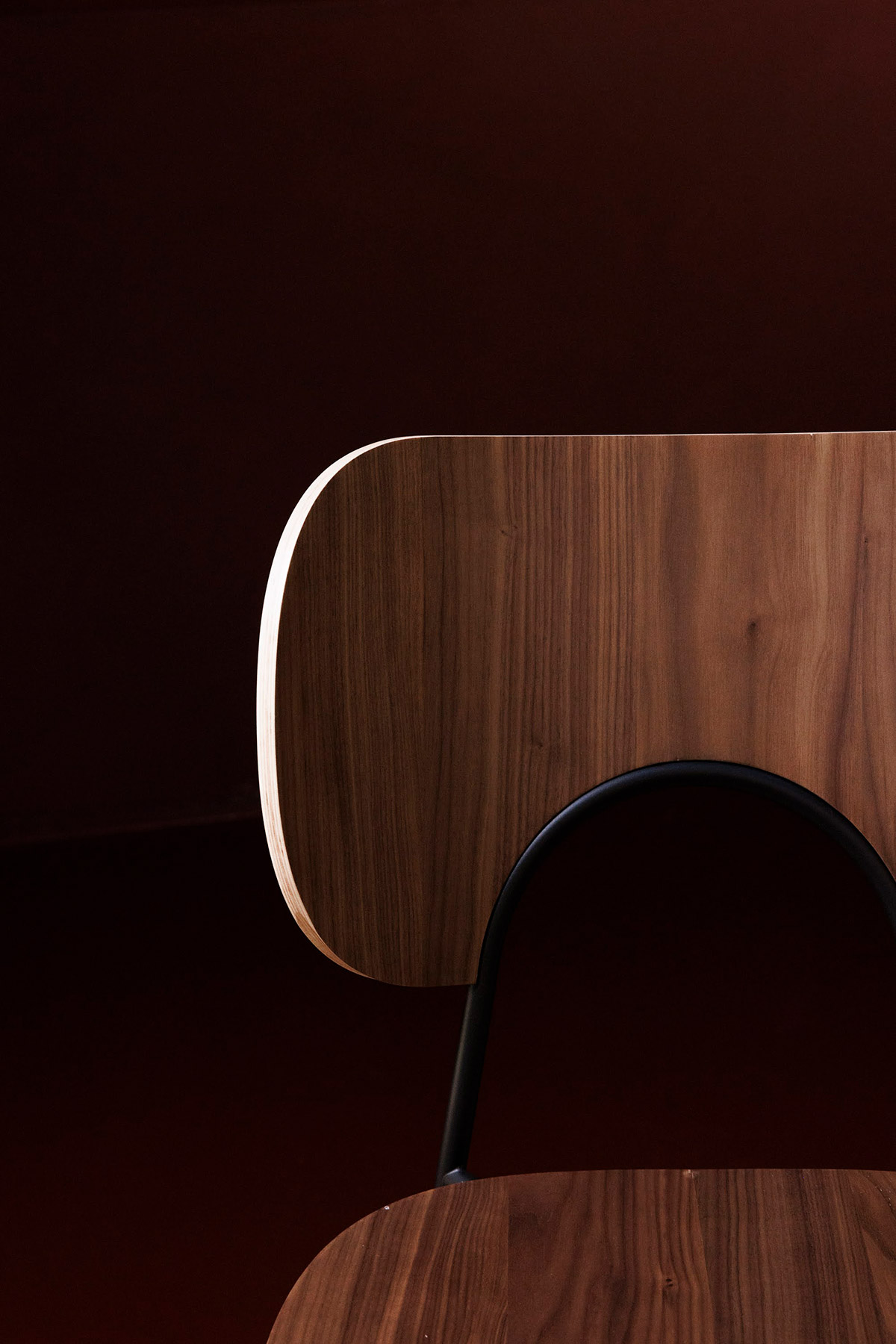
Four materials coexist in Ondula, and each one fulfils a specific function. The curved wooden shell provides tactile warmth and cradles the back; the steel tube is the exoskeleton that guarantees strength and orders the composition; the plastic resolves the junctions and protects the chairs when stacked; the upholstered seat, with its rounded outline, completes the smooth transition between the parts.
The combination of finishes multiplies the character of the piece. A light wood veneer on a structure in a dusty pink tone gives rise to a luminous, almost domestic chair; a dark wood with a pronounced grain, on black steel, makes it more sober and nocturnal, close to the elegance of a dark suit. The detail photographs dwell on the point where the curve of the wood and that of the tube coincide with millimetric precision, and that is where the technical challenge of the project is concentrated. At Actiu, Soledat Berbegal acknowledges that the great manufacturing challenge has been achieving that precise meeting between curved wood and steel tube in the backrest and the arms, two materials that behave very differently and whose union demands careful machining and rigorous control of every part.
To this attention to detail is added a practical intelligence designed for intensive use. The backrest itself works as a handle that makes the chair easy to move, and its design allows it to be stacked, with a protected stacking system, whenever the space needs to be reorganised. The wood comes from controlled felling with FSC certification, and the chair can be fully disassembled into separate single-material parts, making them easier to separate and recycle at the end of its useful life. Sustainability thus appears in the very construction of the object, in the way it is assembled and disassembled.
Actiu’s first wooden chair
Ondula also marks a turning point in Actiu’s history. The Castalla-based company, with more than fifty years of history and a presence in over ninety countries, is the leading Spanish name in furniture for corporate, contract, educational and healthcare environments, and its language has historically been built on metal, plastic and industrial precision. With Ondula it introduces wood into a chair for the first time, and with it a more tactile and emotional dimension that broadens the expressive possibilities of a brand of industrial origin.
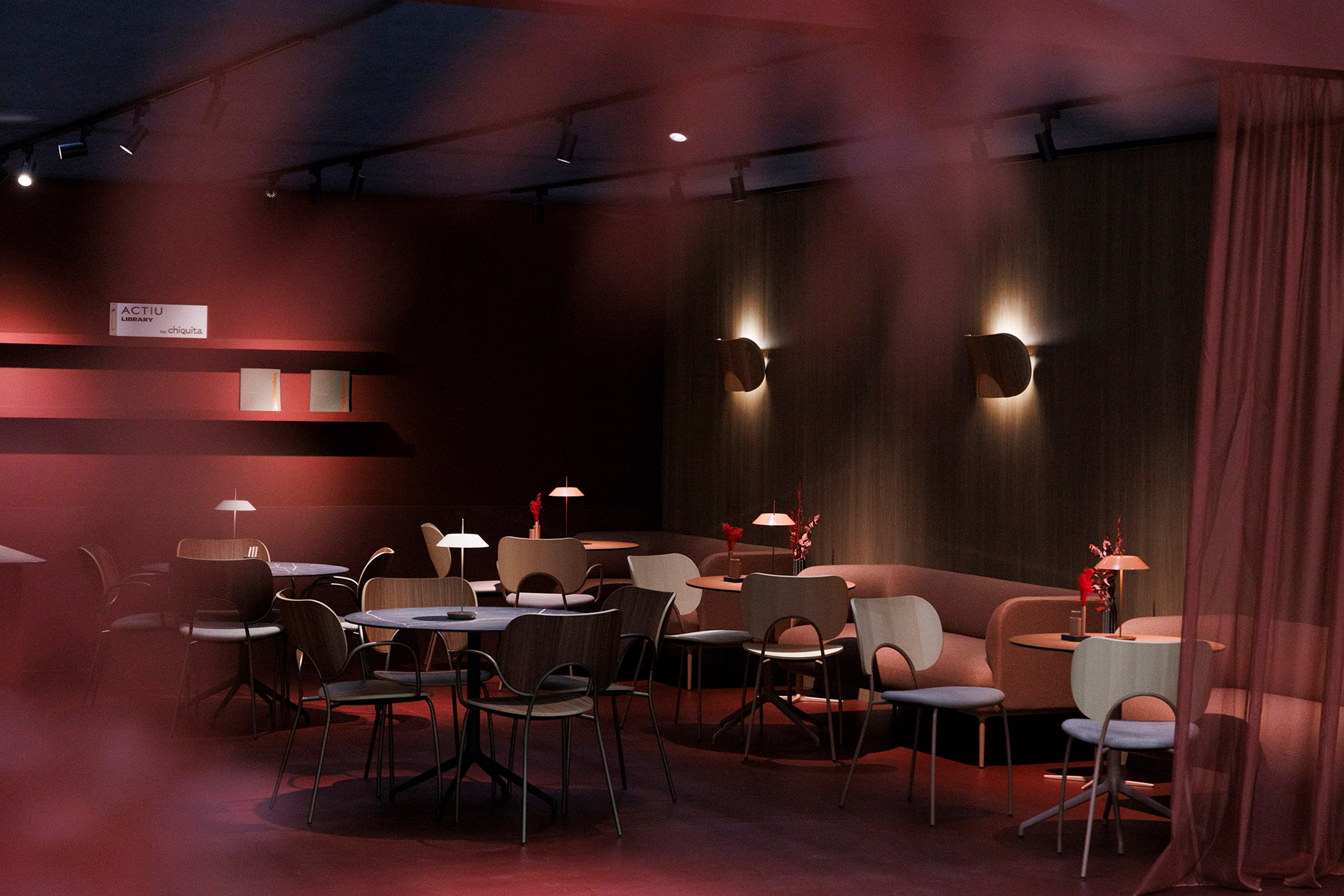
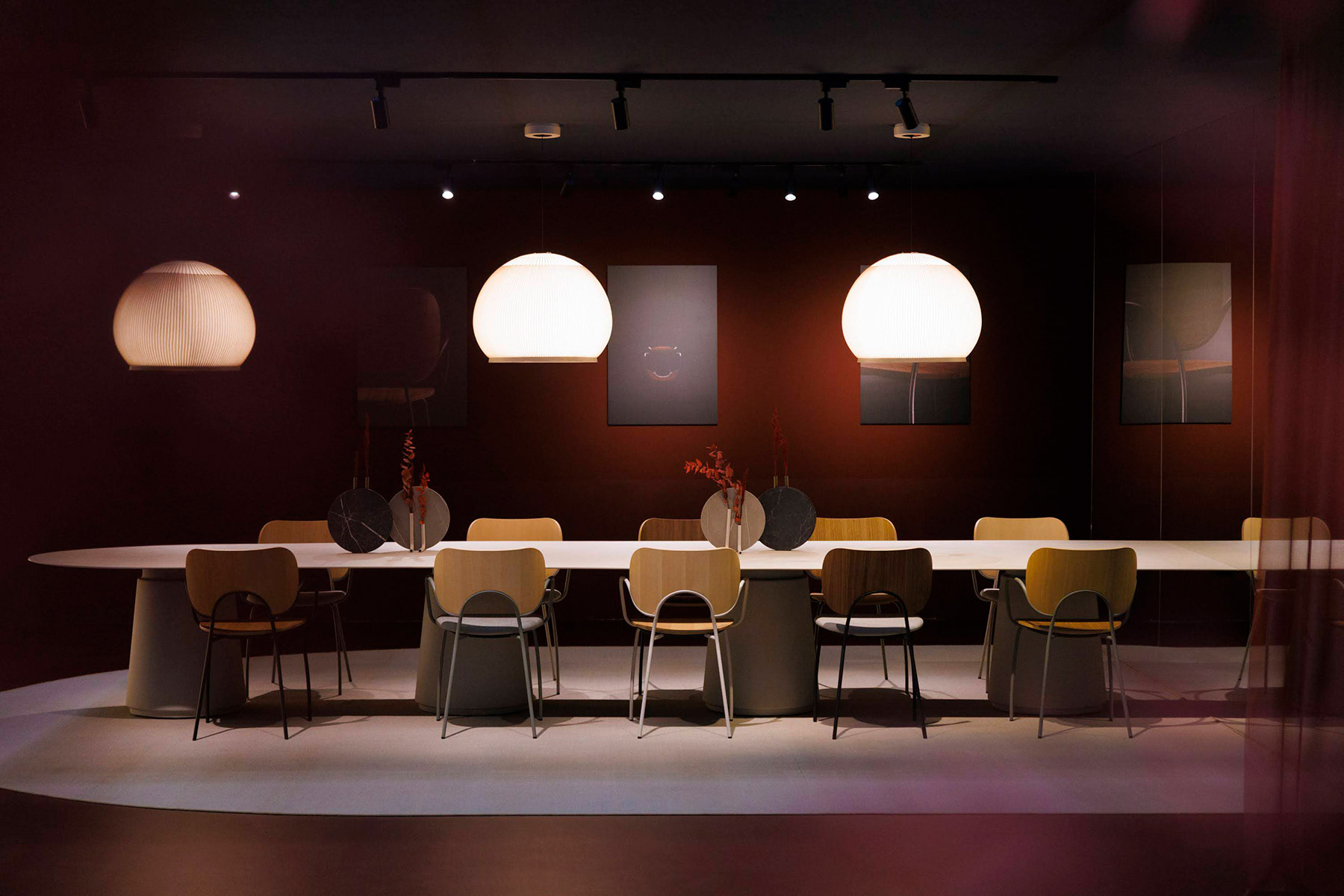
The decision responds to a change in the way we inhabit space. The boundaries between office, home and collective space have blurred, and workplaces, hotels, restaurants and cafés now share the need to feel welcoming, flexible and human. Ondula is conceived for those places where activity changes over the course of the day, from meeting to conversation, from lunch to a break, where furniture helps make people want to stay. It is also part of Life Friendly Spaces, the strategy Actiu has been pursuing since 2024, which places wellbeing, sustainability, inclusion and productivity at the centre of the design of every space. It is an approach that establishes a legacy of responsibility, efficiency and respect for the environment and for future generations.
The curve that accompanies
It is said that a good suit reveals itself in movement, when its wearer sits down, turns or raises an arm and the garment follows naturally. Ondula aspires to that same quality. Its curve is best appreciated when someone leans against it, draws it up to the table or stacks it at the end of the day. José Manuel Ferrero has carried the armhole of Savile Row and the workshops of Ontinyent into a mass-produced chair, and on that journey, as methodical as that of Phileas Fogg, a character who has influenced him so deeply, the line has kept its original meaning: to accompany the body.
Product: Ondula, chair for collective spaces.
Design: estudi{H}ac. José Manuel Ferrero.
Manufacturer: Actiu.
Year: 2026.
Versions: four legs, with or without arms; protected stacking.
Materials: FSC-certified curved wooden shell, steel tube structure, plastic components and upholstered seat; can be disassembled into single-material parts.
Uses: offices, hospitality, restaurants and collective spaces.
Photos: Courtesy of Actiu and estudi{H}ac.
Source: Lelien. María Piedra. estudi{H}ac. Ana Moix.
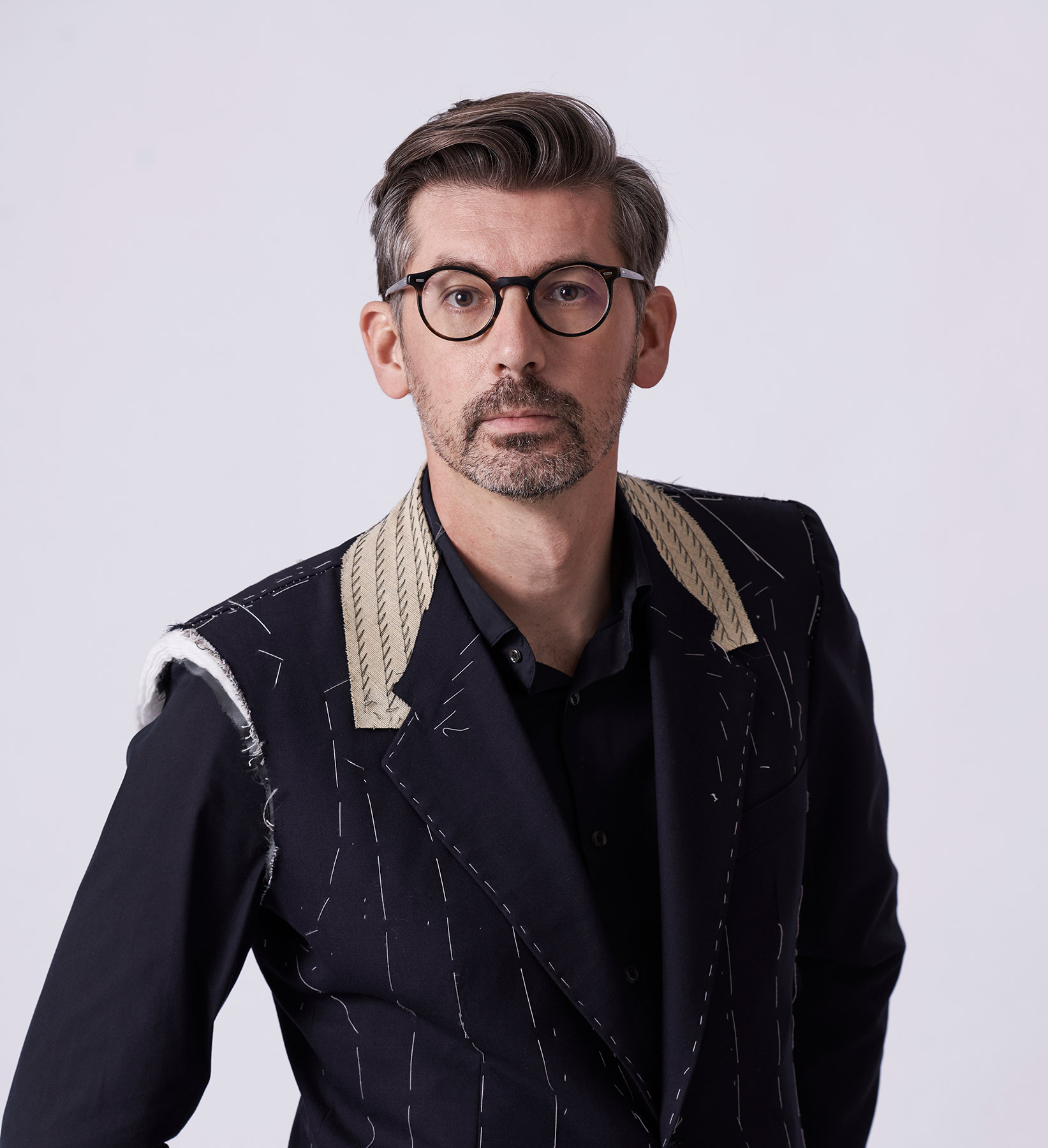
José Manuel Ferrero. estudi{H}ac
Discreet, cultured, elegant and immensely creative, design is his way of life. As if he were a tailor, the care, attention to detail, precision and creativity that José Manuel Ferrero brings to all his projects has remained unchanged throughout his 20-year career. A career inspired by his admiration for tailoring, specifically for the famous London street Savile Row and the textiles of Ontinyent, his hometown, and his passion for detail and Anglo-Saxon culture, make him a perfect blend of conservatism and transgression, applied to the care of forms, materials and textures within industrial design.
“Phileas Fogg, a literary character created by Verne, is the figure who has influenced me the most. The creativity and ingenuity of the protagonist of Around the World in Eighty Days is a fundamental part of the creative process of estudi{H}ac, which uses methodology and professionalism to seek out ideas that result in a good project. Like Fogg, I have travelled to many countries that have filled me with experiences. England has particularly influenced me, as I feel a deep admiration for its style, culture, humour and for a way of being that is conservative and transgressive at the same time. The great admiration for the tailors of the famous Savile Row and the passion for detail, the care for shapes, materials and textures, make each estudi{H}ac project respond to elegance made to measure” he says.
With his suitcase full of sketchbooks, tailor-made suits, Oxford shoes and Penhaligons perfume, he portrays his feet as a personal tribute to Fogg. It is his way of leaving a mark wherever estudi{H}ac creates a project or goes to visit it to get it. He seeks simplicity and elegance in form, but always with a twist in the finish. The exhaustive and meticulous work with which he develops each project makes the final result fantastic. Each project has a story behind it and he works to convey that. He seeks to provide the point of differentiation that marks the work of estudi{H}ac, creating commercial and surprising projects.
Estudi{H}ac
Turia 7
46008 Valencia
+34 963 219 622
estudihac@estudihac.com
www.estudihac.com
Project by Estudi{H}ac. José Manuel Ferrero