
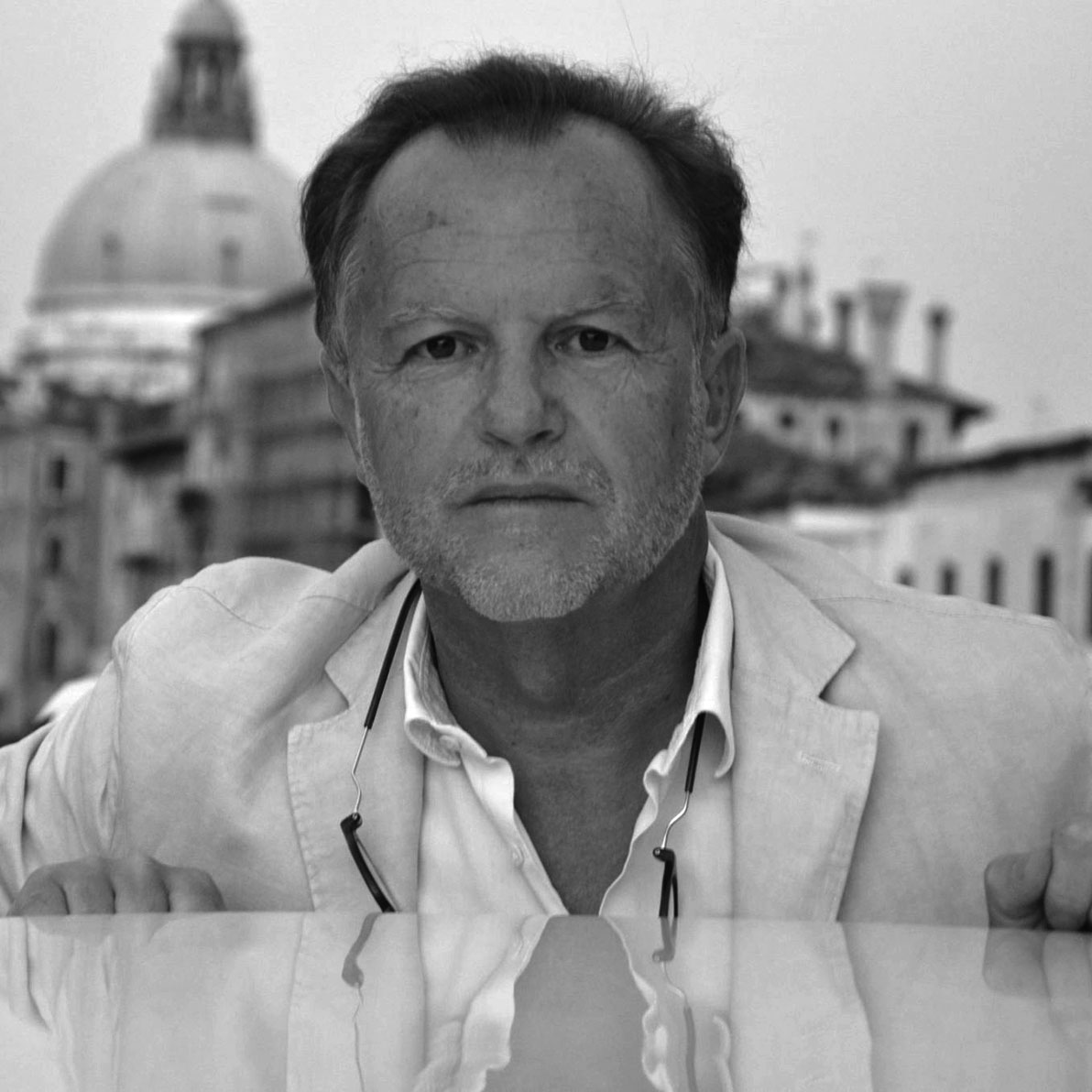
Antonio Obrador (Palma de Mallorca, 1956) found his vocation long before he had a name for it. As a child he was fascinated by the pillars without bases or capitals of La Lonja de Palma, the Gothic building that Guillem Sagrera raised in the fifteenth century. That early fascination held firm against family pressures pointing him toward other paths, and in time confirmed what Obrador understands as a certainty: “vocation is something innate that one carries within.”
In 1980 he founded in Mallorca the studio that today bears his name. More than four decades later, that trajectory has translated into a catalogue of architecture, interior design, decoration and landscaping that spans the private home as much as, most notably, the hotel sector, the terrain on which Obrador has built much of his reputation and in which he has signed some of the most celebrated heritage restorations of recent decades in Spain.
The studio’s work rests on a constant dialogue between tradition and modernity, terms Obrador refuses to consider contradictory. Tradition is expressed in the respect for noble materials —stone, wood, iron— and in the assertion of craftsmanship, of the expert hand that works them; modernity, in the will to reinterpret, to respond to the needs of the present without appealing to nostalgia. Faced with an old building, the studio approaches restoration from a position of respect and of bringing out the value of its original author’s work; faced with an empty plot, new construction frees itself of those constraints in search of a singular result. In both cases the declared objective is the same: a contemporary extension of Vitruvian firmitas that Obrador understands as “enduring design,” set apart from other approaches that dominate much of construction today.
That principle has found its most recognised expression in hotel restoration. Hotel Cap Rocat, installed in the former fortress of Cap Enderrocat, in Llucmajor, is for the architect himself the most difficult project and also the most acclaimed: it received the European Union Prize for Cultural Heritage (Europa Nostra) from the hands of Queen Sofía in 2018, the highest distinction that exists in the field of heritage conservation. The Gran Hotel Son Net, in Puigpunyent, came into the studio’s hands in a state of ruin and today ranks among the twenty-five best hotel restorations in the world according to Condé Nast. To these are added the Hotel Majestic and the Gran Hotel Florida, in Barcelona; the Urso Hotel & Spa, in Madrid; the Palacio Solecio, an eighteenth-century Andalusian palace in Málaga; and, on the islands, interventions such as those of La Residencia de Deià, the Castillo Hotel Son Vida and the Gecko Hotel & Beach Club in Formentera.
At the head of the studio, based in the Casc Antic of Palma, Obrador works today alongside María Chocarro, director architect and partner at AO Estudio, with a team of fifteen in-house architects and a network of external collaborators —engineers, landscapers, interior designers and decorators— completed by craftsmen working in stone, iron and wood. With more than forty years of trajectory behind it, the studio has chosen to keep growing rather than withdraw: the fruit of that review of its own archive is Hotels (Ediciones El Viso, 2025), the first volume of a collection the studio intends to complete with dedicated books on new construction and landscaping.
Recognition for this trajectory includes, among others, the Ramón Llull Award for Professional Career from the Balearic Government (2005) and the Ciutat de Palma Prize for Rehabilitation for Ca’n Nadal, a seventeenth-century casal in Palma’s old town with which he opened his list of honours in 1985. Four decades later, Obrador continues to describe his craft in terms of search rather than achievement: “Perfection does not exist, but the search for perfection does. Only through self-criticism and nonconformity can one advance along that path.”