
Based in Milan, Shanghai and Tirana, Stefano Boeri Architetti has been researching and designing architecture and urban planning since 1993, when it was founded as Boeri Studio by Stefano Boeri, Gianandrea Barreca and Giovanni La Varra. Multiplicity has been, for more than three decades, the principle guiding an activity that spans architecture, design and urban planning, always attentive to the geopolitical and environmental implications of urban phenomena, and that has turned the studio into an international reference for sustainable architecture and strategic urban development.
The Bosco Verticale, built in Milan in 2014, marked the origin of that outlook: the first prototype of architecture integrating living nature at a large scale, recognised as best building in the world by the CTBUH in Chicago and as best skyscraper by the DAM in Frankfurt. Since then, the studio has carried that language — known as Green Obsession, also the title of its 2021 book — into urban and vertical reforestation projects across different continents, responding in each case to local climate and functional needs. Among them, the Trudo Vertical Forest in Eindhoven, inaugurated in 2021 as the first vertical forest built for social housing, anticipates much of what Sa Casa now proposes in Ibiza: the possibility of combining the environmental challenge with the housing urgency of contemporary cities.
Alongside founding partner Stefano Boeri, the studio is today led by Francesca Cesa Bianchi, Marco Giorgio and Pietro Chiodi, with Hana Narváez, Livia Shamir and Corrado Longa heading the project, research and urban planning departments. Under its name, the studio is currently working on masterplans and architectural projects in cities such as Lausanne, Paris, Utrecht and Milan, without setting aside its commitment to archaeological and cultural heritage, visible in interventions such as the new entrance to the Domus Aurea in Rome or the enhancement of the Paestum archaeological site.
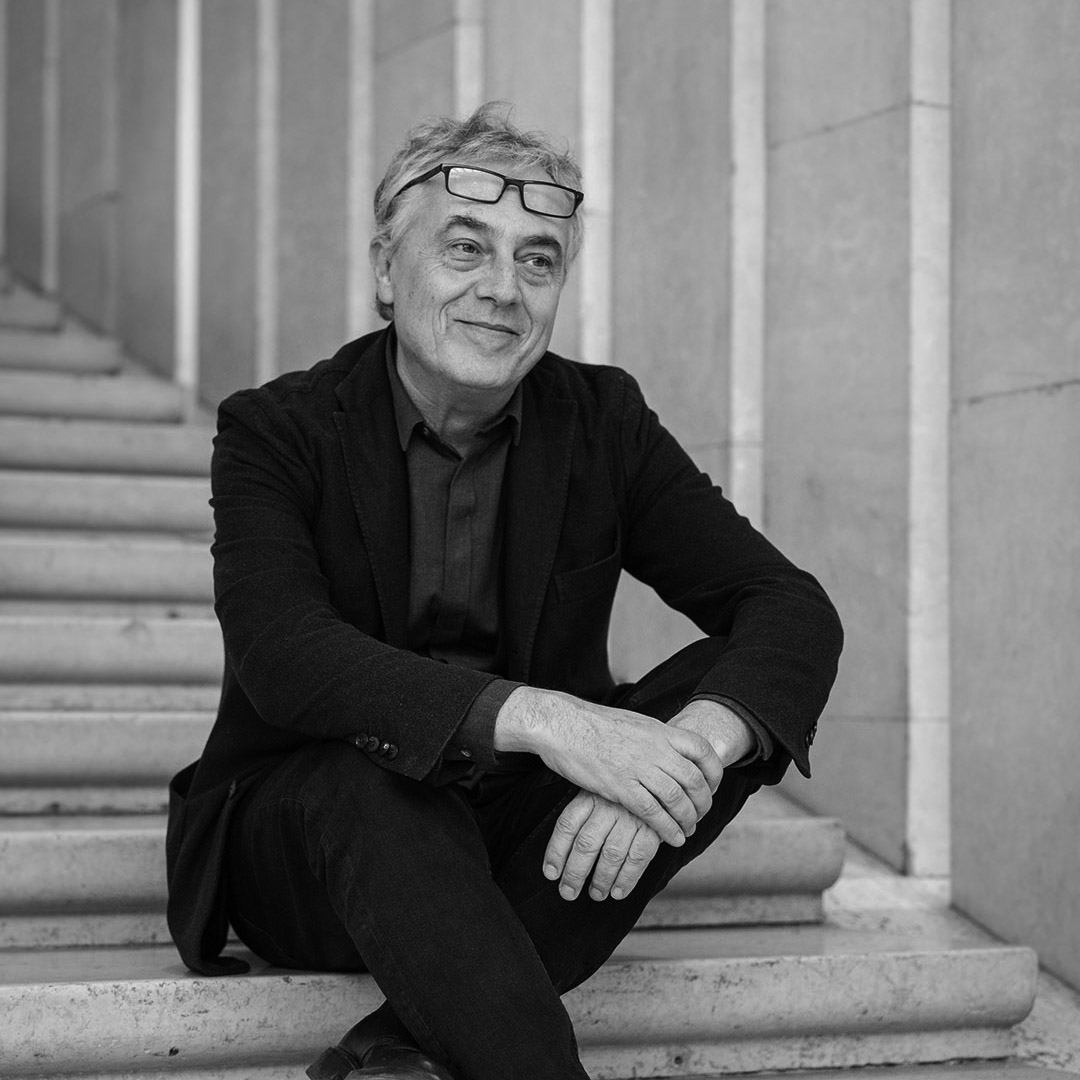
Stefano Boeri
Born in Milan in 1956, Stefano Boeri trained as an architect at the Politecnico di Milano, graduating in 1980, and completed his PhD in Urban Planning at the IUAV University of Venice in 1989. Full Professor of Urban Planning at the Politecnico di Milano and director of the Future City Lab at Tongji University in Shanghai, he has been a visiting professor at institutions including Harvard, the École Polytechnique Fédérale de Lausanne, the Berlage Institute in Rotterdam and the Academy of Architecture in Mendrisio.
Author of the Bosco Verticale, Boeri is one of the most recognised voices in the international debate on architecture and climate change. He has chaired the scientific committee of Forestami since 2020, the urban forestry project for the Milan metropolitan area that envisions the planting of three million trees by 2030, and served as President of Triennale Milano between 2018 and 2026. His career also includes institutional work, as Councillor for Culture, Fashion and Design for the Municipality of Milan between 2011 and 2013 — years in which he launched festivals such as BookCity and Piano City — and his participation, alongside Richard Burdett, Jacques Herzog and William McDonough, on the committee that defined the concept masterplan for Expo Milano 2015.
In 1993 he founded Multiplicity, a research collective bringing together architects, geographers, artists and photographers around the relationship between geopolitics and urban planning, and between 2004 and 2010 he served as editor-in-chief of Domus and Abitare. His written work, published in books such as L’anticittà, Biomilano and Urbania, and his professional practice, present in cities such as São Paulo, Cairo, Riyadh and Tirana, trace the path of an architect for whom thinking about the contemporary city and designing buildings are, at heart, one and the same exercise.