
On this World Book Day, we pay tribute to Anatxu Zabalbeascoa, who stands as a representative of all the writers committed to topics that deeply matter to designers, architects, and artists. Her book Chairs. A History of the Chair, published by Editorial Gustavo Gili, offers a fascinating journey through the evolution of the chair—from its origins to the most iconic creations of modern design.

With a foreword by scientist Jorge Wagensberg, the book explores how the chair has transcended its utilitarian role to become a cultural and artistic symbol. Zabalbeascoa examines iconic pieces such as Thonet’s chairs, the manifesto-seats of Gerrit Rietveld and Mies van der Rohe, and the innovative designs of contemporary creators like Frank Gehry, Philippe Starck, and Jasper Morrison.
Chairs. A History of the Chair is essential reading for anyone wishing to understand how an everyday object can mirror social, technological, and aesthetic shifts over time. This book will serve as the launchpad for our new section “Chairs That Made History,” which we proudly debut today in Exágono.

Anatxu Zabalbeascoa: narrator of space, interpreter of design
Anatxu Zabalbeascoa (Barcelona, 1966) has devoted her professional life to telling the story of how we live in the world through the spaces we inhabit, the objects we choose, and the materials that surround us. She is one of the most respected voices in cultural journalism in Spain, specialising in architecture, design and contemporary art. With a sharp eye and a clear writing style, she has made design accessible without ever compromising on depth or rigour.
She studied Information Sciences at the Autonomous University of Barcelona and completed her education in Art History at The School of the Art Institute of Chicago—an academic path that permanently shaped her dual vocation: to inform and to interpret. For over 25 years she has written for the newspaper El País, where she has established an essential column for architects, designers, and curious readers alike. In her articles, Zabalbeascoa not only examines form, but also seeks out the social, cultural and emotional background of design.
Author of more than a dozen books, she has explored subjects as varied as contemporary Spanish design, sustainable architecture, the role of women in architecture, and the home as a reflection of our dreams. But one thread runs through all her work: design as a mirror of society.
Her book Chairs. A History of the Chair (Editorial Gustavo Gili) is one of her most acclaimed titles. With a foreword by physicist Jorge Wagensberg, it traces the cultural history of the most ordinary—and yet most symbolic—seat in modern furniture. From Thonet’s bentwood chairs and Bauhaus manifestos to the experiments of Frank Gehry and Philippe Starck, Zabalbeascoa shows how the chair has always been much more than an object: it is a manifesto, a political stance, an aesthetic statement.
In addition to her work as a journalist and writer, Zabalbeascoa has curated exhibitions and lectured at cultural and academic institutions in Spain and abroad. Her work is marked by a steadfast commitment to the dissemination of design, understood not as a luxury, but as a necessity—a way to live better and think more clearly about the world.
At Exágono, we celebrate her contribution as a chronicler of design and proudly welcome her narrative sensibility with the launch of our new section “Chairs that made history”, which begins today.
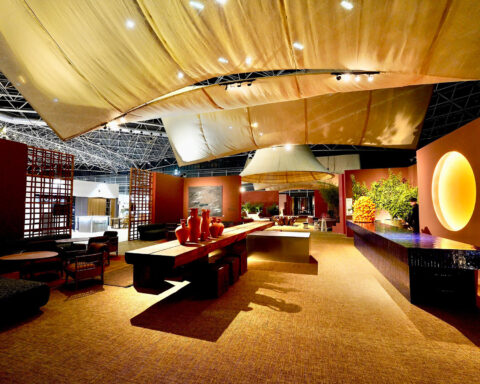
Project by Anatxu Zabalbeascoa