
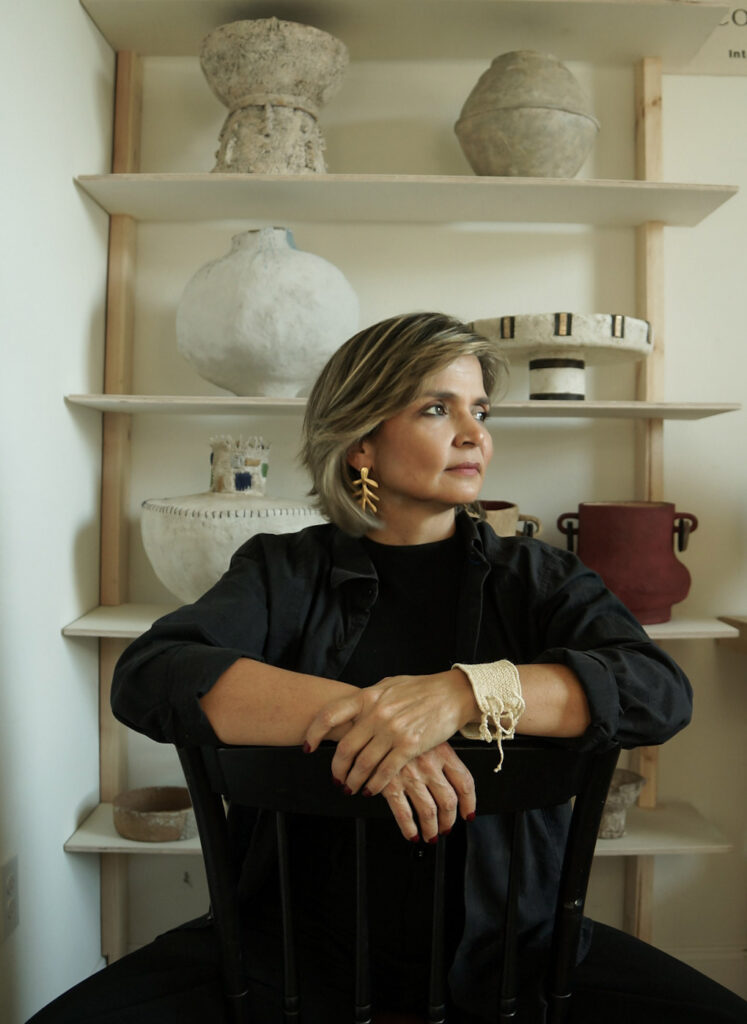
Born in Medellín, Colombia, and based in the United States, Natalia Correa is a visual artist and interior designer. Her work — vessels, wall pieces, and organic sculptures made entirely by hand — occupies that diffuse territory where art and design meet without either one yielding ground. Her pieces inhabit the spaces that receive them, bringing presence and character, texture without noise, a quiet material insistence that is not easily forgotten.
Getting here was not a straight path.
Painting at the beginning
Natalia’s first years of artistic practice were defined by painting on canvas with mixed techniques. She exhibited in Colombia and the United States, accumulated experience and recognition. And yet, something never quite settled.
“Although my work today is centred on vessels and organic sculptures, my beginnings in art were tied to painting on canvas using mixed techniques. Yet despite years exploring that path, there was a constant sense of dissatisfaction with the final result of my work.”
That discomfort — that honesty with herself — would become, in time, the starting point for everything that followed. Natalia paused her artistic practice to dedicate herself to interior design, a pause that lasted years and which, far from being a renunciation, turned out to be a quiet school. Working with spaces, proportions, and materials refined in her a sensibility she would later recognise as essential to her sculptural work.
The discovery: a vessel she could not take with her
The return to art came unexpectedly, through teaching. And it was in that context — teaching, exploring materials alongside her students — that Natalia rediscovered something she had briefly touched in her adolescence: volume, three-dimensionality, the possibility that form could exist in space and not only on a surface.
“My first approach to sculpture happened many years ago, during secondary school, when I had the opportunity to work with clay and make some three-dimensional pieces. After that experience, I never returned to sculpture — until much later, when volume came back into my life in a completely unexpected way, through paper.”
The trigger was concrete, almost incidental: during a trip, she found a vessel that captivated her and that she could not bring home. The impossibility of having it led her to try to recreate it.
“In attempting to recreate it by my own means, I began experimenting with a papier-mâché paste, not imagining that this moment would mark the beginning of a new artistic chapter. What started as an intuitive experiment ended up revealing to me a medium with infinite possibilities for expression.”
Four years on, that experiment has become a sustained and rigorous sculptural practice.
Paper, a material that challenges its own limits
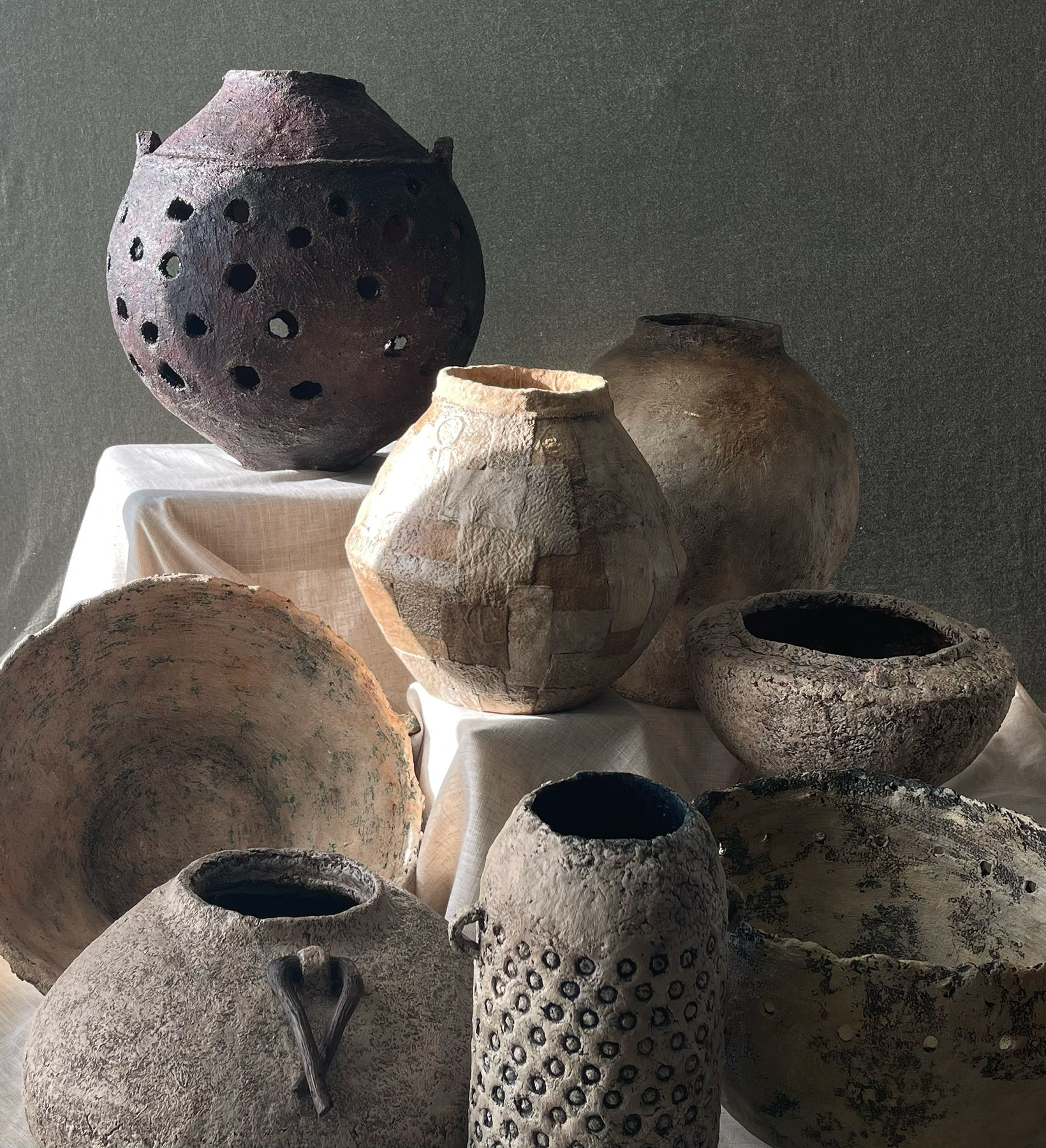
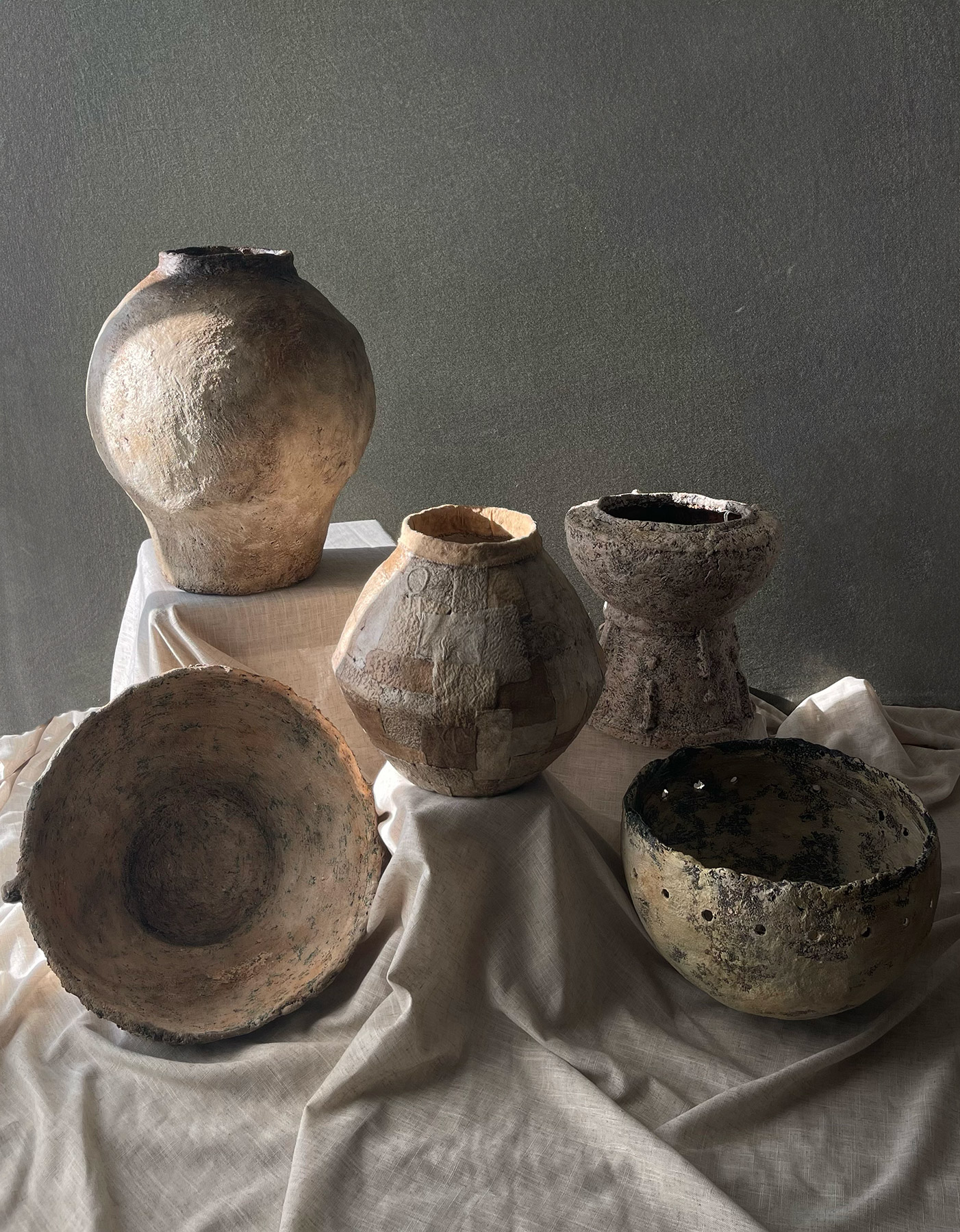
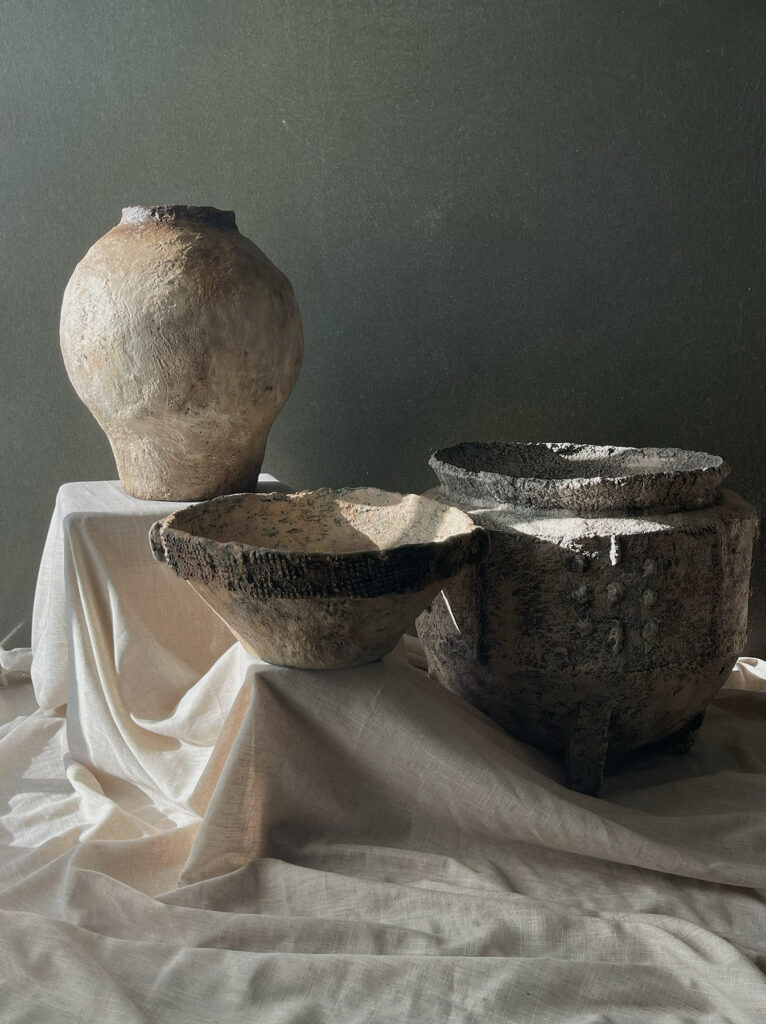
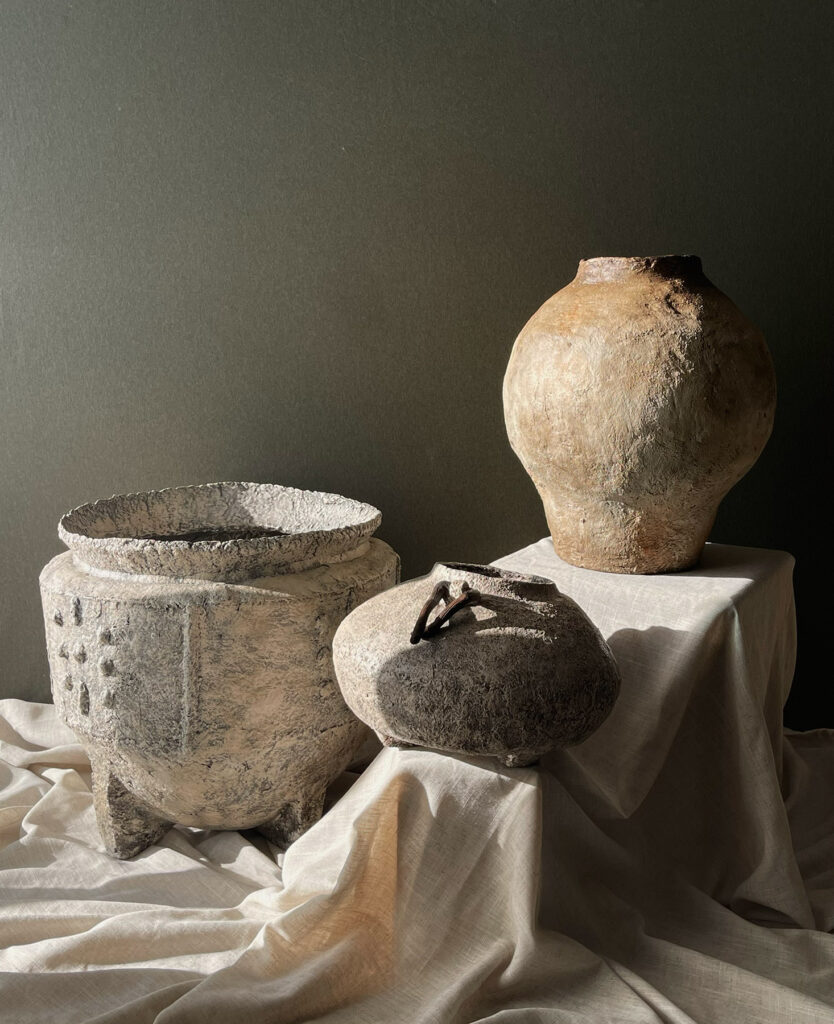
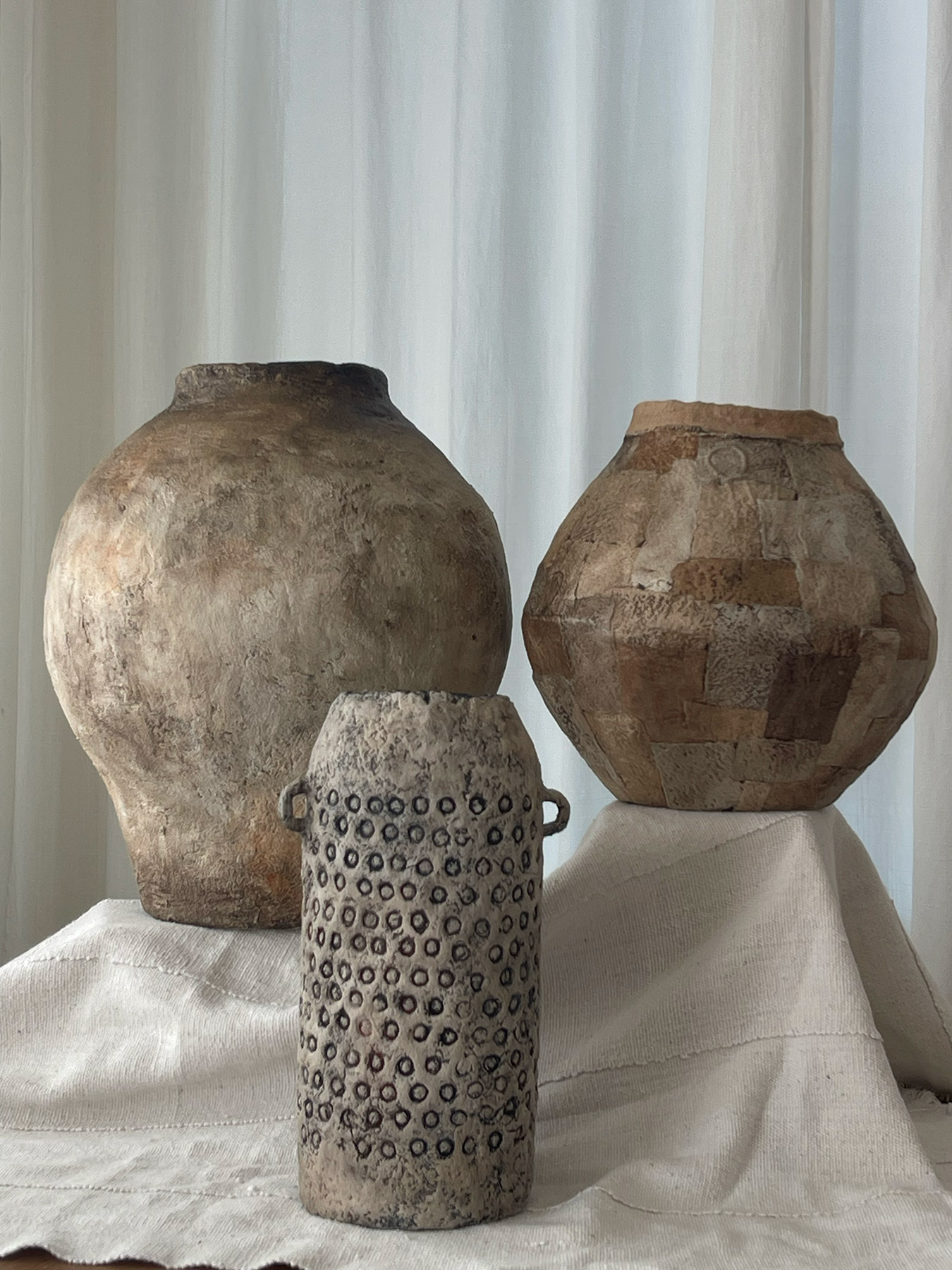
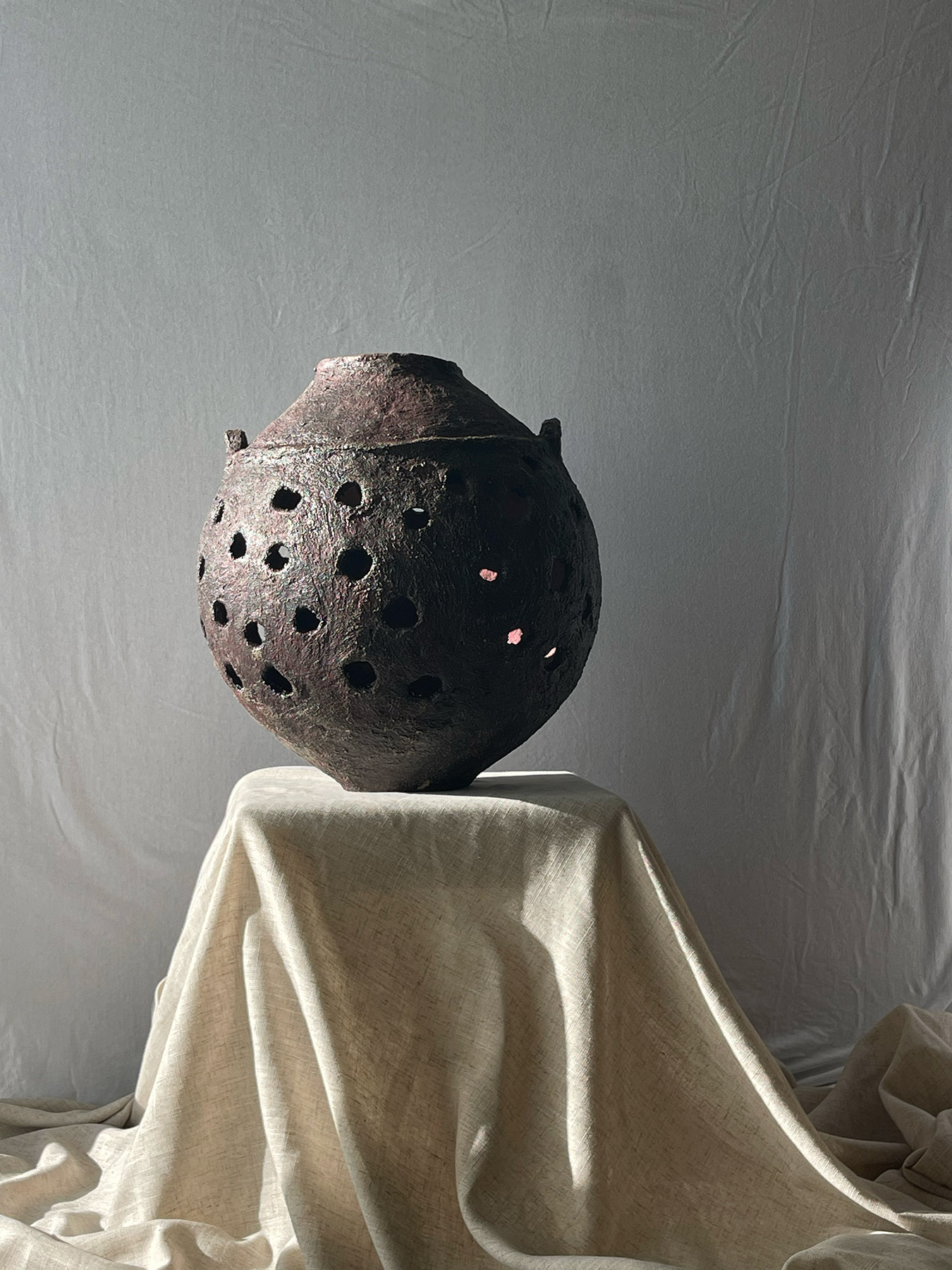
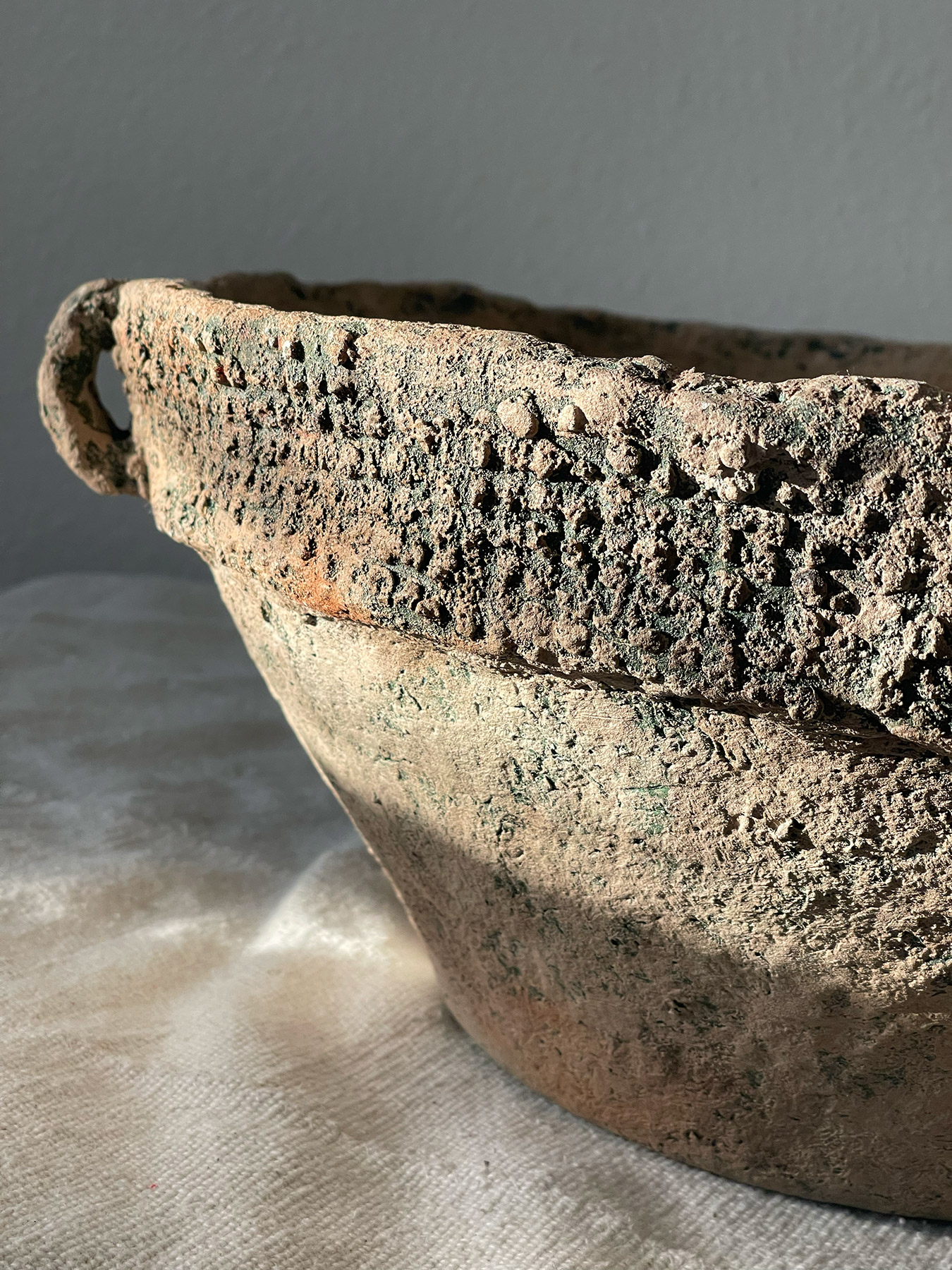
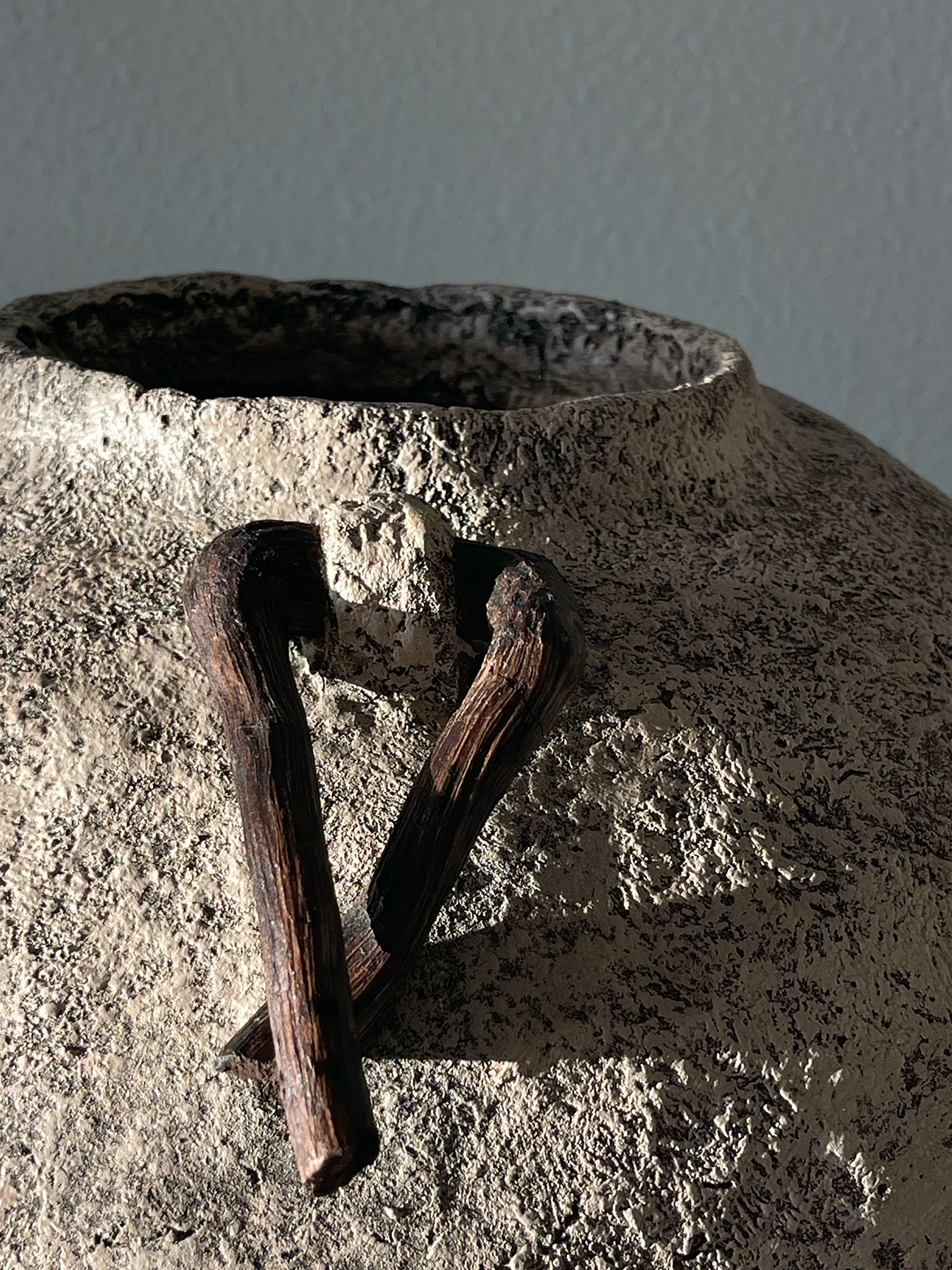
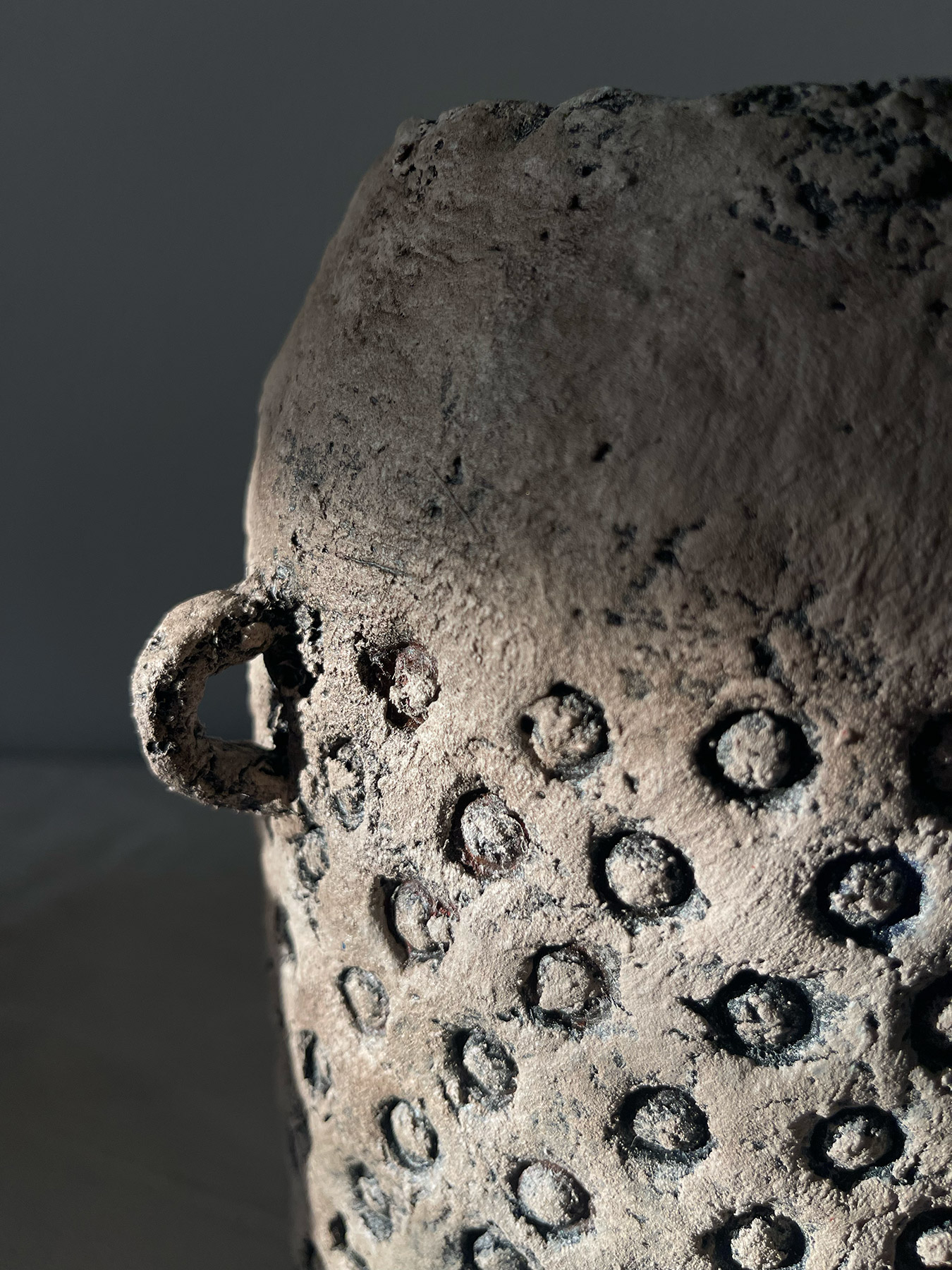
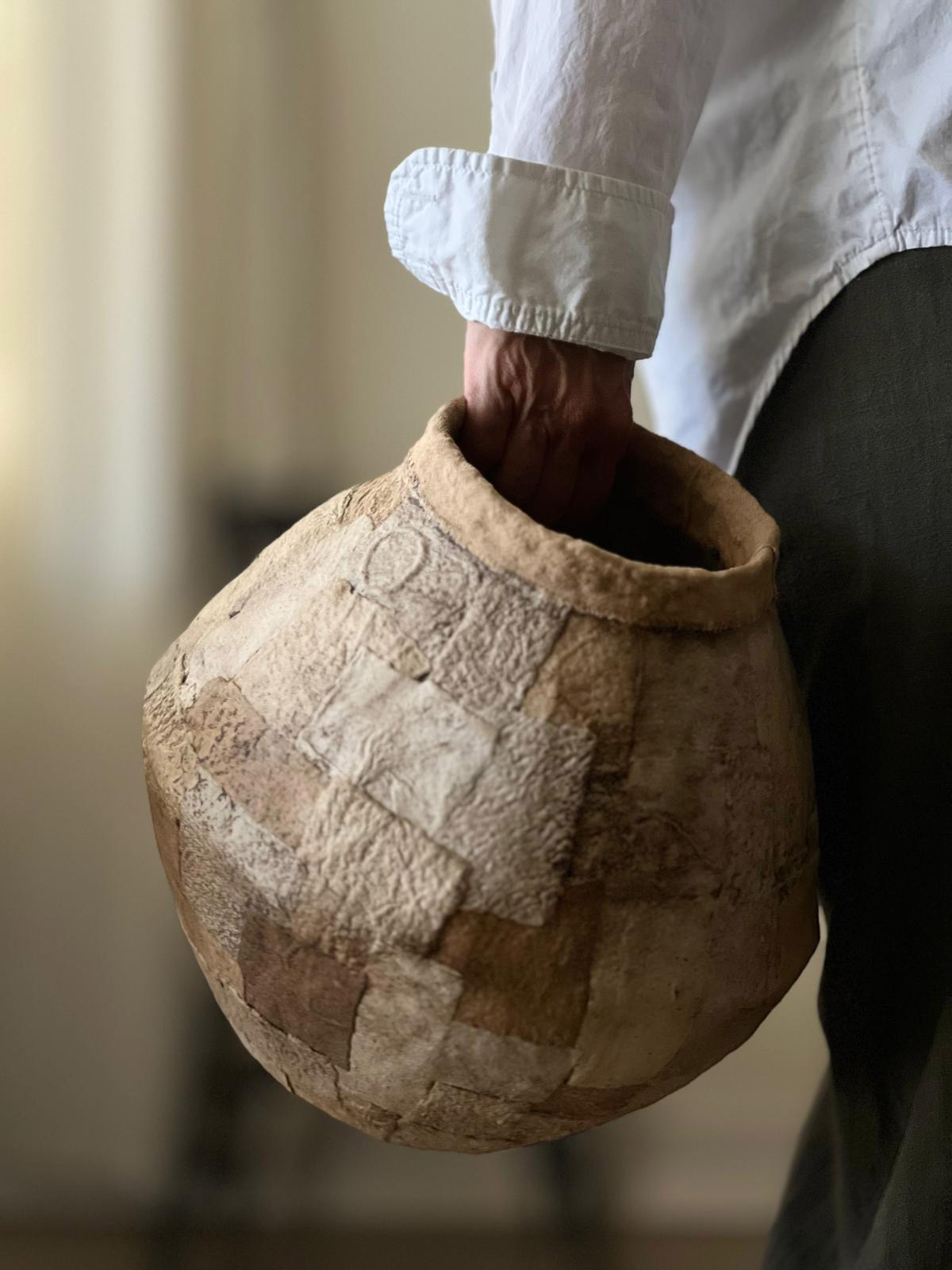
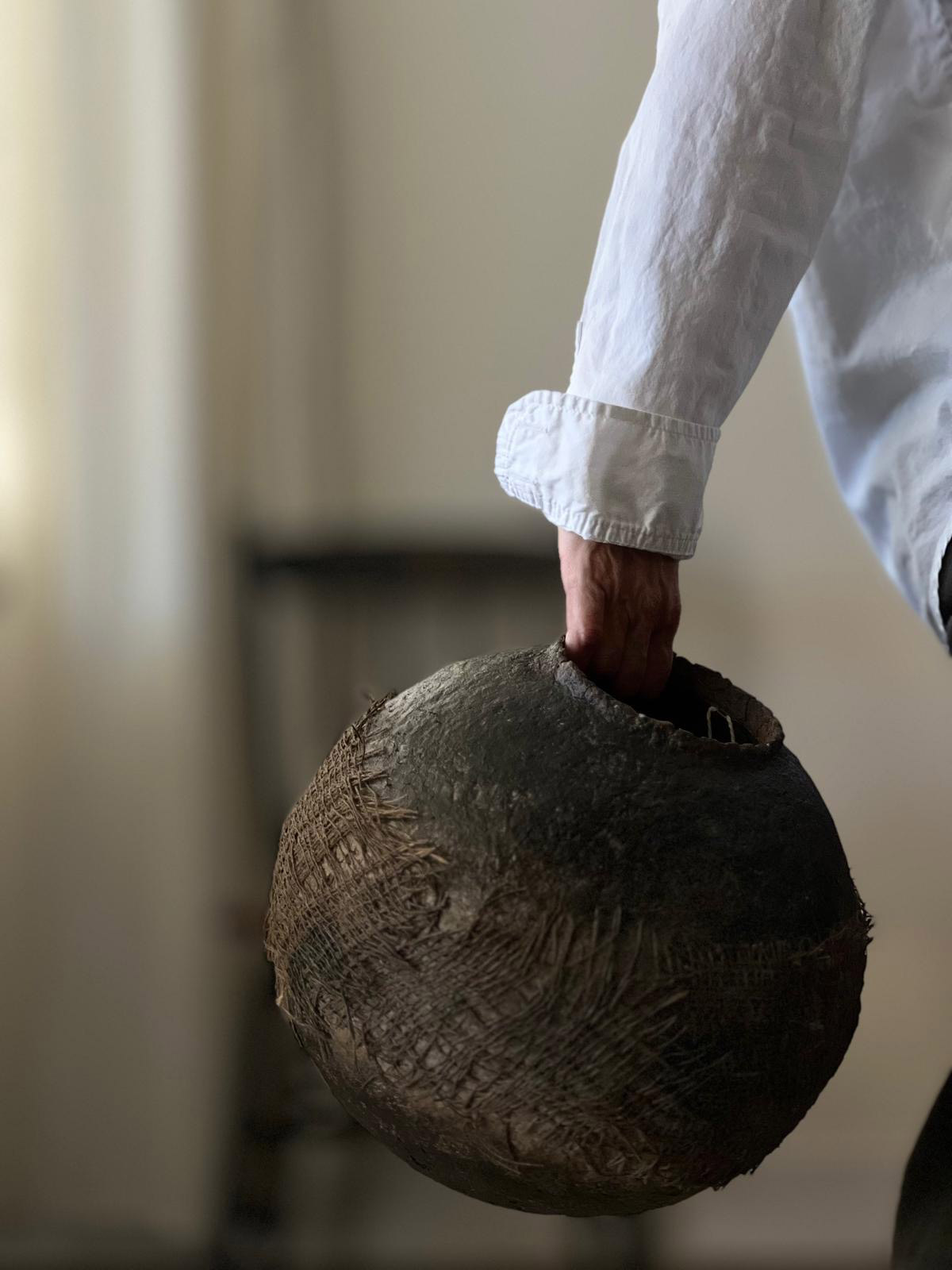
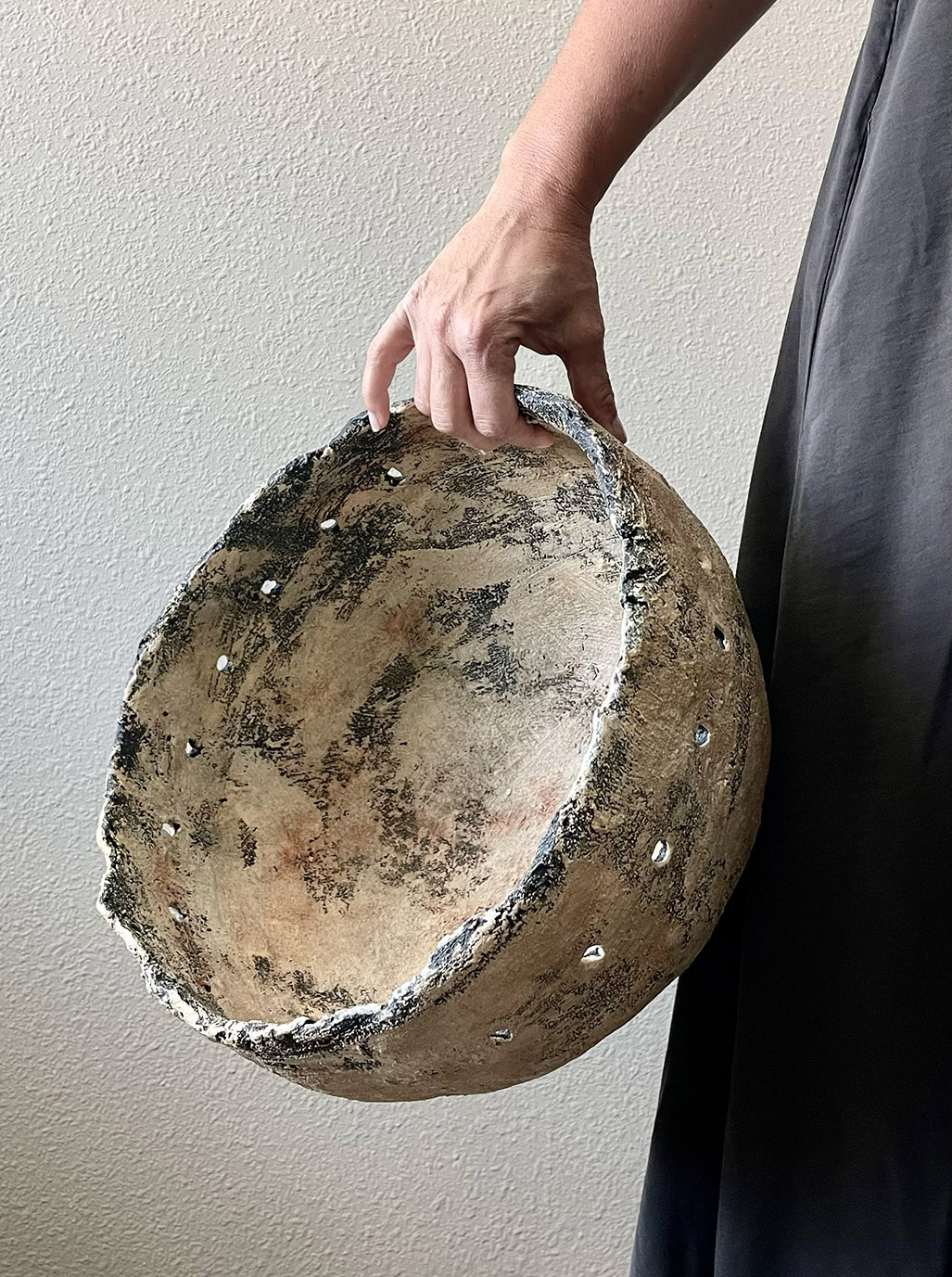
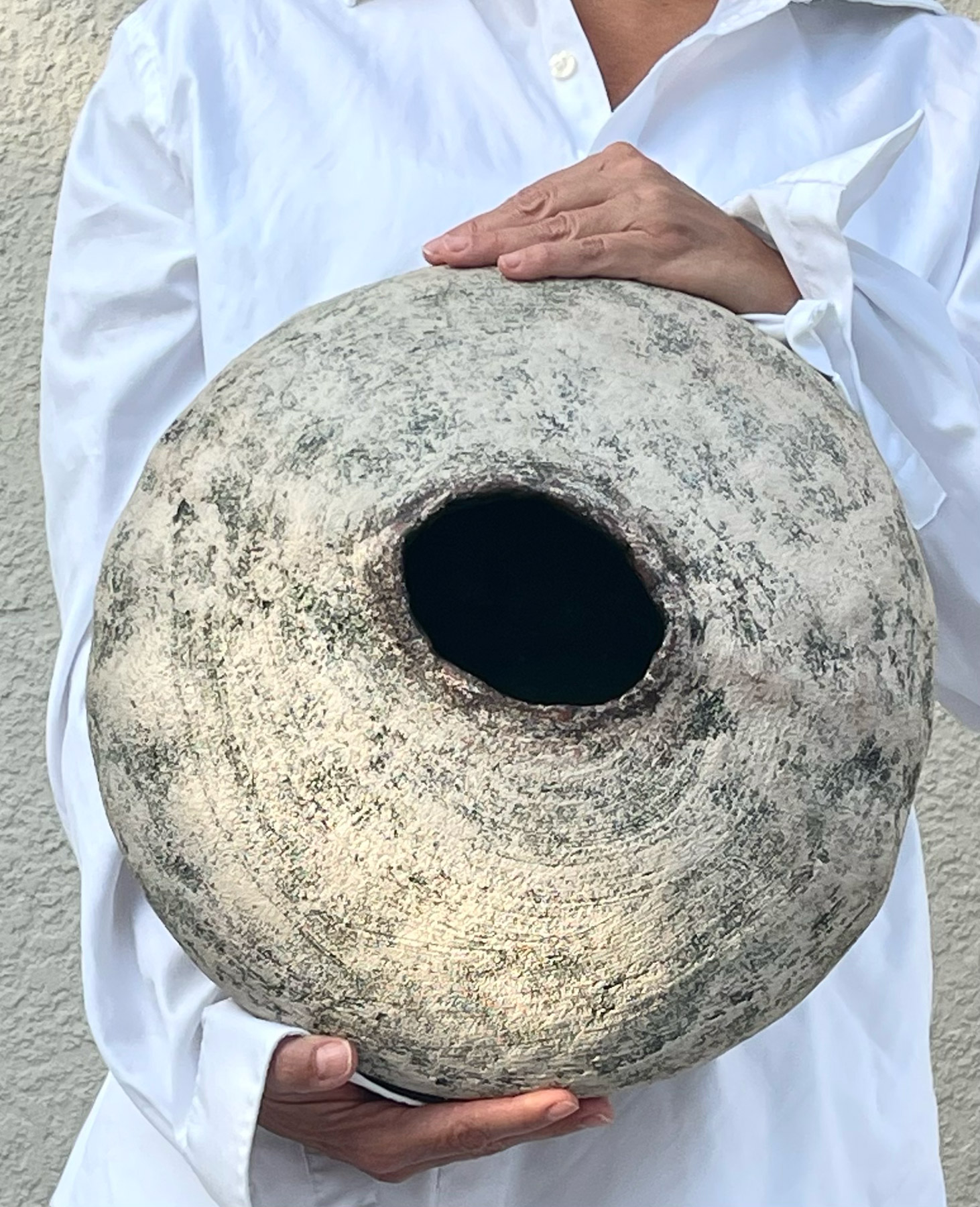
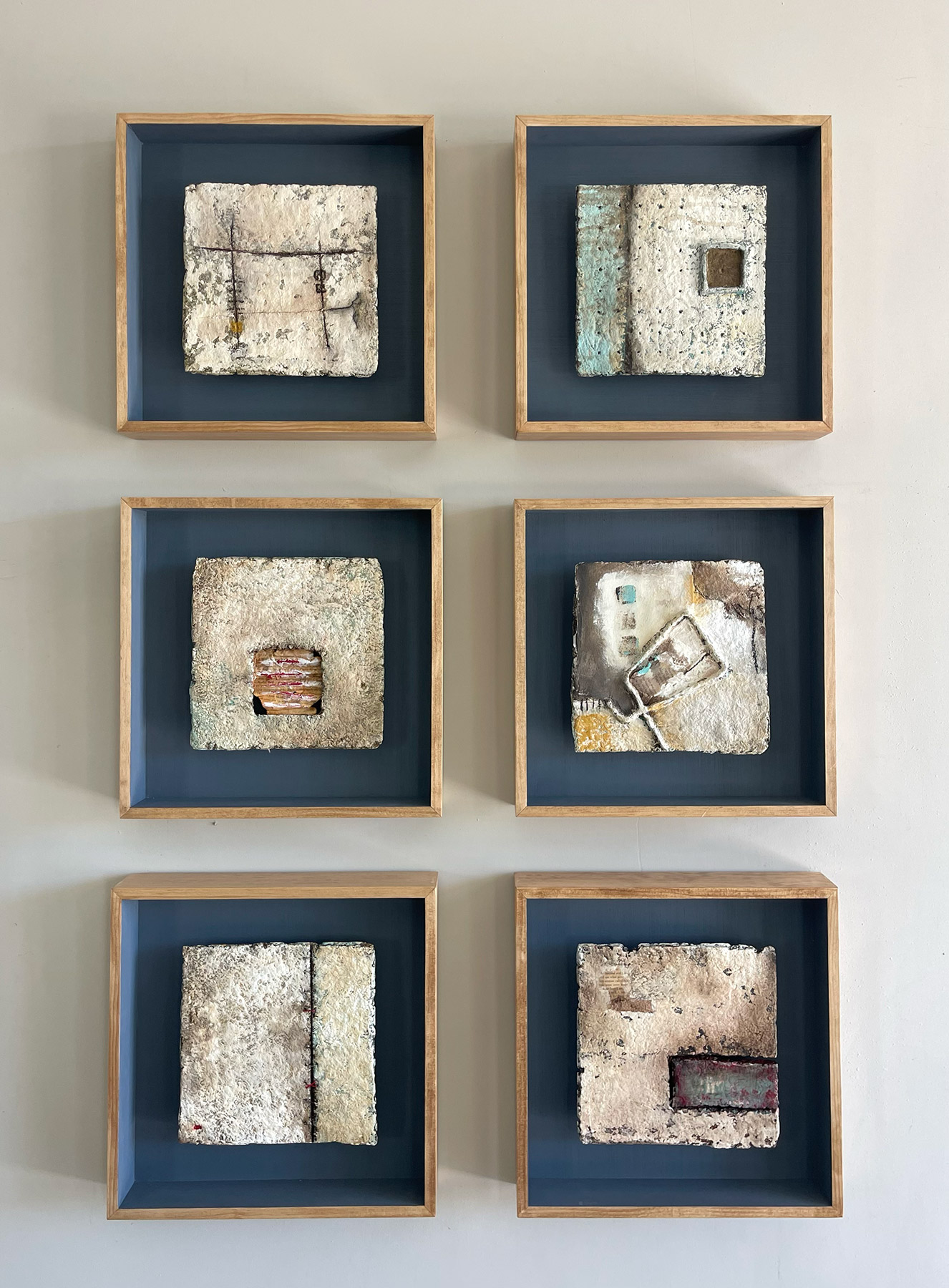
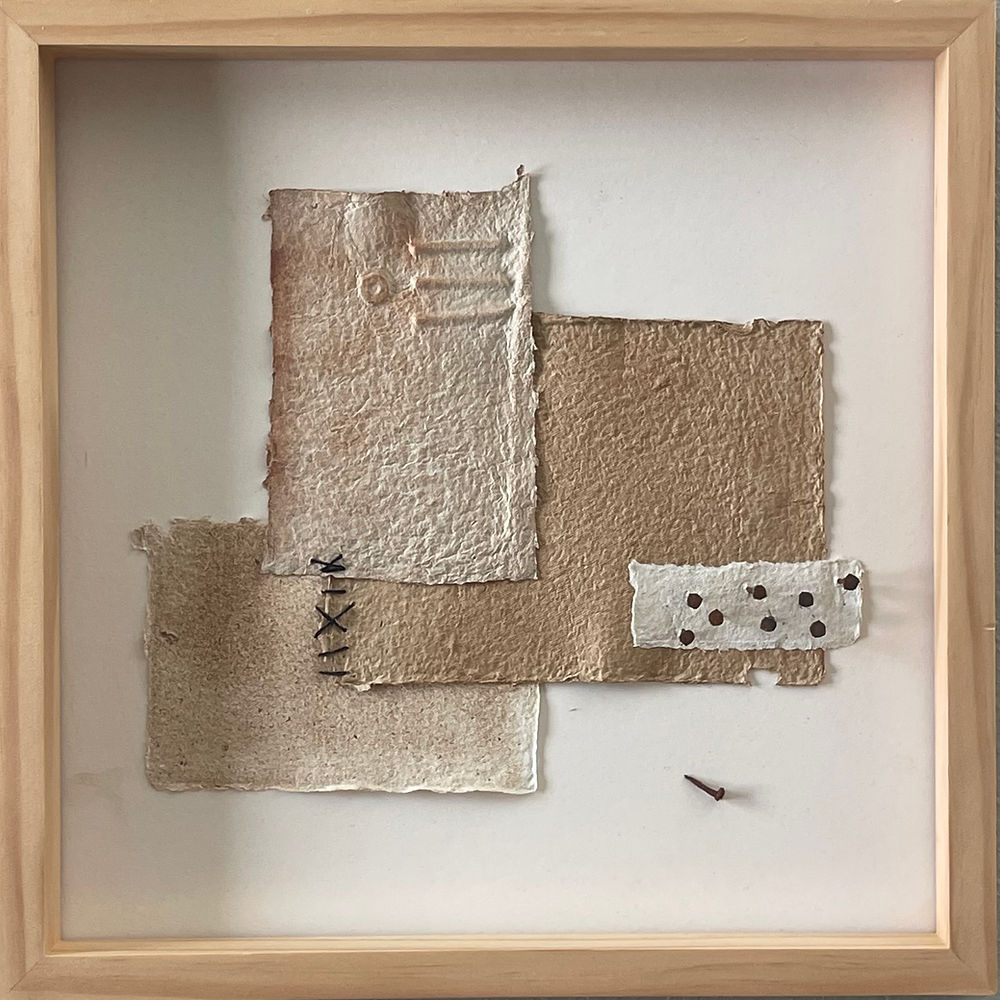
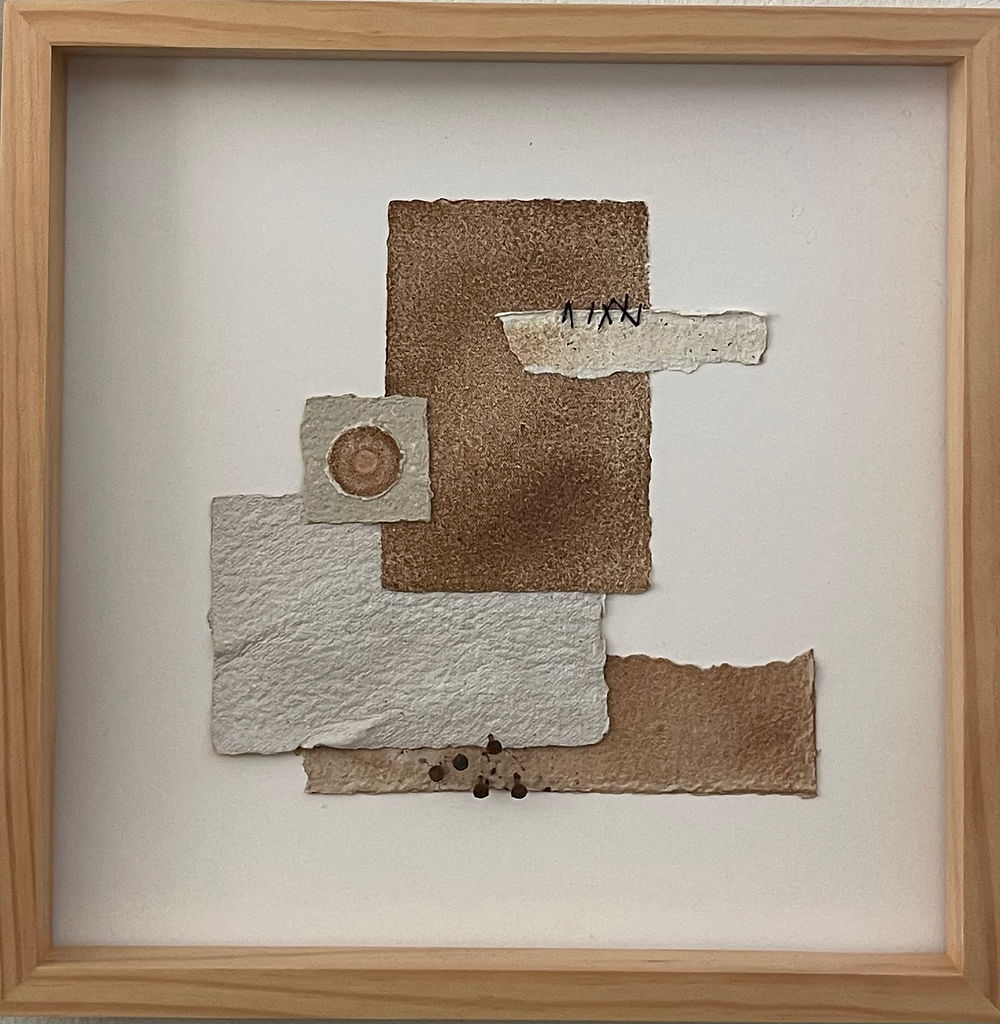
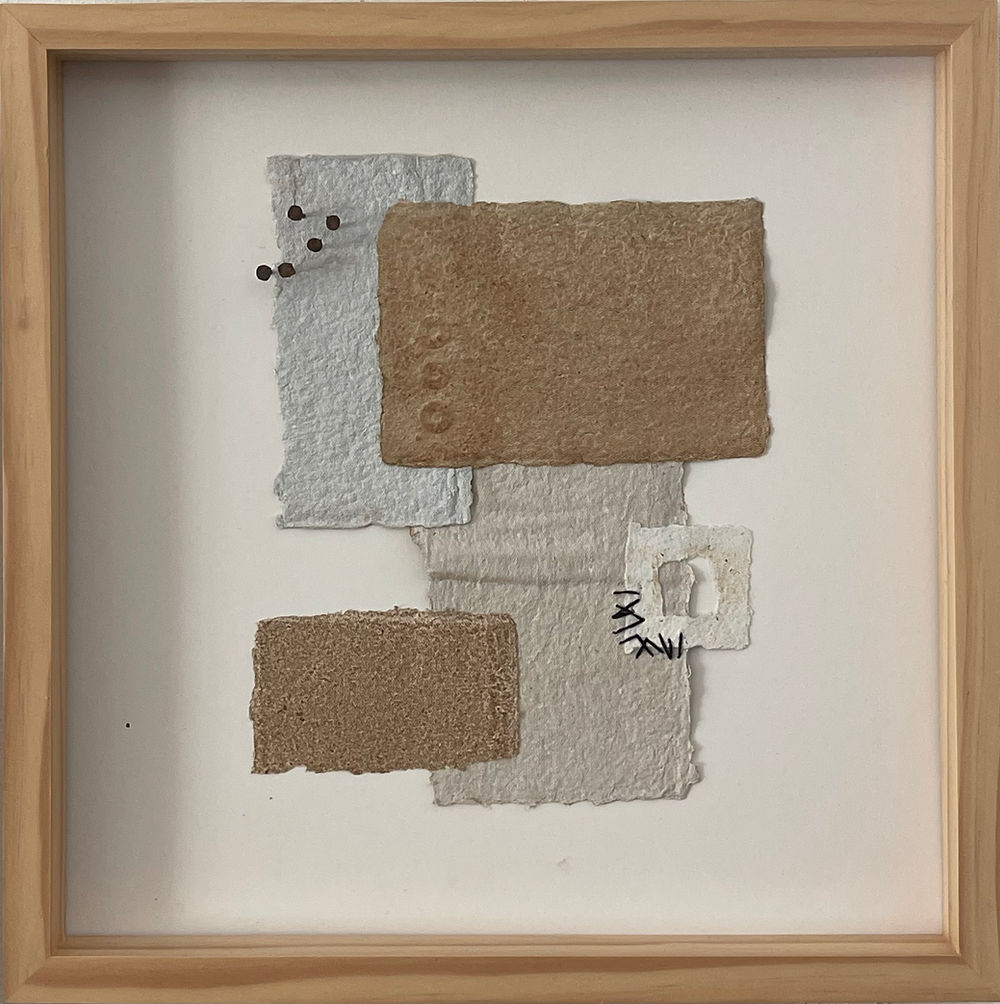
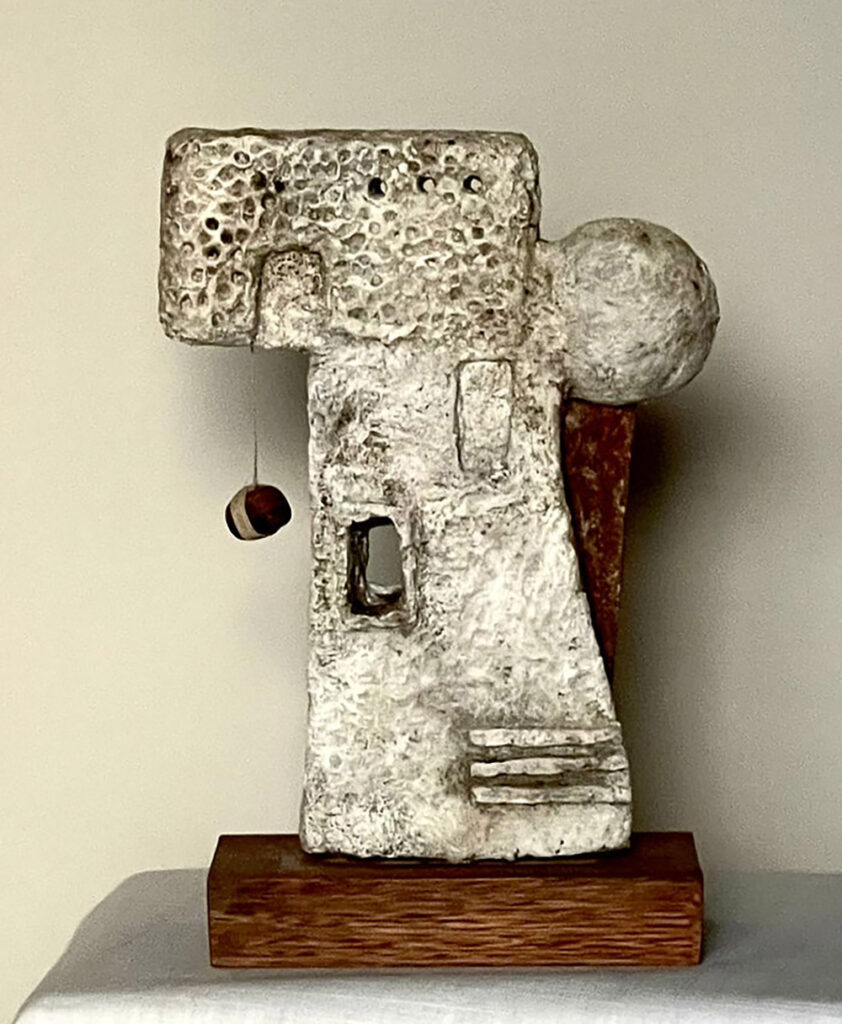
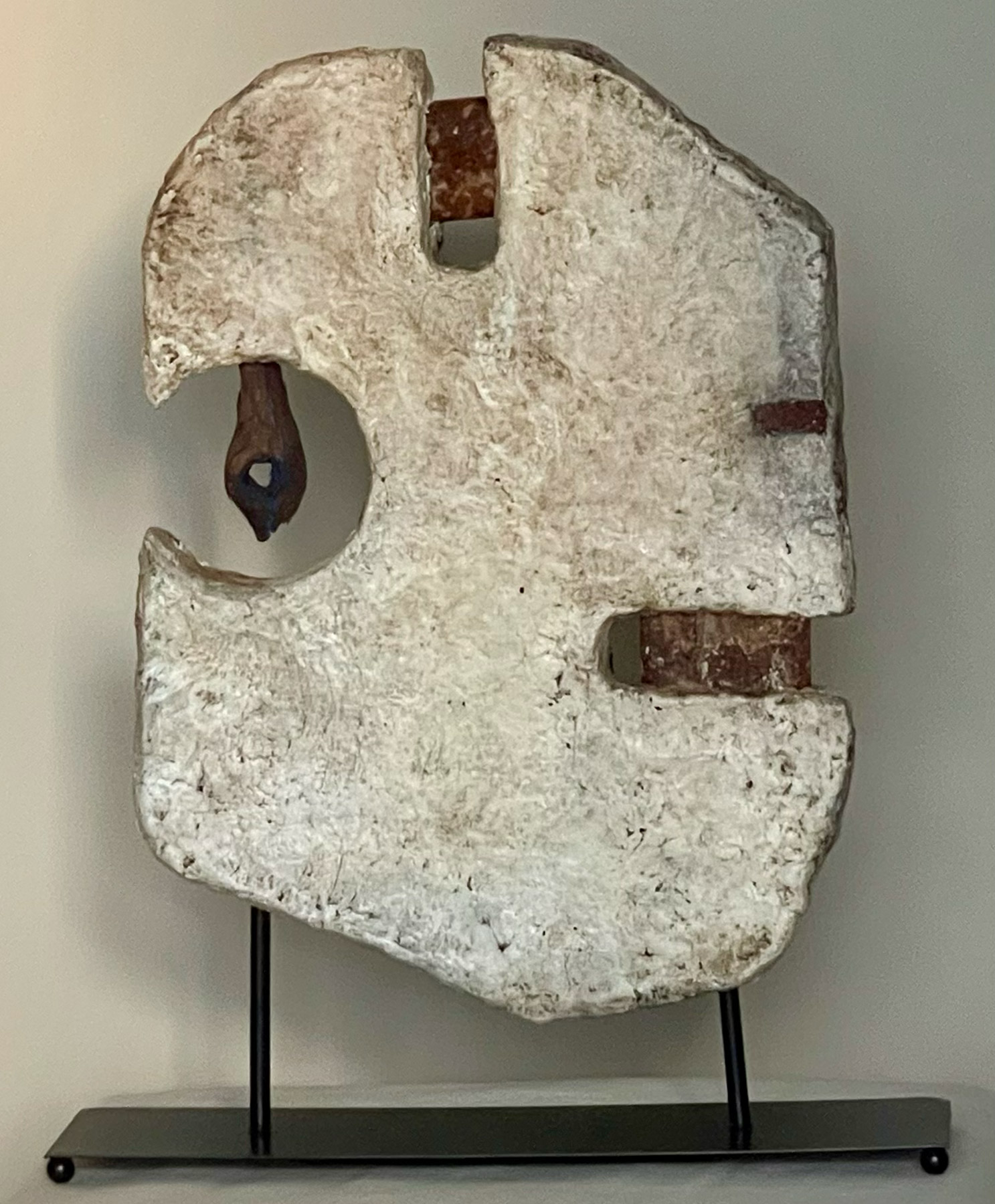
Papier-mâché has an undeserved reputation. It is associated with the provisional, with fragility. Natalia works precisely against that inertia: she transforms paper into something dense, tactile, structural. The starting point is cardboard, processed and combined with other elements until she achieves a malleable paste capable of holding complex forms while remaining responsive to touch and gesture.
“Although paper has historically been associated with the ephemeral or the artisanal, for me it has become a sophisticated sculptural medium full of possibilities. Each piece is born from a slow, intuitive process, built through layers, fragments, and textures that evolve organically during its making. I use no moulds and reproduce no designs; each work exists as an unrepeatable piece with its own identity.”
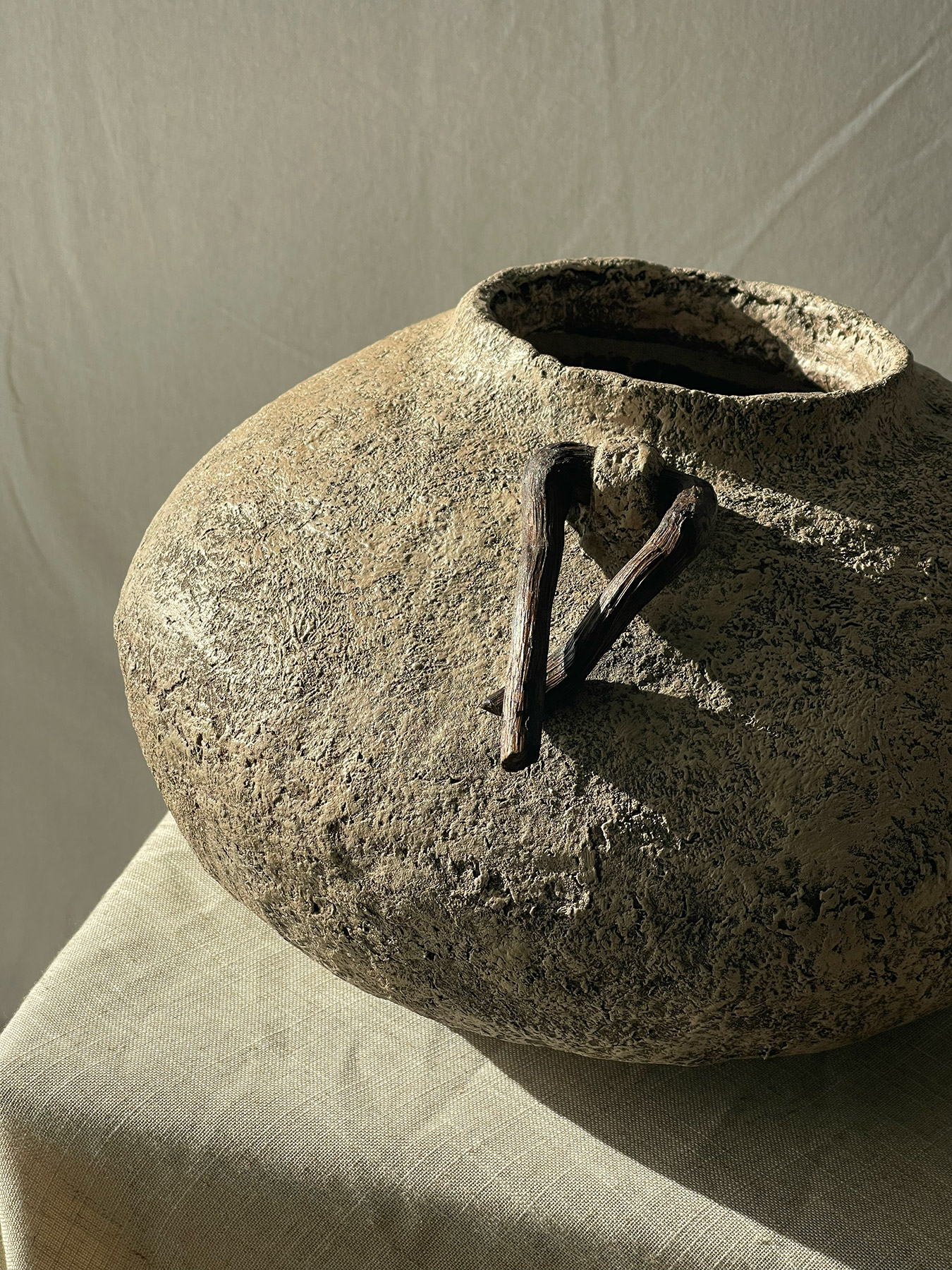
The process includes phases of drying, carving, and adjustment that can extend over long working sessions. The resulting surfaces retain the traces of their making: fibres, tonal variations, slight irregularities that are not flaws but evidence of the process — marks of a concrete human presence.
“For approximately four years I have been dedicated to exploring the sculptural possibilities of paper, developing pieces that challenge conventional forms and sit between art, design, and interior architecture. Through vessels, organic sculptures, and works made entirely by hand, I create unique pieces characterised by imperfect volumes, tactile surfaces, and an aesthetic that conveys strength and vulnerability at the same time.”
The creative process: a meditative and deeply intimate act
Natalia’s pieces carry no predetermined message; they do not illustrate an idea or embody a concept before they are made. They are born from the process itself. And that process — long and solitary — has a quality she describes with precision.
“Although the pieces I create do not necessarily begin with the intention of representing a specific meaning, I can say that the process of making each one inevitably becomes a deeply introspective experience. From the initial design to the final layer of finish, each work arises from an almost meditative state in which I face the creative process alone — with the demands of the material and with the unique challenges that each piece sets before me.”
The long hours of construction and transformation are not merely technical: they are also a space for oblique thought, for questions that surface without being sought.
“During those long hours of construction, texture, and transformation, questions about the inner self, identity, and my relationship with the world around me arise constantly. Rather than seeking to convey a literal message, my work ends up being the reflection of an emotional and sensory experience lived in the very act of creating. It is precisely that intuitive connection between matter, emotion, and personal exploration that gives my pieces an organic and deeply human presence.”
This introspective dimension explains something felt in her pieces before it can be named: the sense that they have been inhabited before they were finished, that they carry within them a time and a presence that is not only technical.
Art and space in continuous dialogue
Natalia’s background in interior design is not an incidental biographical detail. It is in the DNA of her work. Her pieces are not objects placed in a space; they are objects conceived to enter into dialogue with it, to transform it gently from within.
“My work speaks naturally to contemporary interior design. The pieces possess a sculptural presence that transforms spaces, bringing materiality, depth, and a sense of human connection to minimalist and organic environments.”
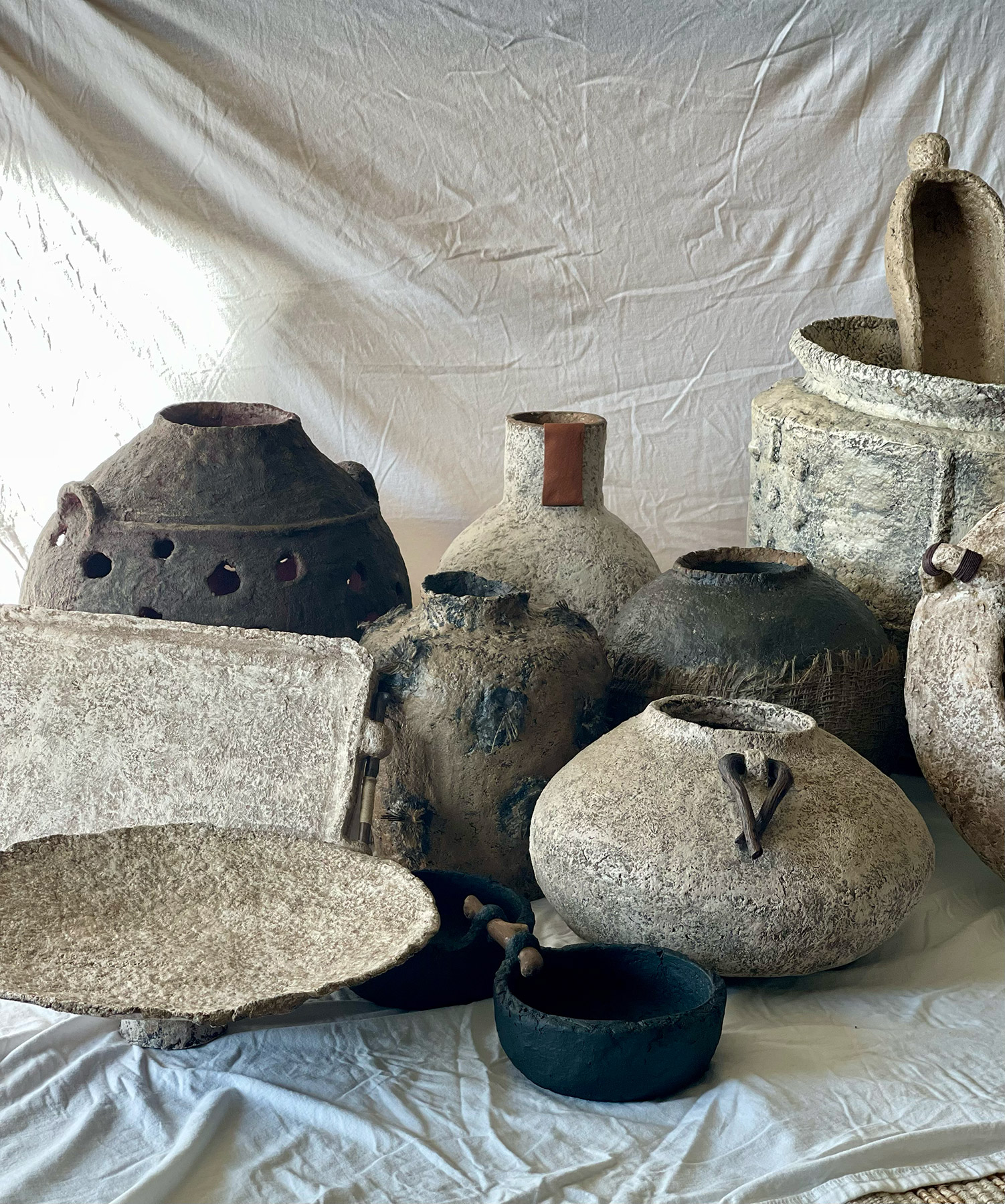
Her collections bring together vessels in different formats, wall pieces, and sculptures conceived as singular objects — not decorative in any superficial sense, but atmospheric: capable of shifting the emotional temperature of a space and giving it character. Her works are part of private collections in Australia, Belgium, Mexico, and Switzerland, and each piece includes a certificate of authenticity that underlines its condition as a unique work.
A practice in constant expansion
Natalia is currently working on a new collection that continues and extends what she has built so far.
“I am currently finishing a new collection in which I continue to deepen my exploration of papier-mâché as the primary material, while experimenting with the incorporation of new elements and materialities that allow me to expand the expressive and sculptural possibilities of my work even further. This new phase represents a natural evolution of my creative process and an ongoing search to discover new relationships between texture, volume, matter, and form.”
She is also developing new collections of large-format sculptures and vessels, deepening her research into paper as a contemporary artistic medium.
“I have developed a deeply personal sculptural language, in which papier-mâché ceases to be an everyday material and becomes an exploration of form, texture, and emotion.”
Natalia Correa’s journey has not been linear, but viewed in perspective it is coherent at every turn. There are artists who find their language by searching for it. There are others who find it by getting lost. Natalia belongs to this second category, and that is felt in the depth of her work.
Natalia Correa
biscottohouse@gmail.com
www.biscottohouse.com
@biscottohouse
Project by Natalia Correa