
The domestic architecture of the 1950s and 60s — above all on the west coast of the United States — has a quality that feels strangely contemporary today. Open-plan spaces, a direct relationship between interior and exterior, clean lines, colour used with intention and without fear. An aesthetic that grew out of confidence in progress, and that is now revisited through a selective nostalgia
It is no coincidence that some of the most influential collections of recent years — from Ikea’s collaborations with Nordic designers to the output of brands such as Hay or Menu — have returned to that formal vocabulary. The interest is, above all, functional: California Modernism found good answers to the problems of the small home and the social life, and those answers remain relevant.
In this renovation of a 95 m² flat on Madrid’s Paseo de Extremadura, Marta Miñarro chooses that reference as a starting point — and it proves entirely apt.
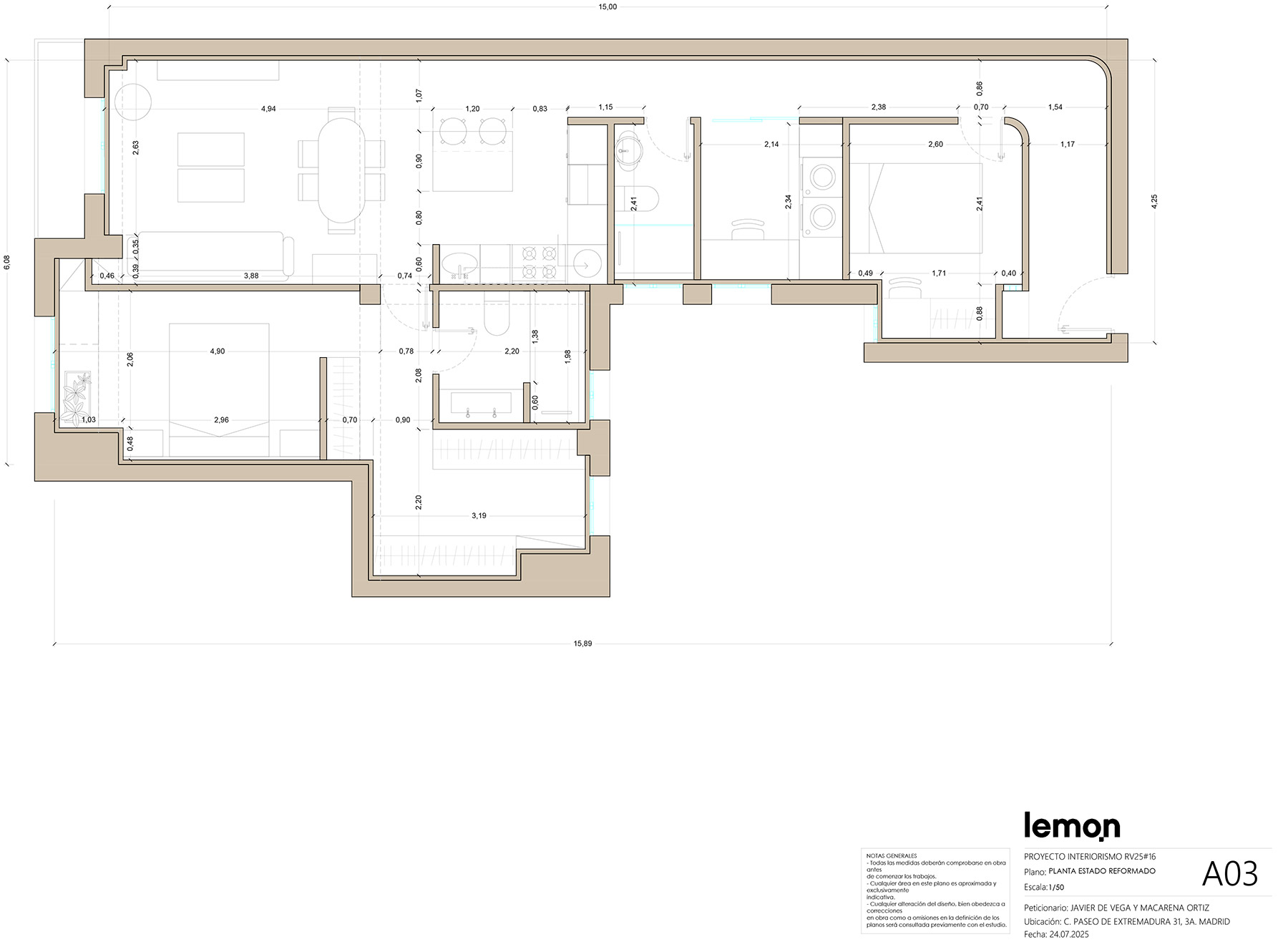
The flat had a compartmentalised layout, a long entrance hall acting as a barrier, and a closed kitchen that turned its back on the living room. The owners wanted more light, better connection between rooms, and a home that could receive guests well. Lemon Studio’s project responds to each of those needs with precise, considered solutions.
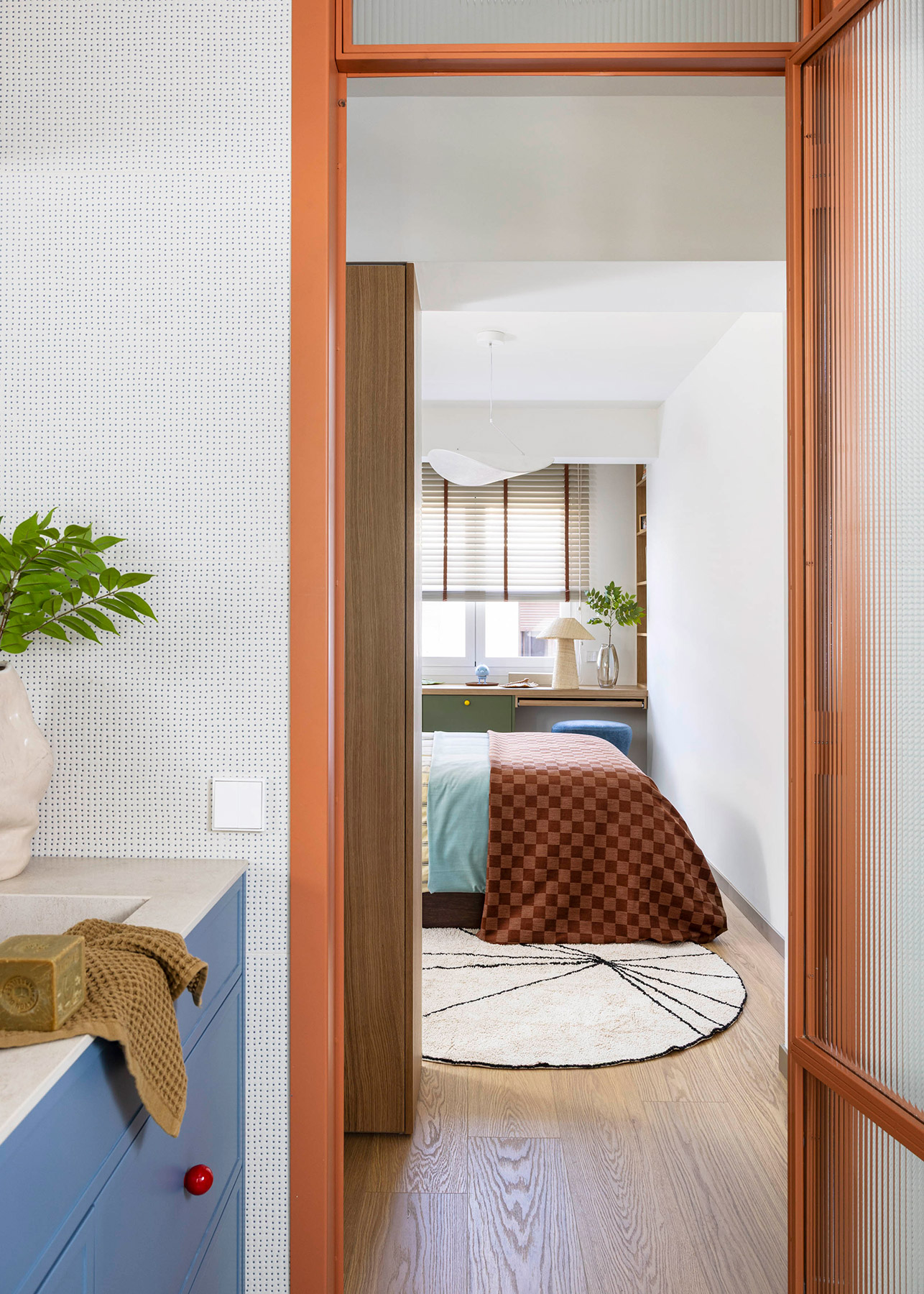
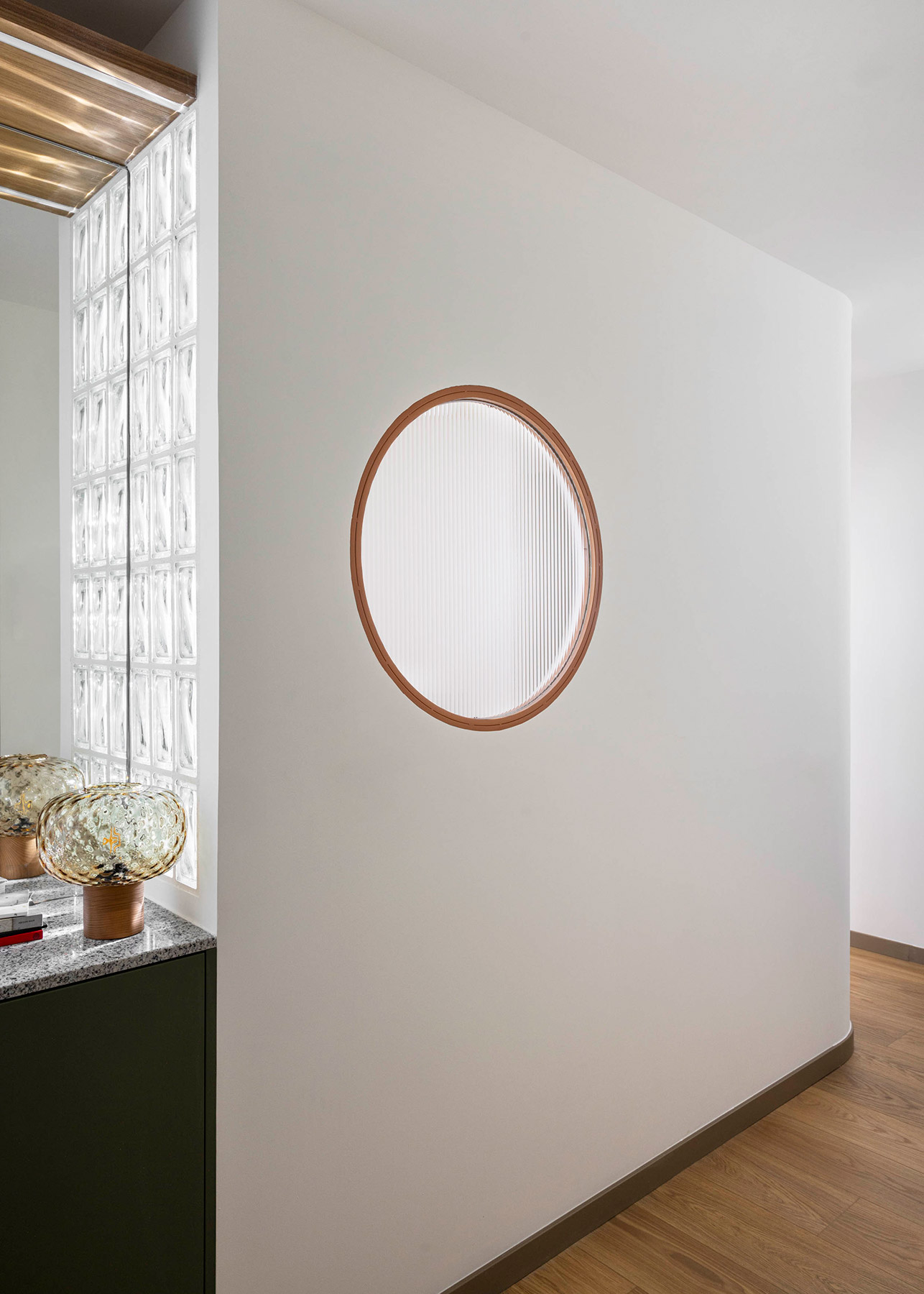
The first move is the entrance hall. Rather than keeping it as a corridor, it opens towards the study through a ribbed glass partition with an orange frame that allows light to pass through uninterrupted. The frame colour — a warm terracotta that reappears in door surrounds, handles and wall lights — is a decision about continuity: the thread that runs through the house from end to end.
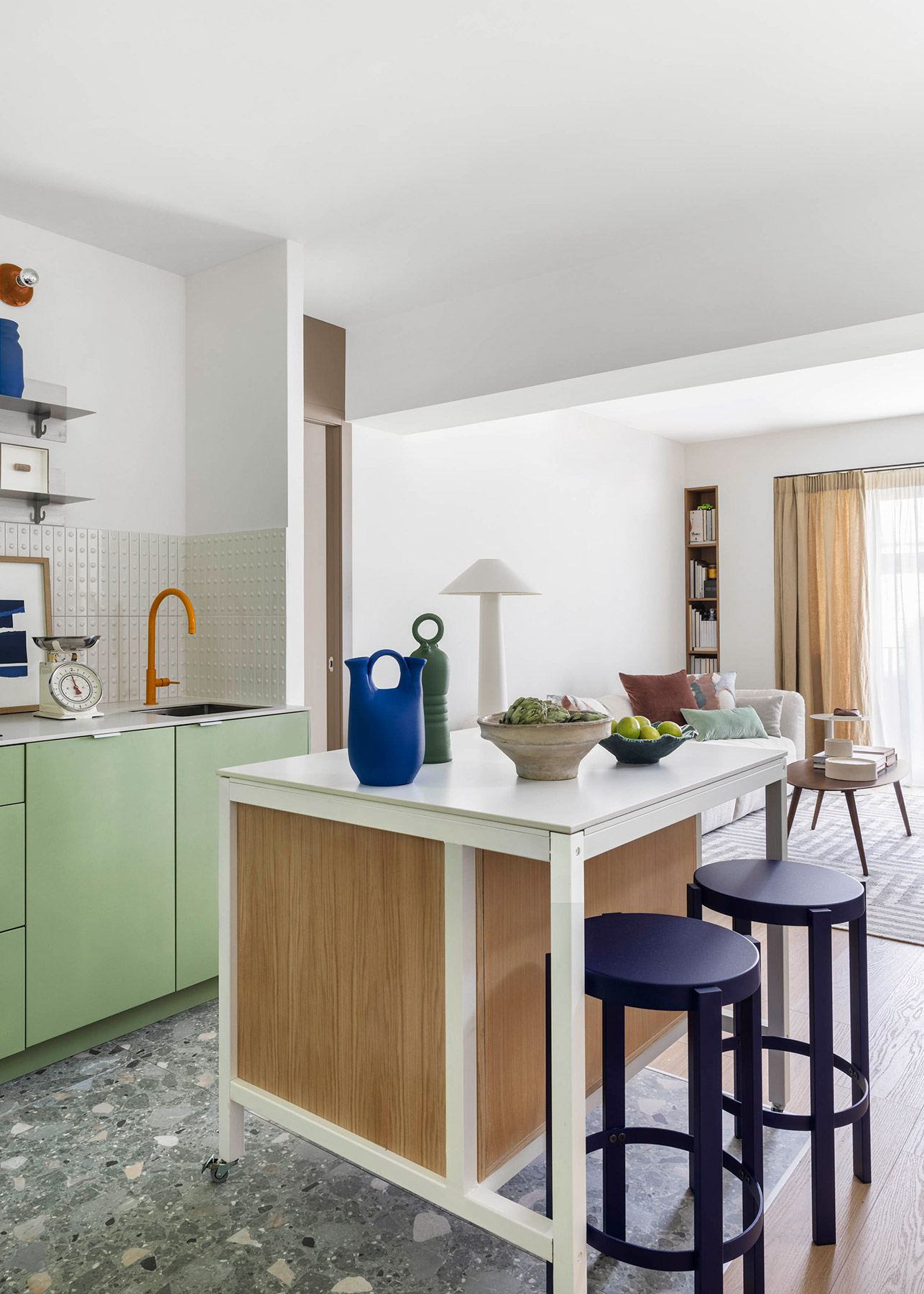
The kitchen integrated into the living room, the heart of the home
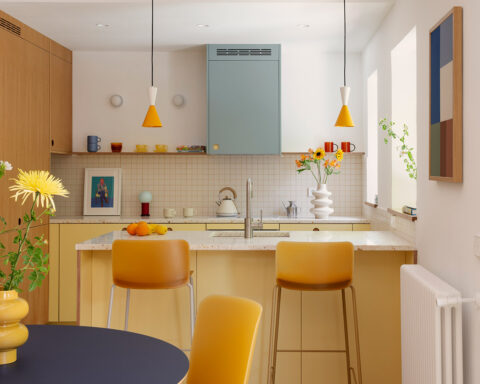
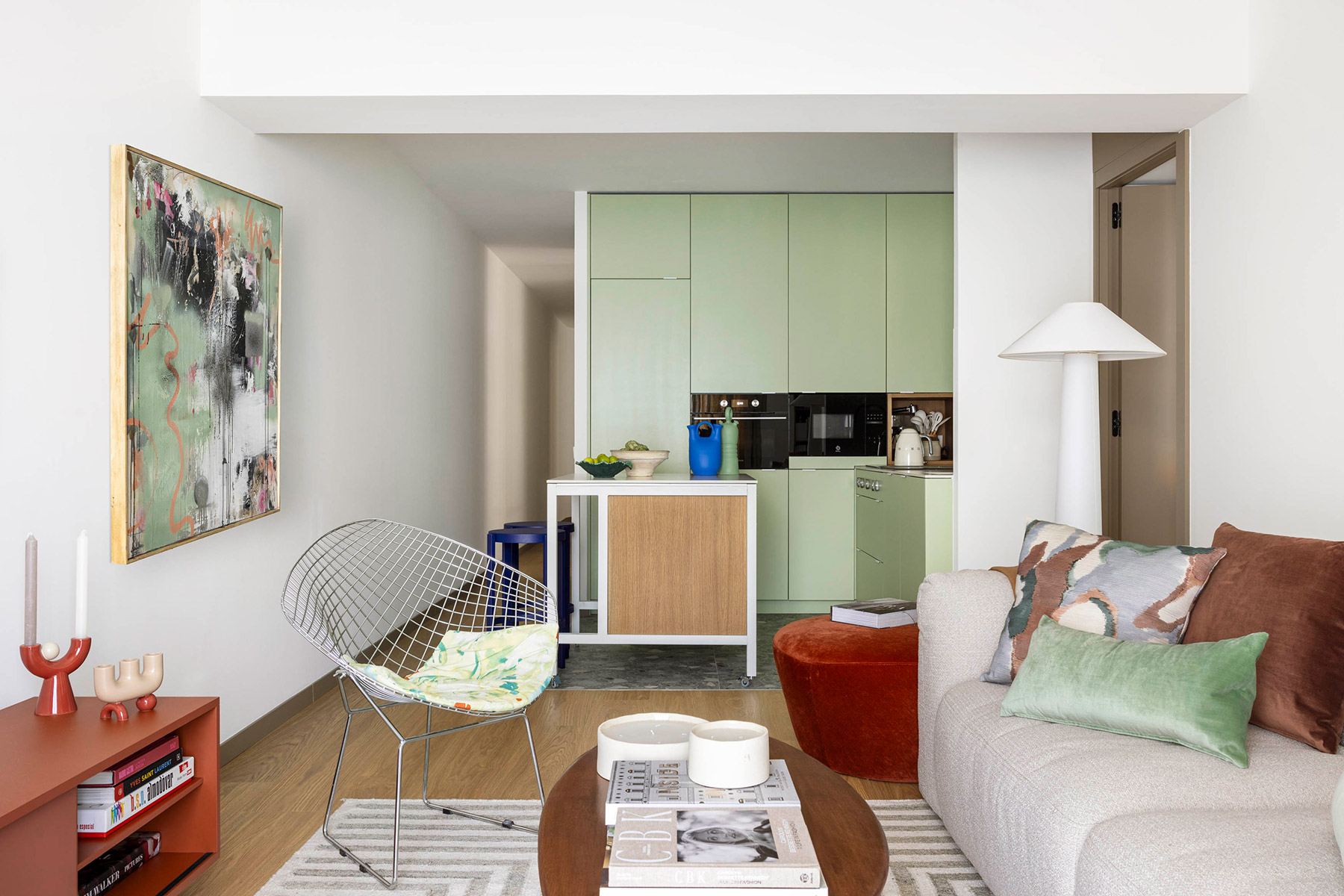
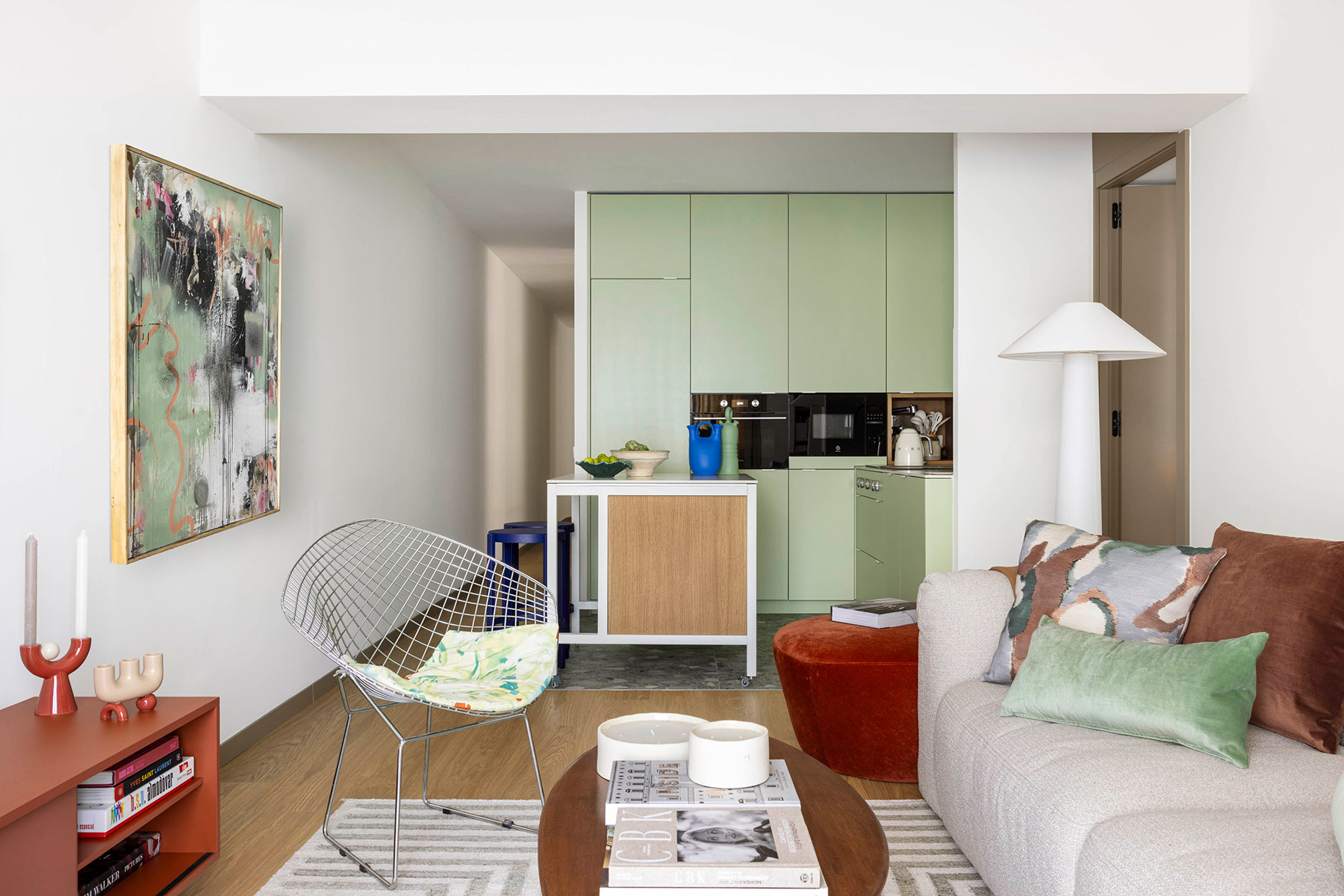
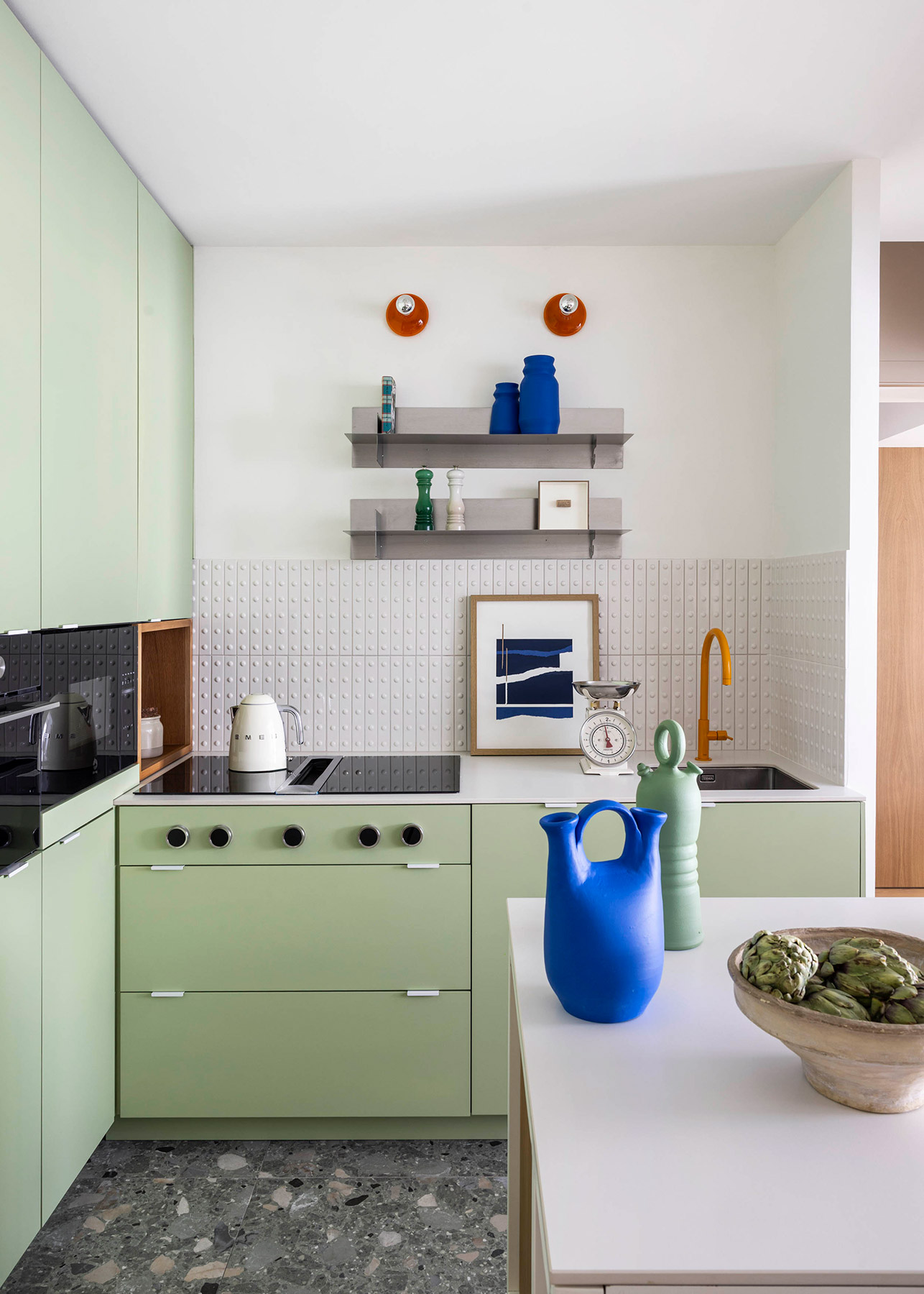
The kitchen is integrated into the living room by removing the wall between them, shortening the hallway in the process. The result is a generous central space, with sage-green floor-to-ceiling units, and a sixties-style terrazzo floor that marks the change of zone naturally. At its centre, a mobile island on wheels combines a white-lacquered structure with an oak front. It is not fixed because it does not need to be. It can move towards the kitchen when cooking in company, or draw back towards the living area when the occasion calls for it. It is a piece designed to accompany the act of receiving guests, which is exactly what the owners asked for.
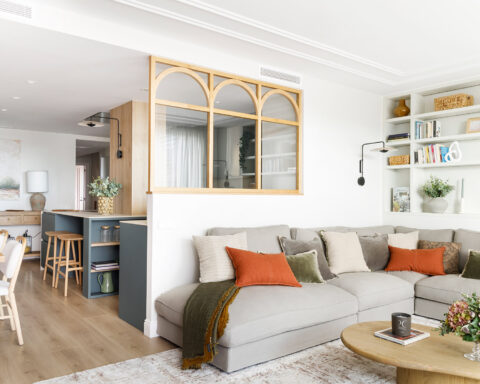
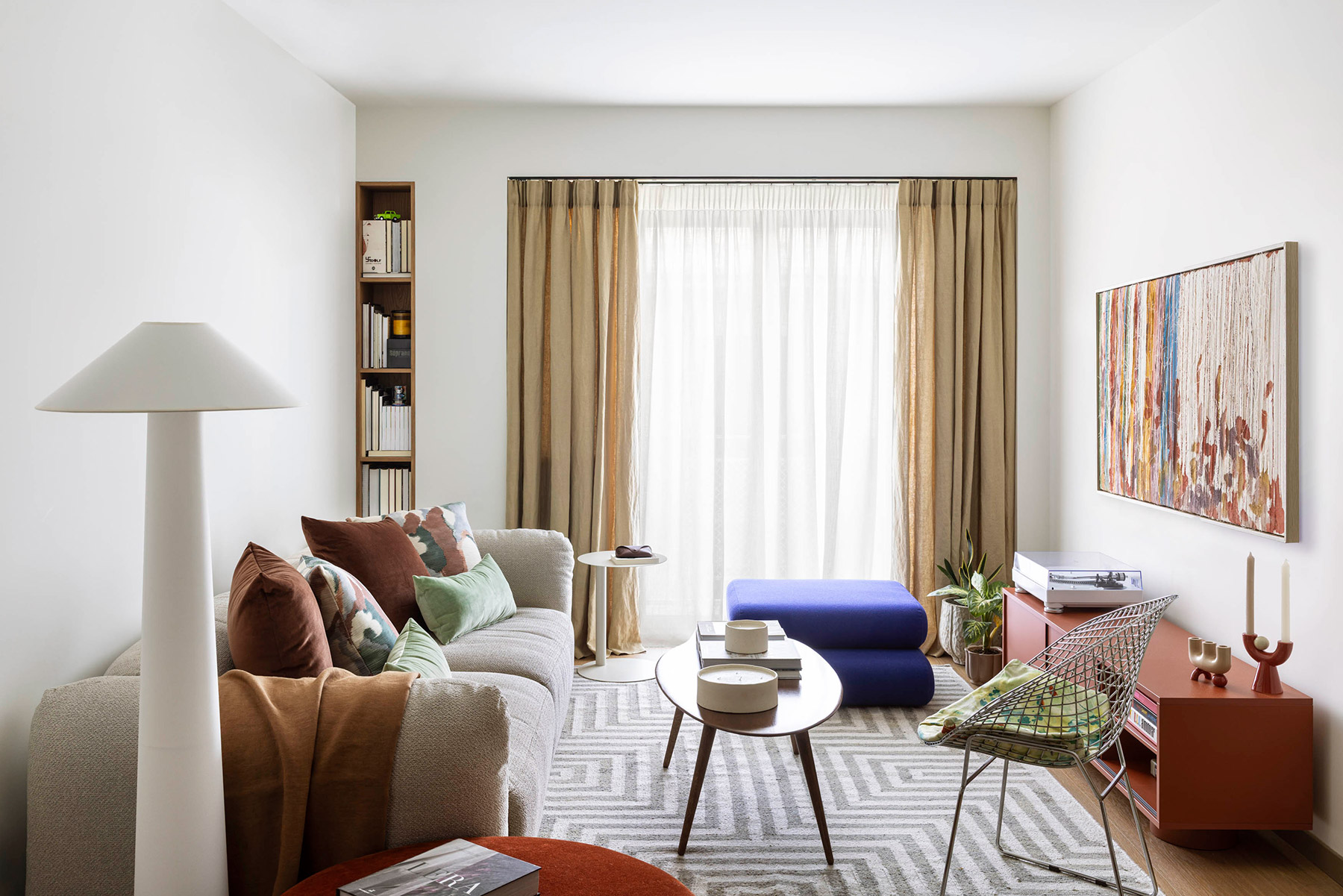
The living room organises itself around a low bouclé sofa in grey, a round dark-wood coffee table, and a Klein blue pouf that introduces the first strong chromatic accent. In front of the window, lined natural linen curtains by Gredecor, and two works on the walls by Alejandra Duarte and Marata Besada. The selection is not incidental: both in scale and palette, the works are in dialogue with the tones of the house.
The simplicity of the main suite
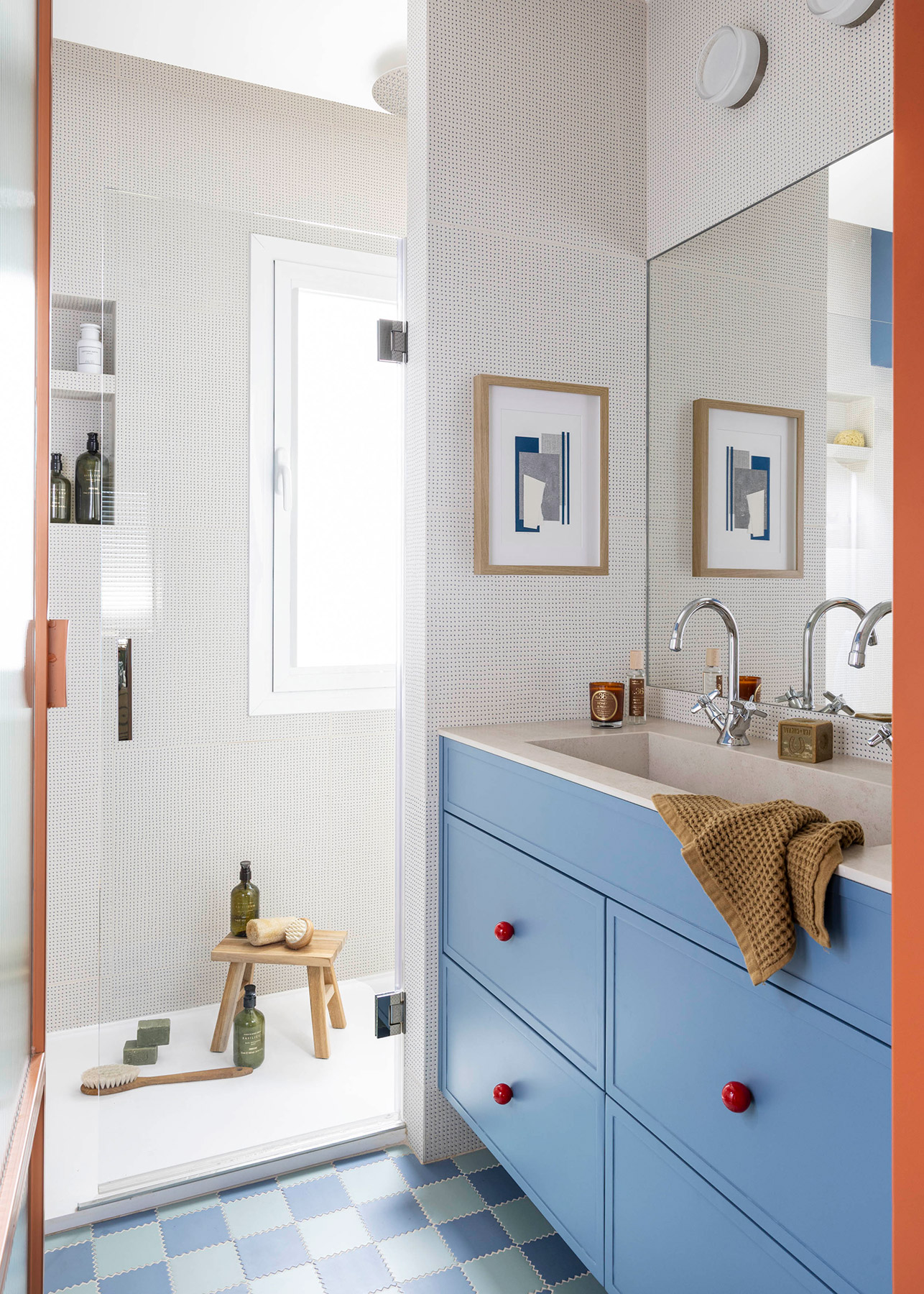
The main suite follows a simple logic. The bedroom faces the exterior, and the bathroom and dressing room shift towards the inner courtyard, where the light is more diffuse and stable. The suite bathroom works with white penny mosaic tiles, a bespoke unit in cornflower blue with red knobs — a contrast that refers directly to the pop palette of the sixties — and a blue chequerboard hydraulic tile floor. The sliding door with an orange frame connects visually with the bedroom without interrupting the flow of the space.
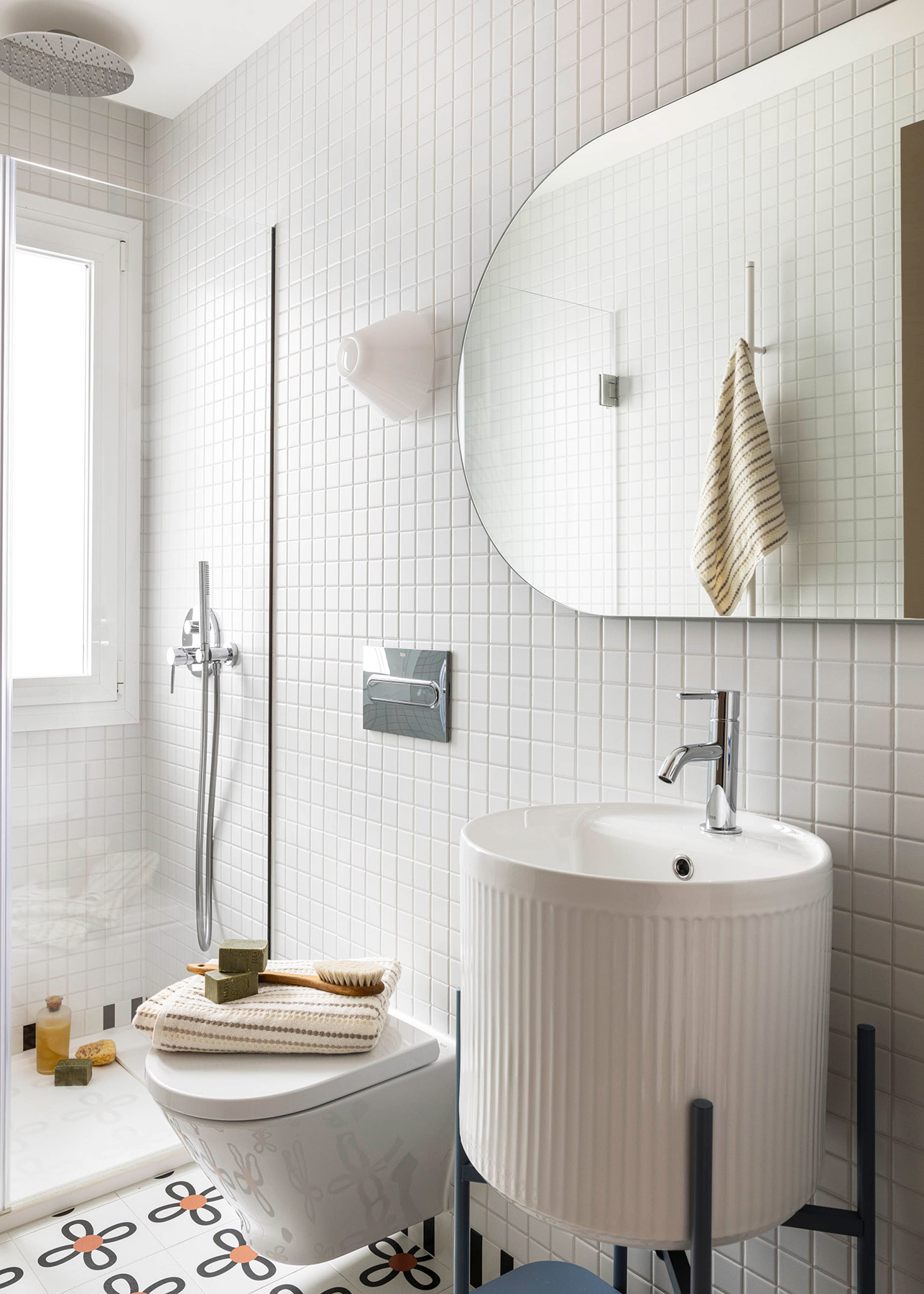
The second bathroom, more compact, opts for square white mosaic tiles on the walls, a fluted column washbasin, and a black-and-orange floral hydraulic tile floor that makes the pavement the protagonist.
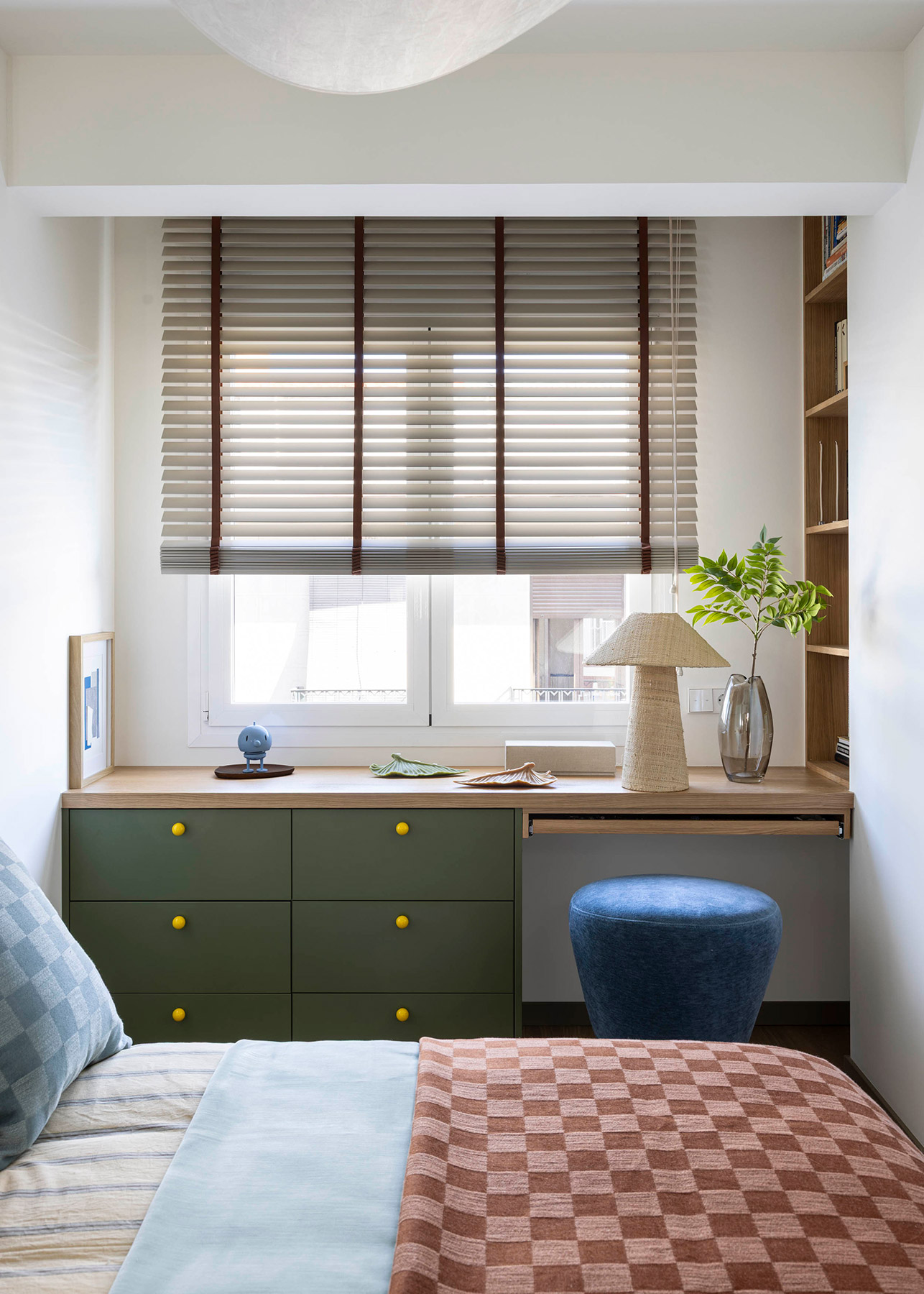
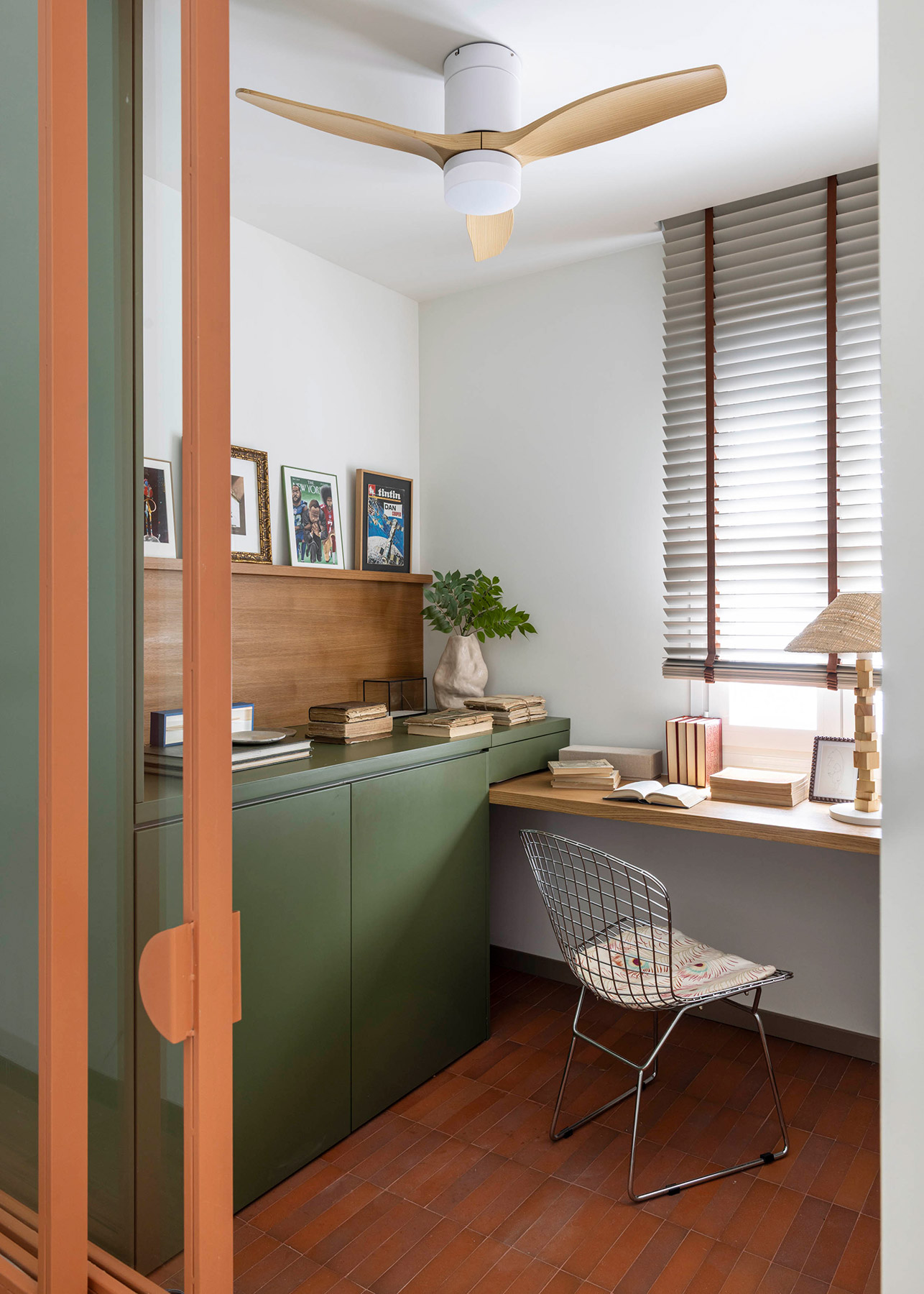
The study displays a new integrated palette
The study, reached from the entrance hall through the glass door, holds a different palette: fired-clay terracotta floor, olive-green joinery, and a wooden work surface beneath the window, with a slatted blind and leather tape. The Bertoia chair, left unupholstered, recalls that this space belongs to the same family of references as the rest of the house. A style carried through the whole project as attitude, beyond decoration.
The result is a home where every design decision strikes a balance between aesthetics and use. Light, materials and the new layout produce warm, comfortable and deeply liveable spaces.
Project: SL-PE31.
Location: Paseo de Extremadura 31. Madrid.
Area: 95 m².
Completed: 2026.
Interior design: Studio Lemon.
Photography: Amador Toril.
Styling: Cristina Rodríguez Goitia.
Art: Alejandra Duarte and Marata Besada.
Curtains and textiles: Gredecor. Table lamp: Soulem. Pouf: Lizzo. Chequerboard cushion: Pepe Peñalver. Round rug: Lorena Casals.
Source: Studio Lemon
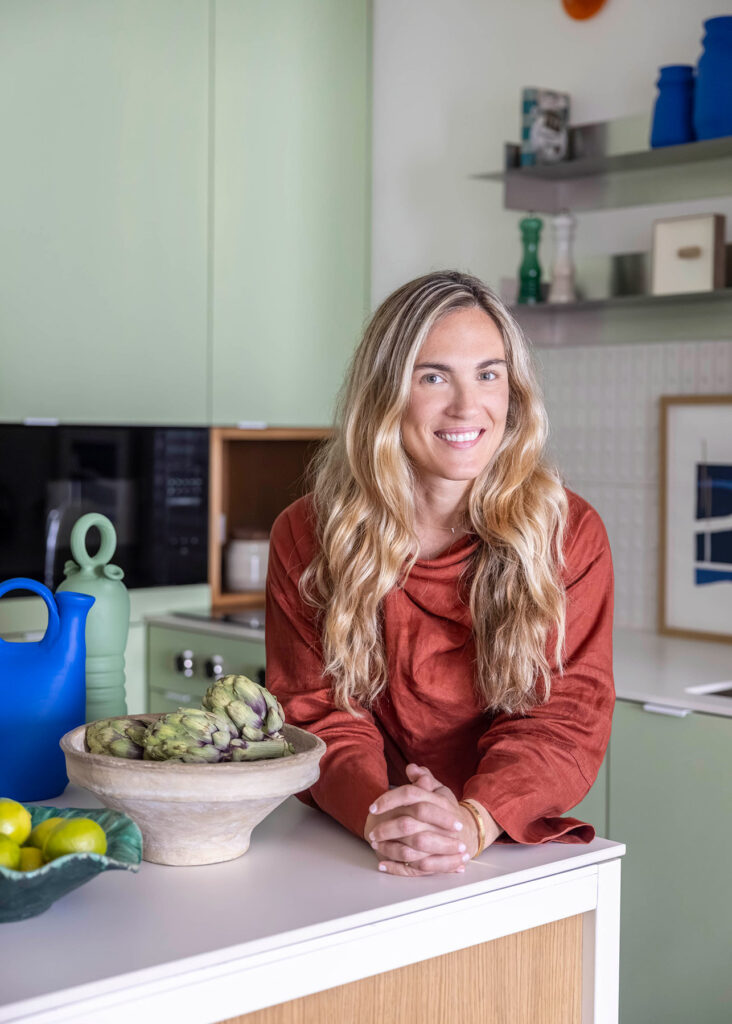
Marta Miñarro. Studio Lemon
Marta Miñarro Martínez holds a degree in Architecture from the Universidad Alfonso X el Sabio in Madrid, where she received first prize in the faculty’s residential design and urban planning competition.
Before founding her own studio, she broadened her experience in Helsinki at Ateljé Sotamaa, a firm specialising in single-family housing and restoration. The Nordic influence of that period — constructive rigour, material honesty, and a clean approach to domestic space — is evident in her subsequent work.
In 2021 she founded Lemon Studio, with offices in Madrid and Lorca (Murcia). Since its founding, the studio has specialised in distinctive residential and restoration projects, with a portfolio spanning Madrid, Murcia and the Mediterranean coast.
The studio’s philosophy is rooted in the conviction that architecture is deeply bound to people — to the way they inhabit and experience space. This premise translates into a working method that combines technical knowledge and aesthetic intuition, drawing strong inspiration from art, design and traditional craft. Meticulous attention to detail, a careful selection of materials, and a particular sensitivity to colour and texture are the hallmarks of every project. The result: interiors that are singular, timeless and honest.
Studio Lemon
Trafalfar 33
28010, Madrid
+34 630 857 415
marta.minarro@studiolemon.es
studiolemon.es
Project by Marta Miñarro. Studio Lemon