
Suspended on the flank of the Serra de Tramuntana, Galilea is a Mallorcan corner that seems to float in a suspended time, halfway between the solidity of rock and the vastness of the sky. There, the bustle dissolves into the echo of footsteps on steep streets that smell of woodsmoke, rosemary and damp earth. The façades of its houses huddle together as if seeking shelter beneath the imposing gaze of the Puig de Galatzó. Walking its streets, one can enjoy an absolute stillness broken only by the distant song of birds or the whisper of wind through centuries-old pines and olive trees..
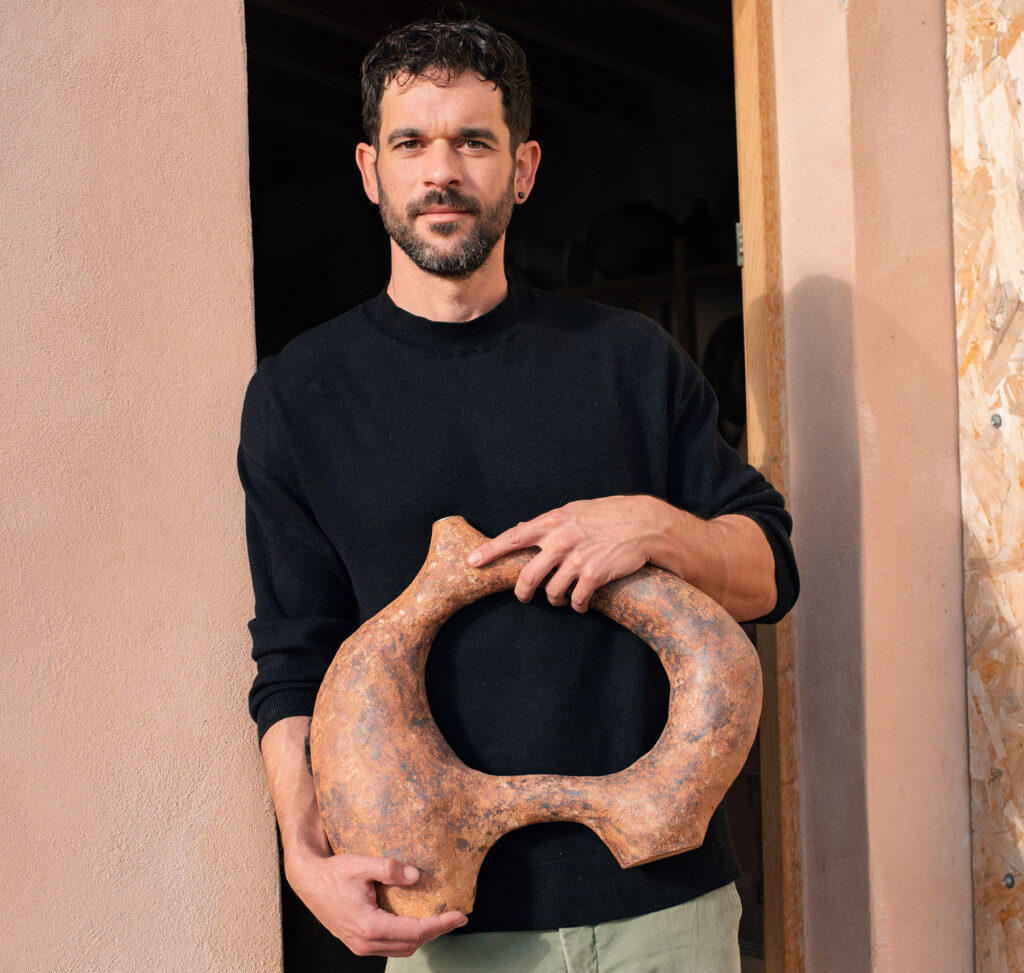
Galilea is the Mallorcan refuge chosen by the artist Paco Romero to work clay the way it was done before the wheel and the mould: with his hands, with stones and pieces of wood gathered on site, letting the material decide much of the piece — one that does not seek to imitate ancient forms or reproduce a decorative style, with a way of working in which the material takes centre stage.
The evolution of his creative process
Romero was born in Alicante and trained at the higher school of art and design, focusing at first on painting and sculpture on canvas. The decisive turn came in Barcelona, where he spent a season in the studio of the Catalan master ceramicist Ramon Fort, from whom he learned the craft that still drives his passion. “That was when I understood the language of clay, and the infinite possibilities it offered both in ceramics and in painting.”
In 2016 he moved to Mallorca and set up his own studio. He began by making functional pieces that he sold in shops and markets across the island. Over the years, that work evolved into sculptural and decorative objects designed for interior spaces, many of them born from commissions and later turned into permanent installations. It was also during this period that he changed his technique, giving up the wheel to focus on hand-building, a process he calls “more organic and moving.”
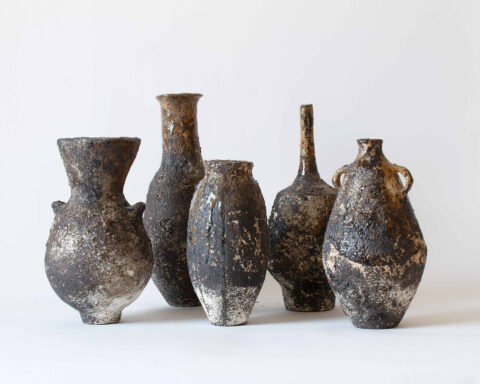
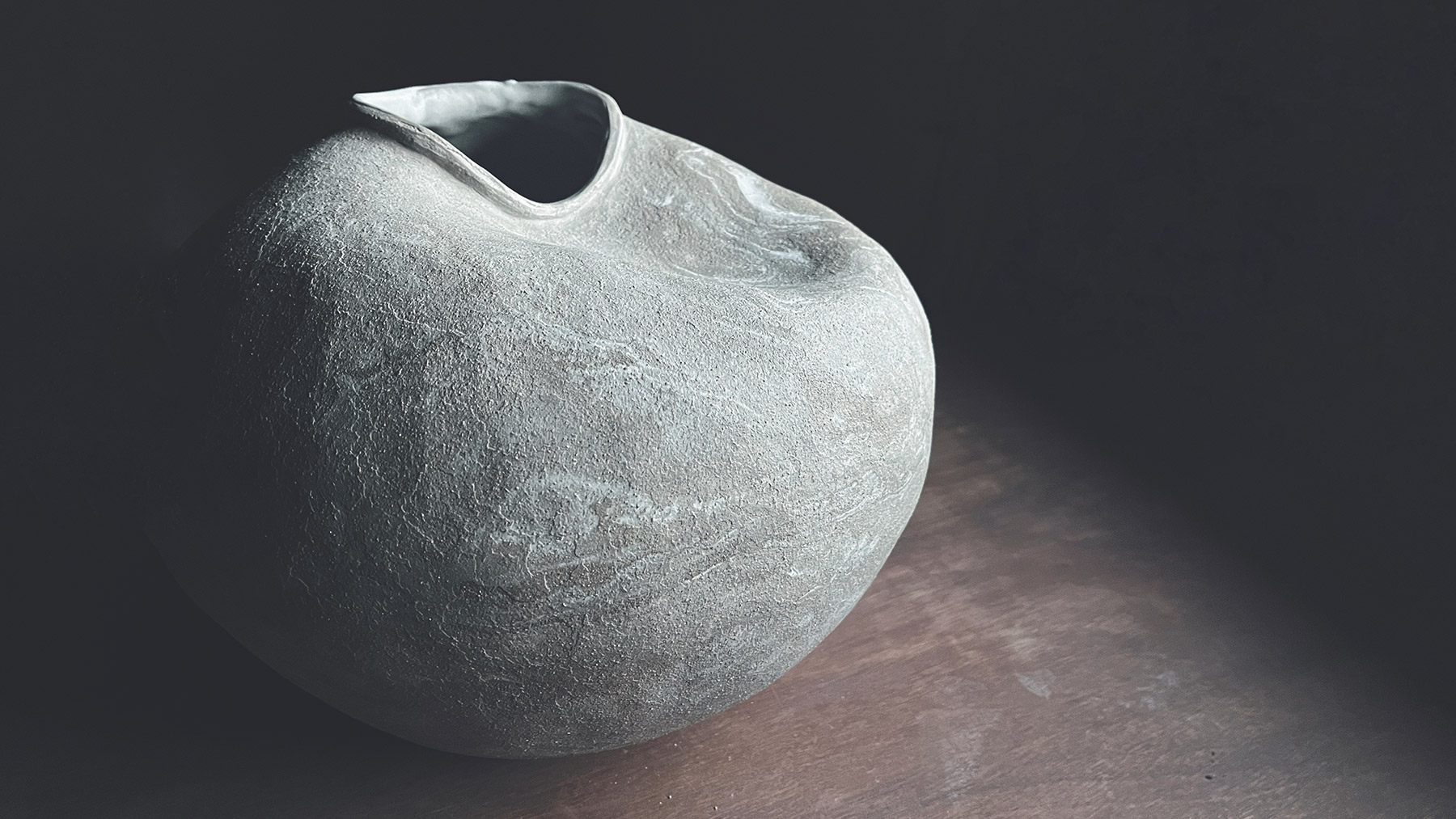
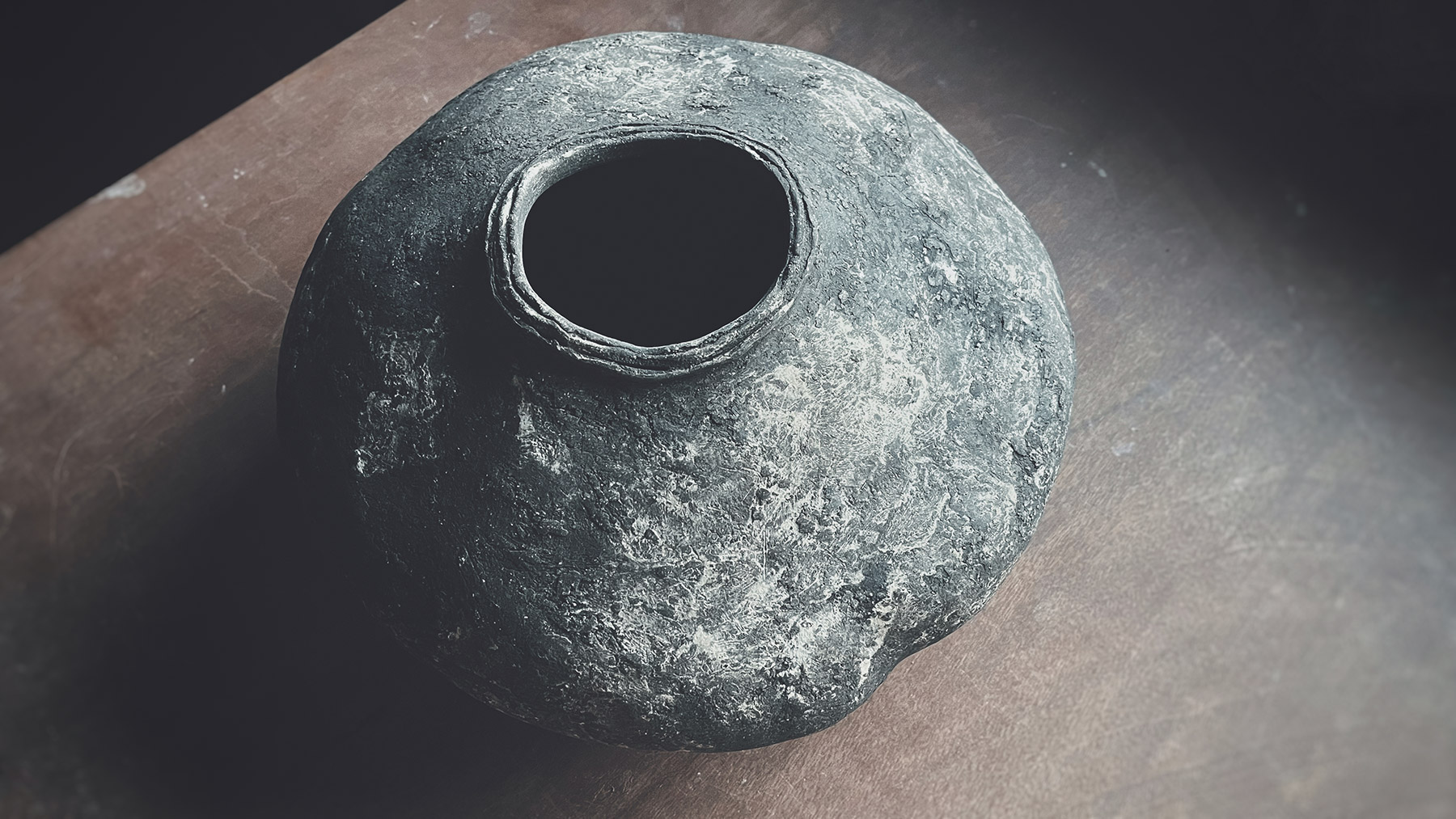
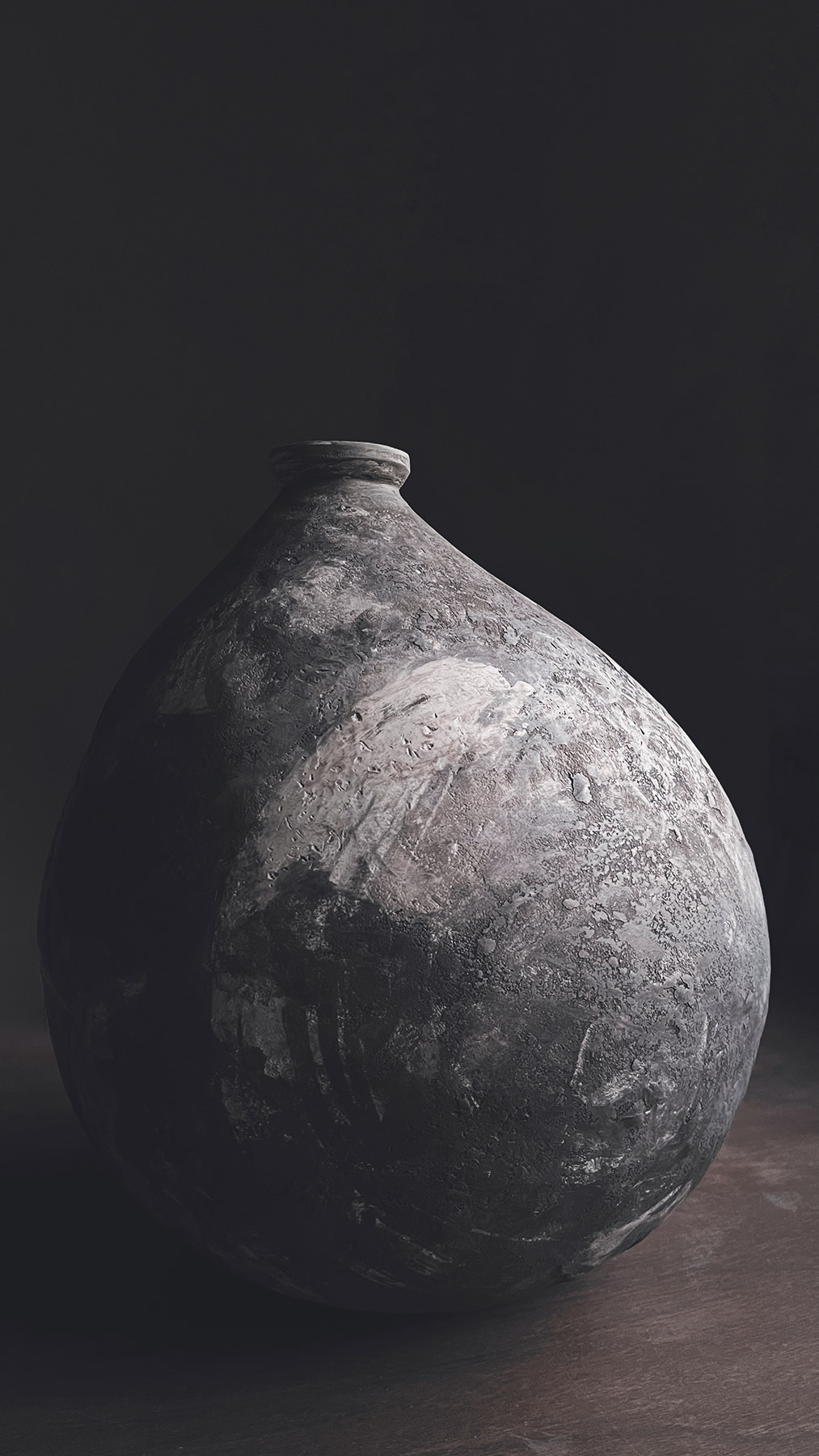
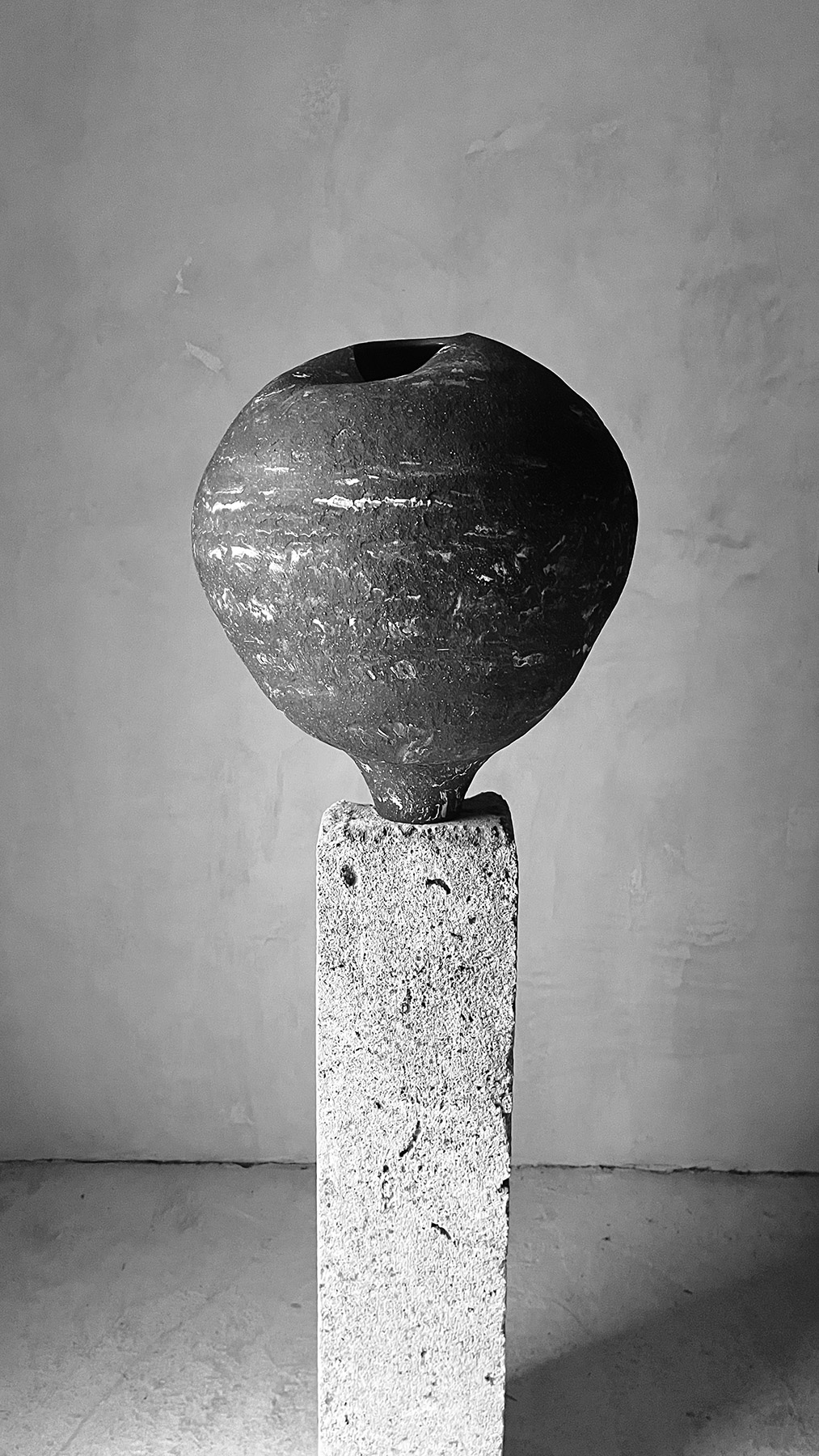
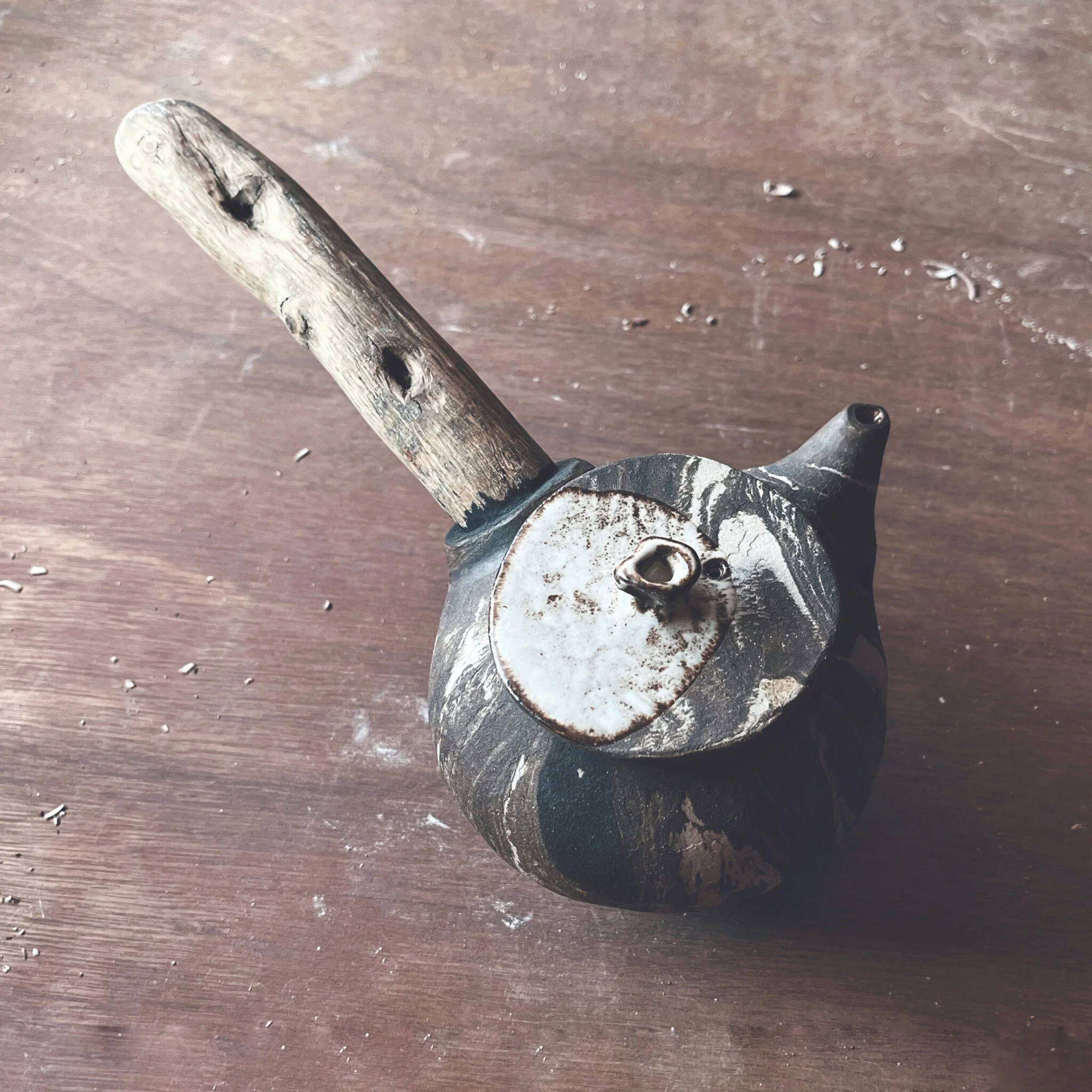
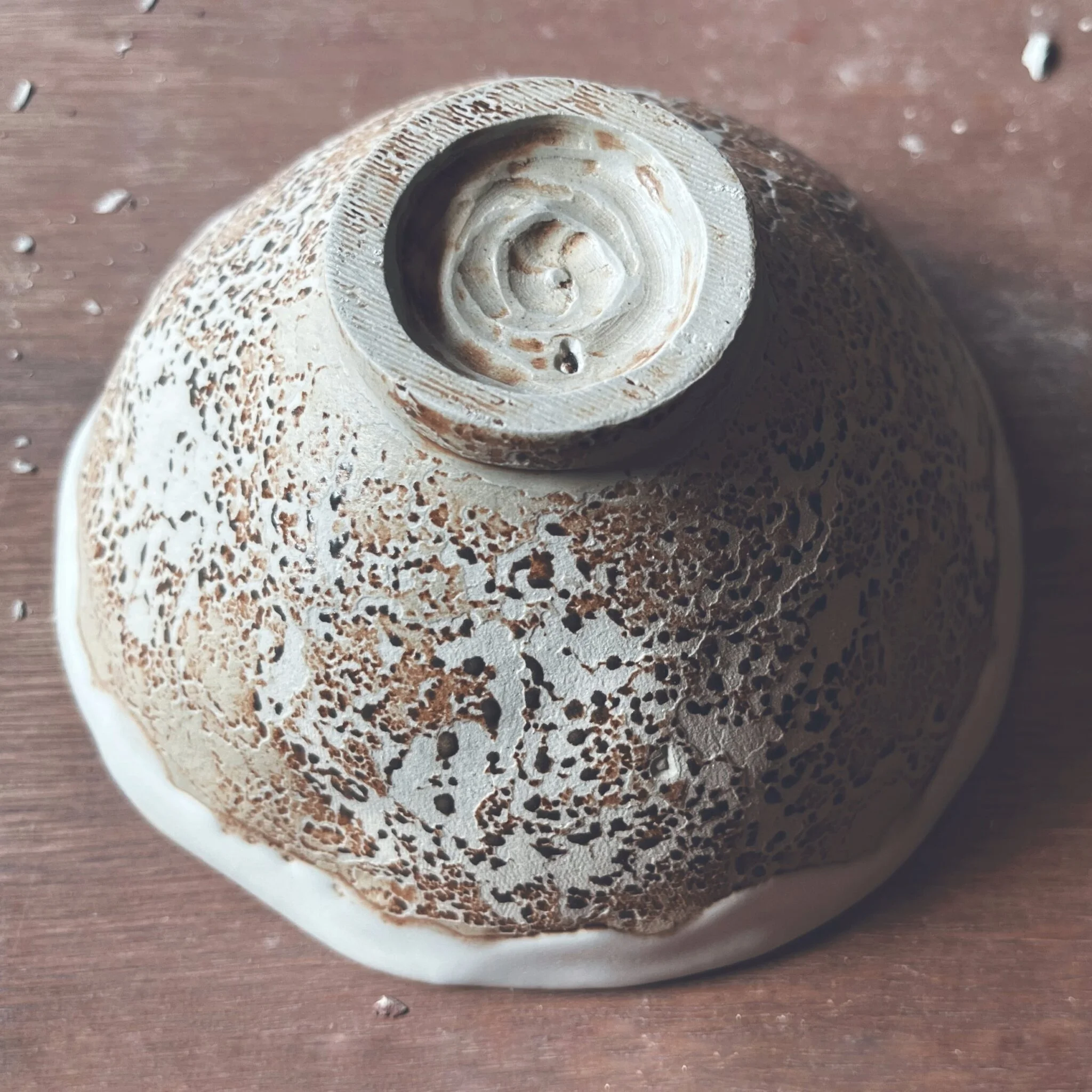
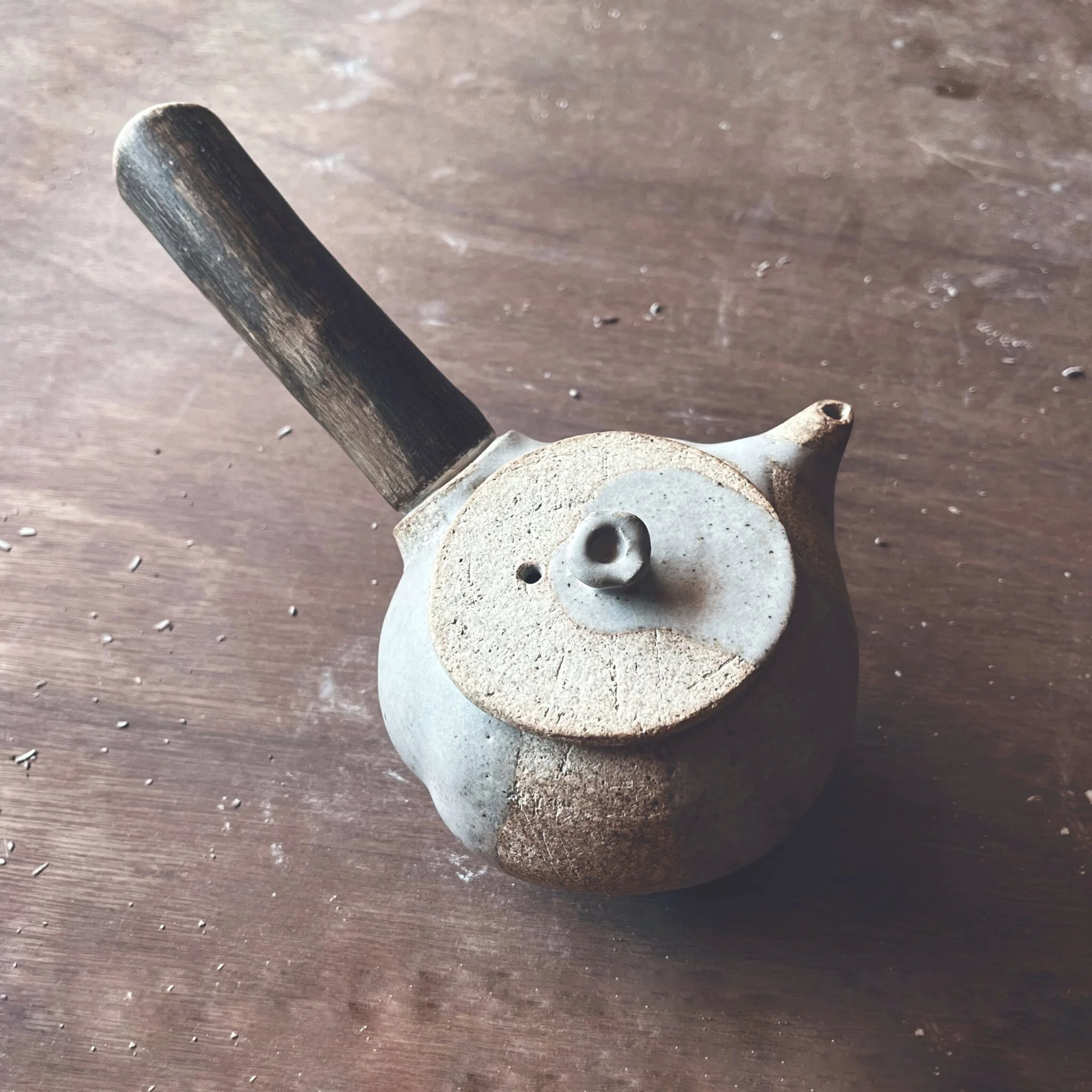
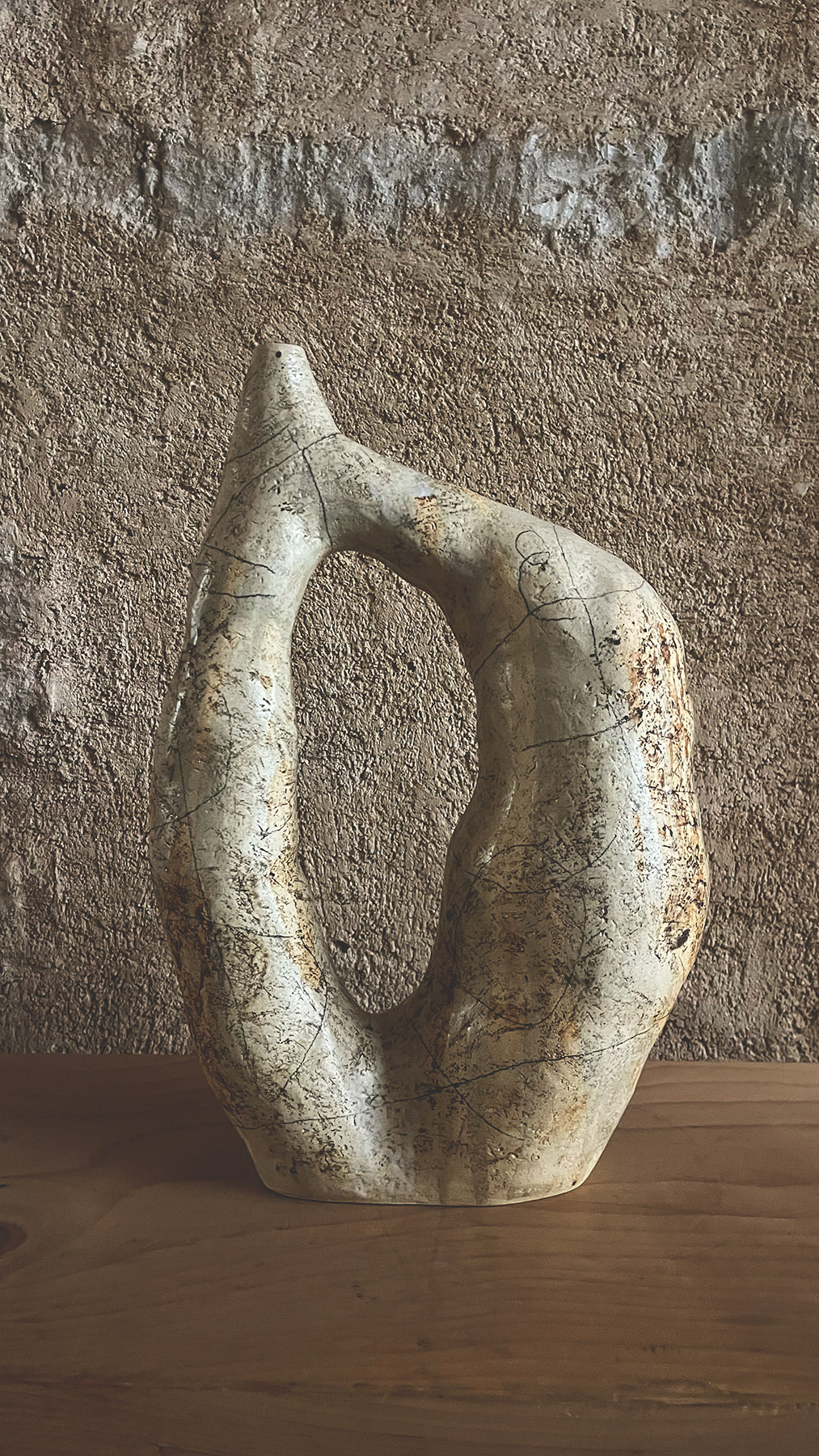
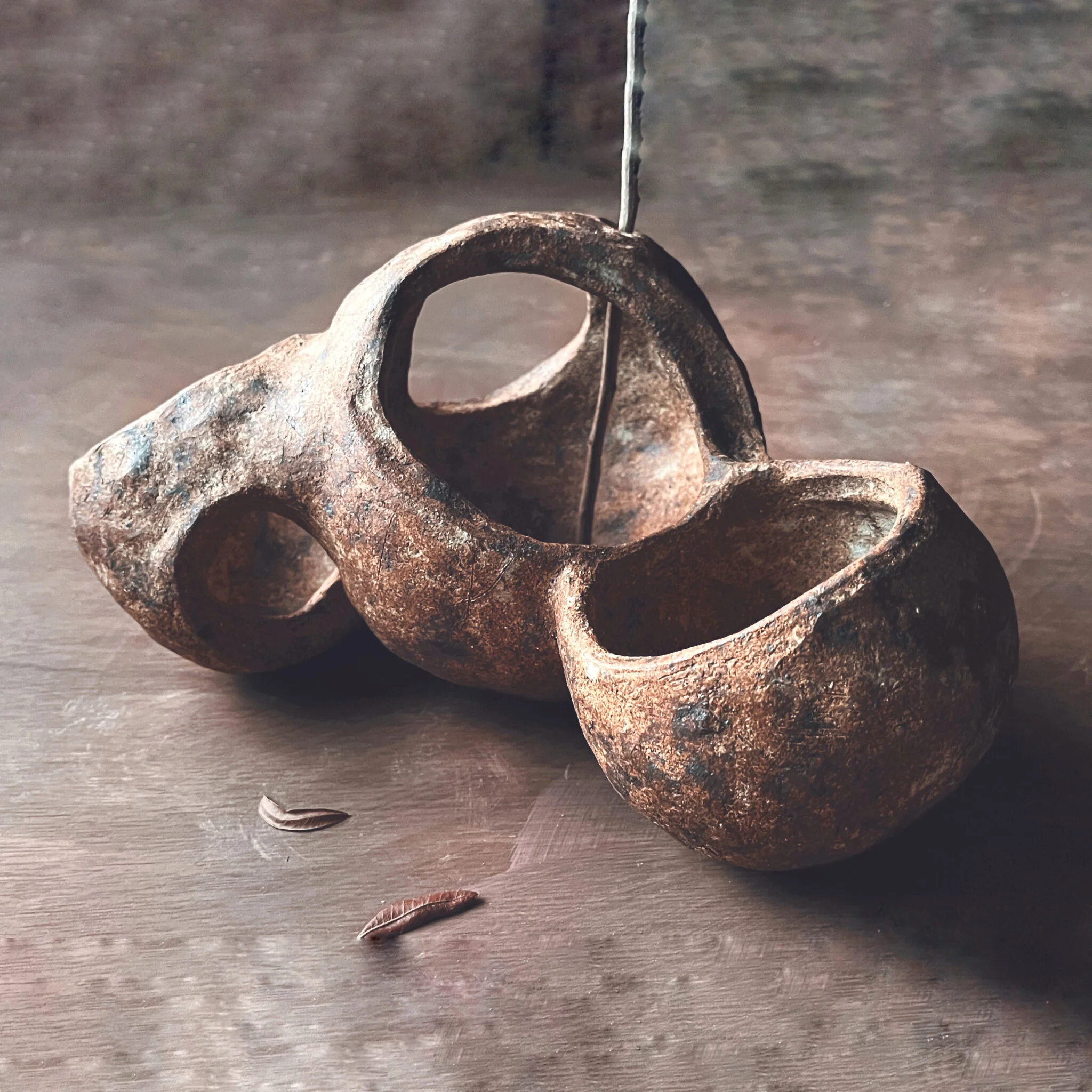
The wheel imposes its own geometry; when a piece is shaped by hand, that symmetry disappears, and with it any hurry. The piece grows by accumulation, in a process that can stretch over days. The tools he uses — stones, pebbles or pieces of wood gathered around Galilea — are what give each piece its shape. Each one leaves a distinct mark; the surroundings end up, quite literally, inside the piece.
Time as material
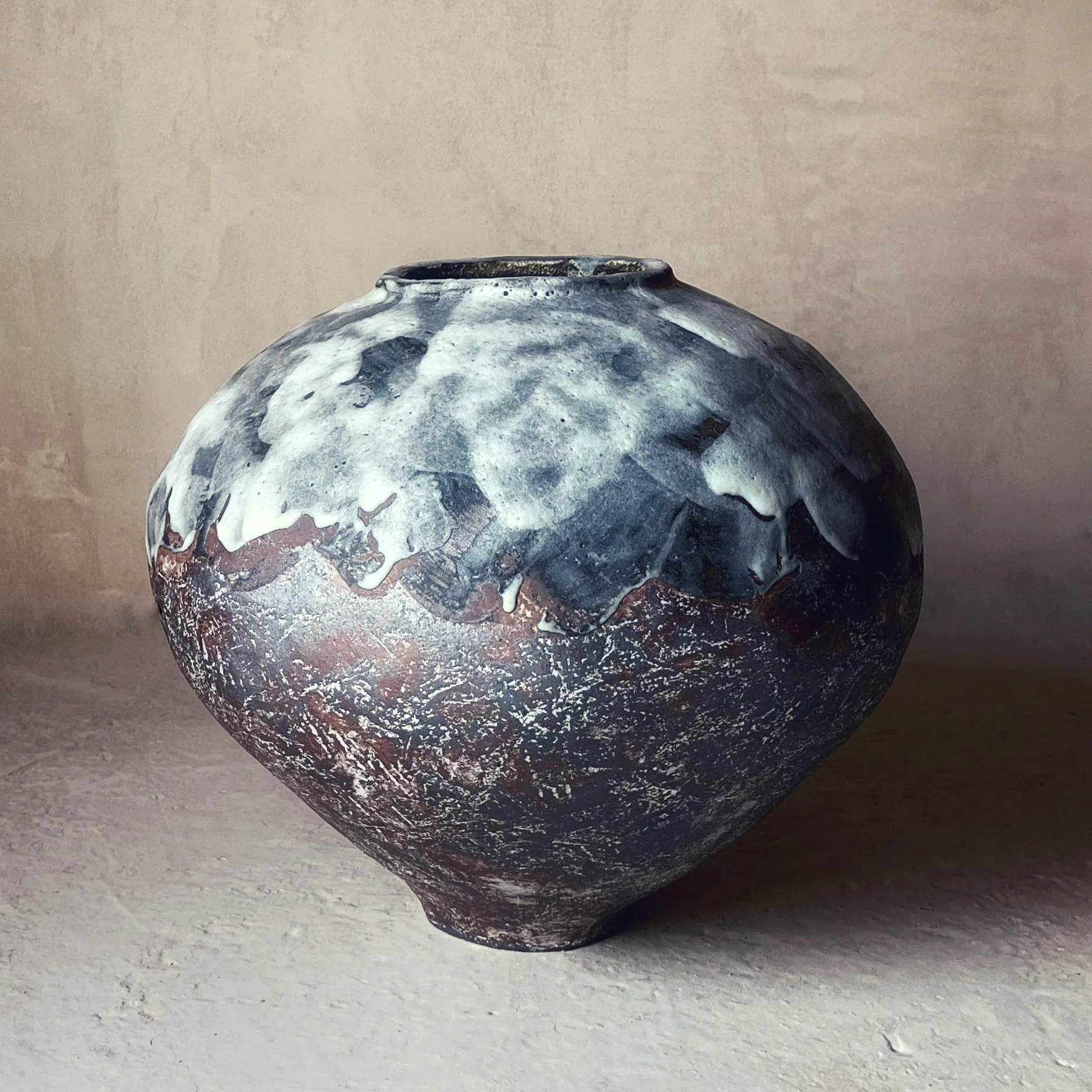
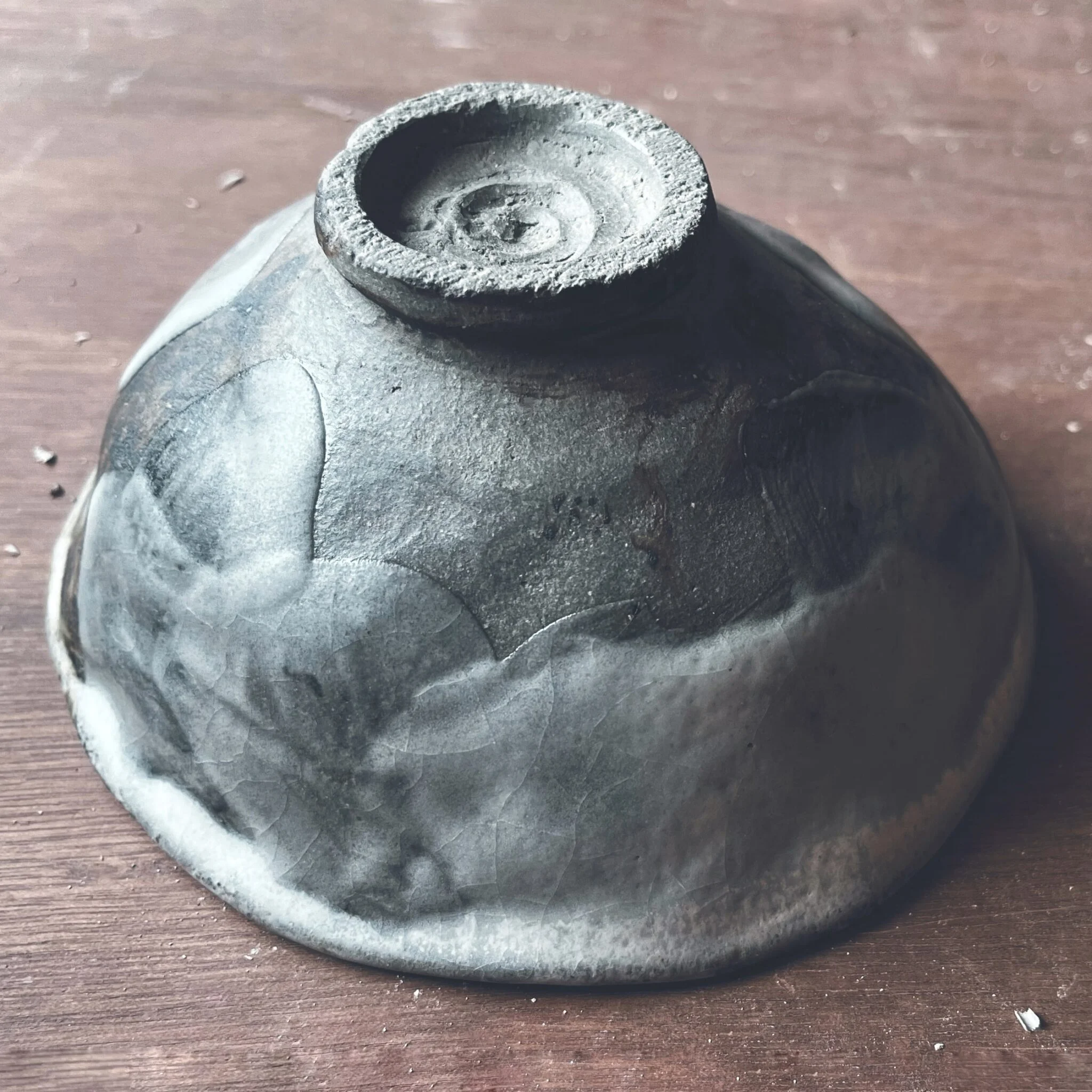
He fires every piece in stoneware at 1280 degrees, which produces work that is highly resistant and properly vitrified despite its raw, weathered appearance. The glazes, formulated in-house, can develop a craquelure over time that Romero regards as part of the piece’s natural ageing. The erosion of the pieces, left unpolished, is part of the story each one tells.
Romero controls just enough to know what he is doing, without “switching off” the piece before its time. “When you control the whole process, leaving no room for intuition or improvisation, there is no room for emotion,” he explains. “In my work I always try to leave part of the process to chance; that part of the process is what gives the piece its soul.”
That relationship with time runs through all of his work. “My references are the effects generated by the passing of time,” and his work is grounded in “the memory accumulated by the objects, places and people” that inspire him. Even the craft itself follows that same cumulative logic: “Over the years you also learn that hands have memory — they are a tool that accumulates years of learning, of mistakes and successes.”
That idea gives rise to his different series, each built on the same hand-modelled clay, but asking the material a different question.
Estratos series
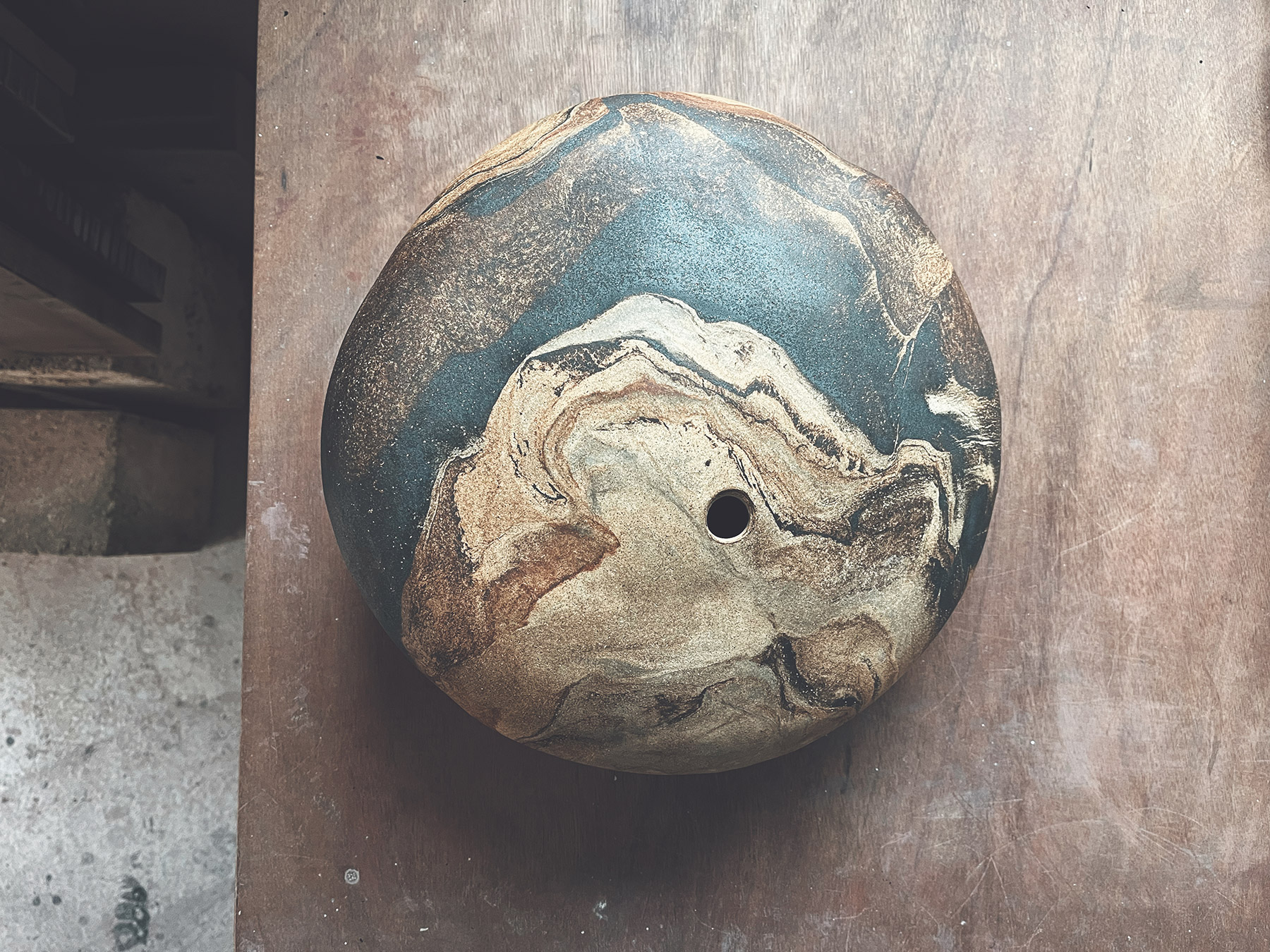
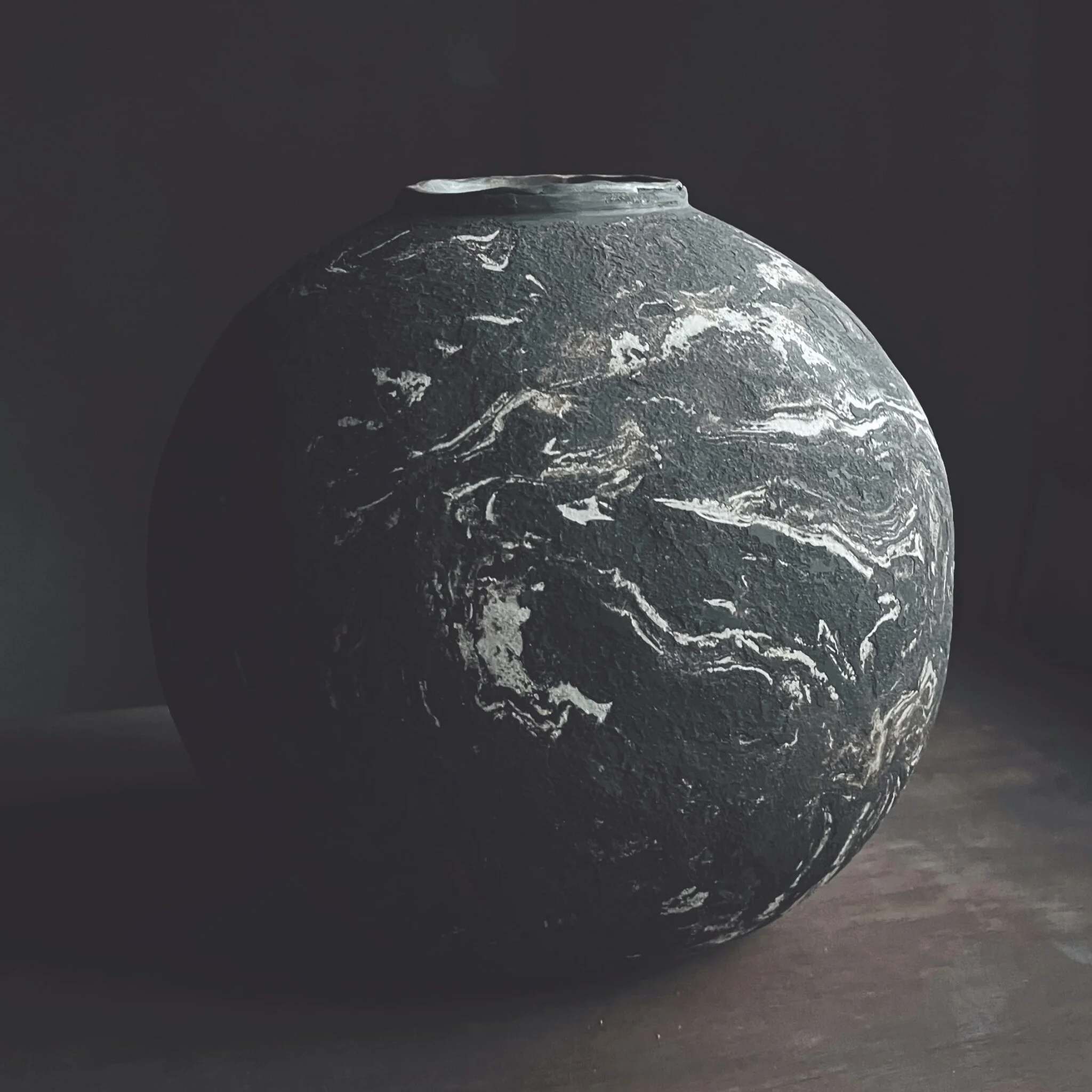
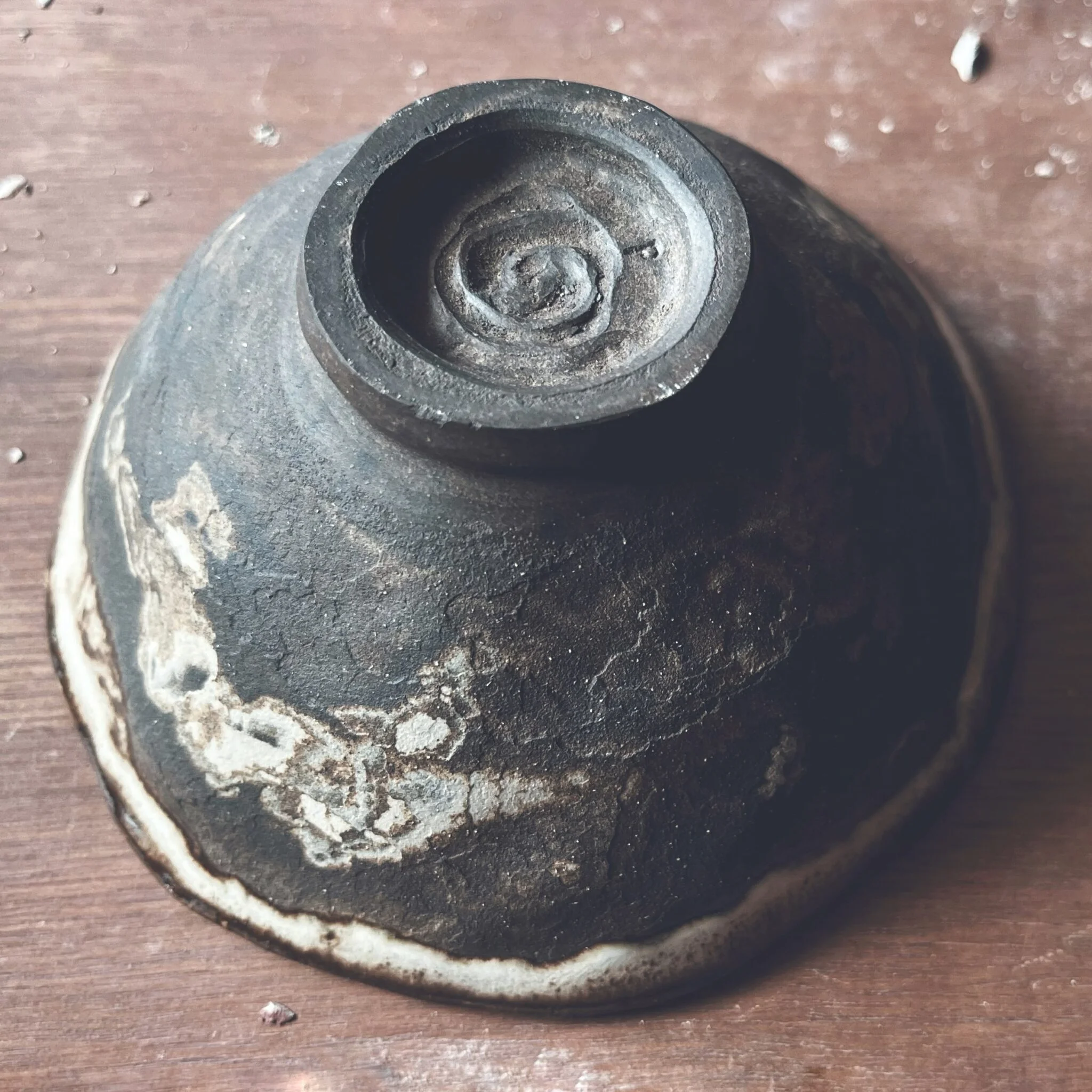
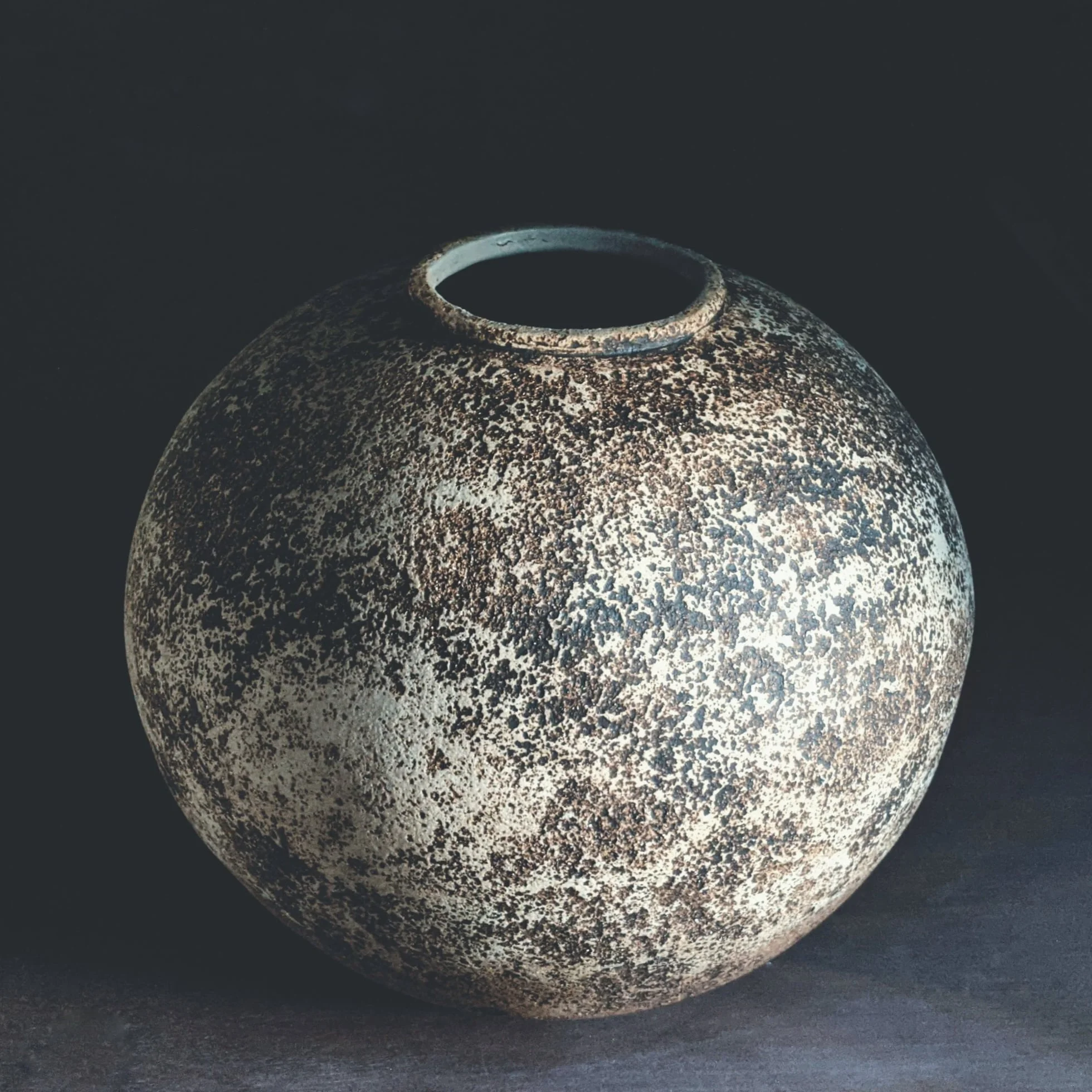
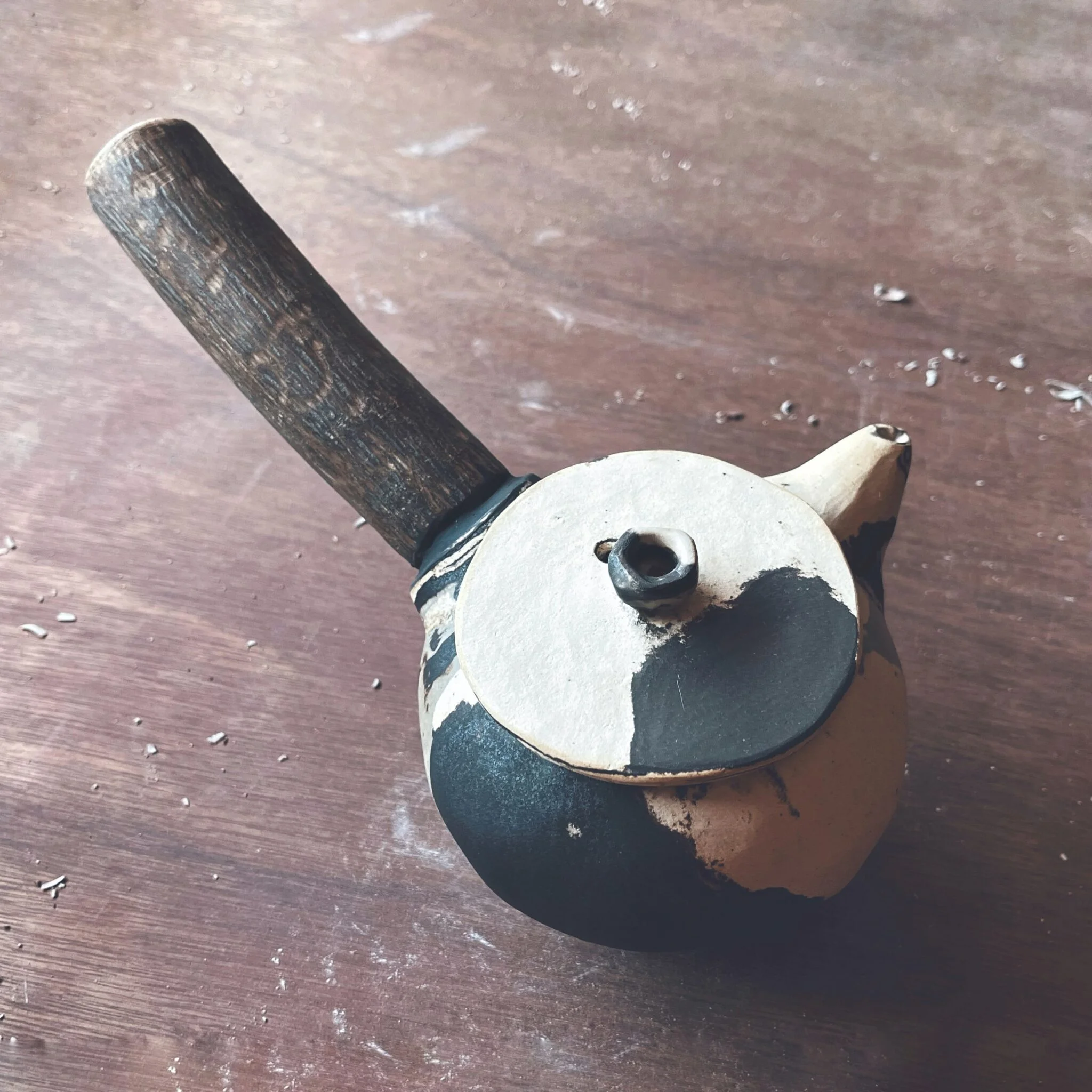
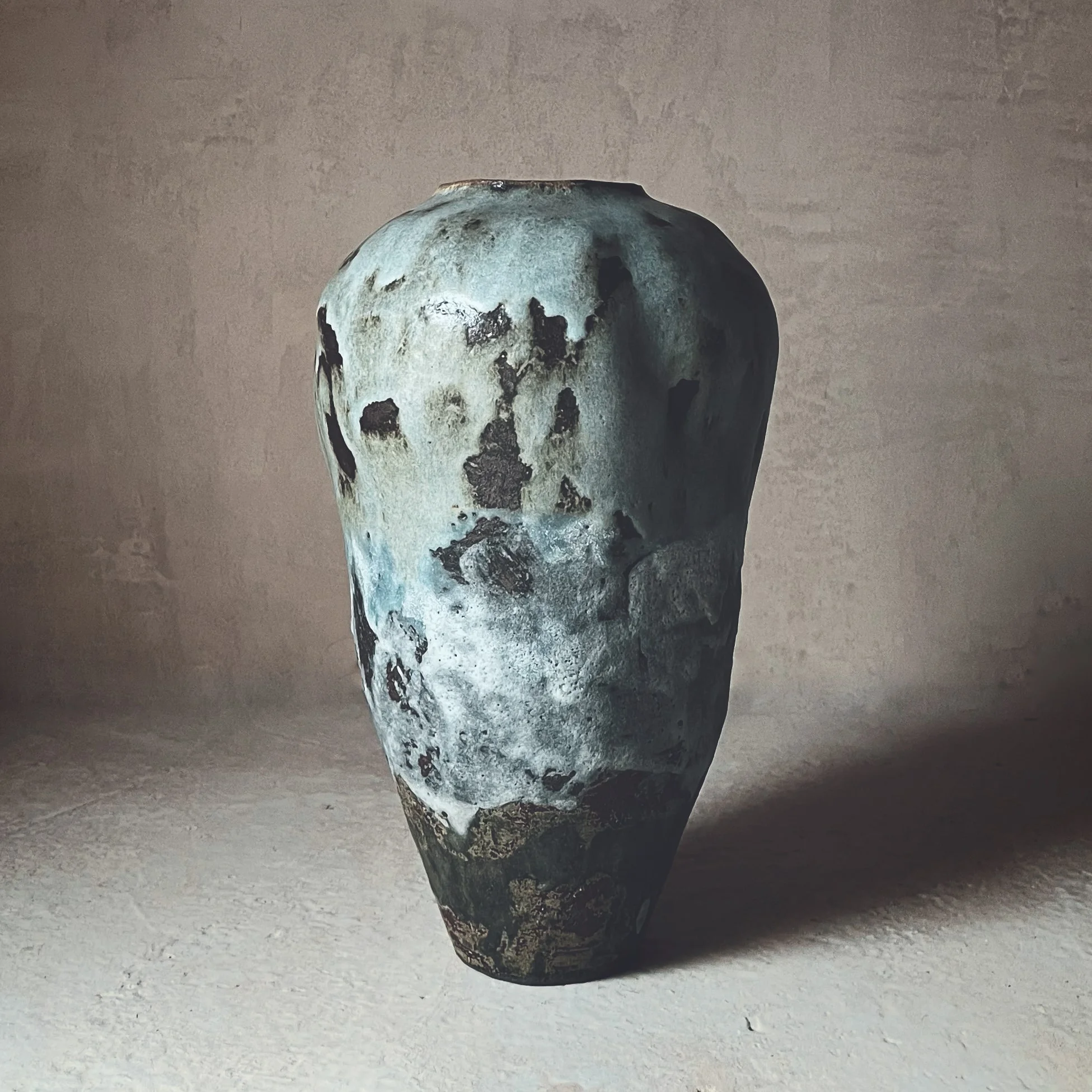
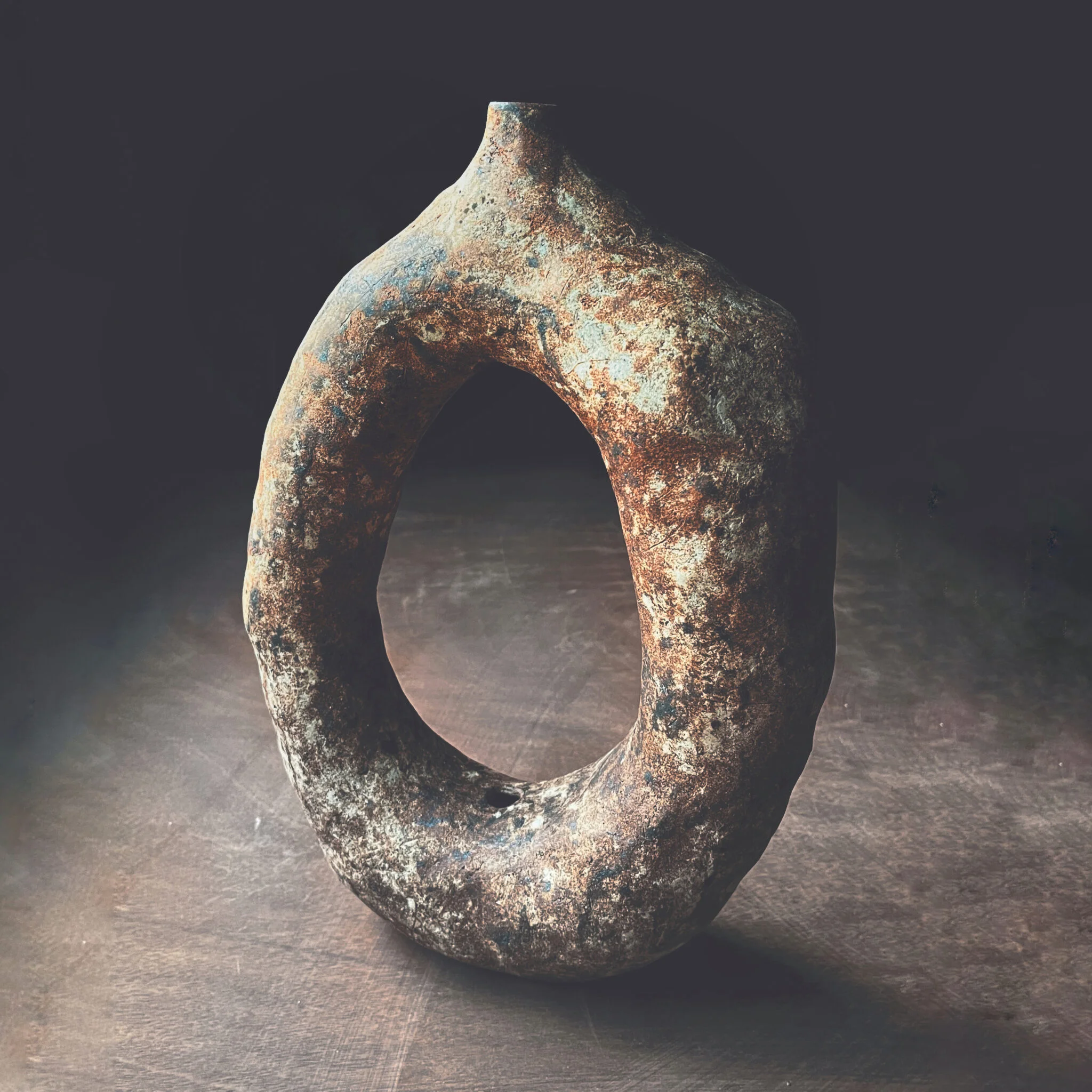
Estratos points to the earth, to primitive cultures and to the mark time leaves on objects. Each piece is built from overlapping layers of different clays, which reveal veins and sediments until the surface becomes a kind of geological cross-section.
Pieles series
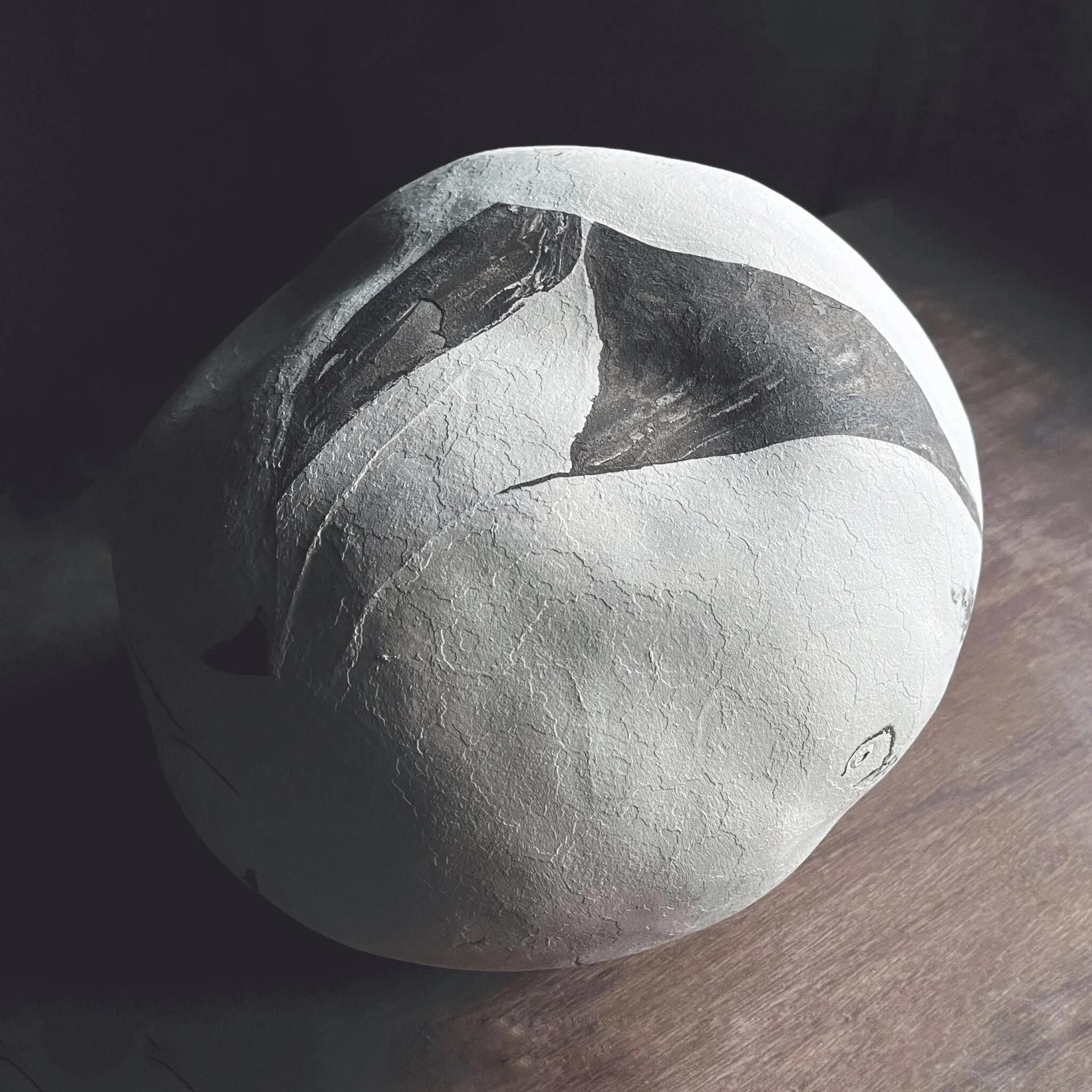
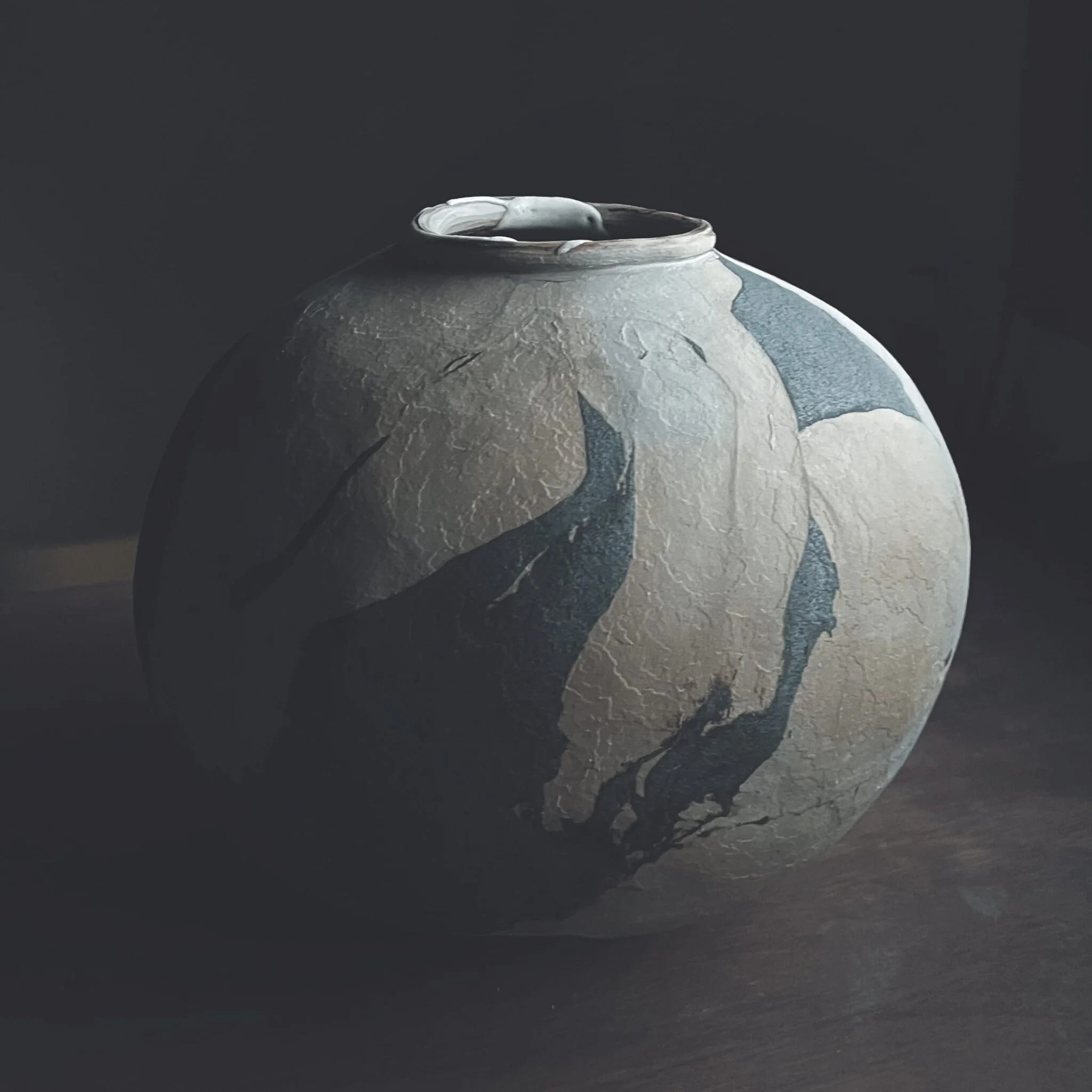
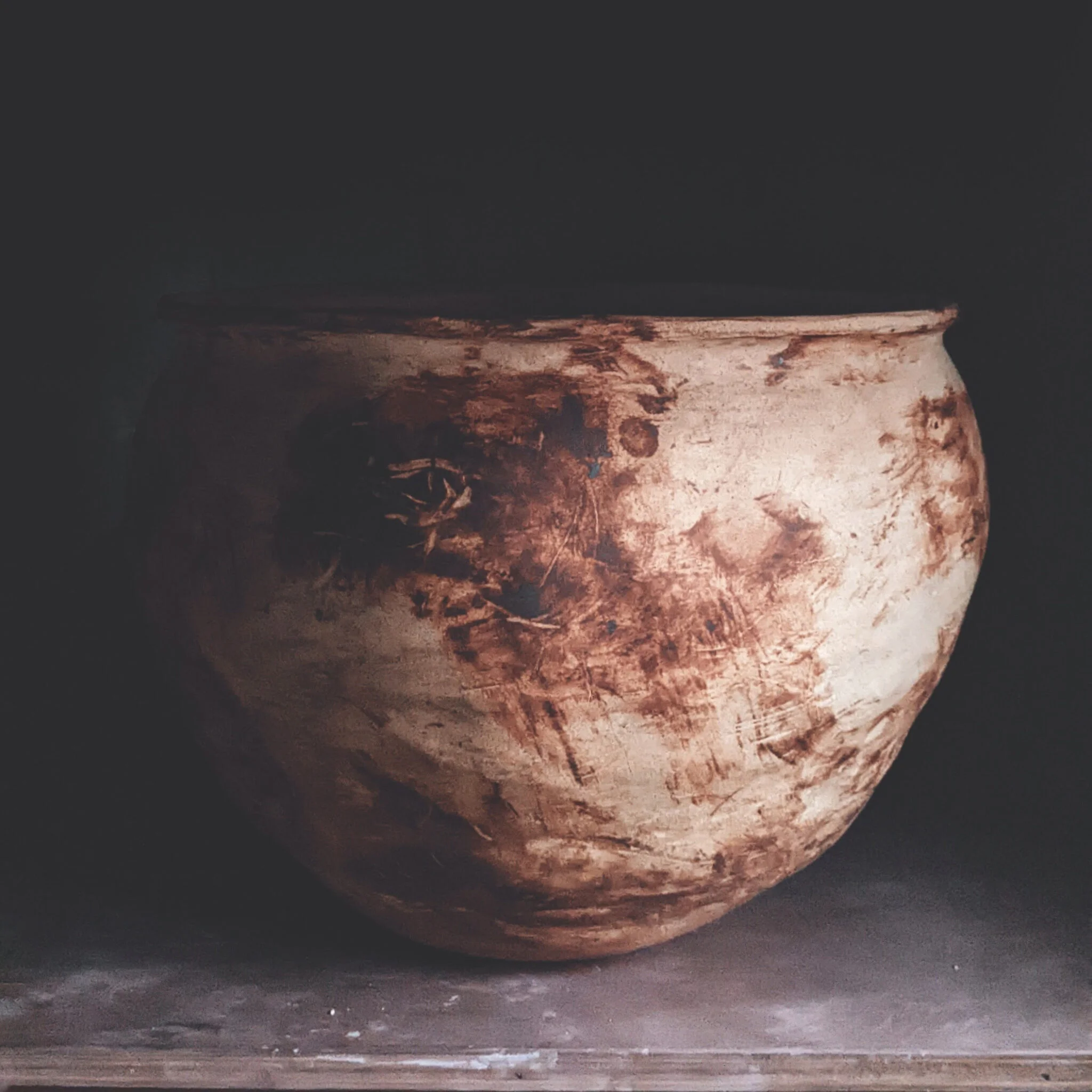
Pieles seeks clay in its purest state, with no layers standing in to interpret it “a study of the possibilities of clay in its purest state, without surface layers.”
Invierno series
Invierno is an ode to liquid porcelain seen through a wabi-sabi sensibility, “seeking the beauty of asymmetry and imperfection in the simplicity of ancient primitive ceramics.”
Tótem series
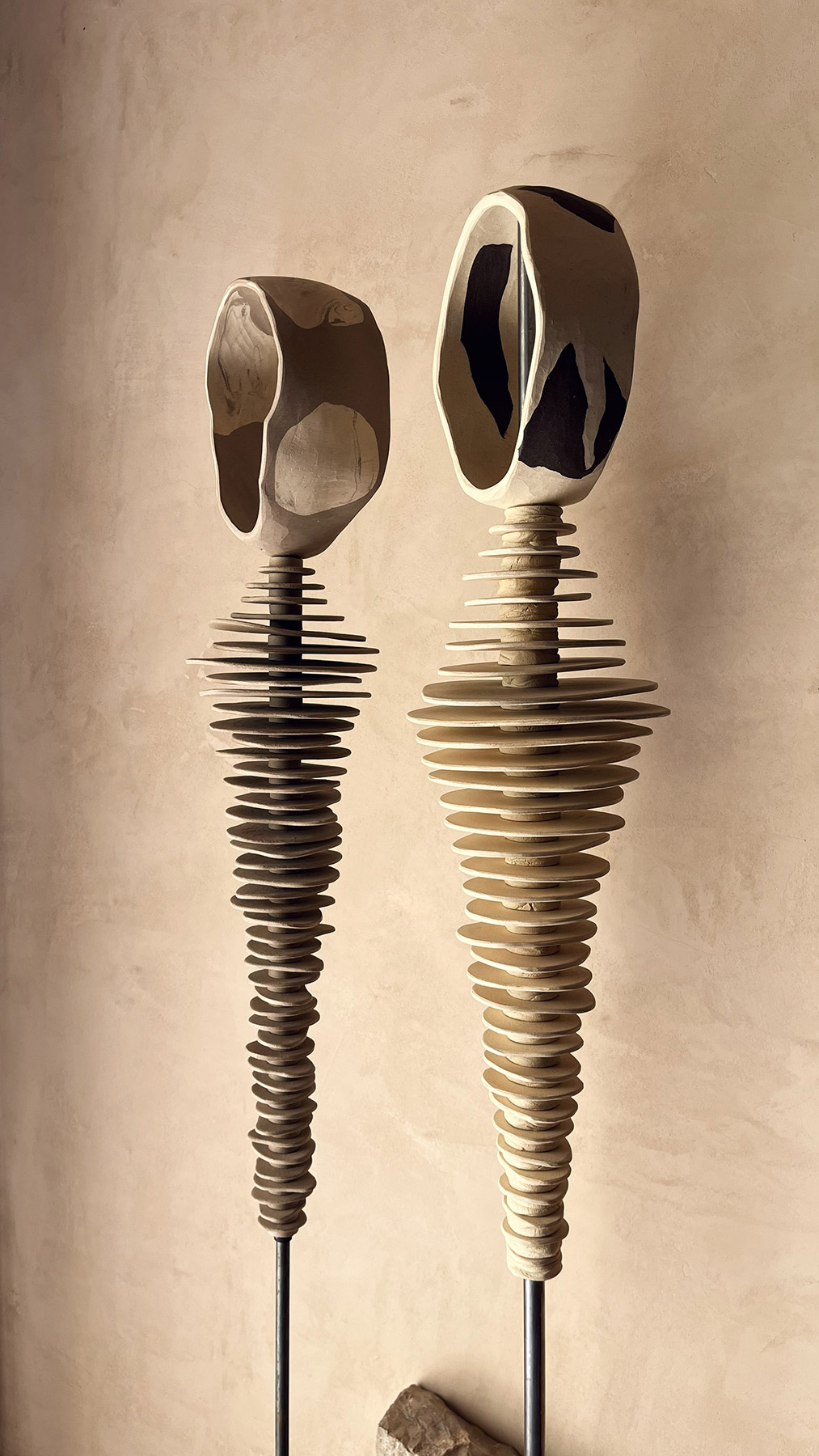
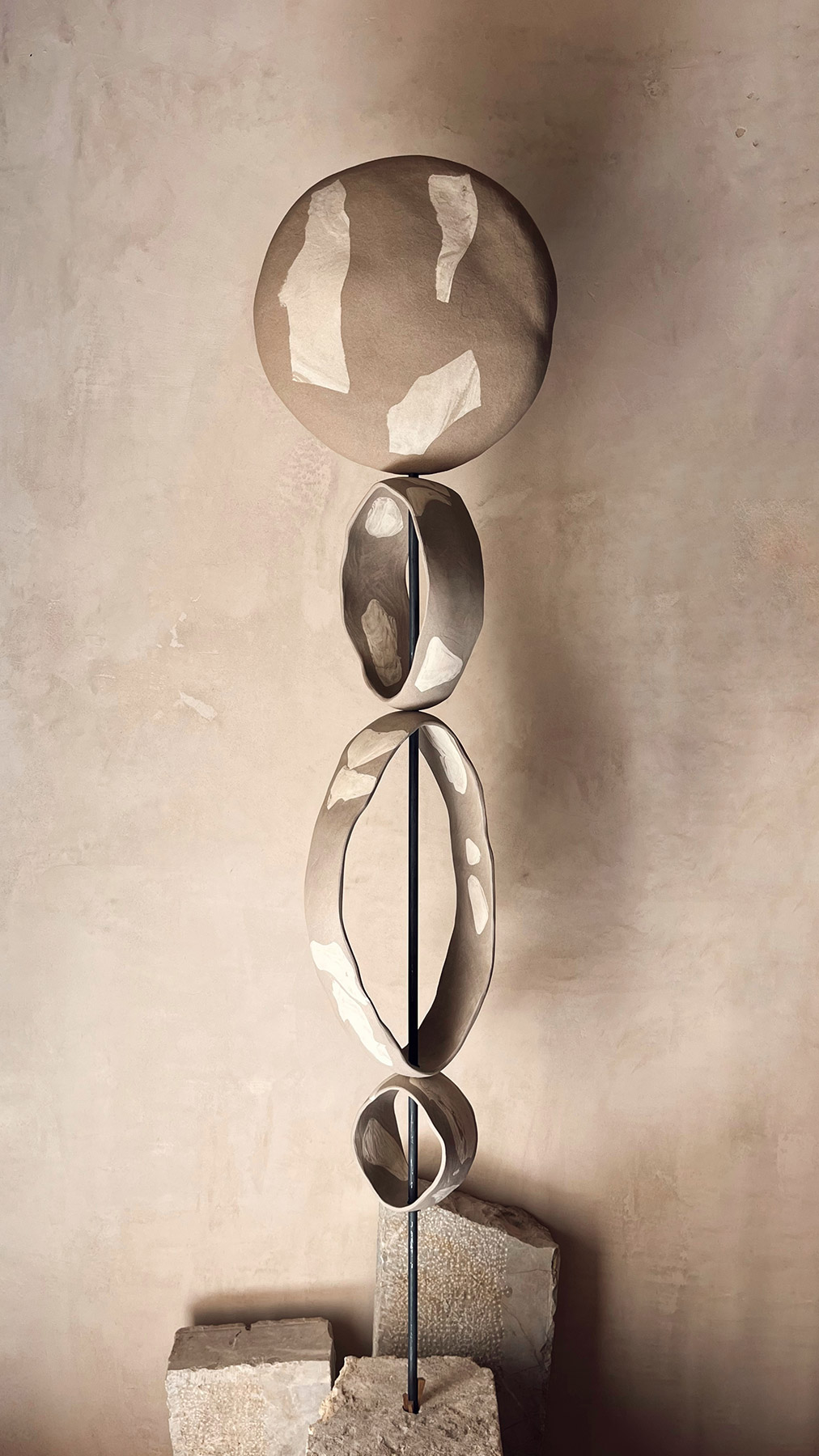
Tótem, the series that engages most closely with architecture, proposes ring-shaped forms that repeat themselves until they find the one the place calls for: “the shape and size of the piece is not fixed from the start, and changes as it is built, according to what it conveys to me. It is also the most flexible in scale — the same form works as a floor piece or as an object for a shelf, depending on the space it has to occupy.”
Painting with clay
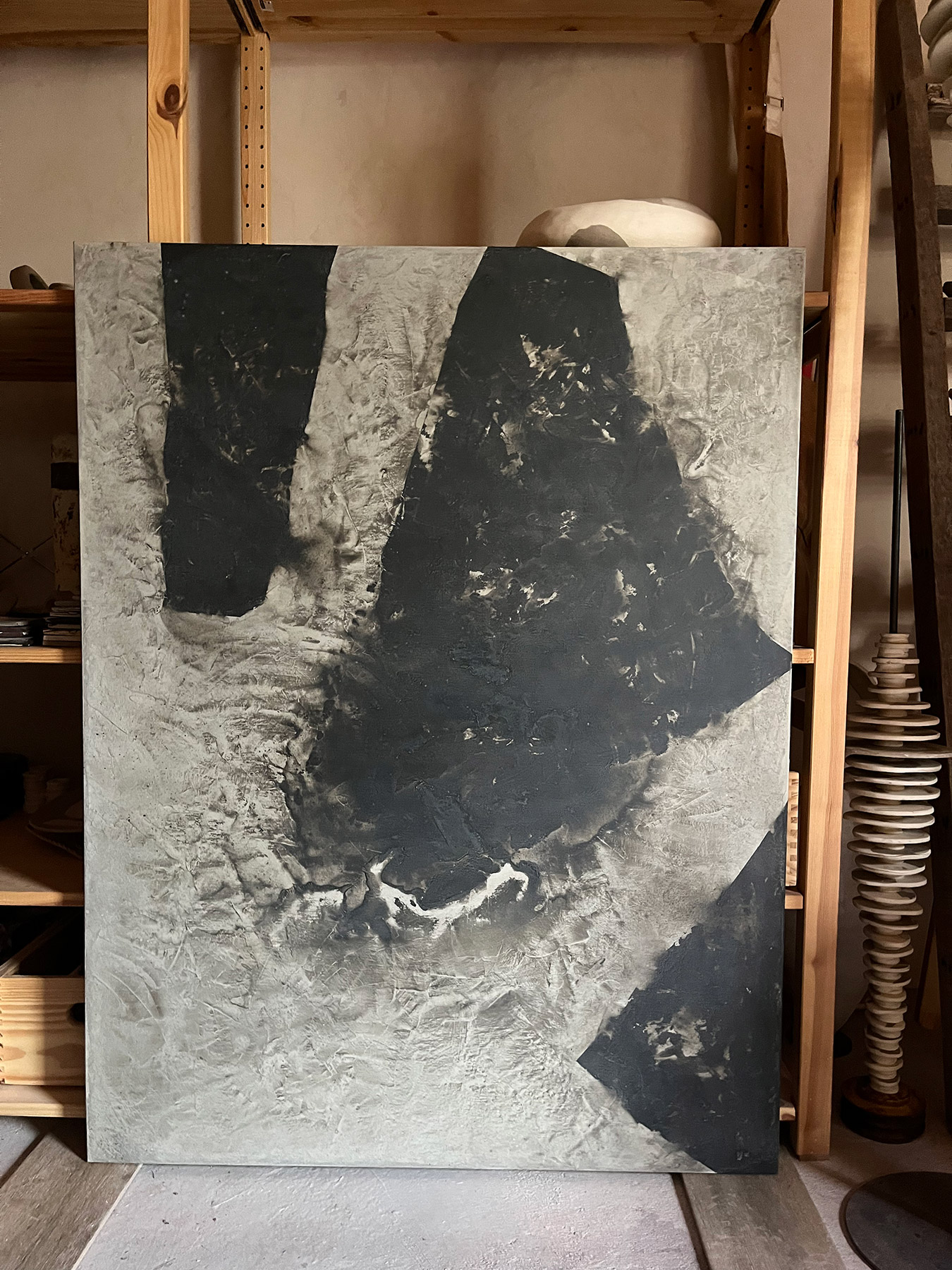
His investigation continues into painting. At times, Romero looks toward primitive architecture and the urban layout of ancient Mediterranean settlements, building surfaces where clay, local earths and acrylic engage in different layers. In other works the reference becomes more essential: primitive symbols, forms and marks emerge from sediments that build up on the canvas until they form compositions of mineral sobriety. In both cases he also revives ancient processes such as terra sigillata, a Roman clay-decanting technique that he adapts to contemporary sculpture and painting. “It is both a privilege and a responsibility to be able to recover and keep alive techniques that have been in use for centuries, to honour their history and to do so respectfully toward the people who, centuries ago, developed these techniques with the scarce resources available to them,” he explains. “In a way it is my tribute to those people, a return to the origins, to the first inhabitants.”
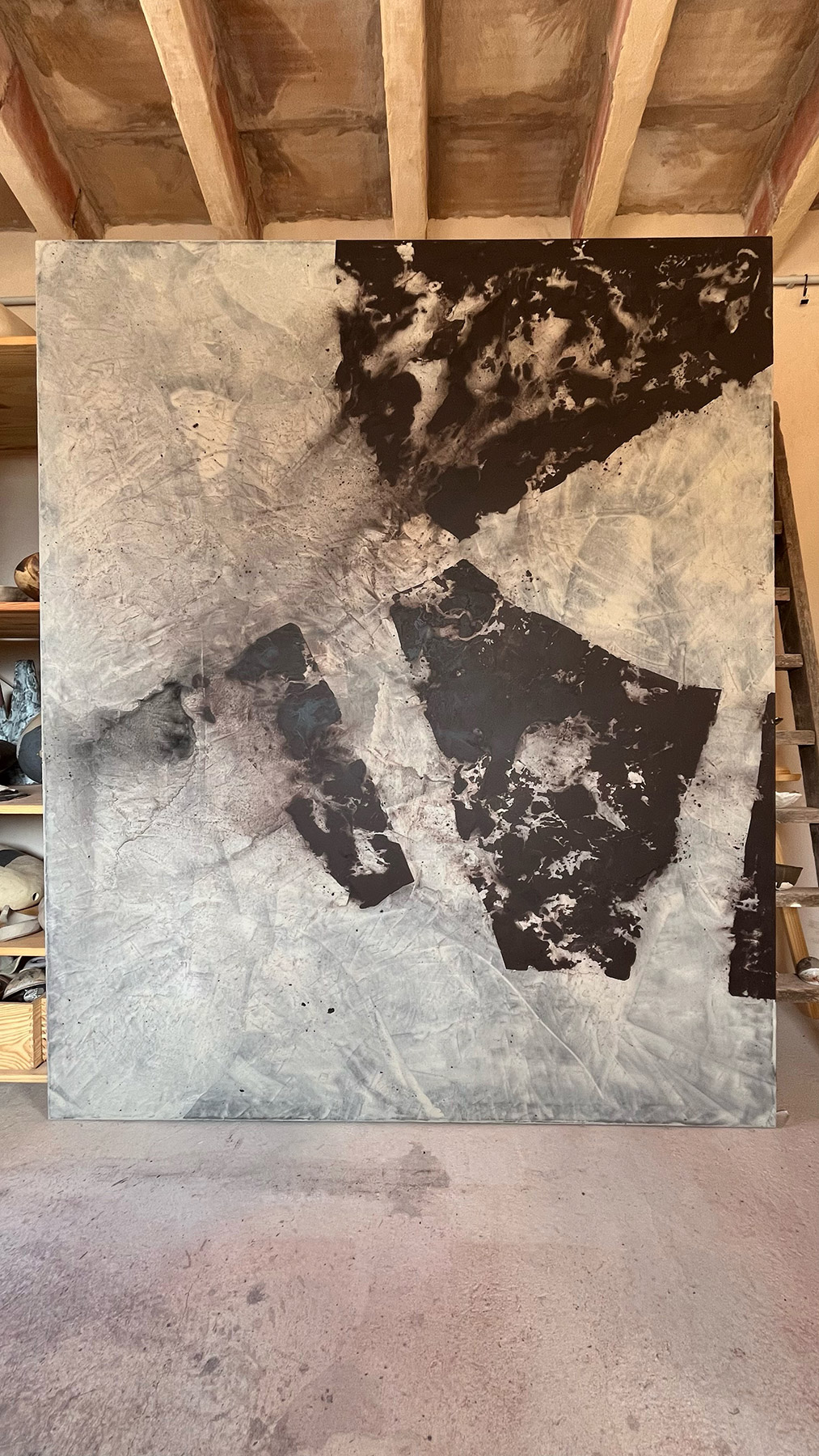
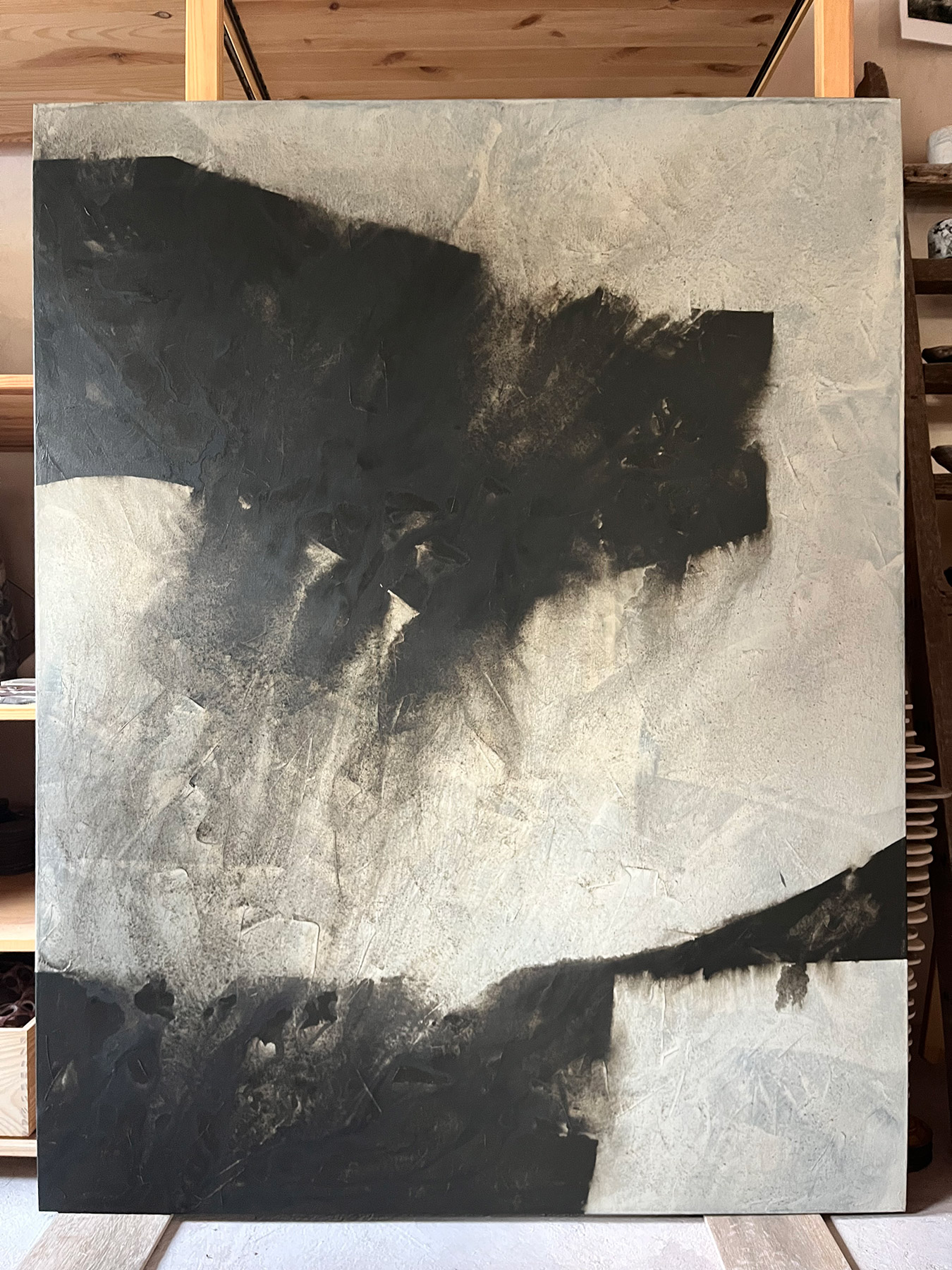
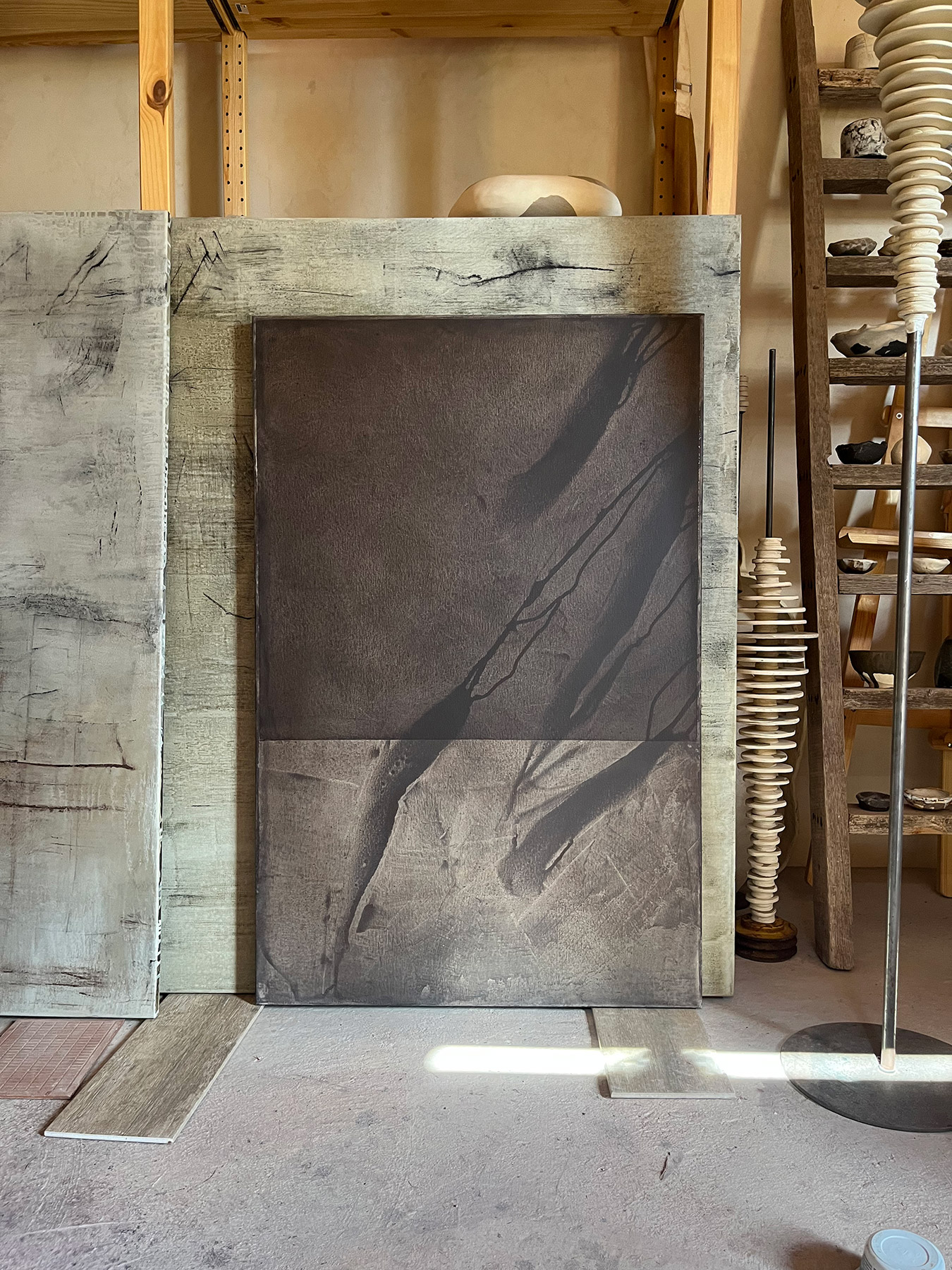
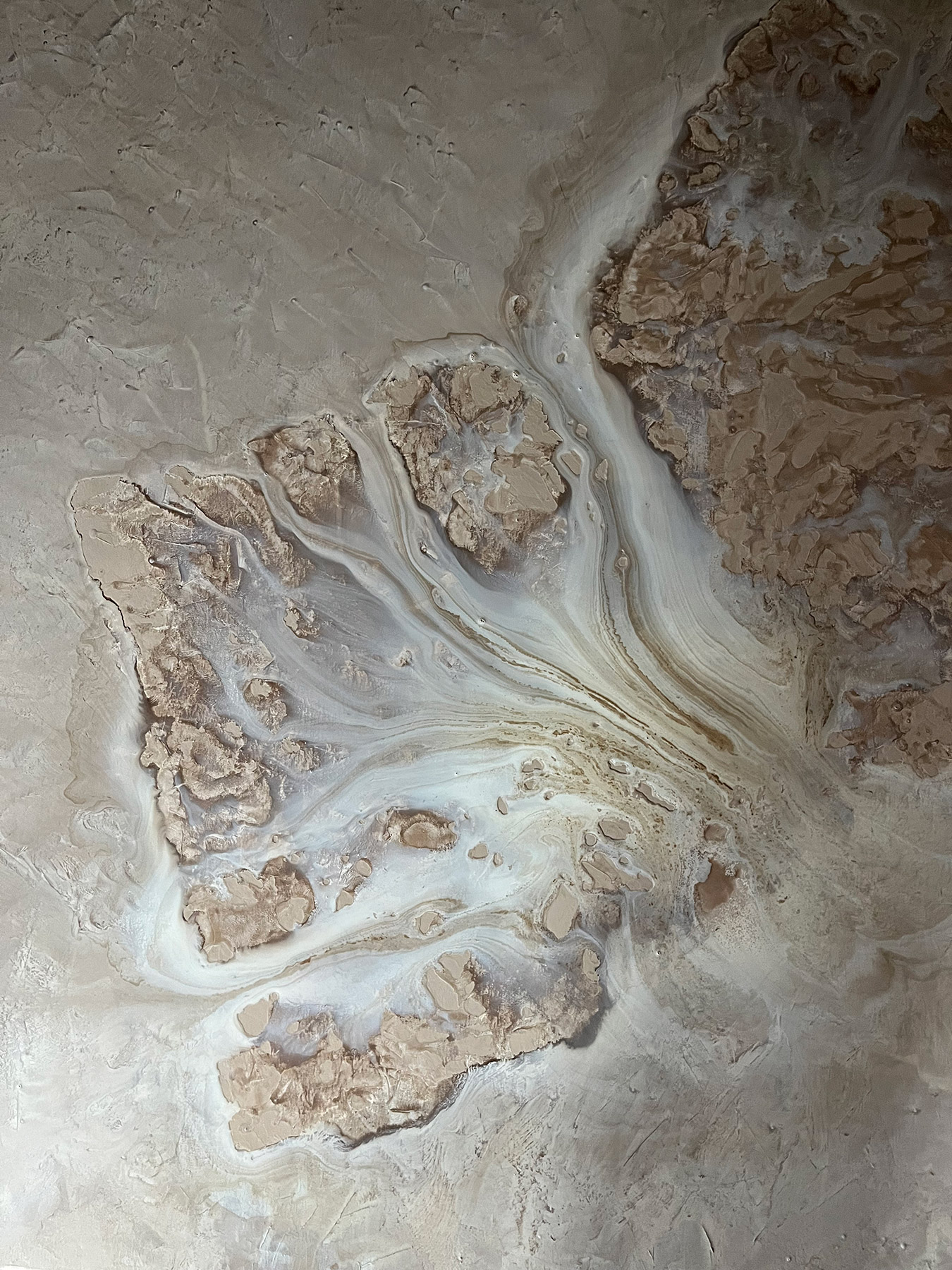
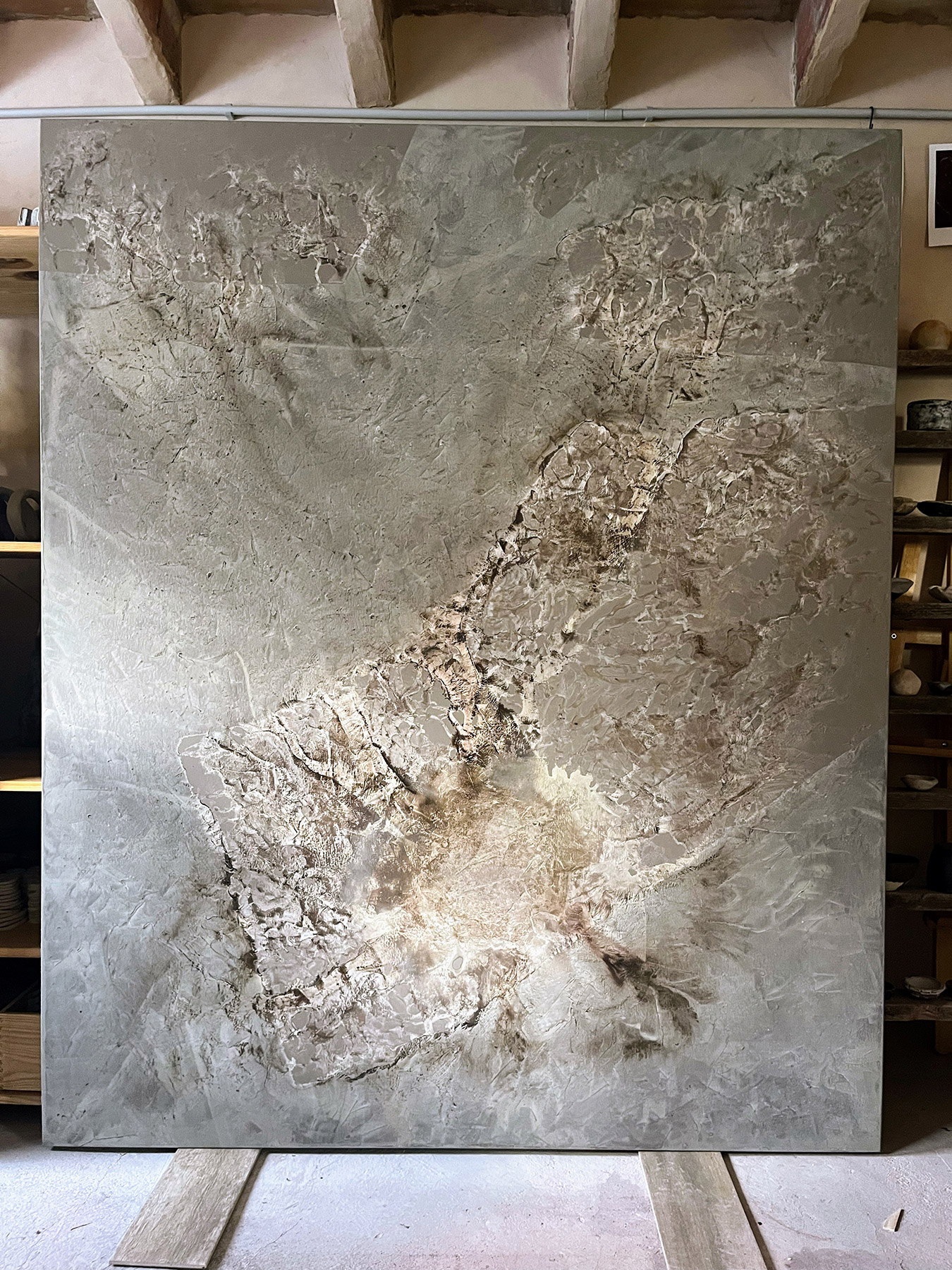
Romero’s work has steadily found its place in architecture and interior design projects: collaborations with studios such as Durietz Design, Melt Spaces and Contain Studio, totemic pieces on display at the Hotel Nobis in Palma, permanent installations at Terraza Balear and Tea Ritual, the Lab Oliver Prize in 2023, and his recent inclusion in Kave Home Gallery, which has added his sculptural ceramics to its selection of artists. All of it without altering the scale or the pace of a studio that remains small, and deliberately limited in output.
What Romero ultimately seeks is for his pieces to feel as though they had always been there. “With my work I try to create a sense of timelessness, a point of peace, of balance,” he says. “I would like anyone who looks at, or lives with, the piece to feel that it was always there, that it has witnessed the passing of time and has a story to tell.”
All photos @ Paco Romero.
Paco Romero
Galilea (Mallorca)
+34 637 304 247
info@ceramicaprimitiva.com
ceramicaprimitiva.com
@p.ceramica.primitiva
Project by Paco Romero