
My training and much of my professional career come from graphic design. For years I have worked among images, composition, typography, colour and structure, a way of thinking that is still very present in everything I do. I have also worked in set design, window display and furniture design, taking part in projects such as Casa Pasarela, Casa Decor and Salone del Mobile Milano.
After so many years in front of a screen, I began to feel the need to work more with my hands. I wanted to touch, to build, and to relate to materials in a more direct way.
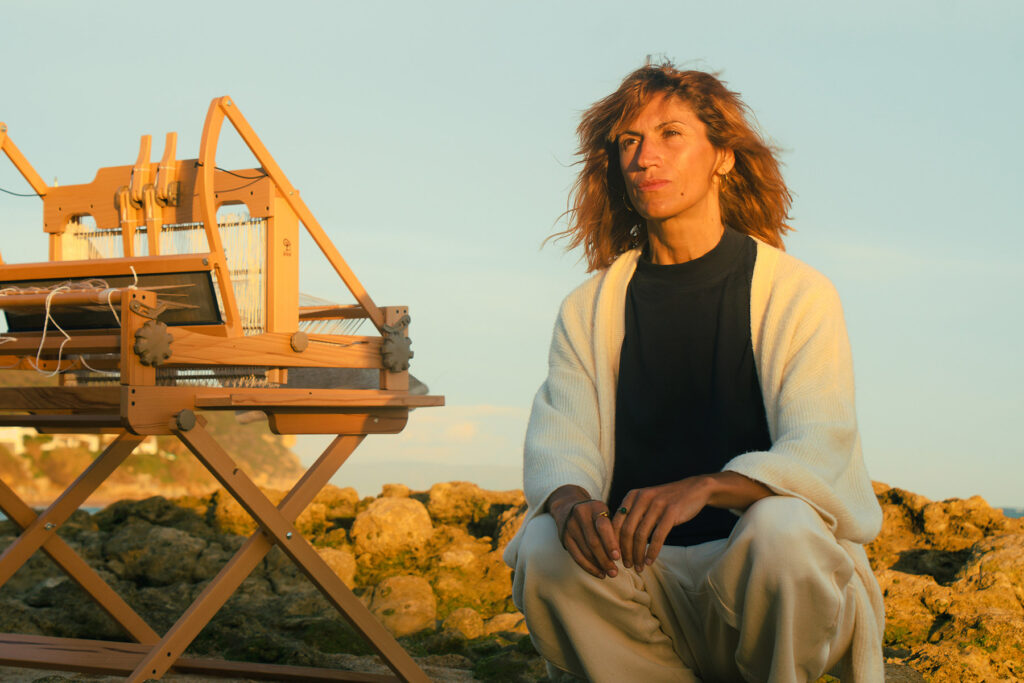
At the same time, a number of journeys and encounters gradually drew me towards textiles. One of them was Xtant, in Mallorca, where I discovered materials, techniques and ways of working I had not known. Little by little, all of that led me to the low-warp loom.
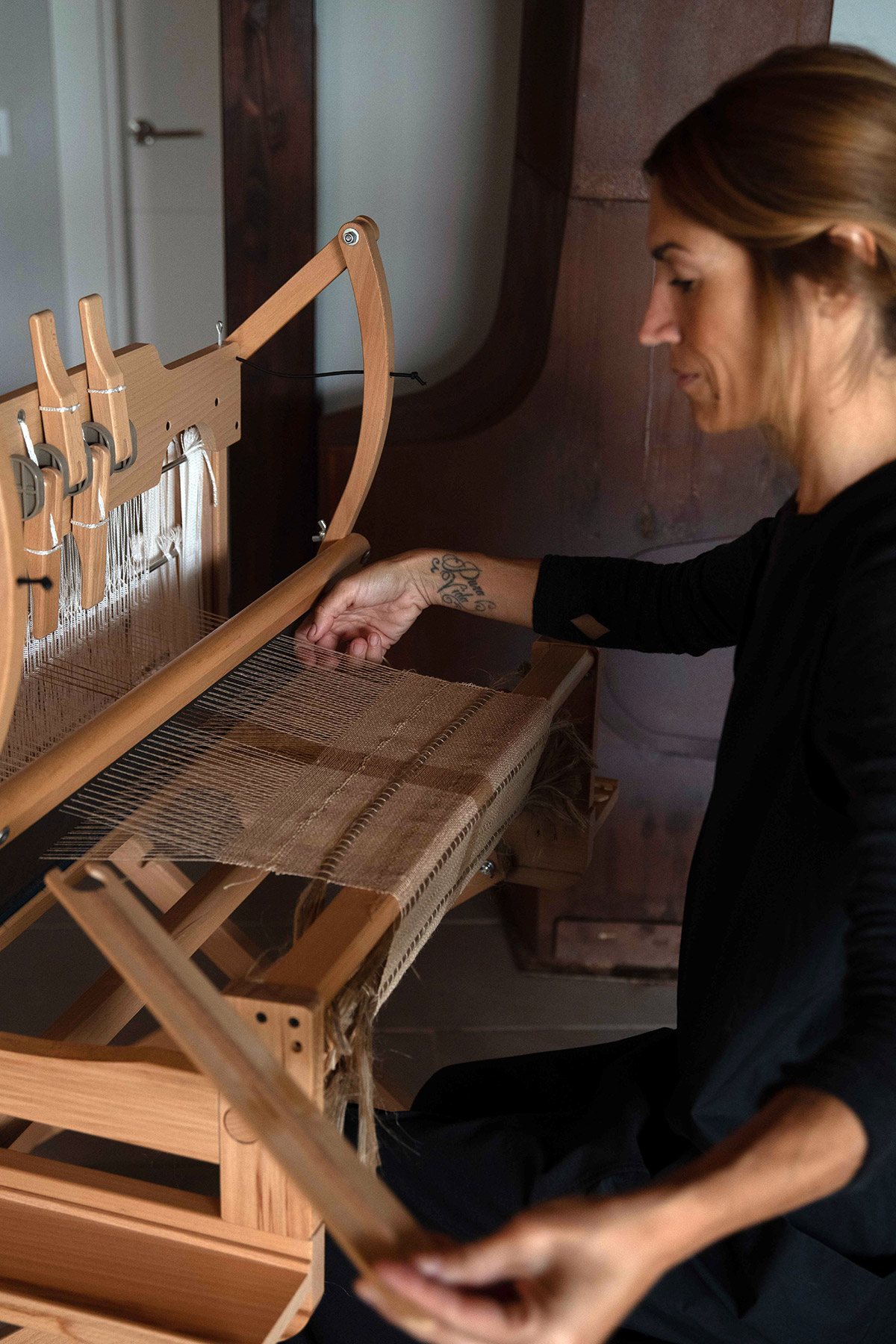
Learning to stay
t is curious that I ended up so drawn to a technique that, in many ways, works in the opposite way to me. I am not especially good with slowness. I am restless and find it hard to spend a long time doing the same thing. The loom, by contrast, forces you to stay, to concentrate, and to accept a rhythm that cannot be hurried.
My arrival at the loom coincided with a difficult moment in my life. I had been living with chronic pain for many years and was going through a very low emotional state. I needed to find new motivations, something I could do despite my physical limitations and that would, in some way, help me reinvent myself and get out of that state. That was when I began learning to weave, first at two schools, one in Madrid and another in Barcelona, and then practising on my own.
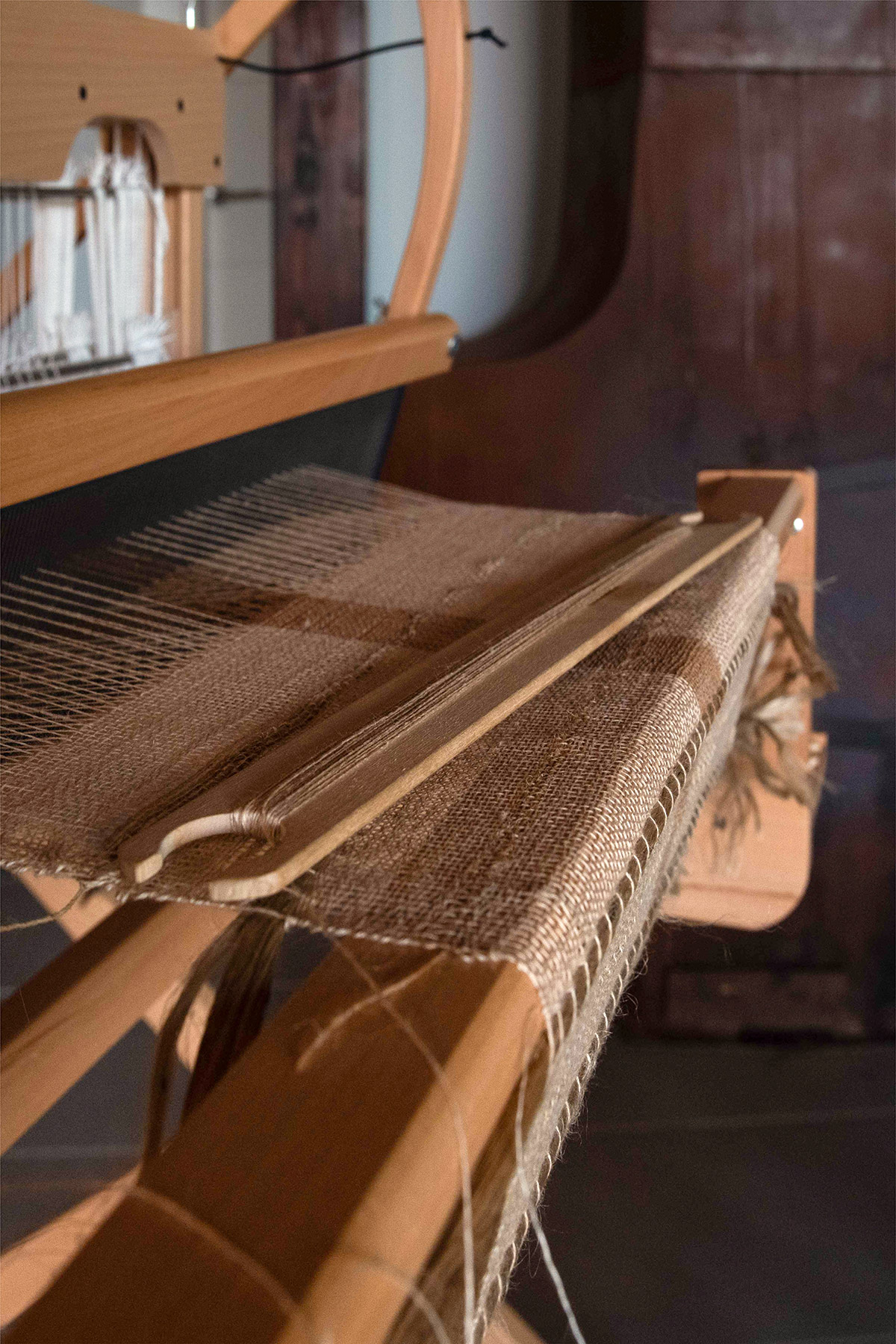
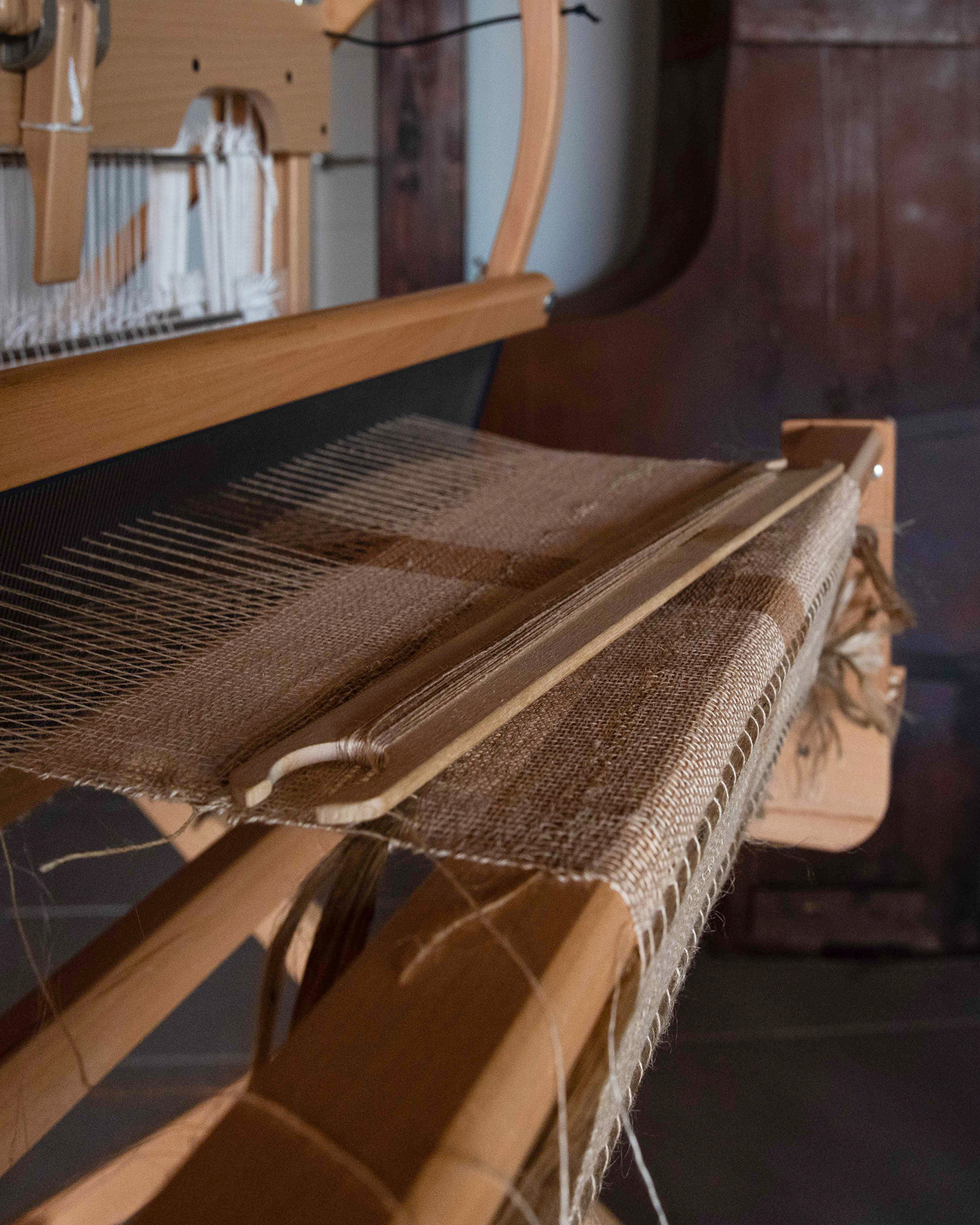
What I did not expect was to discover that weaving begins long before the first pass of the weft. Preparing and dressing the warp can take hours, even more than a day. You have to calculate the number and length of the threads, measure them, keep them in order, take them to the loom, thread them one by one through the heddles and the reed, distribute them, and finally achieve an even tension. It is probably the most tedious part of the whole process, and for many hours you also have the feeling that nothing is happening yet. All you see is threads and more threads.
There is a book on weaving whose introduction made me laugh, because the author recounts how, after spending practically the whole day dressing a warp without having even started to weave, she asks herself: “Why on earth did I get myself into this mess?” I felt completely identified.
But when everything is finally ready, the process changes completely. After that first part, so technical, slow and precise, another, much more open one begins. The warp is already there, holding everything up, and then I can start to play: changing materials and densities, leaving gaps, building forms, trying something without knowing whether it will work.
I think that is why the loom suits me in a somewhat strange way. Two almost opposite ways of working coexist in it: one needs order, calculation and patience; the other, curiosity, play and the ability to change direction.
And there is something more the loom has taught me: silence. I can spend hours weaving and enter a state of very deep concentration. For me it has become a form of meditation, a way of quieting the mind and being completely present in what I am doing.
Letting the materials lead
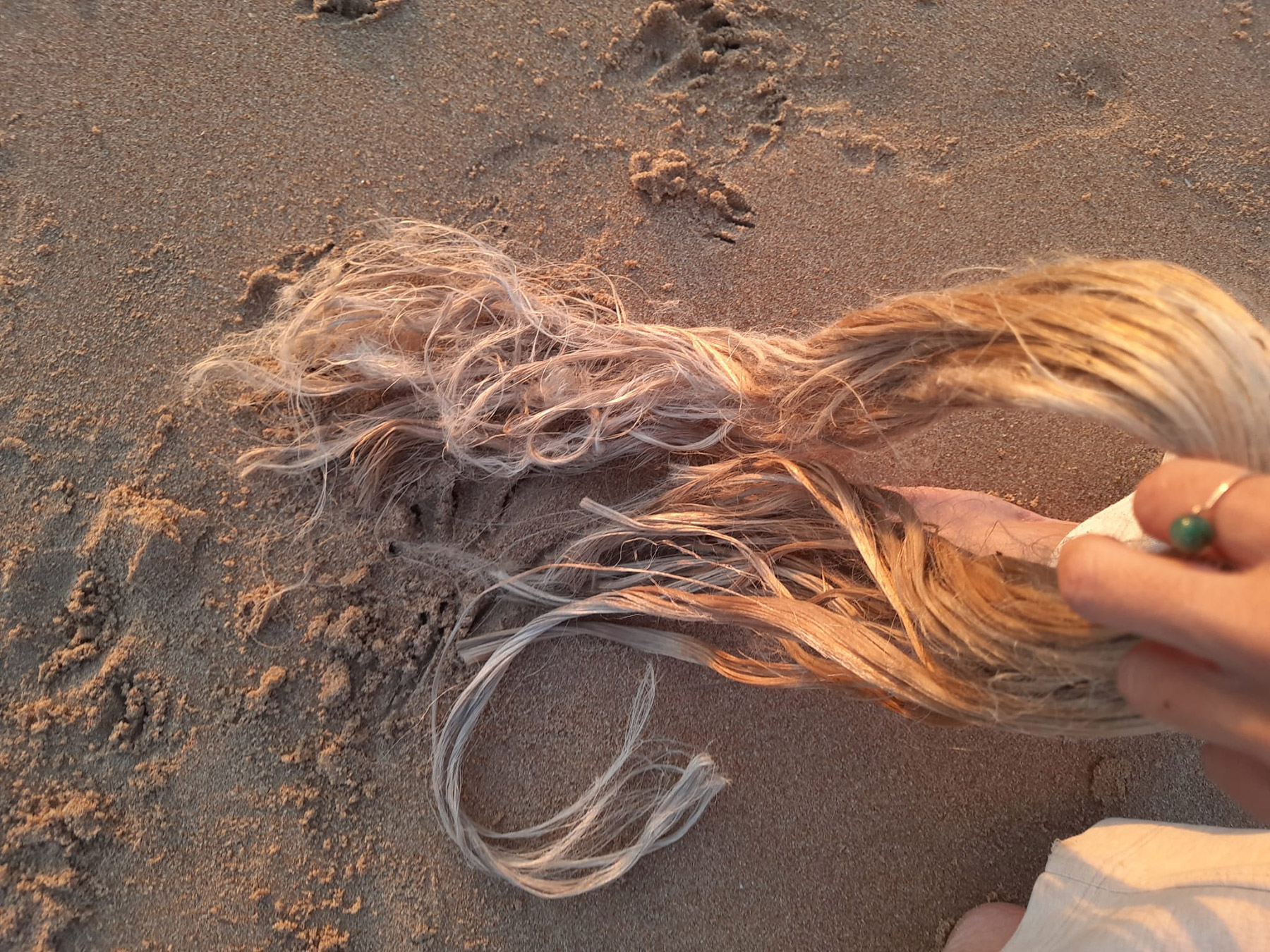
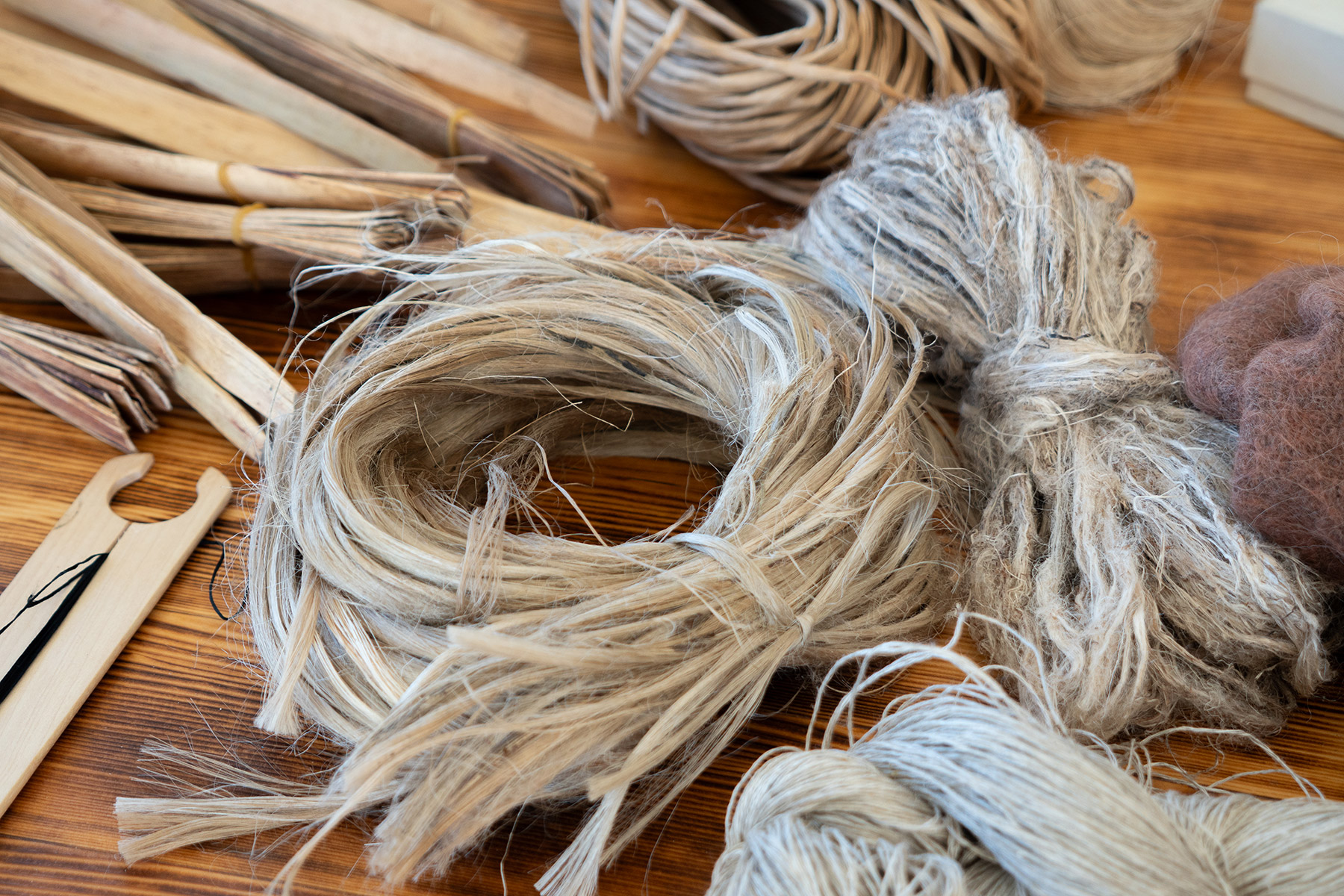
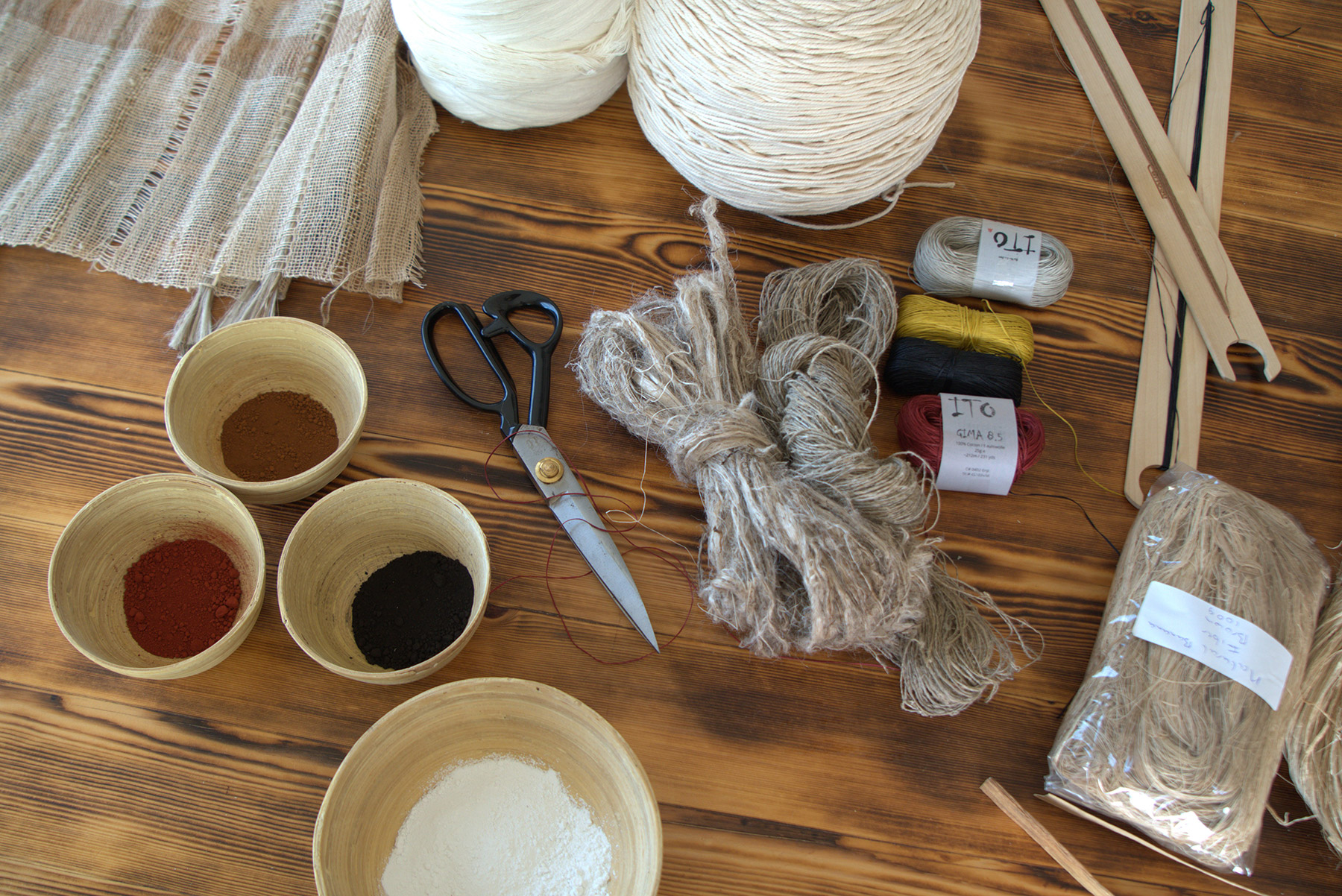
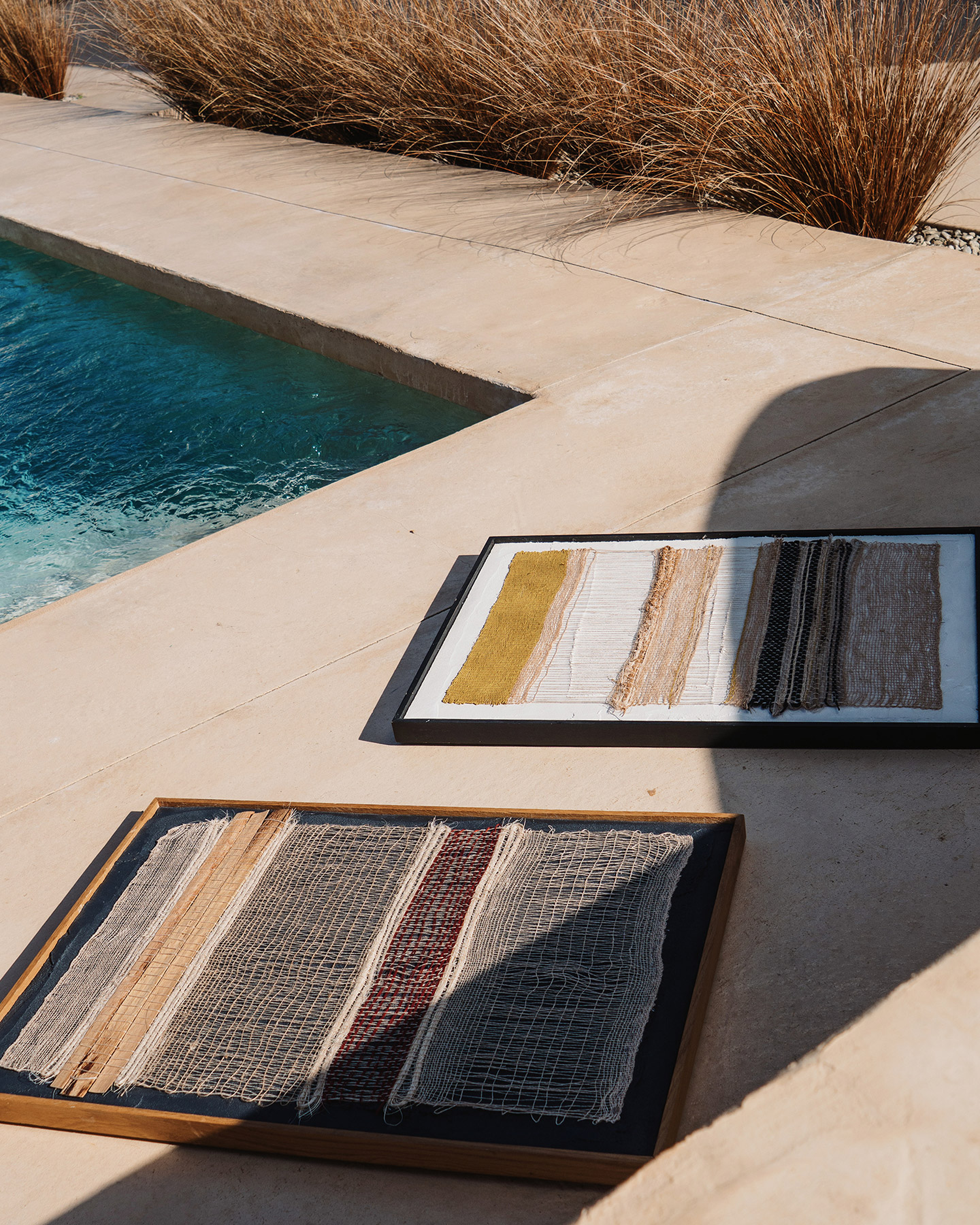
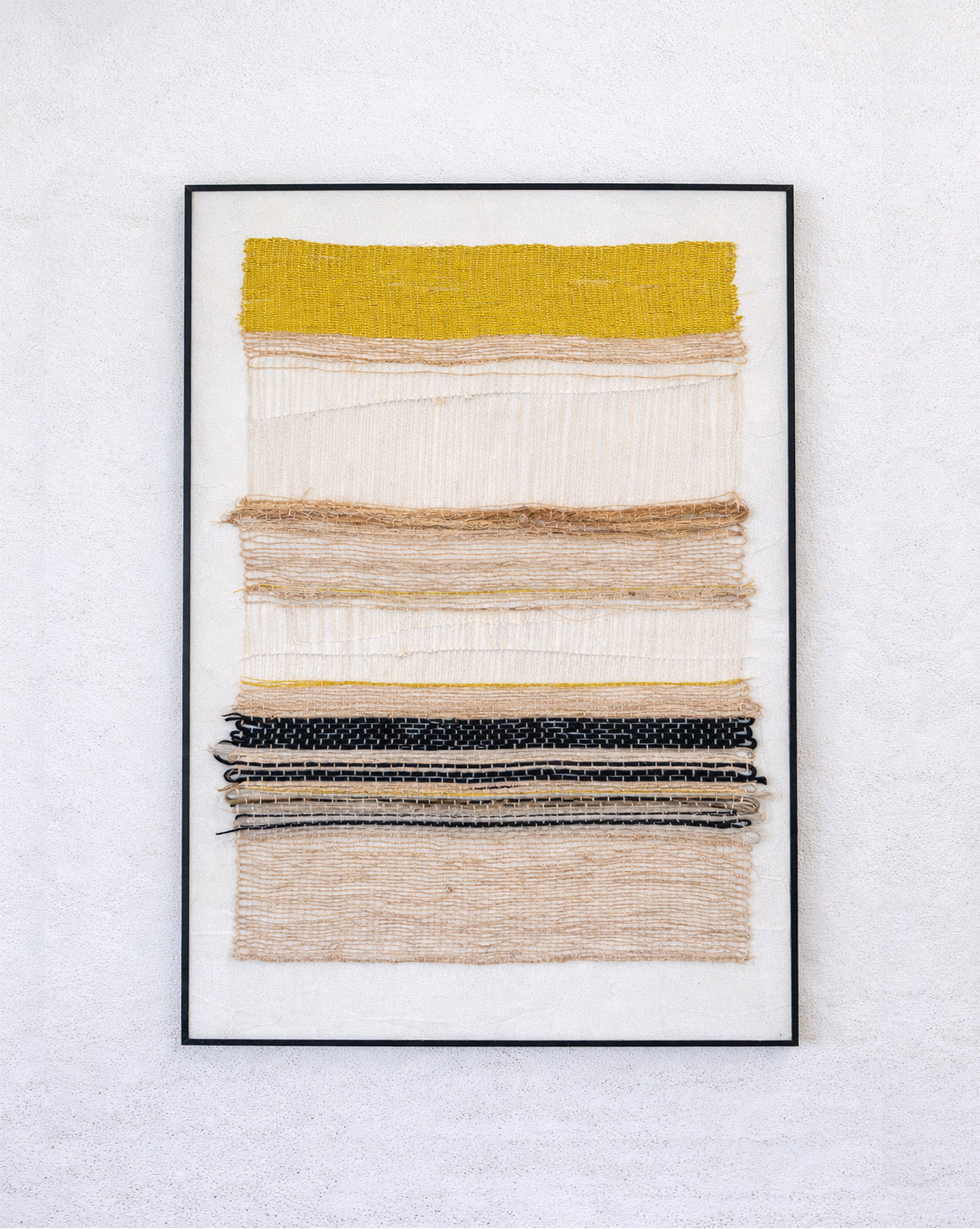
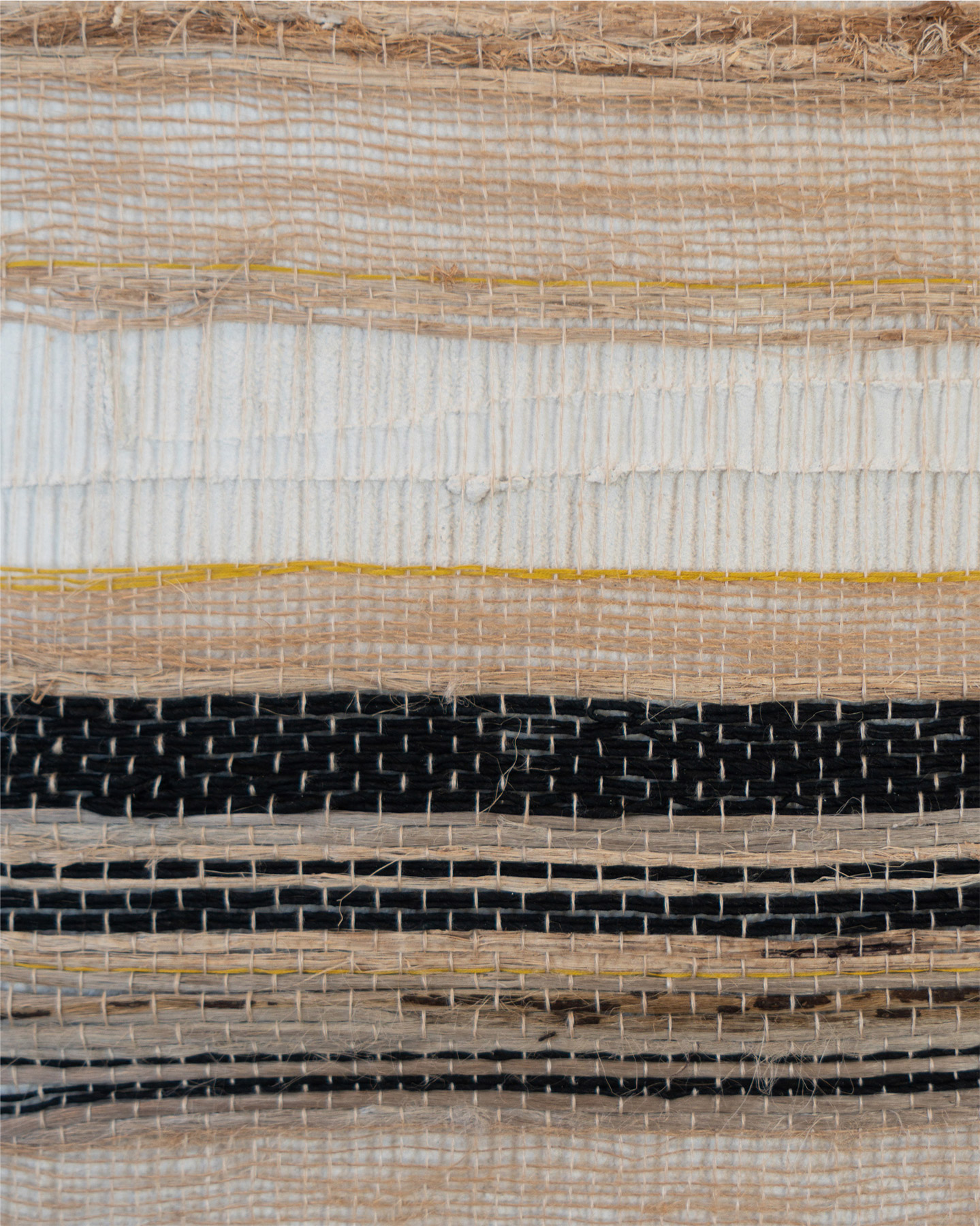
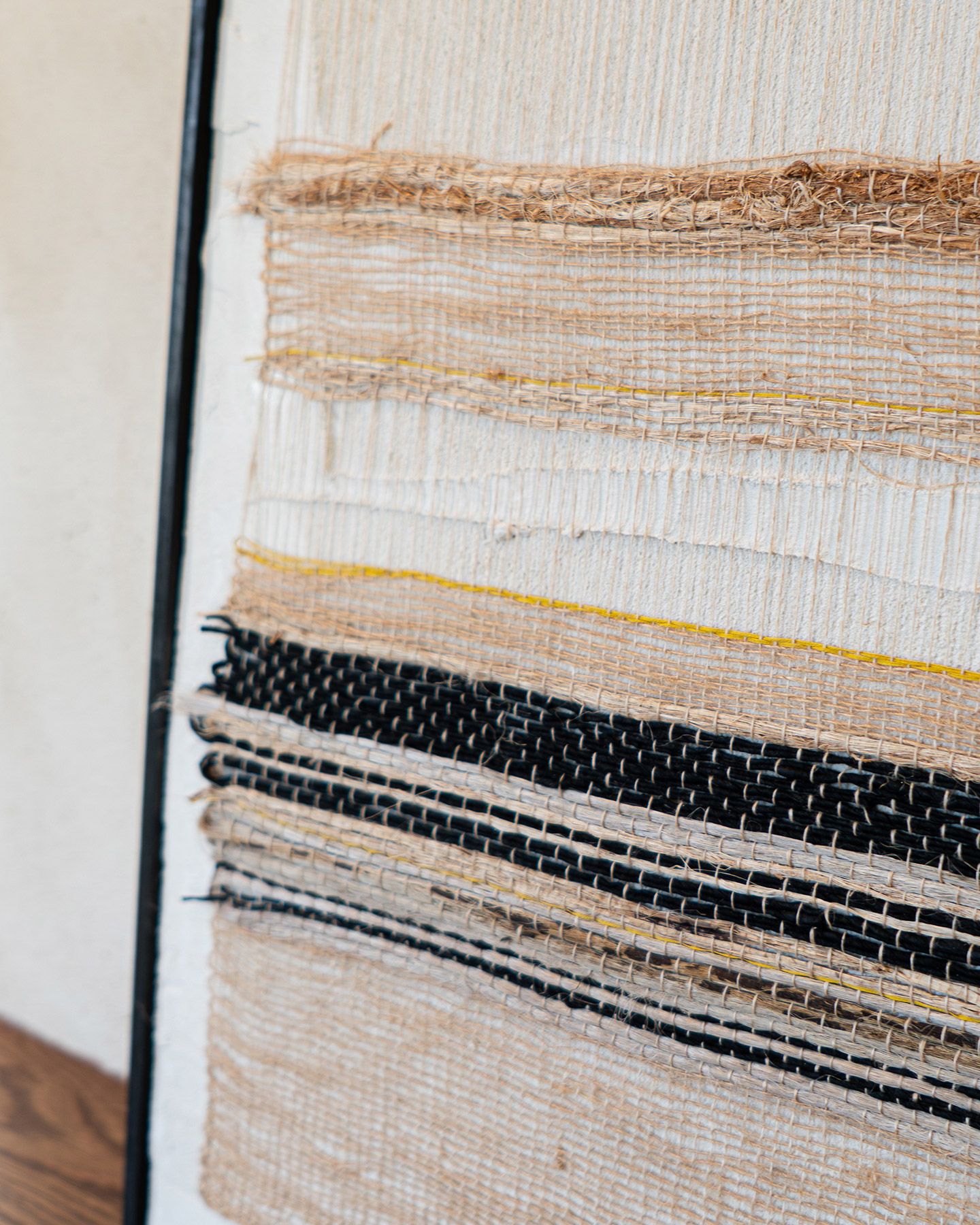
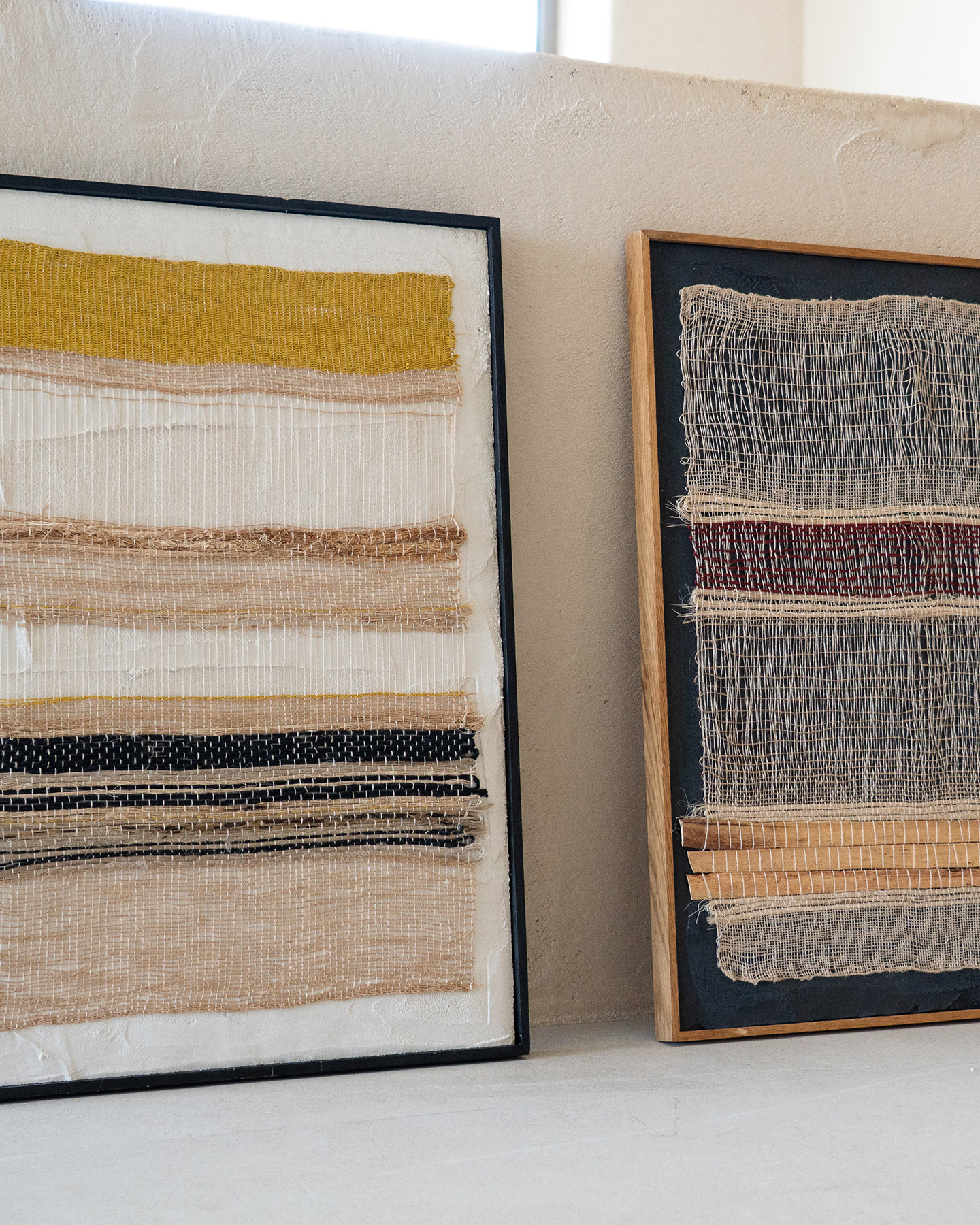
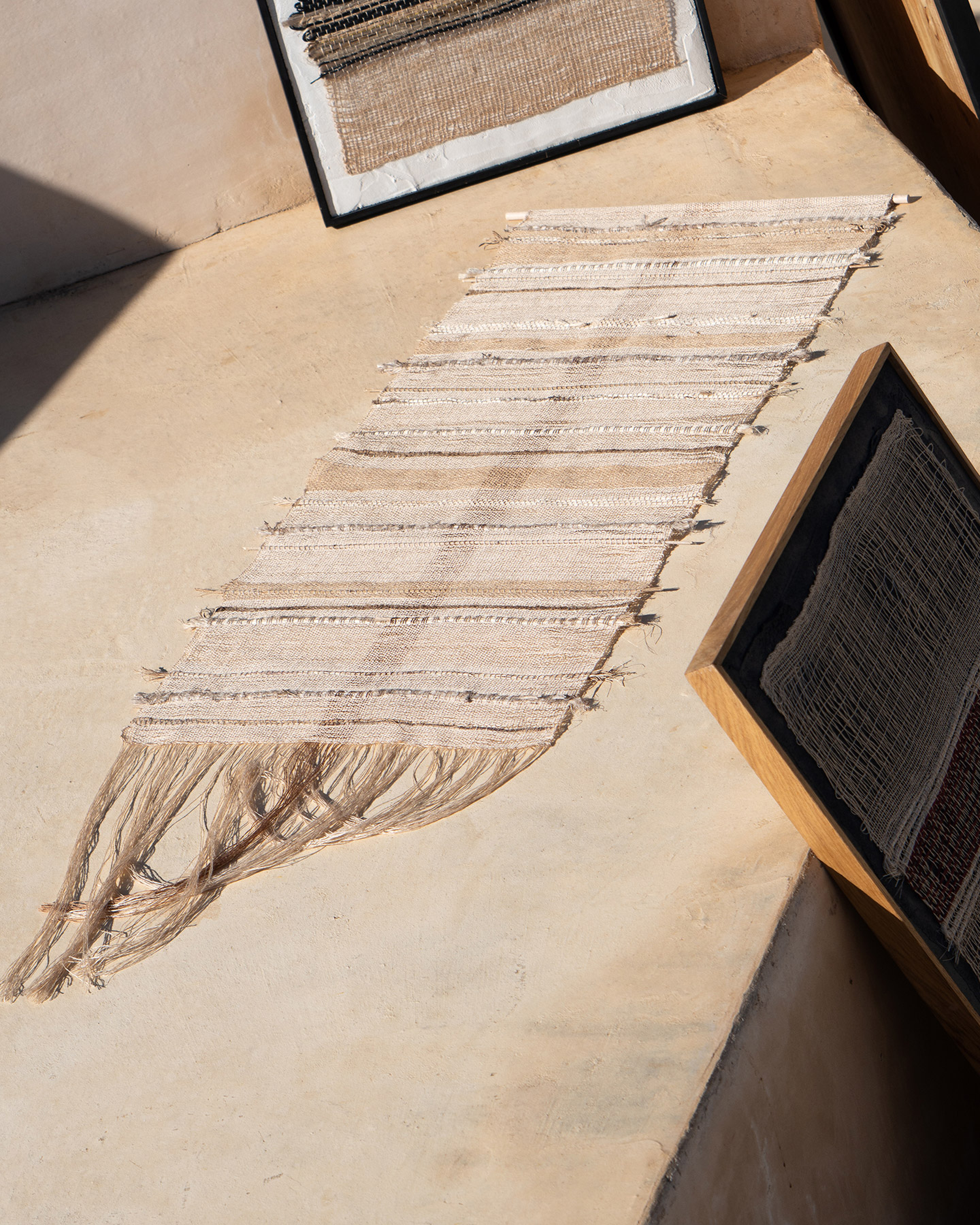
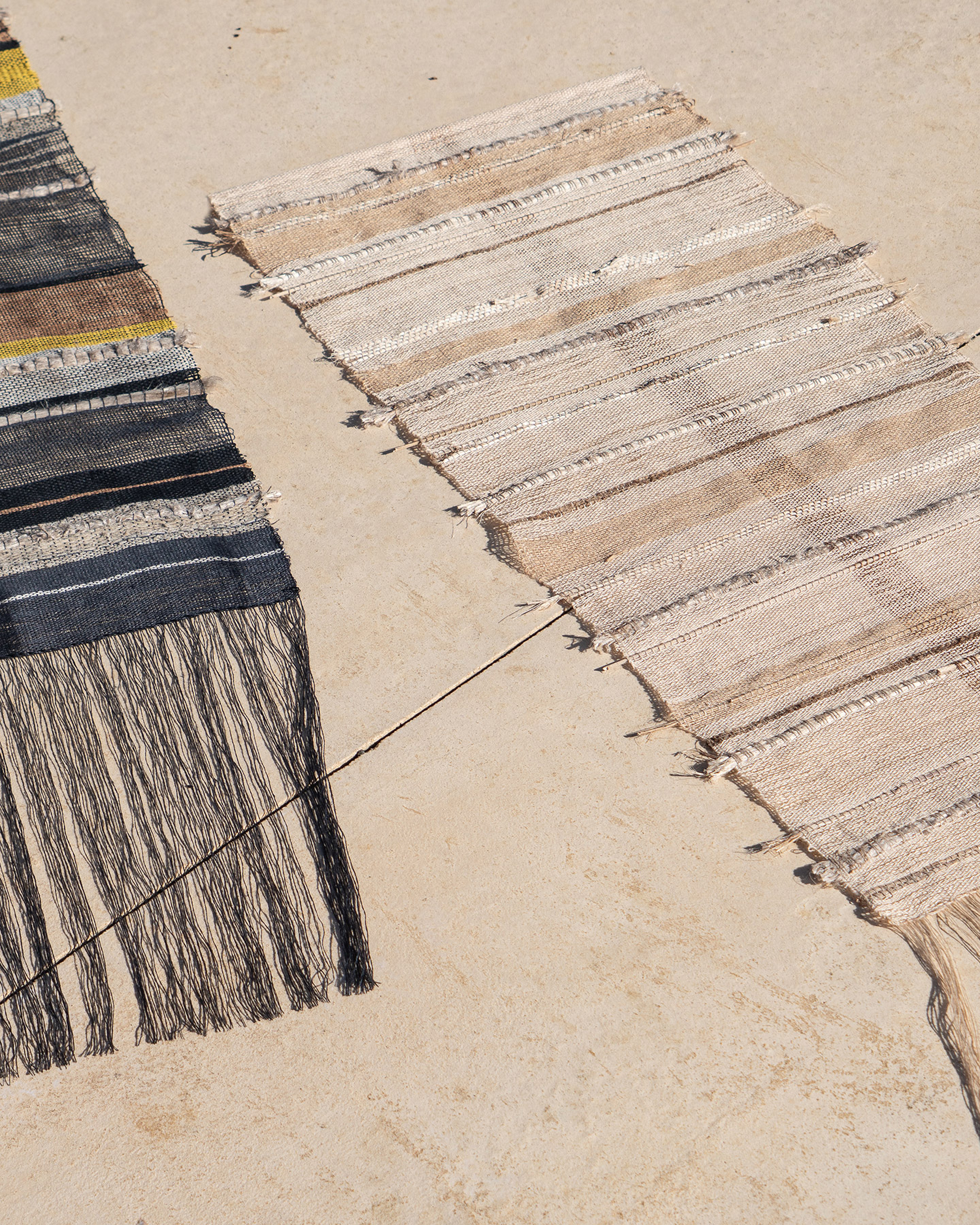
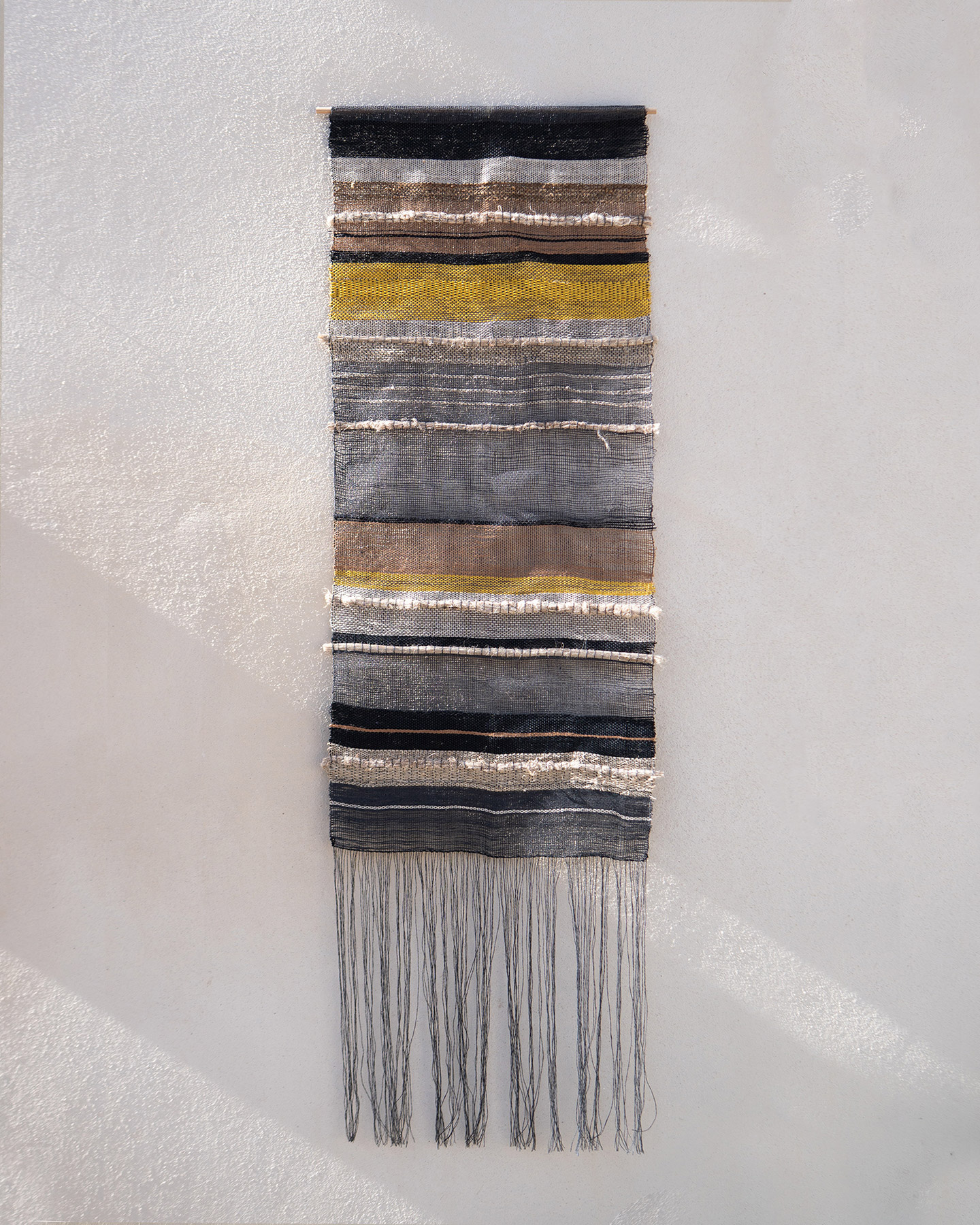
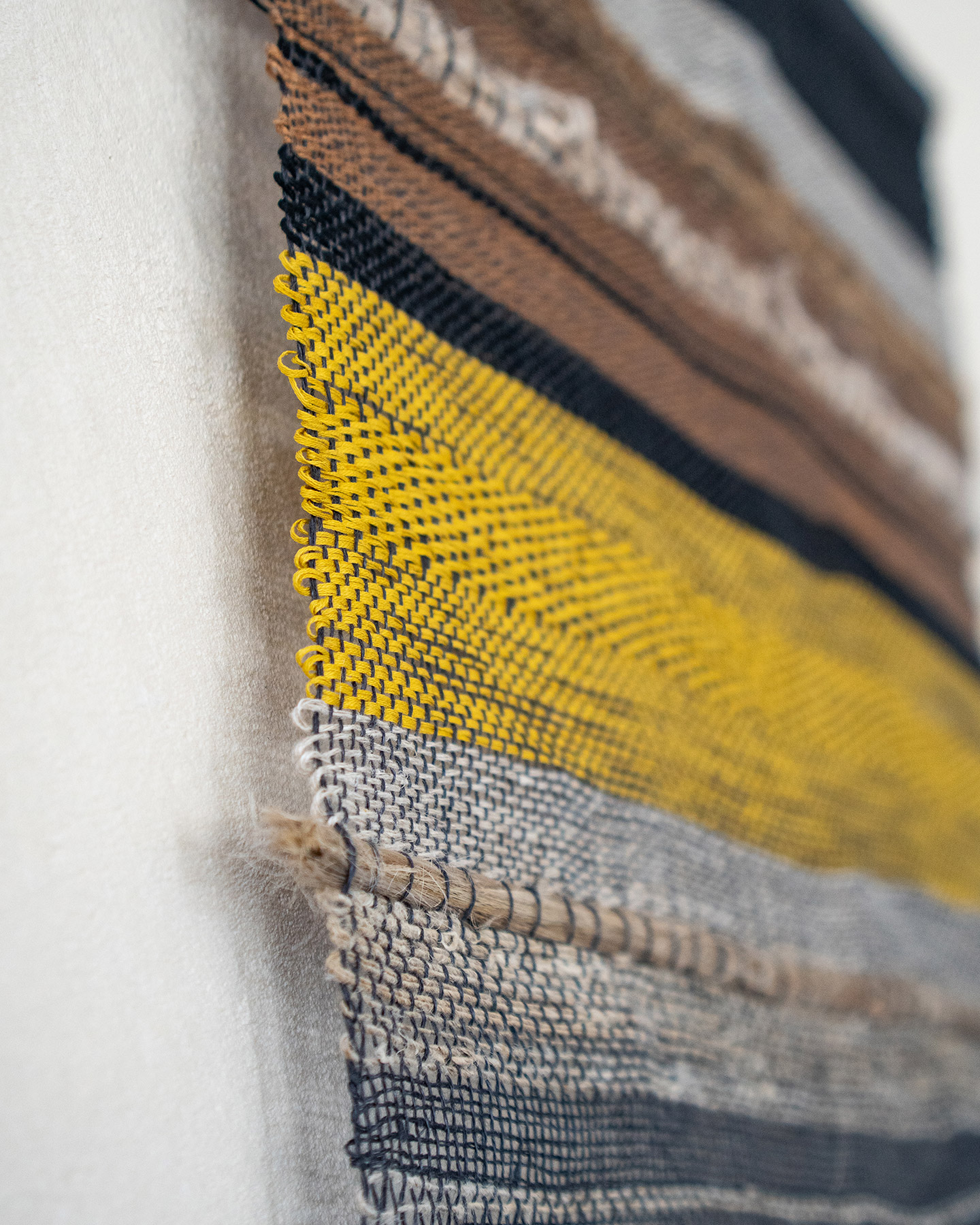
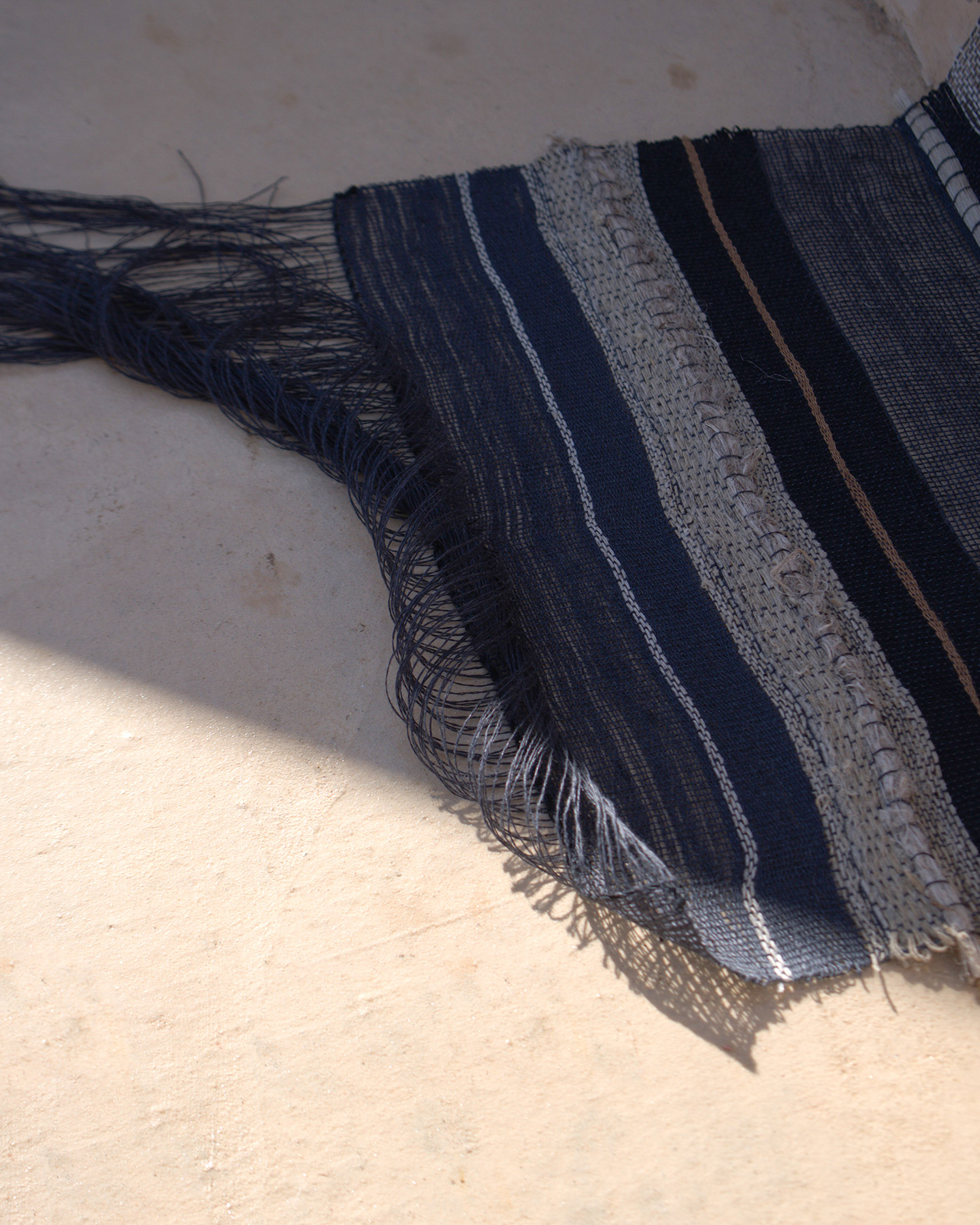
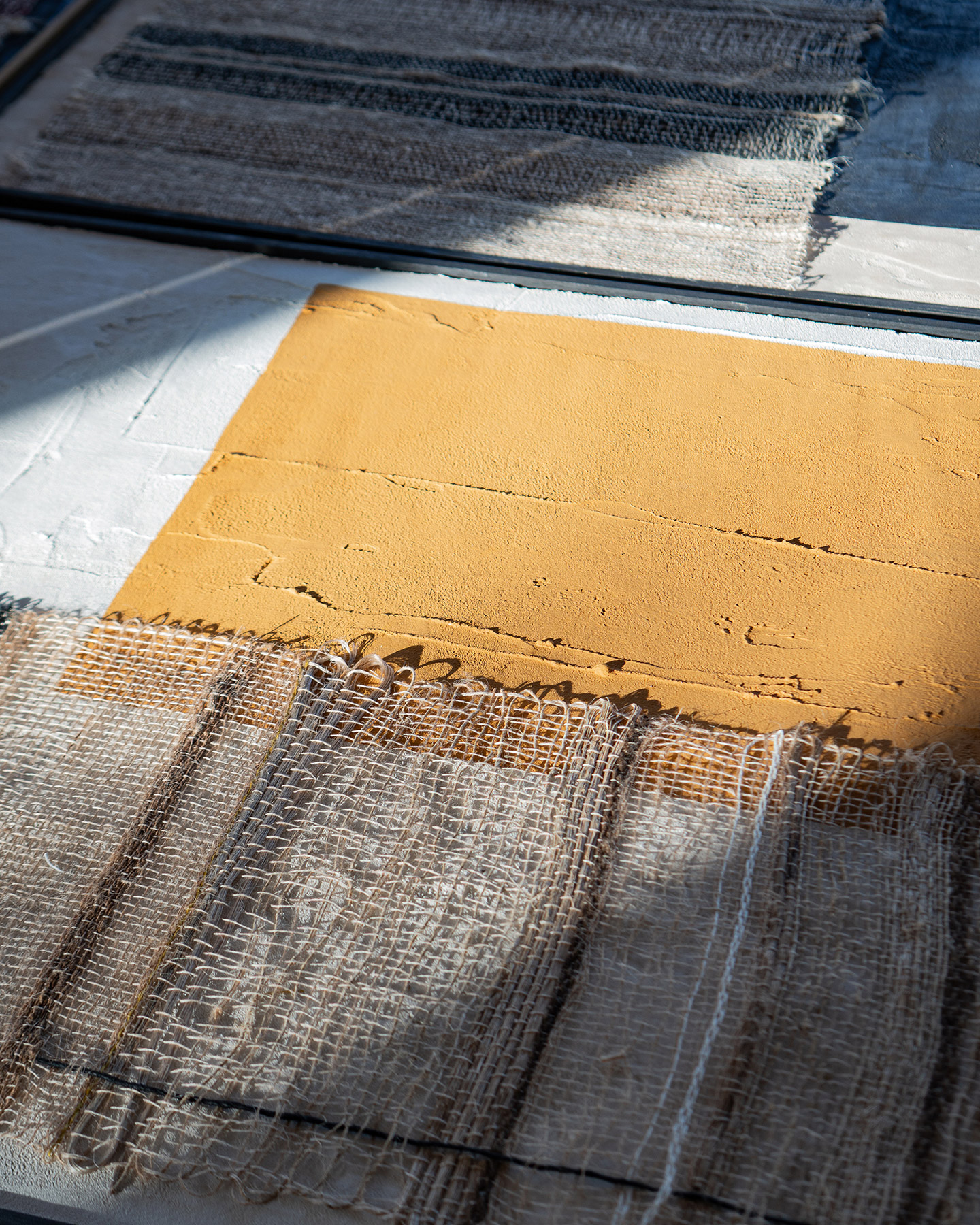
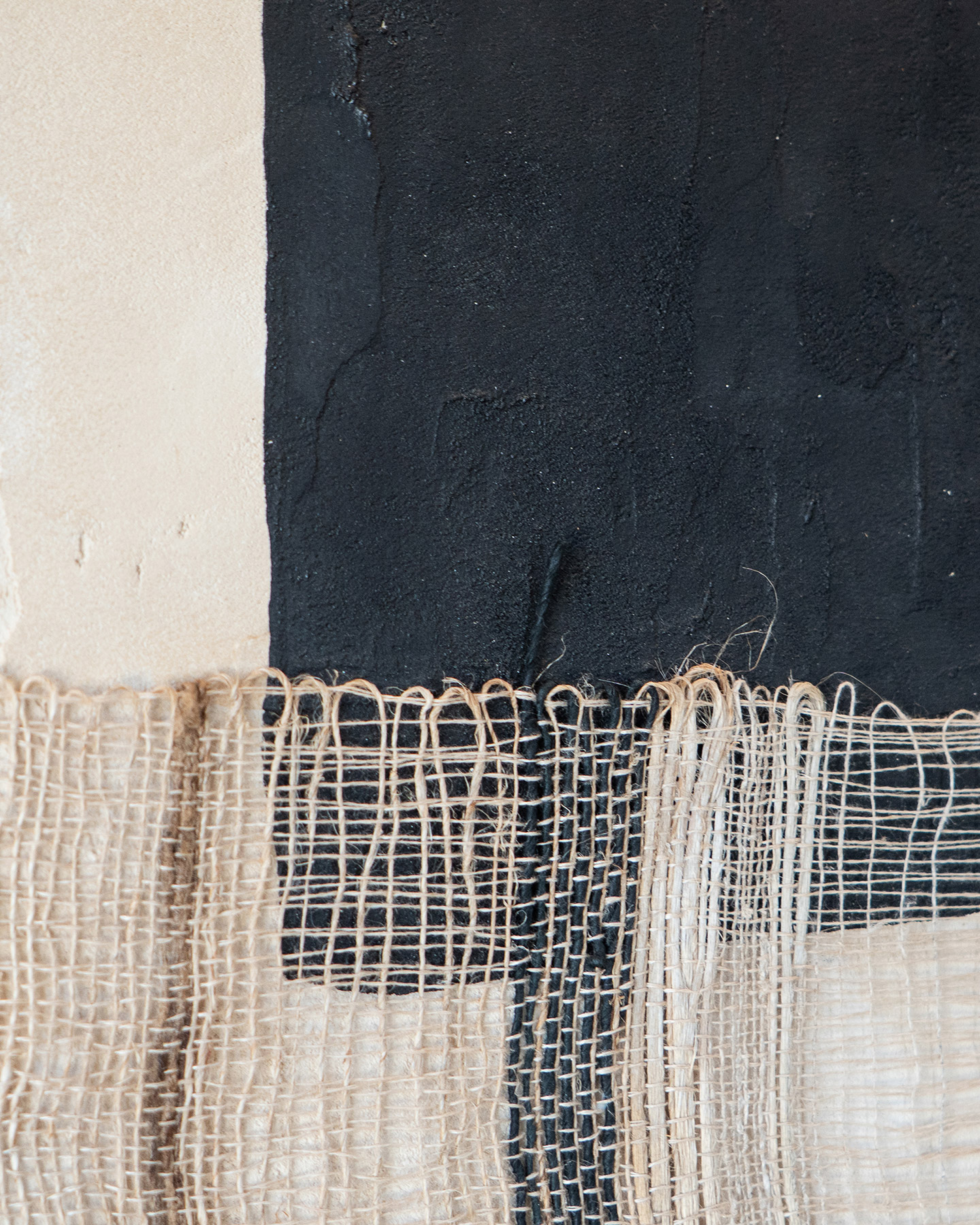
An important part of my work has to do with materials. I like to seek out unusual fibres and discover what happens when they reach the loom. I work mainly with natural fibres from Japan, India and Spain, among them hemp, ramie, cotton, nettle, linen, jute, silks, banana fibre, pineapple thread, seaweed, plant barks, water hyacinth, mulberry paper and various paper yarns and cords.
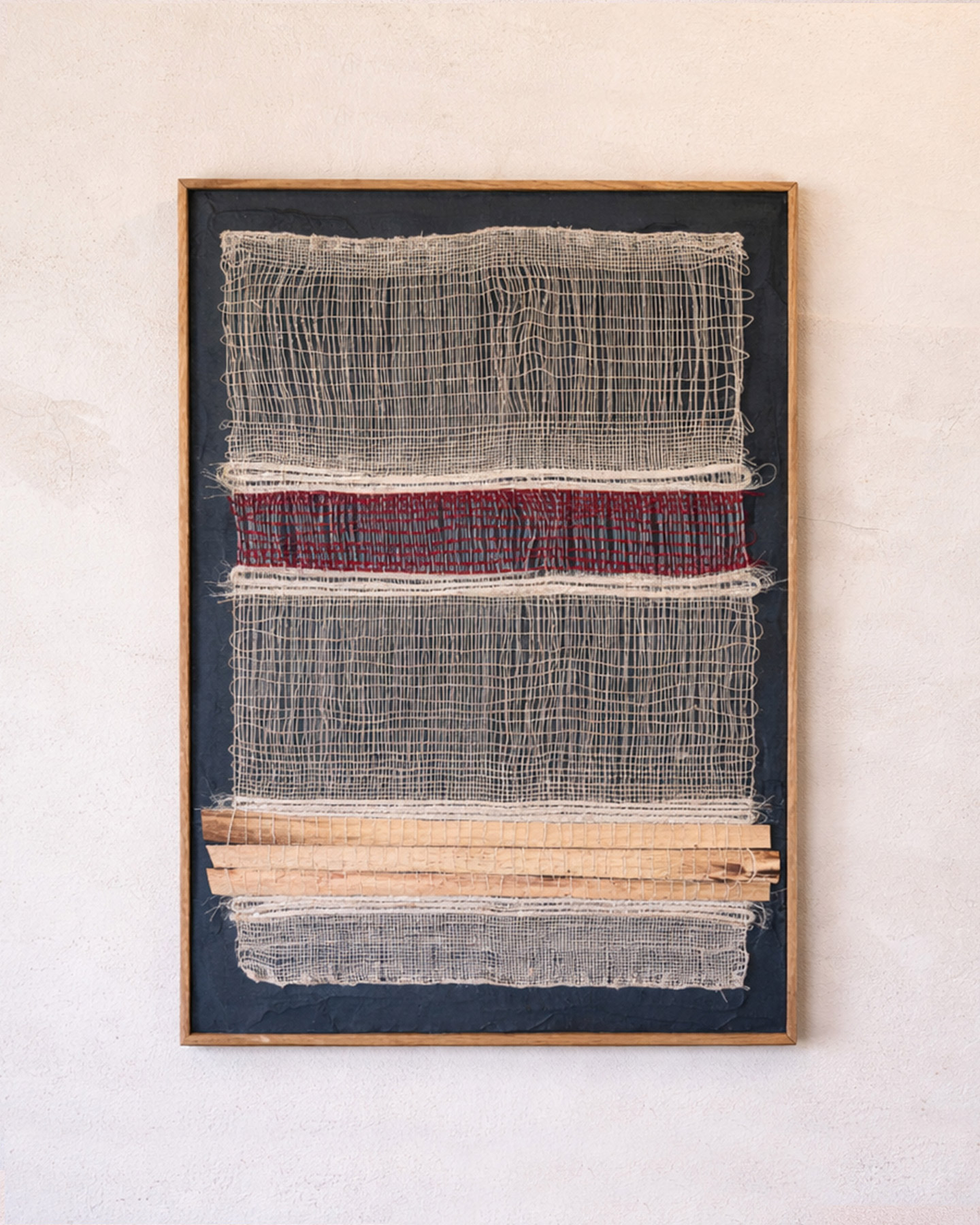
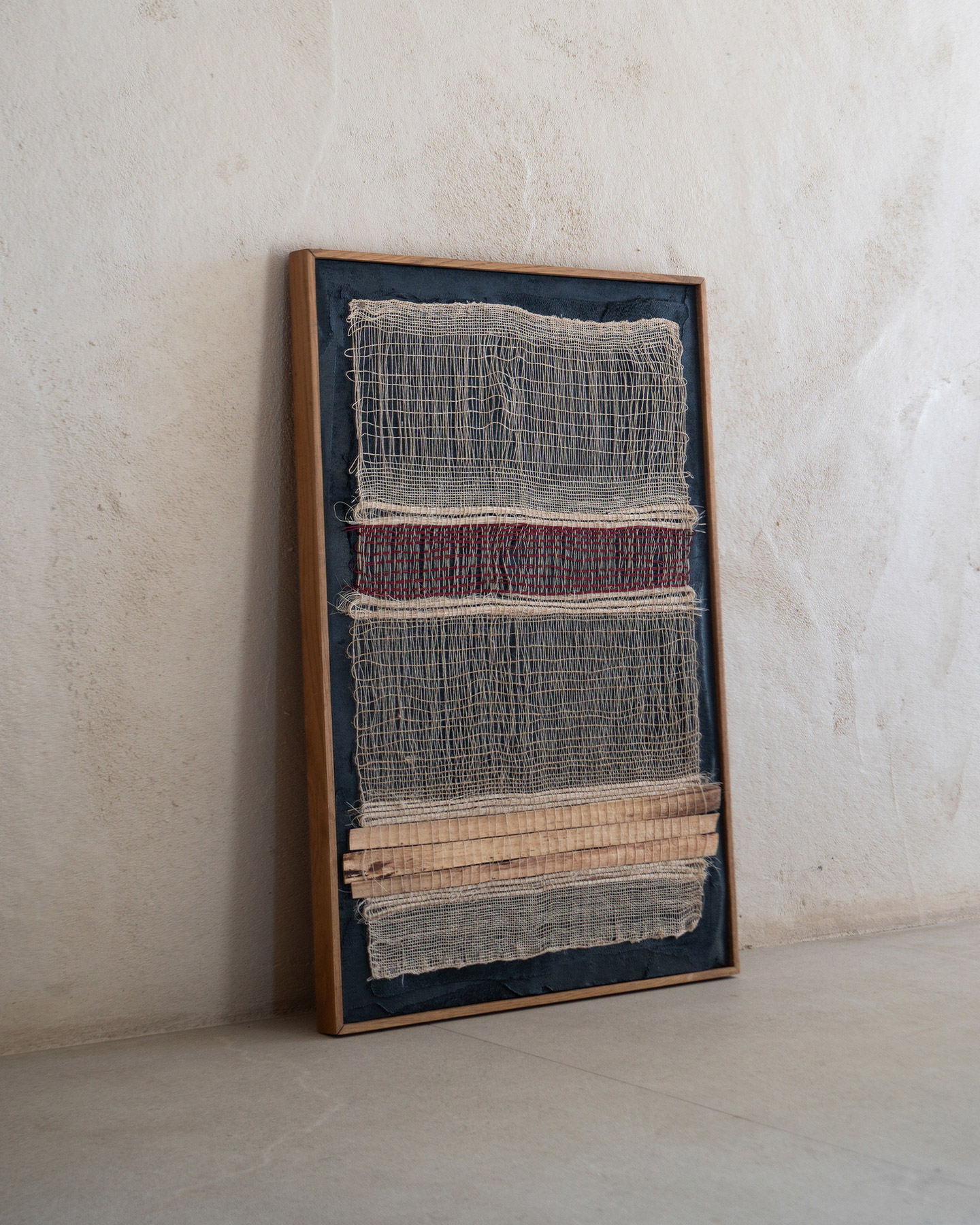
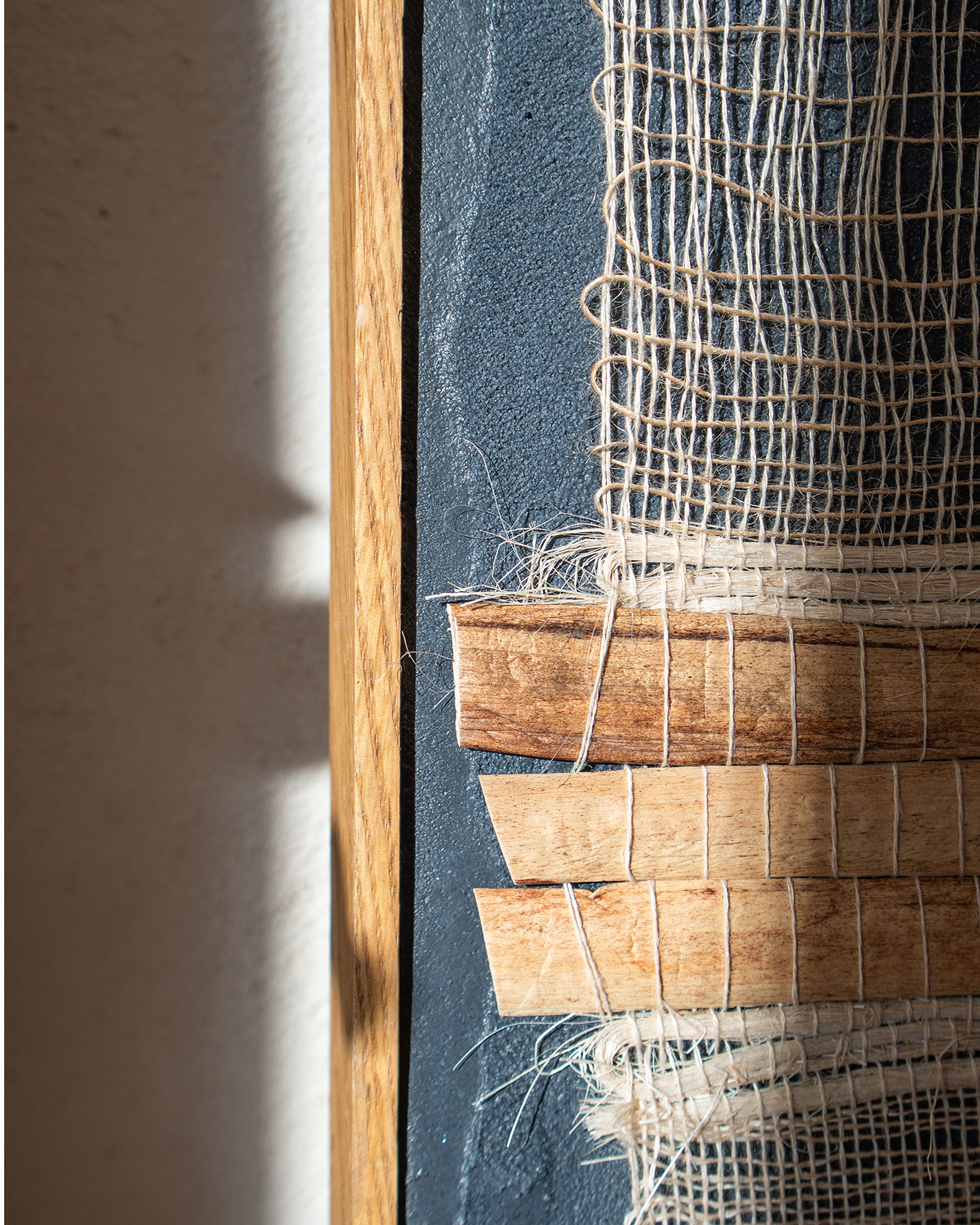
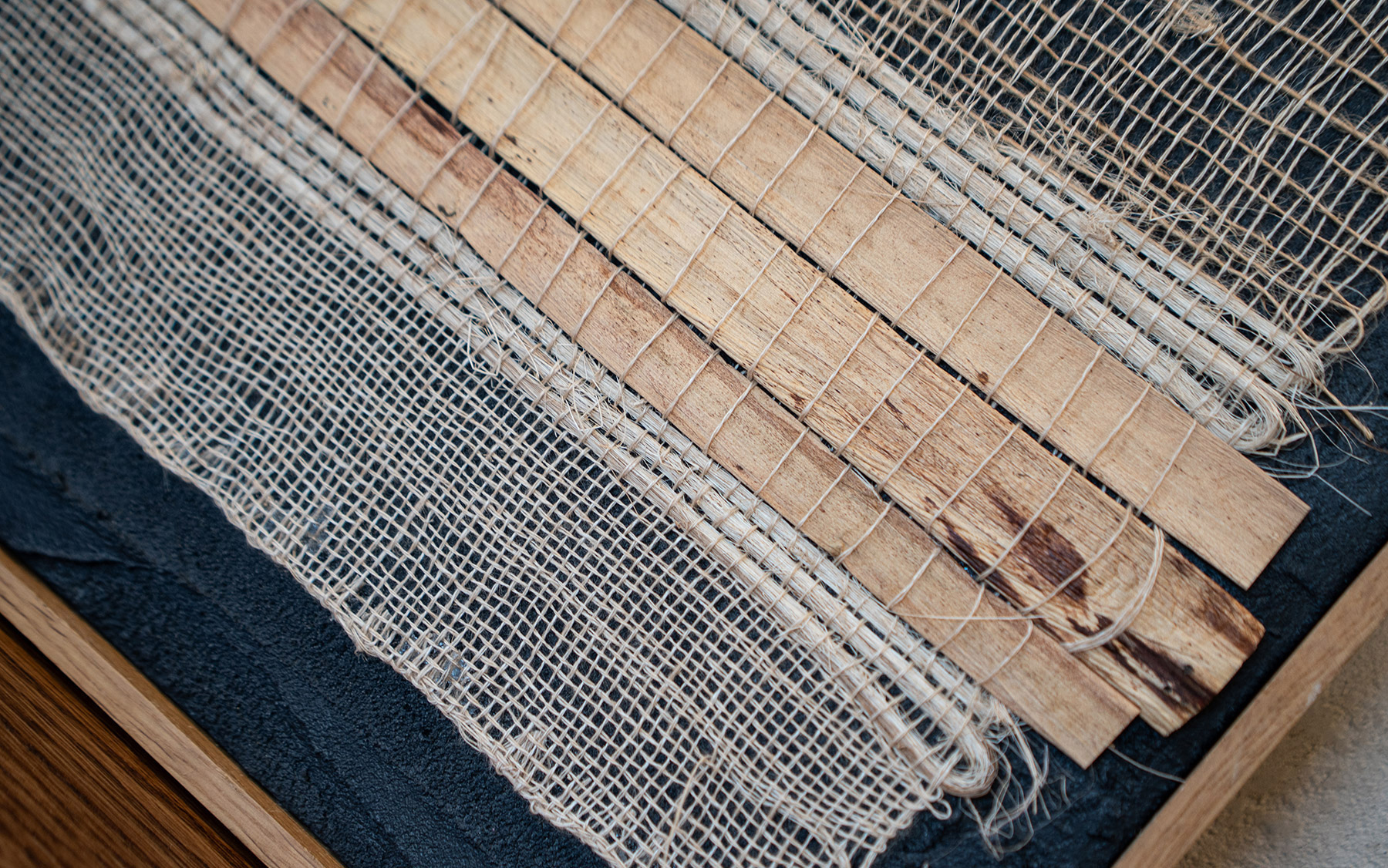
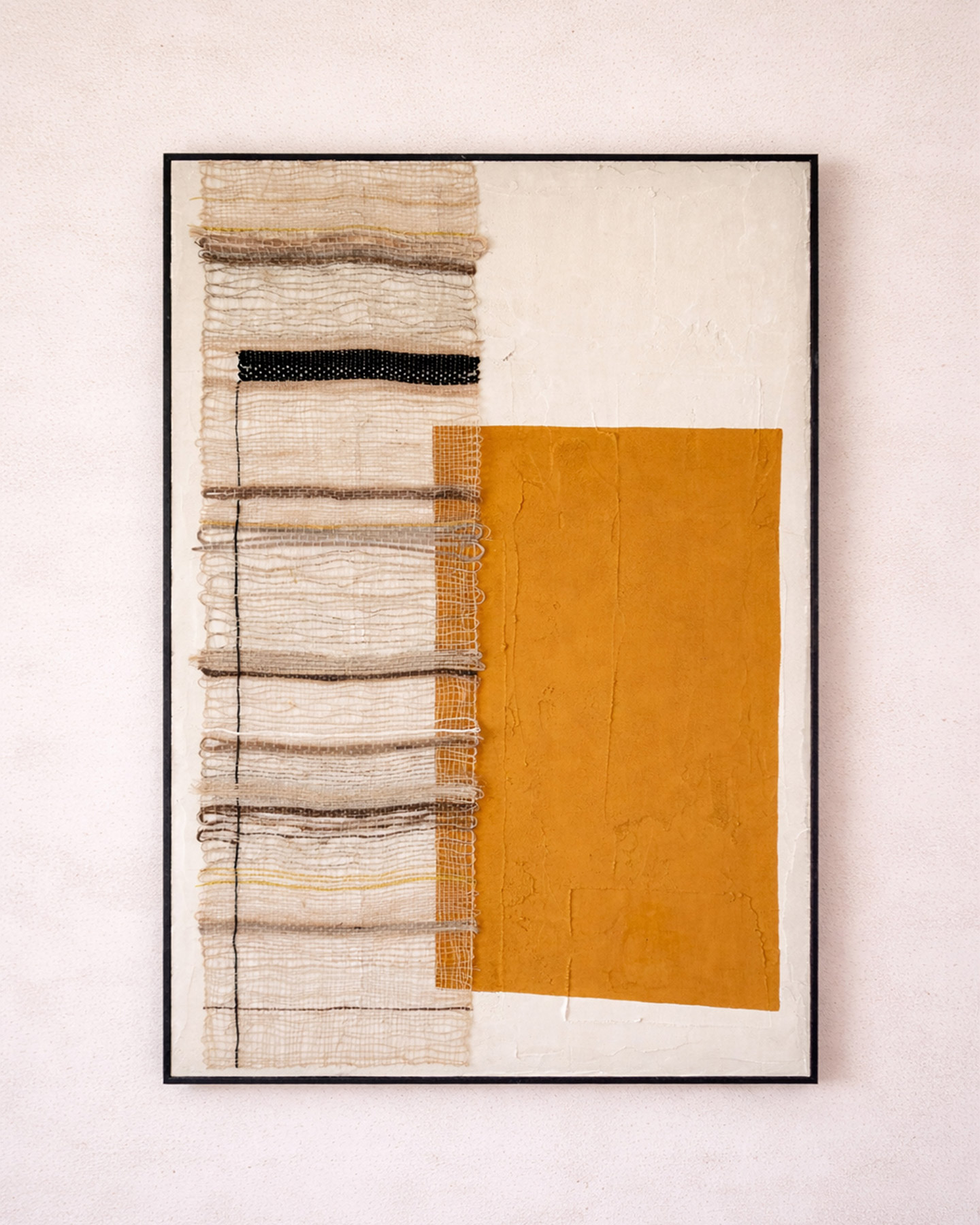
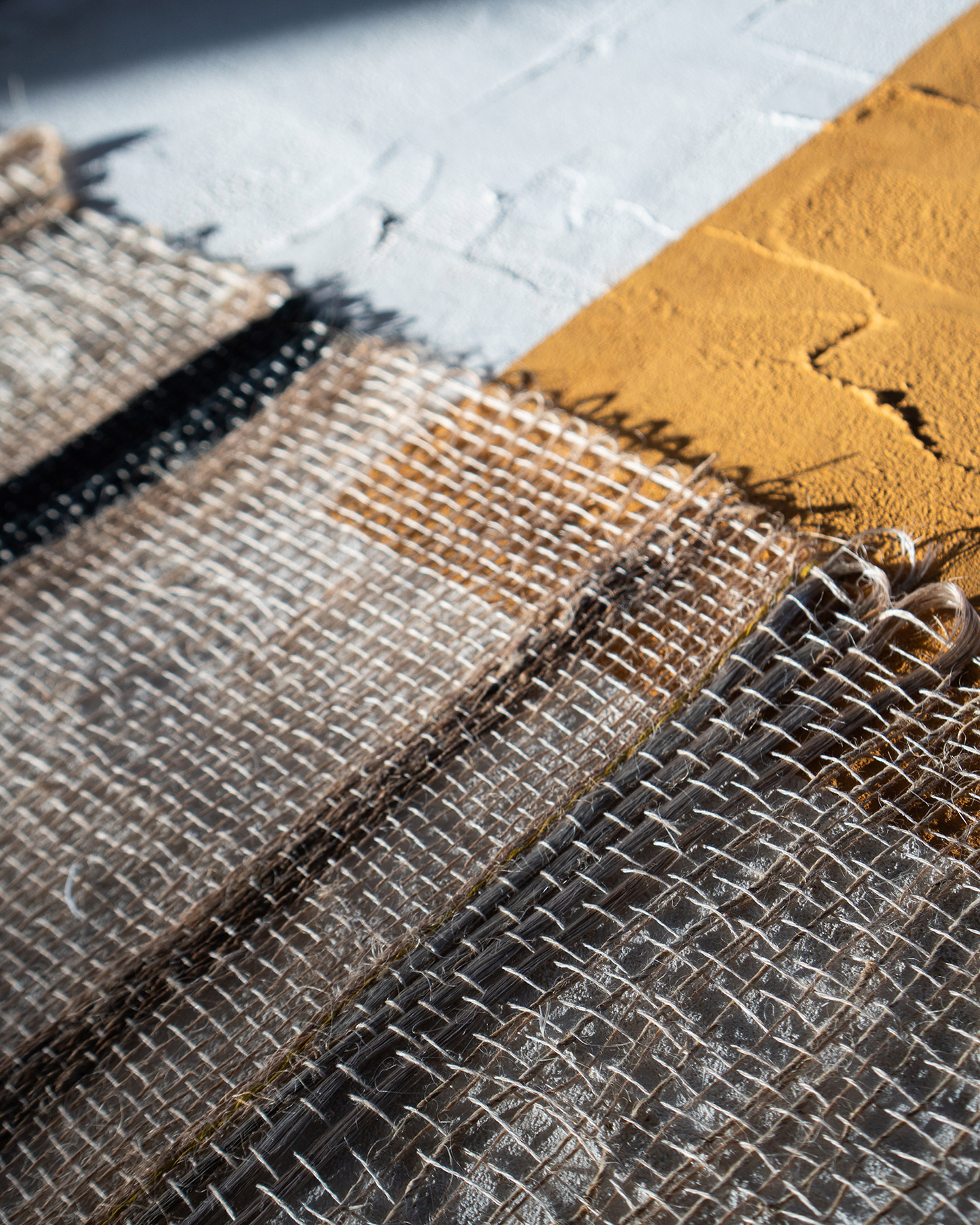
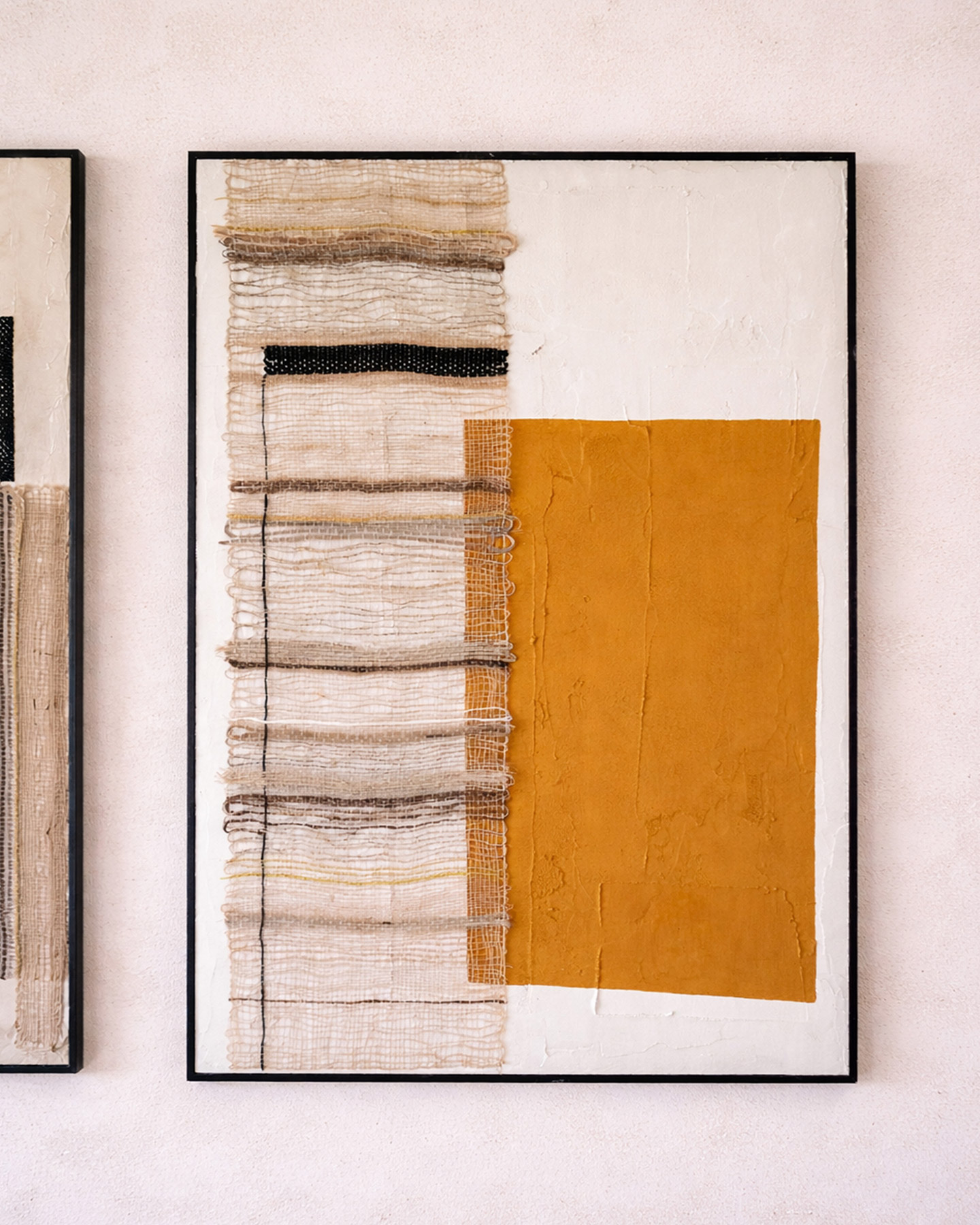
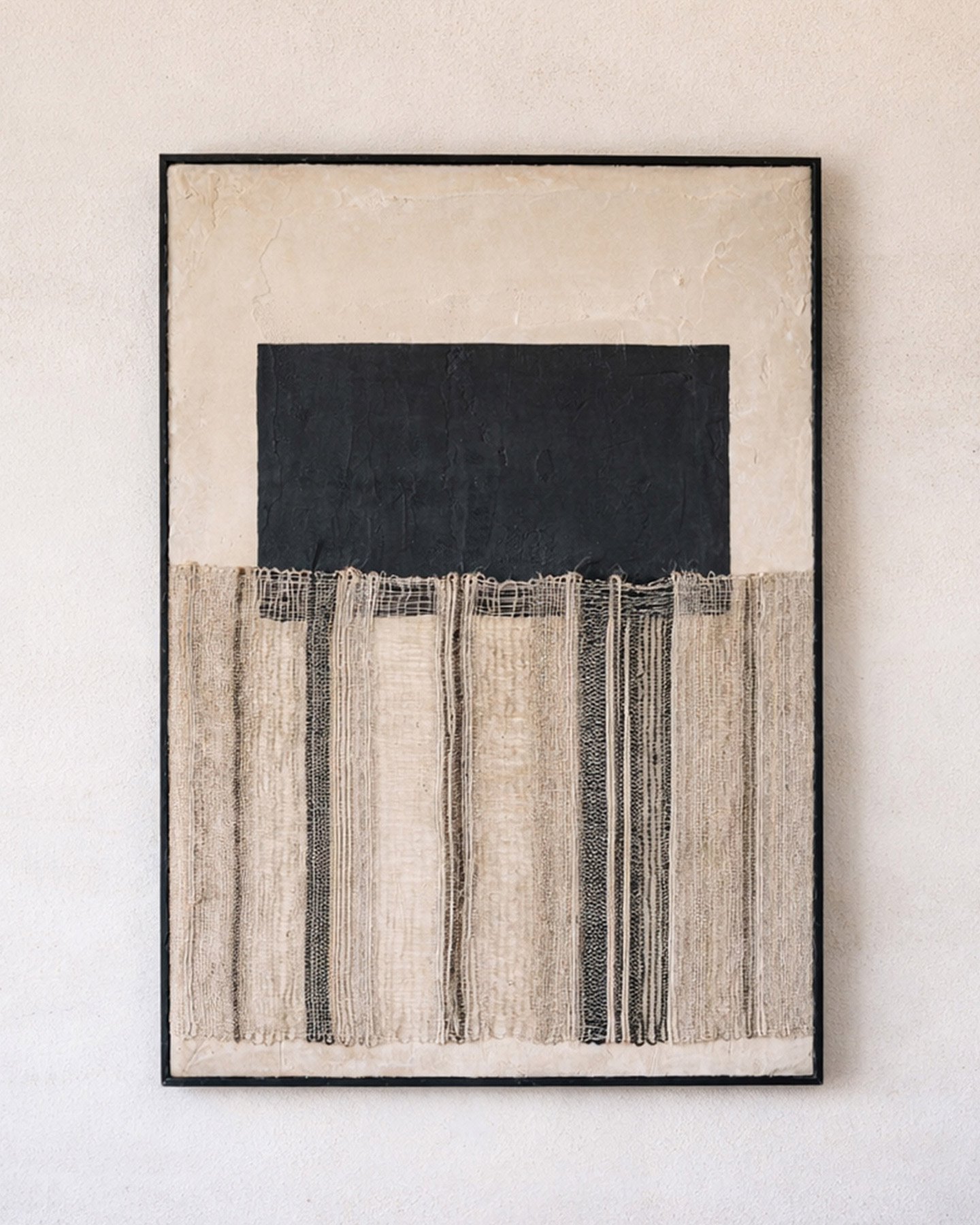
In my latest collaboration I incorporated paper itself as weft, after working it beforehand, as well as different fabrics. I am interested in the possibility of thinking about the weft in a much more open way: not necessarily as a thread, but as any material that can pass through the warp and become part of the weave.
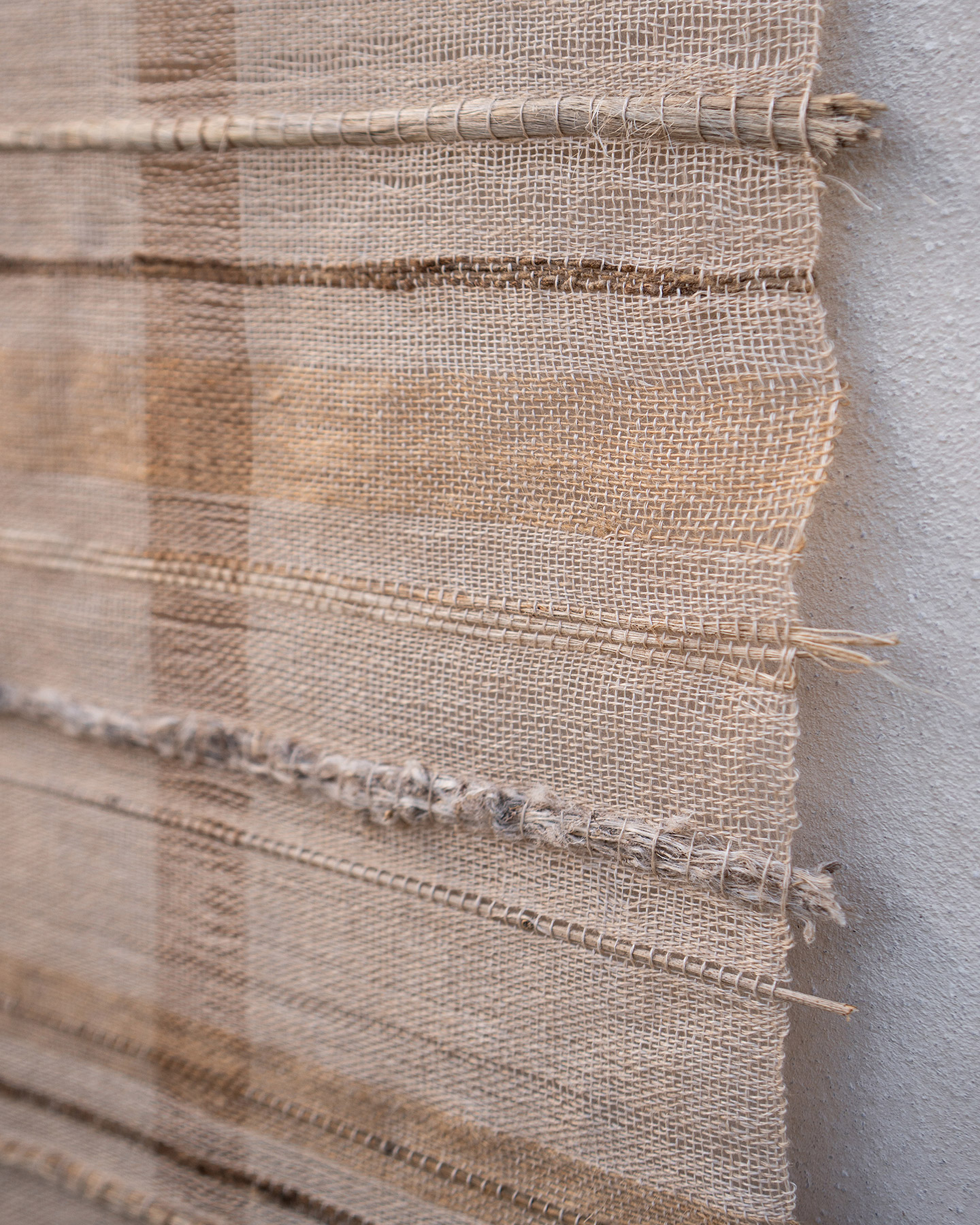
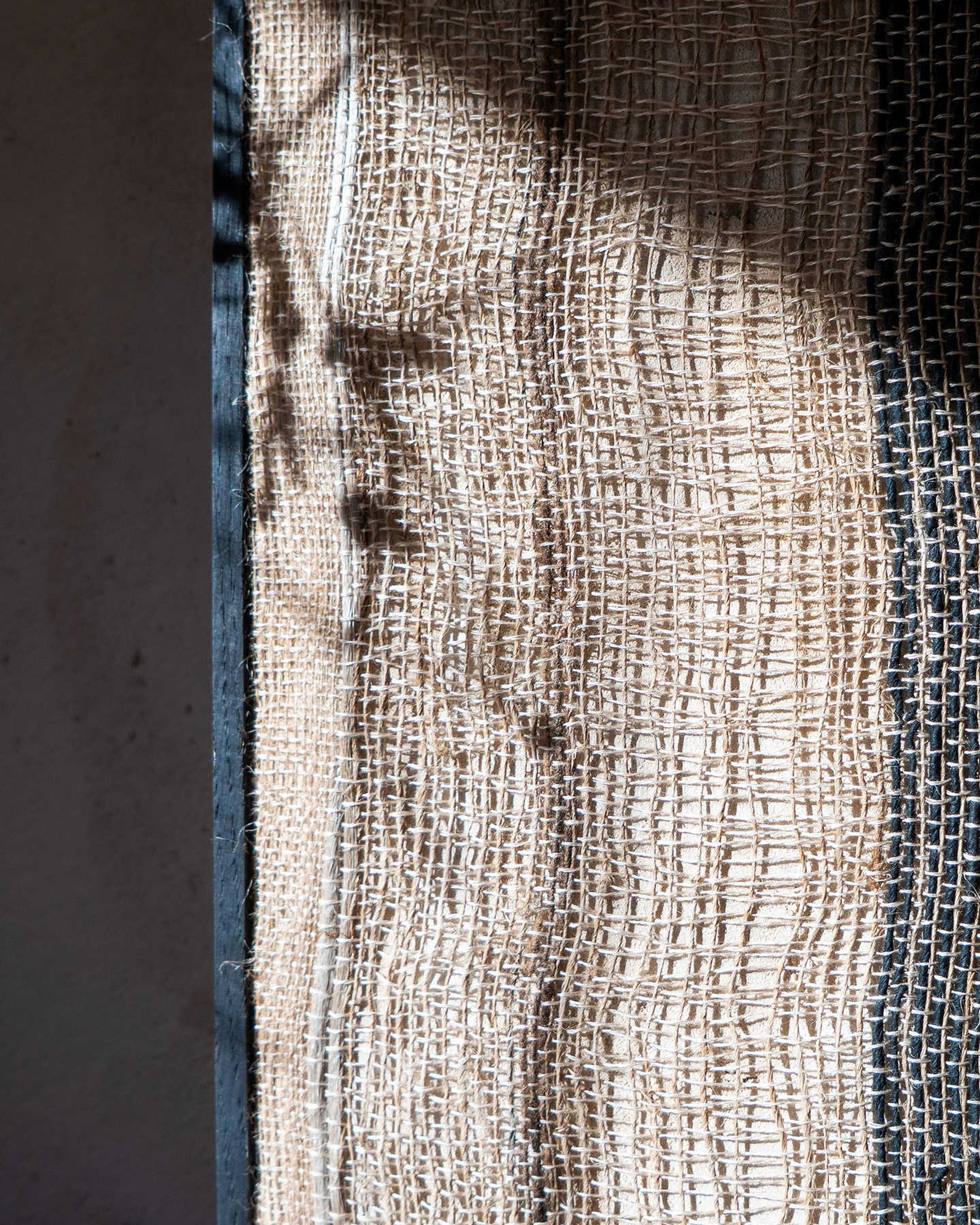
Many of these materials are irregular, fragile and very alive, and that is why they attract me. They do not all behave in the same way or allow you to work with them in the same way. Some fibres withstand a great deal of tension and others break straight away. Some are rigid, others almost disappear. Some allow you to build volume and others work better leaving air and space between the threads.
Much of the work consists of testing them and observing how they behave, how they respond to tension and what possibilities they hold within the weave. Sometimes it is simply a matter of finding out whether a material can be woven, what form it can build, or what happens when I try to use it in a way for which, in principle, it was never intended.
Weaving also involves many mistakes. A thread that breaks, a tension that shifts, something that does not turn out exactly as you had imagined. For someone as demanding as I am, learning to live with that has also been part of the process. There is a line from The Creative Act that I love: “When the work has five flaws, it is not yet finished. When it has eight flaws, it may well be.” I like it because it sums up something I have had to learn along the way: not everything that departs from what was planned necessarily needs correcting.
Crossing the limits of the loom
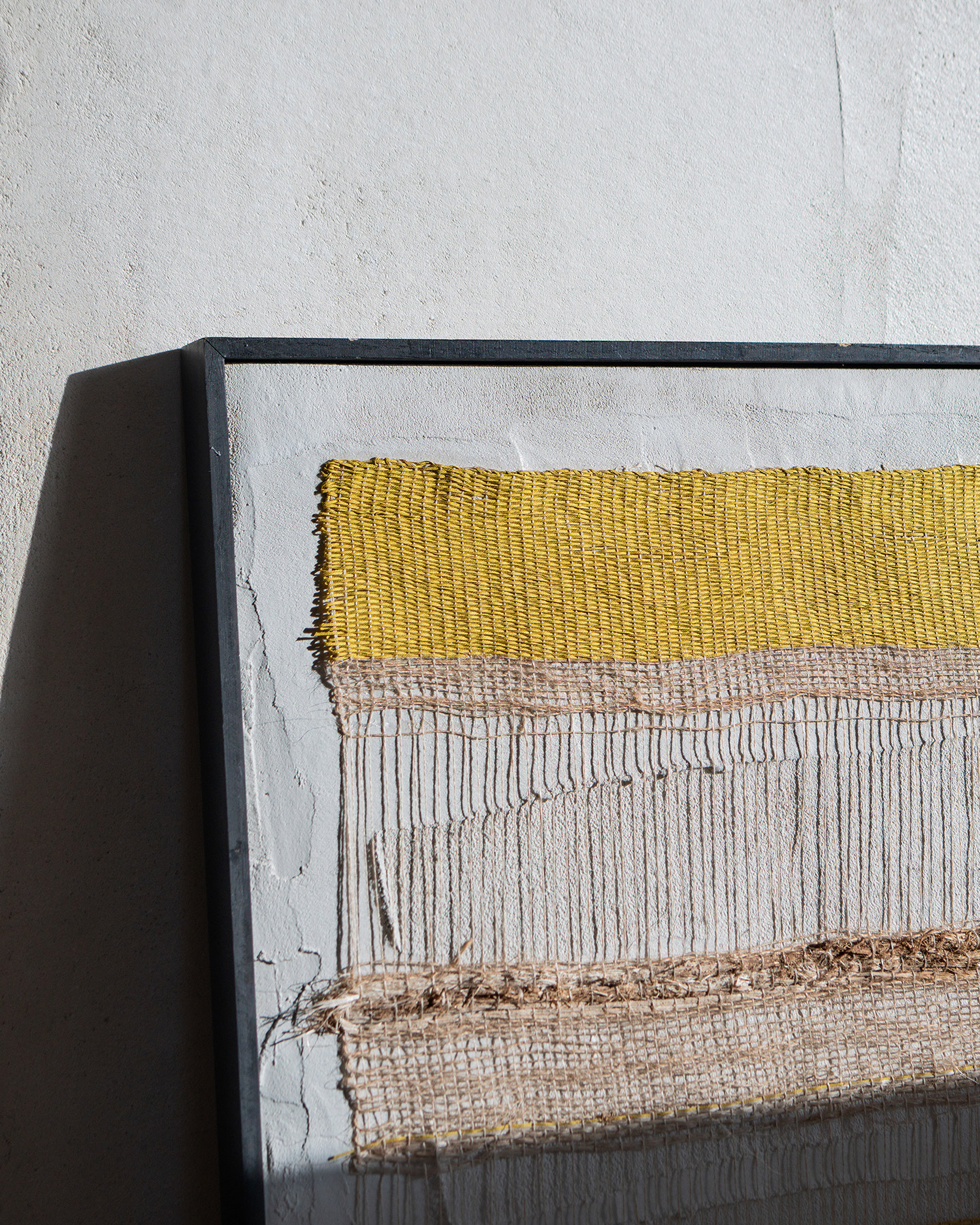
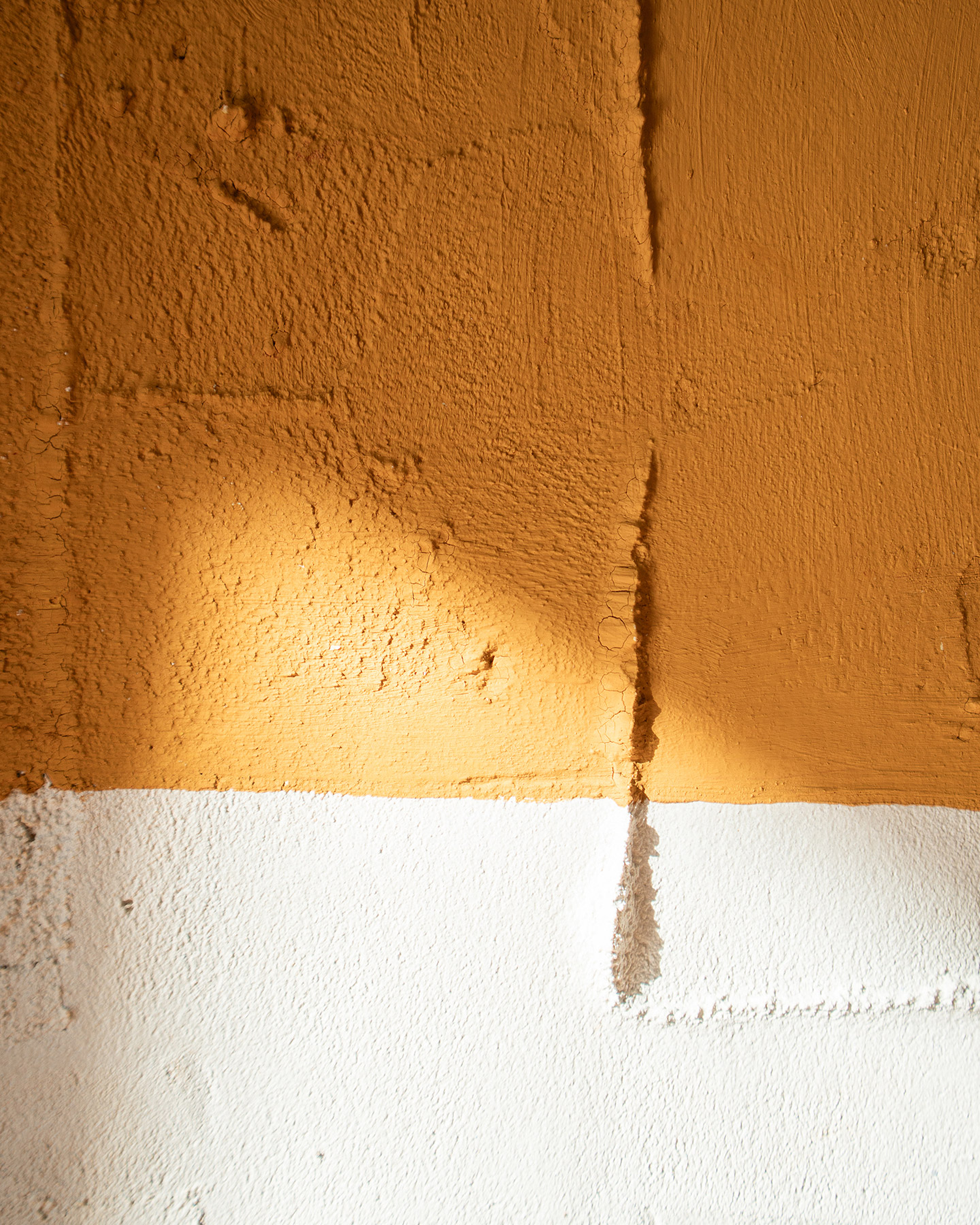
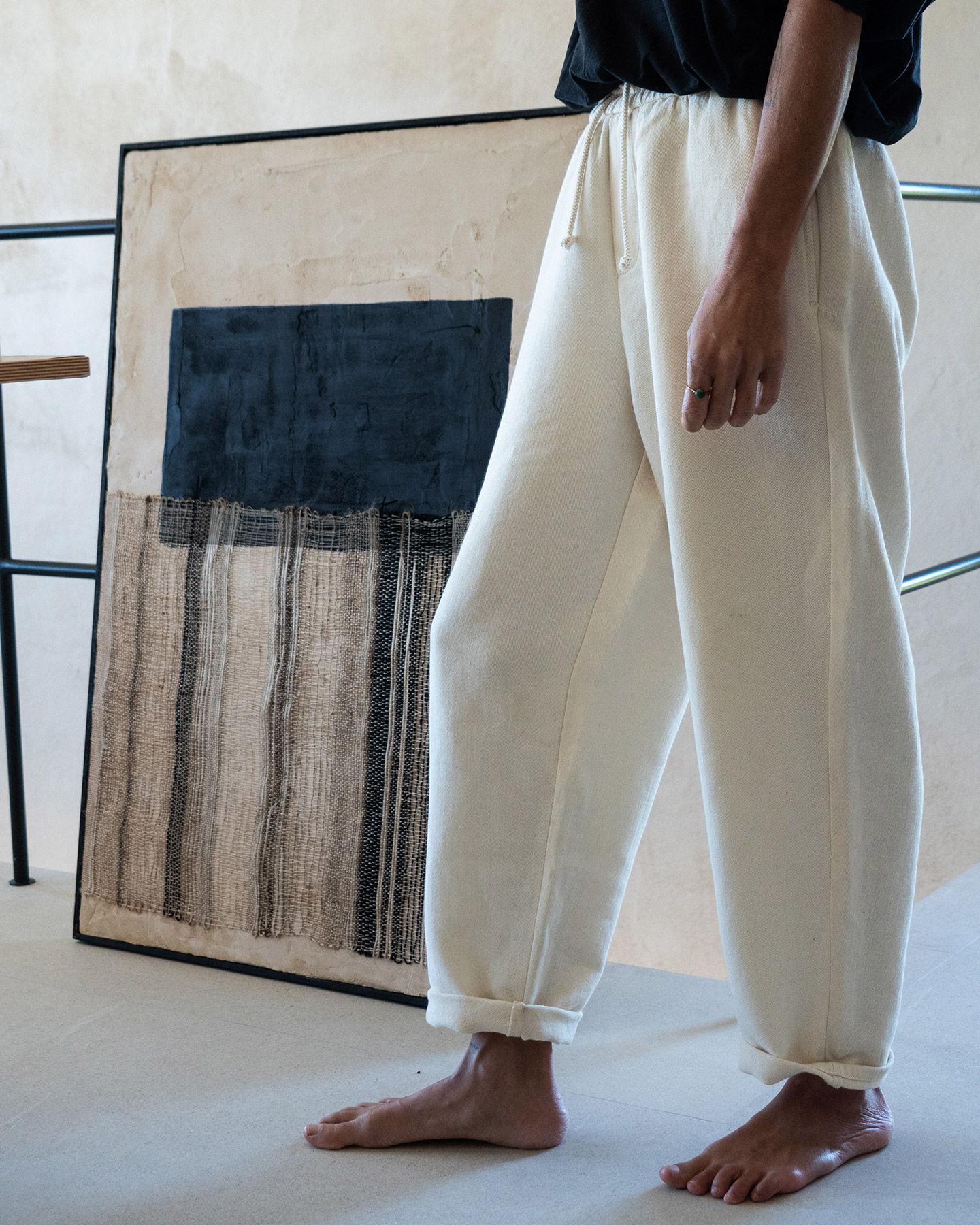
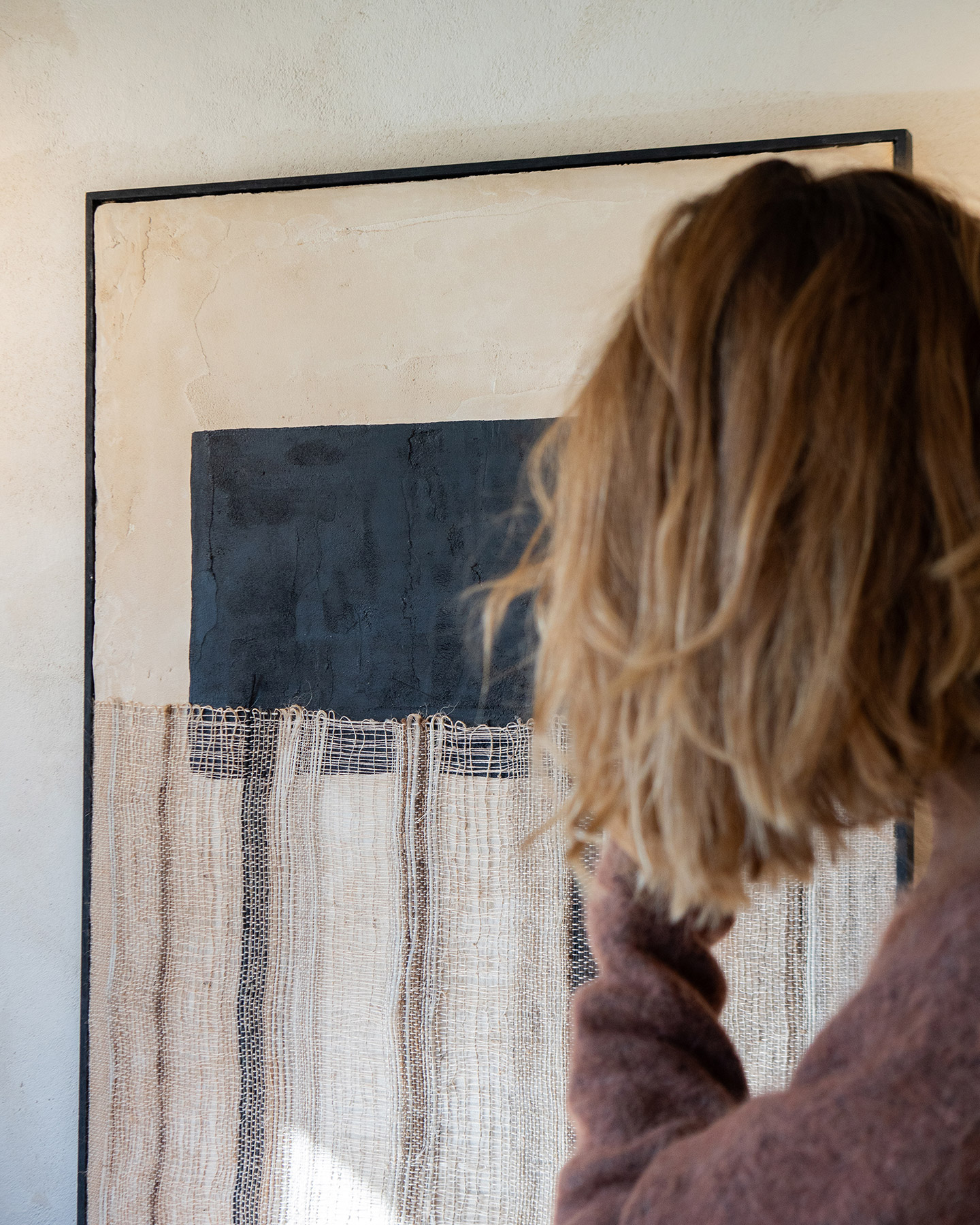
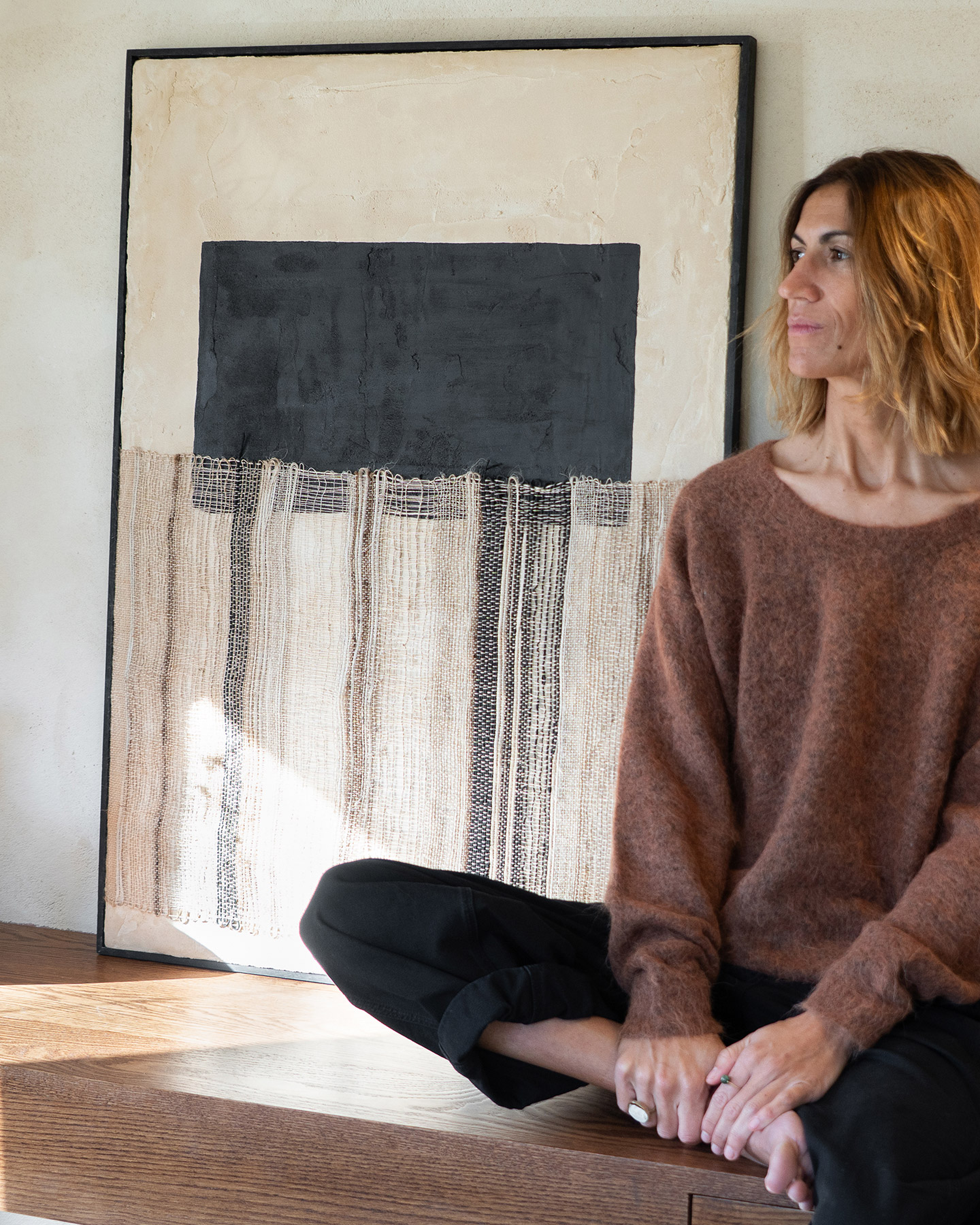
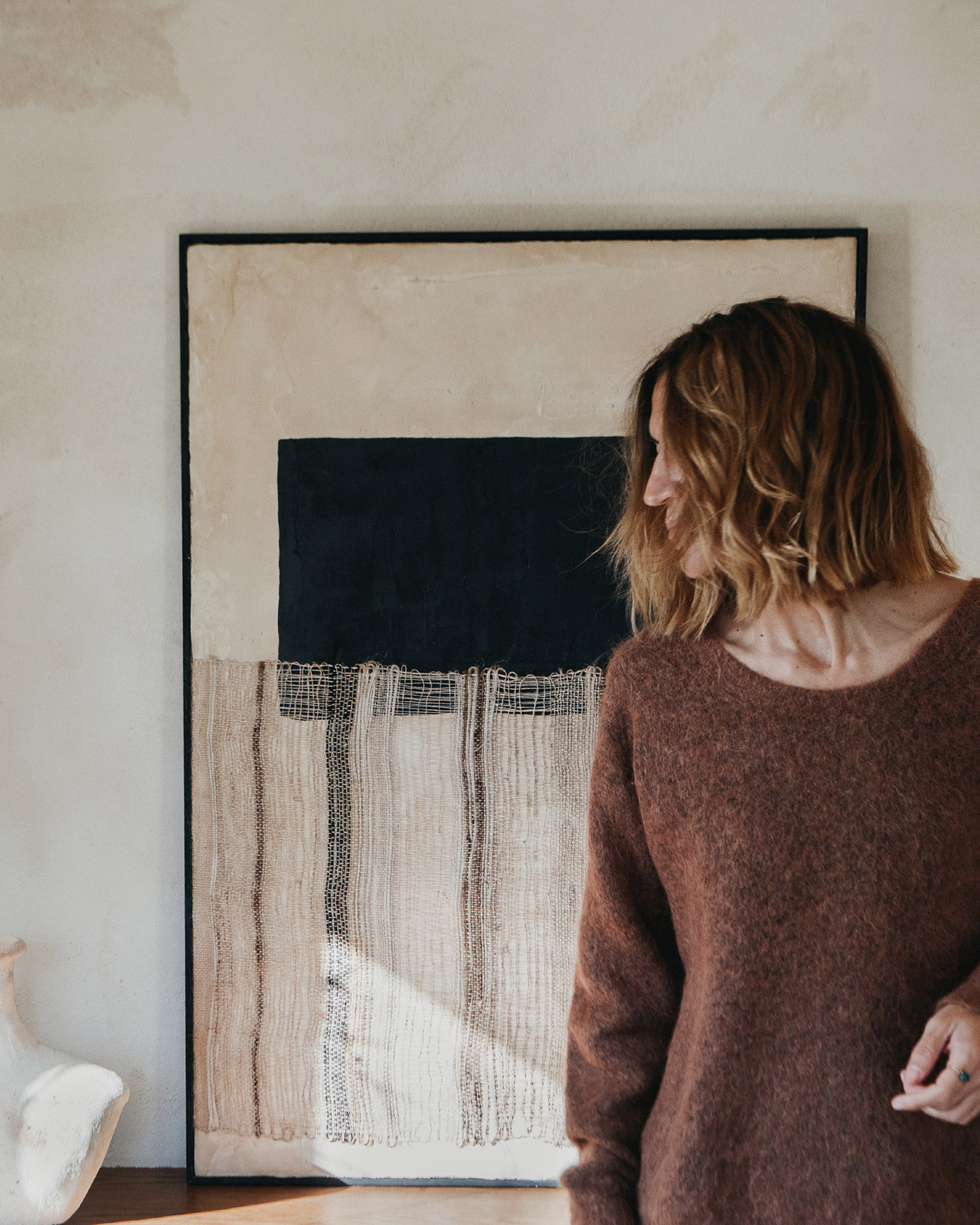
That way of working has meant that, little by little, weaving has come into contact with other materials. Cement, ceramics and aluminium appeared in some pieces, and with them entirely new problems: how to support a piece, how to join two materials, how much weight a structure can bear, or how to make something very rigid coexist with something extremely flexible.
And then I find myself doing things I do not know how to do.
I especially enjoy that part. Suddenly I have to learn some carpentry, find a way of working metal, run tests with cement or ceramics, or ask for help from someone who knows far more than I do. Not knowing how to solve something rarely makes me abandon an idea; usually it makes me want to find out how to do it.
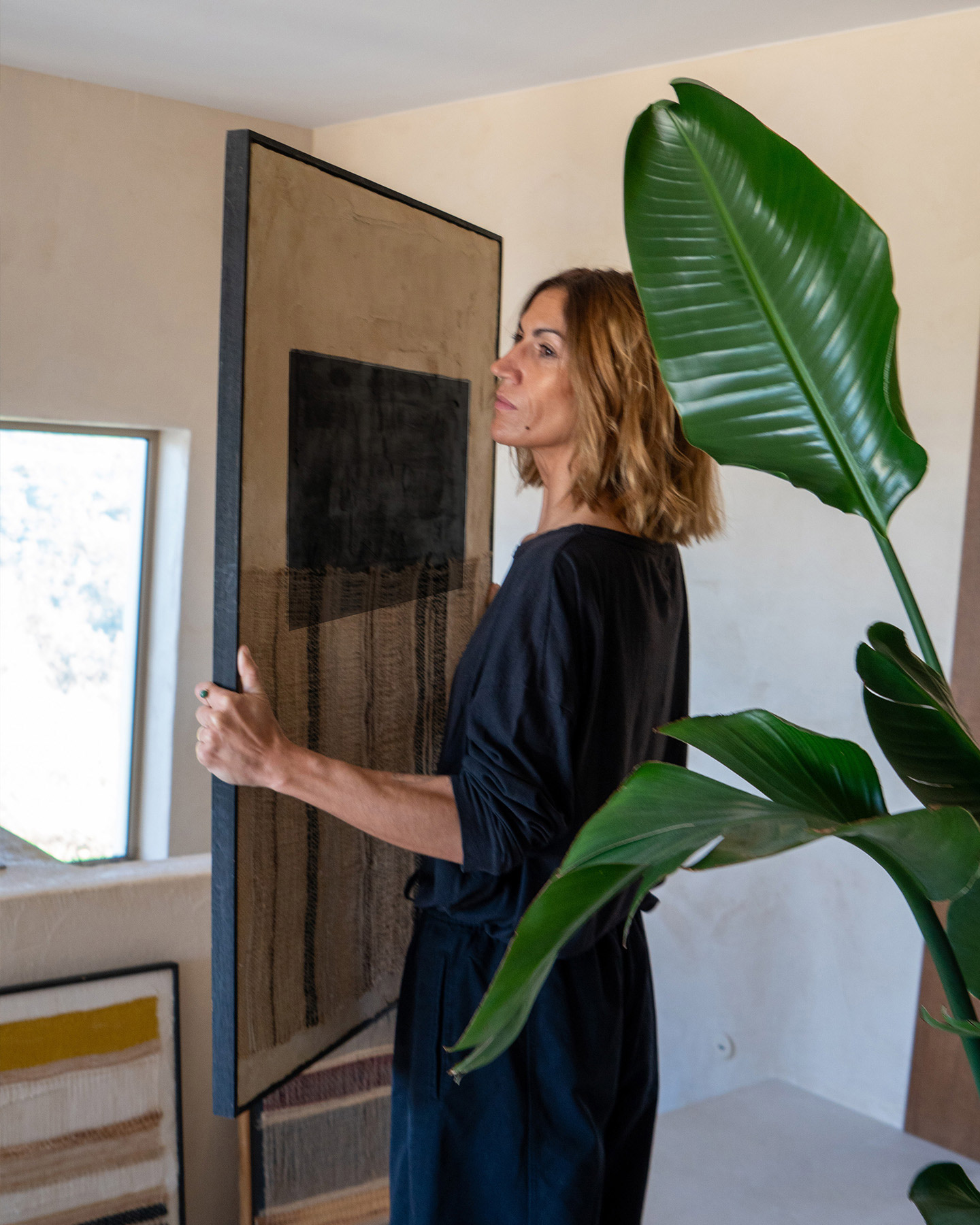
Perhaps that is why I have never felt that the loom has to set the limits of my work. It is a fundamental tool for me, but also a starting point. A piece can begin on the loom and end up closer to sculpture, need a structure, incorporate a completely different material, or even lead me to abandon the initial idea.
Nor am I particularly interested in deciding whether something is weaving, sculpture, design or anything else. Having worked across different disciplines for so many years, it feels increasingly natural to use whatever I need at each moment.
I am also fortunate not to depend financially on my artistic production. That allows me to work without the obligation to produce constantly, complete collections or maintain a particular line. I can spend a long time researching something that may never become a work, simply because it interests me.
That freedom is very important to me. It allows me to play, to make mistakes, to abandon something and come back to it later. Not everything I make has to end up as a piece, and perhaps one of the things I have most had to learn over these years is not knowing in advance where I will end up.
Occupying space
Recently, while listening to a talk about Aurèlia Muñoz, one idea stayed with me in particular: the thought that a work is never a completely isolated object, and that the space in which it will be placed is also part of it.
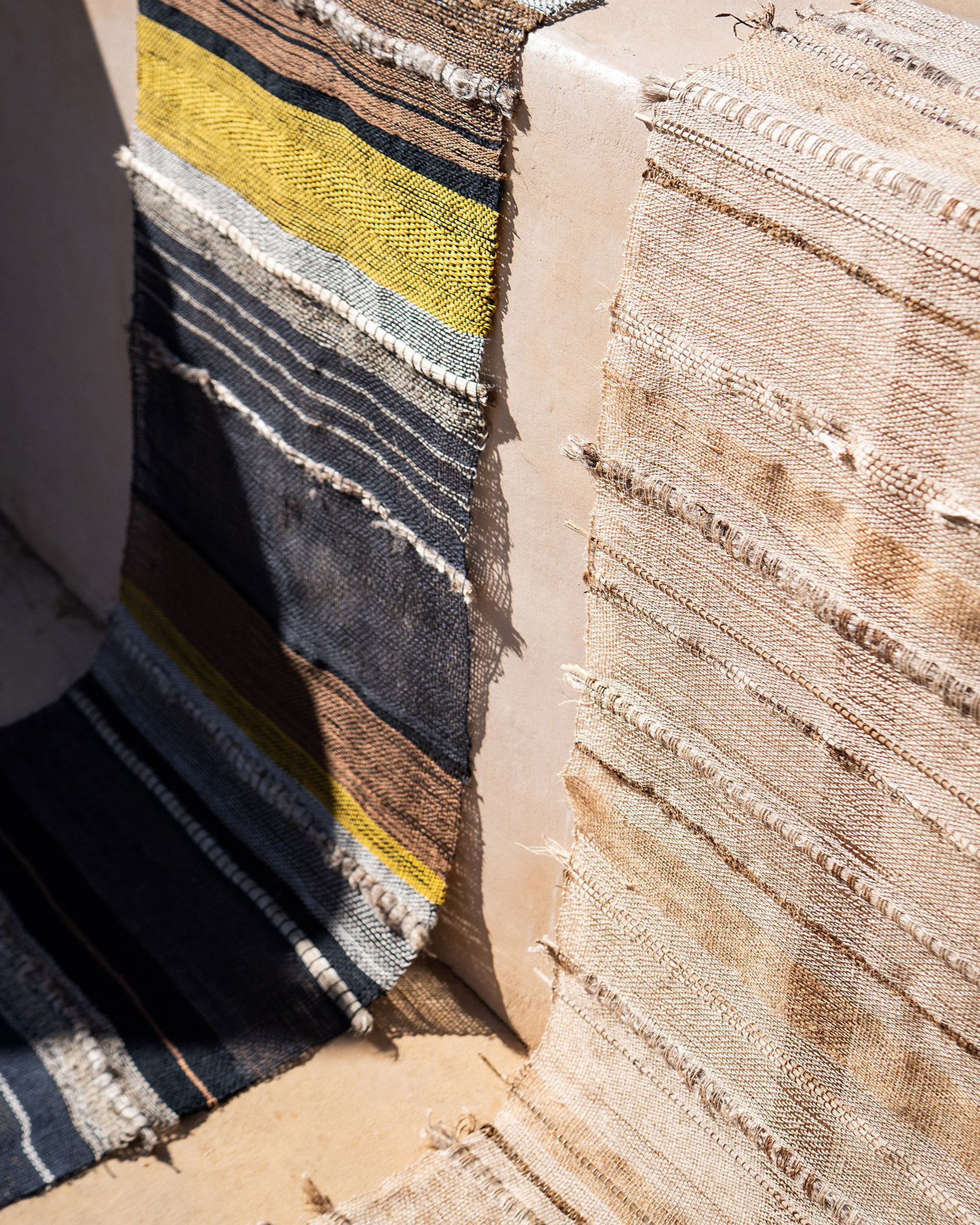
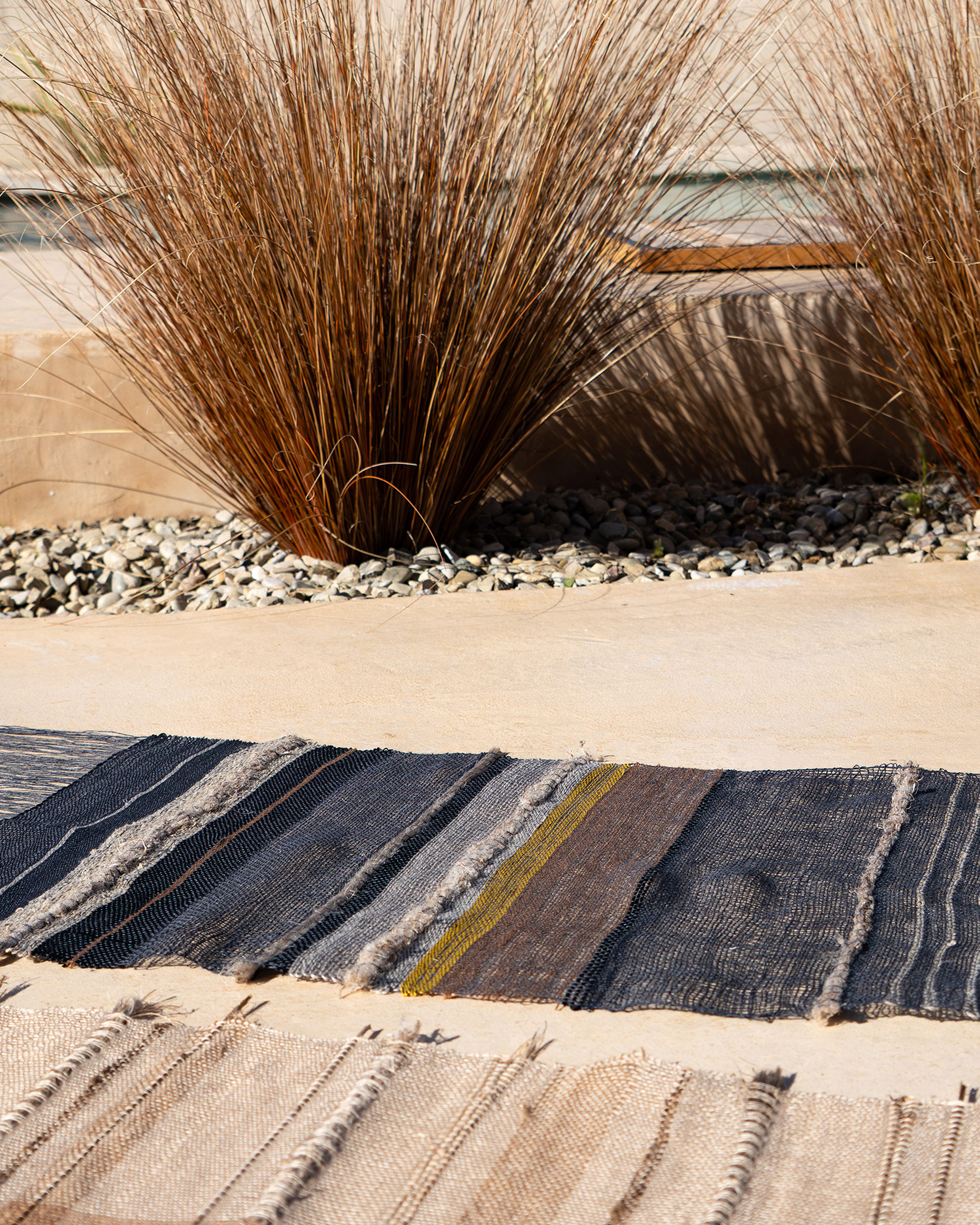
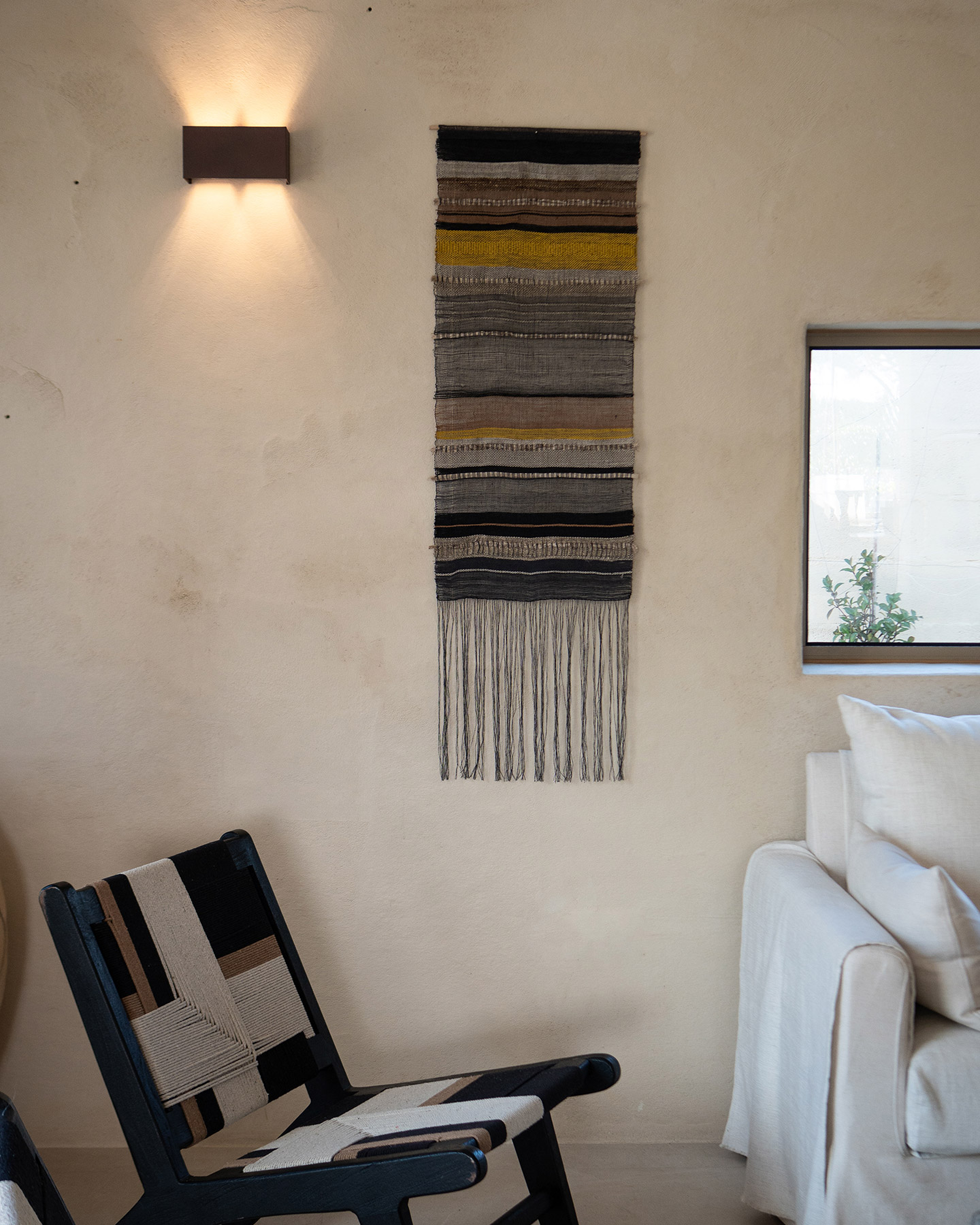
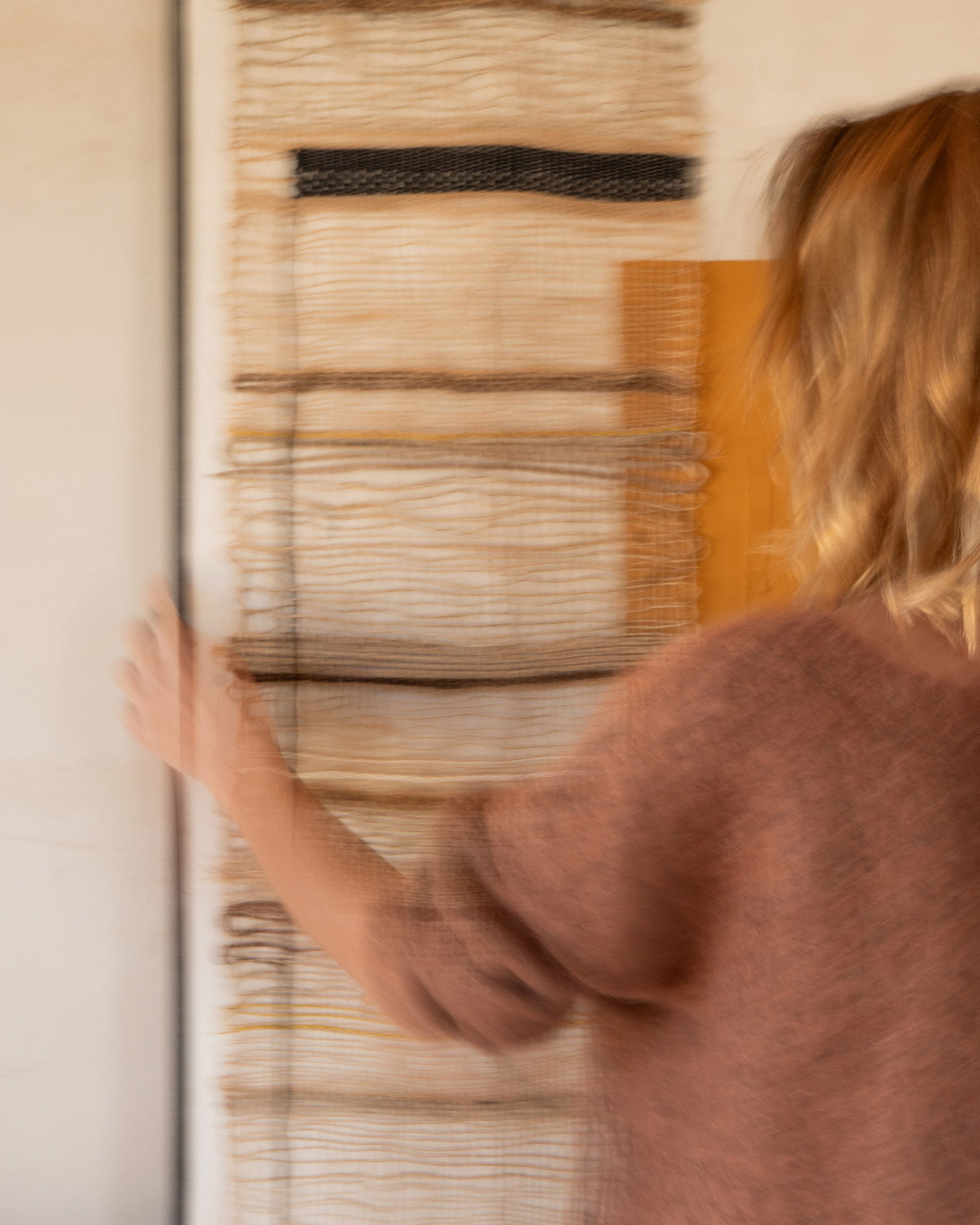
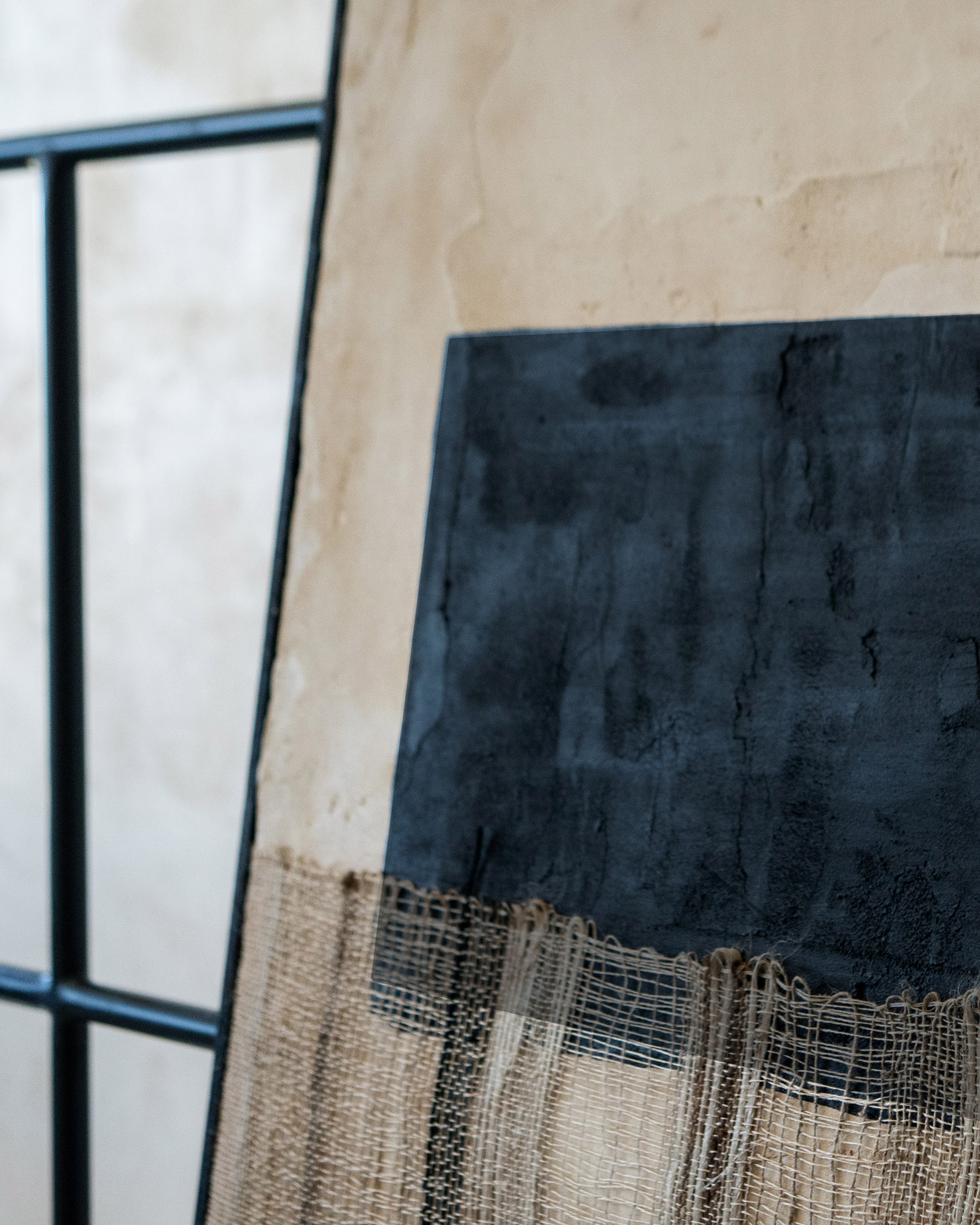
It is something I think about more and more as I work. A piece changes completely depending on where it is, on the light, on the distance from which it is seen, or on what happens around it. Some works need a wall and others need to move away from it and begin to occupy space.
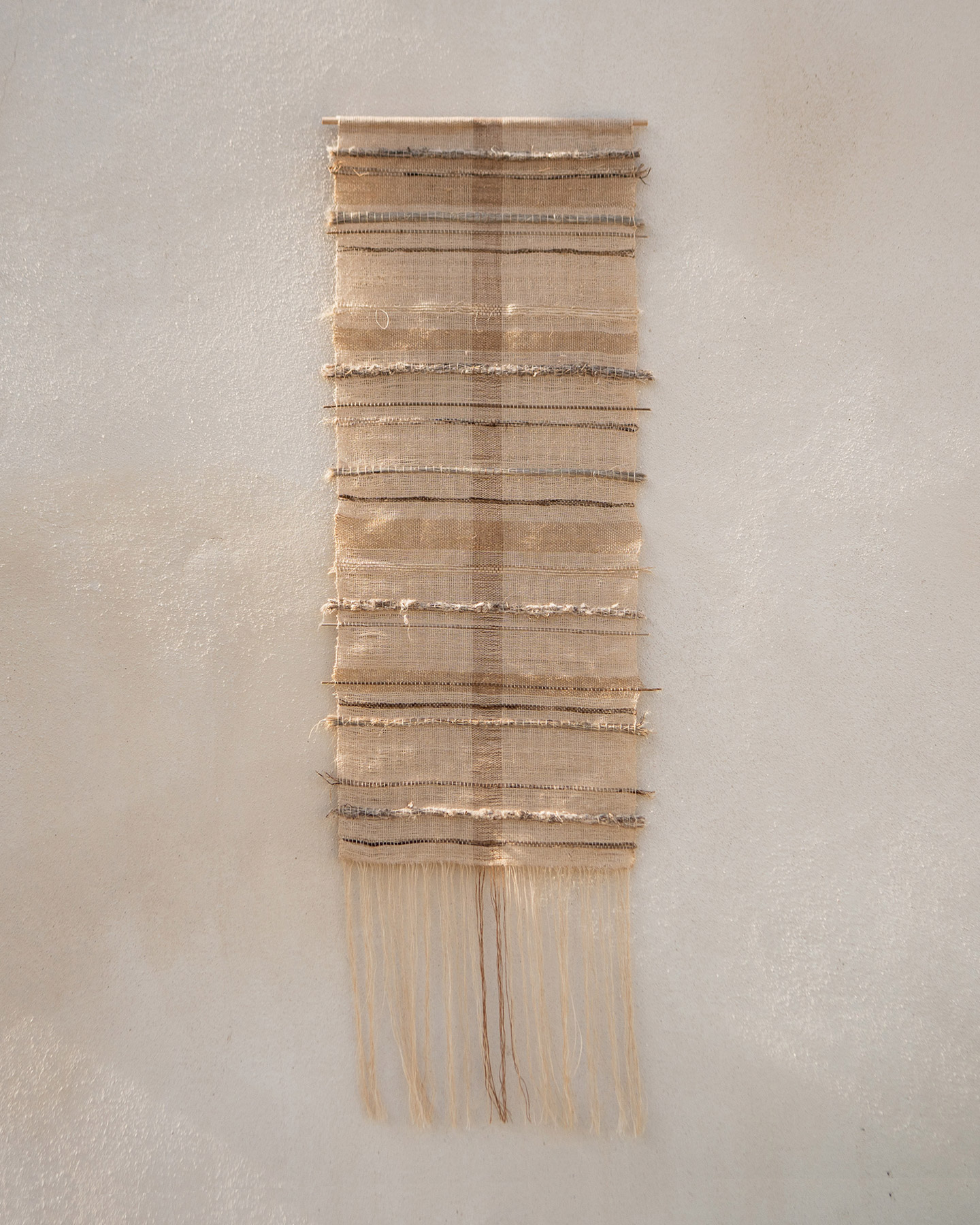
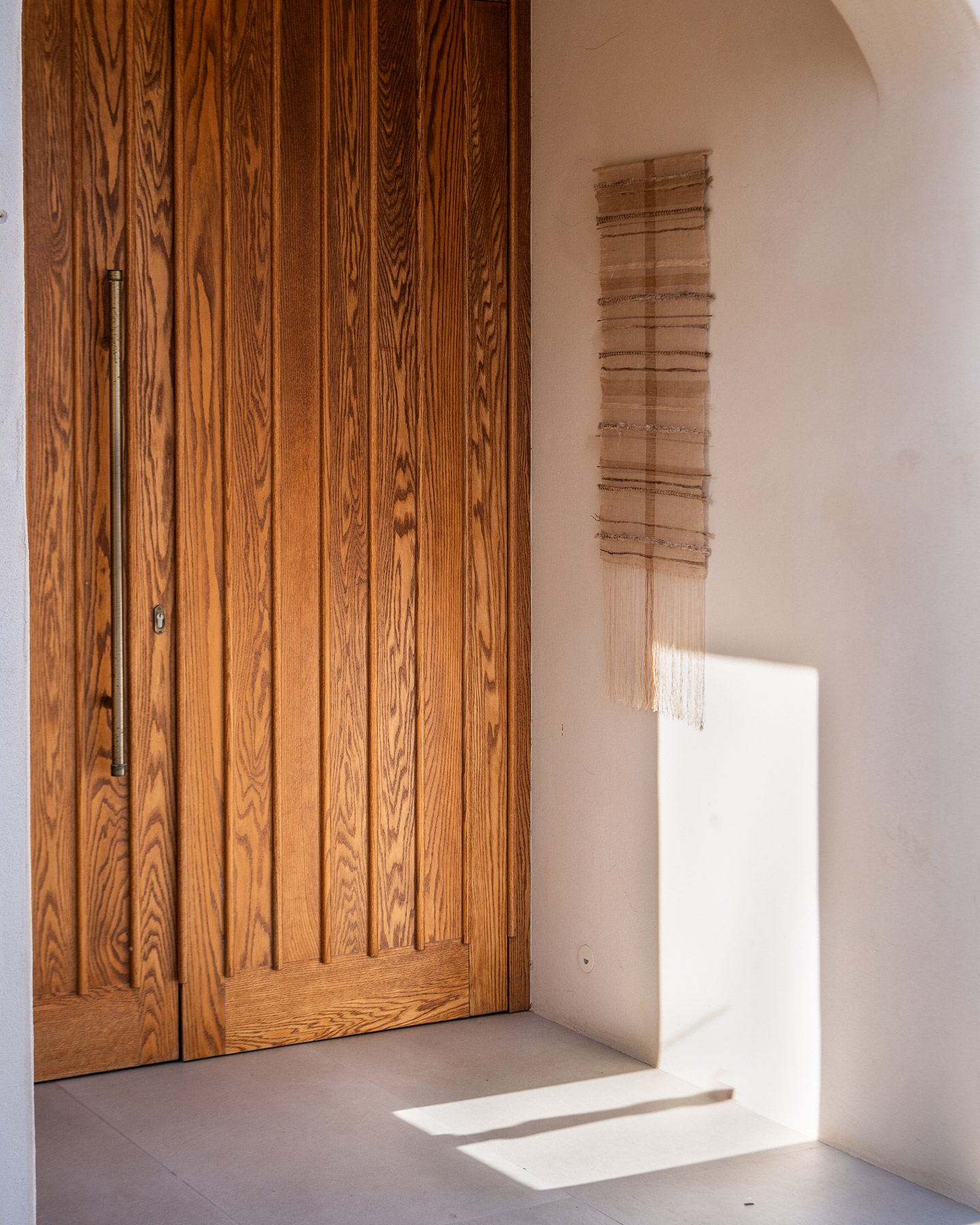
I am also very drawn to the textile’s capacity to shift in scale and presence. It can be very dense, carry great visual weight and almost become a mass, but it can also become extremely light, transparent, mobile, or almost disappear.
Lately I feel like exploring that second possibility further: taking the weave off the flat plane, letting it occupy space, and seeing what happens when it begins to relate more directly to architecture.
Sharing the process
In that talk about Aurèlia Muñoz, an expression came up that I liked very much: “kindred spirits”. Understood not necessarily in an intimate sense, but as those people who appear at certain moments and manage to shift you out of your place, teach you something you do not know, or make you look at your own work differently.
I think I value those encounters more and more. They may be other artists, people who work with materials or techniques I am unfamiliar with, but also people who connect others and can open a door to a space, an exhibition or a possibility that you, on your own, might never even have imagined.
For a long time my way of working was fairly solitary. Over the past year, however, I have begun to particularly enjoy shared processes. When you work with someone else, you have to give up part of the control. An idea of yours passes through another person’s eyes and hands and comes back transformed. The result no longer depends solely on your own decisions.
That is what interests me especially now: someone taking me beyond what I already know how to do. Working with people who know other materials, other techniques, or who simply see things differently. Less to add two separate bodies of work together than to build something neither of us would have made alone.
And here play appears once again as a form of learning: testing, making mistakes, changing direction, or finding a solution that was never planned. When the process is shared, all of that changes, because you are no longer the one who decides where everything has to go.
Virginia Payo Azabal
Madrid
Vejer de la Frontera (Cádiz)
+34 679 806 113
info@virginiapayo.com
virginiapayo.com
@virginiapayo
Project by Virginia Payo Azabal