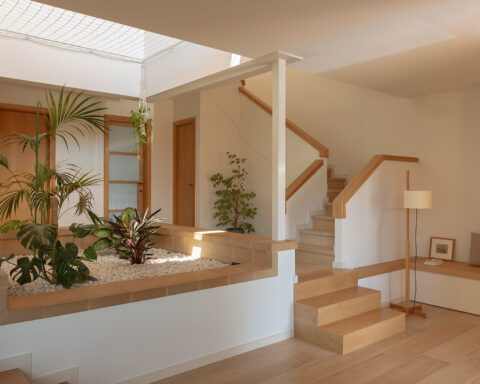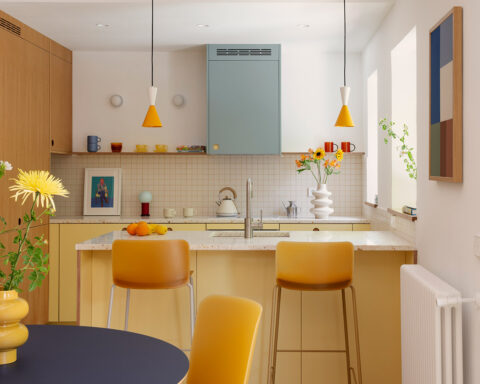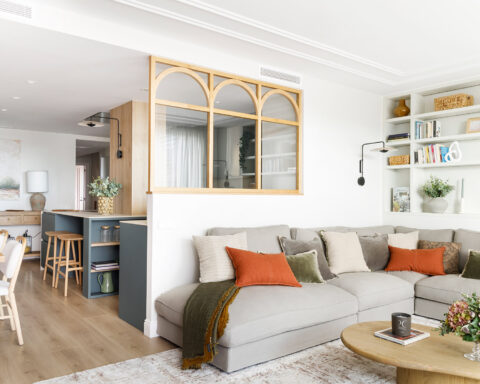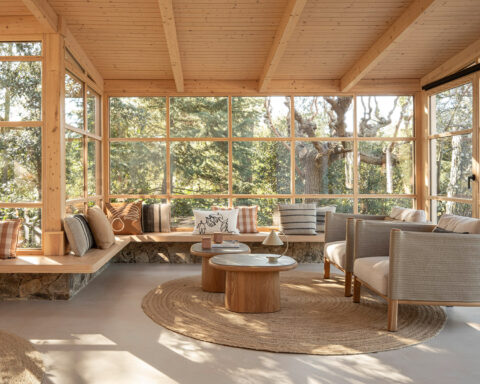


Every spring, Casa Decor presents itself in Madrid as an anticipated ritual: a building taken over by design, a succession of spaces that promise to surprise, move and, at their best, provoke reflection. For years, it was also a territory of risk, a laboratory where interior designers could test their own narratives, construct unprecedented atmospheres and push the boundaries of their discipline. However, after experiencing the 2026 edition, a feeling emerges that is difficult to ignore: something has changed. Not abruptly, but profoundly.
From authorship to showcase
There was a time when Casa Decor spaces were remembered for the imprint of their authors. They were not merely beautifully resolved environments, but positions. Each intervention contained an idea, a perspective, even a certain resistance. Today, that authorship seems to be fading. The spaces remain impeccable —materially refined, technically sophisticated— but in many cases they respond to a different logic: that of brand representation.
The interior designer is no longer always the origin of the discourse, but often its mediator. The project ceases to be an exploration and becomes a precise scenography, where each element responds to a predefined catalogue. The consequence is not minor: when the starting point is the product, the margin for deviation narrows. And with it, the possibility of the unexpected.


Kaldewei (bathroom solutions). Cupa Stone STONE (red marble cladding). Cevica (ceramics).


Iris Ceramica Group (ceramic surfaces).

The aesthetics of coincidence
Walking through this edition produces another persistent impression: that of a certain homogeneity. Mineral textures, restrained palettes, enveloping lighting, carefully balanced compositions… The language is coherent, even refined. But it is also repetitive. The spaces do not engage in dialogue with one another: they resemble each other.
This is not a lack of quality, but rather an aesthetic convergence that dilutes conceptual diversity. As if all projects responded, more or less consciously, to the same global imaginary —recognisable and safe. And perhaps herein lies one of the most revealing symptoms: the replacement of risk by trend.
Conditioned interior design
Casa Decor has always been a commercial platform —it would be naïve to ignore this— but in the 2026 edition that dimension seems to have gained a decisive weight.
The strong presence of major brands, the need for product visibility, the implicit demands of branding… all of this creates a scenario where creative freedom is constantly negotiated.
The designer operates within a delicate balance: between idea and strategy, between space and object, between discourse and visibility. And within that tension, the project risks losing depth in favour of immediate legibility.
The result is a series of highly photogenic spaces, conceived to circulate efficiently within the digital ecosystem. Impeccable images that condense an atmosphere in a single glance, but often relinquish complexity, duration and prolonged experience.


Nuet Ceramics (ceramics).


Homapal (metal laminate). Häfele (LED lighting system). Fénix (innovative surfaces).


Geberit (bathroom products). De Lucio Reformas (project execution). Neolith (flooring). Simon (mechanisms and LED lighting). Genix Home (bed linen). Hisbalit (glass mosaic).

Where are the established figures?
The question is not so much about names as it is about attitude. Beyond the presence of established studios, one senses a certain withdrawal of those interior designers who historically used Casa Decor as a field for radical experimentation.
Today, the system seems to favour profiles capable of seamlessly integrating brand demands, rather than voices willing to challenge them. And yet, it is precisely that friction —uncomfortable, sometimes imperfect— that has generated the most memorable moments of past editions.
What remains
It would be unfair to reduce Casa Decor to this critique. The platform remains essential: it brings visibility to interior design in Spain, connects industry, craftsmanship and design, offers opportunities to new talent, and sustains public interest in the domestic space. But its success is also its challenge.
Perhaps we are not witnessing an ending, but a mutation. Casa Decor is no longer solely a creative laboratory. It is, above all, a hybrid ecosystem, where design, communication and marketing coexist. A place where interior design is exhibited, but also negotiated. The question, then, is not whether it has lost its essence, but whether it is capable of redefining it. Because ultimately, the question remains: can interior design still be an act of creativity when space becomes a showcase?
Casa Decor
calle San Agustín, 11
(Esquina con Cervantes. Barrio de Las Letras. Madrid)
Del 9 de abril al 24 de mayo de 2026