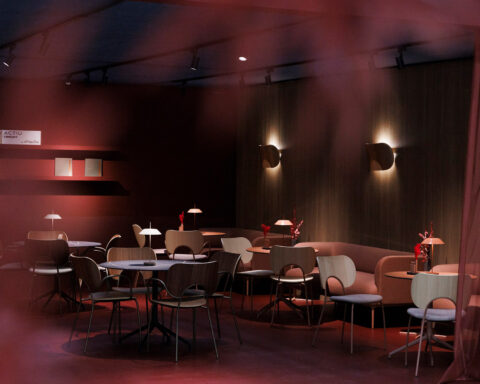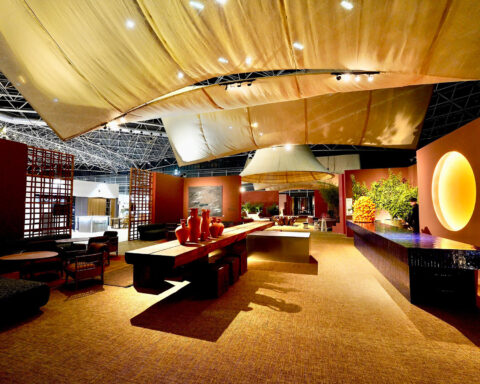


From 5 to 8 March, Madrid will host the first edition of FORMA Design Fair Madrid, a new fair dedicated to collectible design taking place at Matadero Madrid as part of the Madrid Design Festival. Driven by the festival and the City Council’s Department of Culture, Tourism and Sport, the initiative is conceived as a long-term platform for encounters between creators, industry and contemporary material culture.
More than an exhibition event, FORMA positions itself as a cultural infrastructure in the making. Its objective is to shape an ecosystem where brands, emerging studios, galleries, publishers, artisans and agents linked to object design, lighting and new materials can coexist. The fair will occupy Nave Una and the DIMAD Central de Diseño, unfolding a route that connects practice, thought and market around design as an expanded discipline.
The proposal also includes PER-FORMA, a parallel professional programme activating conversations, demonstrations and encounters between sector agents. A device that underscores the project’s pedagogical ambition: to generate knowledge transfer and foster lasting connections beyond the fair calendar.
A map of contemporary sensibilities
The first edition unfolds through a selection that reflects the current diversity of collectible design, where craft-based approaches, material experimentation and hybrid languages between art and object coexist.

Andrés Mariño
Among the participants, Madrid-based architect and designer Andrés Mariño stands out for his research into steam-bent wood, revisiting traditional techniques through a contemporary lens. His pieces, refined and quiet, establish a dialogue between structural precision and artisanal sensitivity. At FORMA he will present his work alongside Justino Del Casar, in a collaboration that confronts two complementary approaches to design through matter and time.
Arturo Álvarez
With more than three decades of trajectory, Arturo Álvarez introduces another dimension: light as sculptural territory. His practice, situated between art and design, turns lighting into an expressive field where material, gesture and atmosphere intertwine in pieces of strong formal identity.


Jaime Hayon
On a broader scale, the presence of Jaime Hayon underscores the international dimension of the event. His language, recognisable for its blend of humour, sophistication and craftsmanship, has helped blur the boundaries between art, design and craft, placing narrative at the centre of the contemporary object.
Justino Del Casar
From a more conceptual approach, Justino Del Casar works with discarded materials — documents, tickets, packaging — transforming them into symbolic pieces that question the ephemerality of consumption. His practice introduces a critical dimension into the fair’s landscape, reminding us that design can also operate as cultural reflection.


Nanimarquina
The brand Nanimarquina, a benchmark in contemporary textile design, will contribute its reading of artistic legacy through the Chillida collection, where the sculptural language of the artist is translated into textile compositions that explore void, rhythm and material density.
Regina Dejimenez
In the hybrid territory between body and landscape, Regina Dejimenez’s work unfolds a sensory investigation that connects biology and matter. Her pieces, halfway between installation and object, evoke organic processes where the visible and the imperceptible share the same structure.


Todomuta Studio
This selection closes with Todomuta Studio, led by Laura Molina and Sergio Herrera, whose multidisciplinary practice combines ancestral aesthetics and a futuristic vision. Their limited-edition pieces explore speculative narratives that expand the traditional limits of design, integrating craft, technology and material fiction.
A fair as cultural infrastructure
Beyond the sum of names, FORMA raises a deeper question: what role can a fair play in constructing a contemporary material culture? In a context where design oscillates between industry, gallery and authorial practice, the initiative proposes an intermediate format that privileges encounter and conversation.
The choice of Matadero Madrid is no coincidence. Its condition as a hybrid cultural space reinforces the experimental dimension of the project and situates it within the continuity of the city’s creative ecosystem. FORMA presents itself as a natural extension of the festival and of a scene seeking to consolidate its international projection.
In this first edition, the fair defines itself more as a foundational gesture than as a closed model. A place from which to observe where collectible design is moving and what narratives emerge when the object is conceived through memory, matter and time.
If it succeeds in consolidating itself, FORMA could become more than an annual event: a platform capable of structuring discourse, market and community around a shared idea of contemporaneity. A contemporaneity that, as with the best design, is built slowly — through the forms we inhabit and the objects we choose to keep.
FORMA Design Fair Madrid
5–8 de marzo de 2026
Matadero Madrid.
info@mataderomadrid.org
+34 913 184 670
Plaza de Legazpi, 8
28900 Madrid