

Since Pierre Yovanovitch founded his interior design studio in 2001, he has designed numerous pieces of furniture, lighting and decoration for his residential projects, which led him in 2017 and 2019 to present his Oops and Love furniture line in exhibitions at R & Company in New York. It was in 2021 that he created his own furniture brand Pierre Yovanovitch Mobilier, whose activity includes the design, edition and manufacture of furniture, lighting and decorative objects.
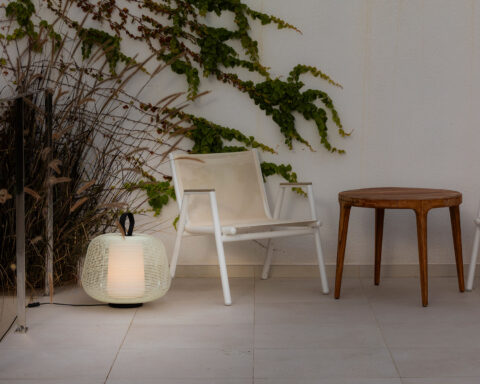
Pierre Yovanovitch Mobilier develops and markets pieces for professional and private customers. The furniture is manufactured by craftsmen in France, covering trades such as cabinetmaking, metalwork, upholstery, as well as glasswork and ceramics. Stone, plaster and other composite materials are also used.
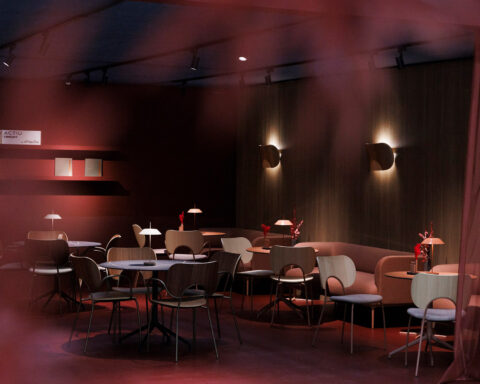
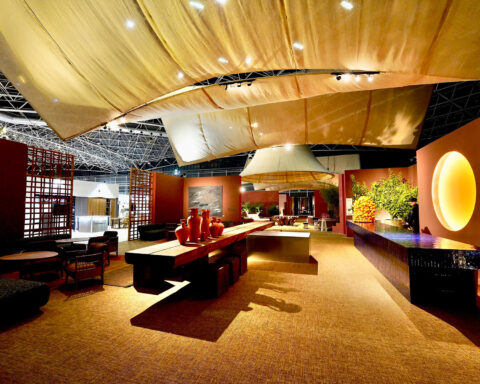
In 2023, Pierre Yovanovitch Mobilier opened his first galleries in Paris and New York of which we show images provided by Pierre Yovanovitch Mobilier.


Yovanovitch says that while there are no particular inspirations behind his pieces, at the heart of the design process is a love of nature and a childhood spent on the French Riviera. “The duality of life there – the strength of the dense forests, the fleeting lightness of the sunsets, the bright colours of the lavender season and the deep hues of the ocean – are things I draw on when creating my pieces” he explains.
The creation of this furniture brand allows the designer Yovanovitch to share his designs with clients all over the world, and also “tomaster our own sales environment and showcase the furniture in our own way” he explains “As a designer, and with an intimate knowledge of the savoir-faire involved in these works, it was important that our sales were rooted in a deep understanding of the design identity“. Identity closely linked to craftsmanship. Yovanovitch regularly collaborates with French craftsmen in his collections.
Pierre Yovanovitch Gallery Paris
The Paris Gallery was the first exhibition of furniture, lighting and decorative objects by Pierre Yovanovitch Mobilier. It is located at 4, Passage Sainte-Avoye in Paris.
These are some images from this Gallery, provided by Pierre Yovanovitch Mobilier and the pieces shown in the Gallery.


Pierre Yovanovitch Gallery New York
After the Paris Gallery, Pierre Yovanovitch Mobilier opened the New York Gallery at 555 West 25th Street in New York.
These are some images from this New York Gallery, provided by Pierre Yovanovitch Mobilier and the pieces shown in the Gallery.


Pierre Yovanovitch
Architect and interior designer, Pierre Yovanovitch was born and raised in Nice (France). Born to a Yugoslavian-born industrialist father and a French mother, as a child he studied piano at the Nice Conservatory, where he began to appreciate opera.
After studying at a business school in Paris, he worked for designer Pierre Cardin for eight years as a designer for his ready-to-wear collections. Yovanovitch describes Pierre Cardin as an architect of clothing, who instilled in him a unique vision of architecture: the geometry of shapes, volumes, angles and curves. He learned to master colour, patterns and a sense of detail, which allowed him to develop his creativity.
In 2001, after renovating his first flat in Paris, he founded his own interior design studio. His work and reputation in the world of interior design have grown thanks to the recommendations of his private circle and his meetings with artists and collectors.
Sources of inspiration. Yovanovitch’s sources of inspiration include the Swedish Grace decorative movement of the 1920s – of which Axel Einar Hjorth and Gunnar Asplund were central figures – as well as early 20th century American designers such as Paul László, Terrence Harold Robsjohn-Gibbings, James Mont and Harvey Probber. The rigour and fine lines of raw materials, the integration of neoclassical elements and a refined sense of colour are characteristic of Swedish art and furniture of this period. These influences are combined with a modern approach in his projects for the rehabilitation of historic sites.
Mid-century American designers were masters of the art of pushing conventional boundaries by enhancing the quality and beauty of raw materials: steel, cork, ceramics and wood. This era has much in common with the interiors designed by Yovanovitch who draws on the strength and authenticity of a place and reproduces in them a contemporary approach and aesthetic.
His designs are also influenced by 20th century French interior designers such as Jean-Michel Frank, Pierre Chareau and Jean Royère, and by architects such as Le Corbusier, Robert Mallet-Stevens, Walter Gropius, Adolf Loos, John Pawson, Tadao Ando, Herzog & de Meuron, Renzo Piano, Frank Lloyd Wright and Frank Gehry. Yovanovitch believes that knowledge of past centuries is essential for contemporary creation.
Contemporary art is central to Yovanovitch’s projects. As a collector, he collaborates with artists and gallery owners to include in his projects artworks by artists such as Claire Tabouret, Tadashi Kawamata, Alicja Kwade, Johan Creten, Daniel Buren, Giulia Andreani, Francesco Clemente, Xie Lei, Richard Nonas and Yan Pei-Ming. These works add a unique dimension to the spaces he designs.
Passionate about the modern movement of the 20th century, he frequents galleries and auction houses. As his first clients were collectors, he understood the importance of art in creating harmonious projects. Yovanovitch believes that art is essential to any décor and is the key to personalising a space, placing it at the centre of his design practice.
Storytelling is at the heart of Yovanovitch’s work, seeking a narrative thread to establish a connection between the space and the client. Telling a story, the story of the place and its owner, or inventing an original story for each project.
When the opportunity arose to work with Vincent Huguet on the opera Rigoletto in Basel, it was a dream come true for Yovanovitch. The link between storytelling and spatial design is obvious.
The Château de Fabrègues, the private residence of Pierre Yovanovitch, is located in the north of the Var in Provence. Built in the early 17th century, the property belonged to the Fabrègues family, Provençal craftsmen ennobled in the 16th century.
Yovanovitch acquired the property in 2009 and often cites his property and the surrounding nature as the main sources of inspiration for his work.
Today the property serves as an artist’s residence and a platform for creative expression. Yovanovitch regularly invites and gives carte blanche to artists to create works on site within the walls of the Château de Fabrègues.
Source: Pierre Yovanovitch.
Pierre Yovanovitch Mobilier
5, rue Bachaumont
75002 Paris
+33 1 42 66 33 98
info@pierreyovanovitch.com
www.pierreyovanovitch.com
Galerie Paris
4, Passage Sainte-Avoye
75003 Paris
Abierta de lunes a sábado 10h – 18h
info@pierreyovanovitch.com
www.pierreyovanovitch.com
Galerie New York
555 West 25th Street
New York, NY 10001, USA
Abierta de lunes a viernes 10h – 18h
Con cita precia los sábados.
+1 (212) 249 3483
info@pierreyovanovitch.com
Project by Pierre Yovanovitch