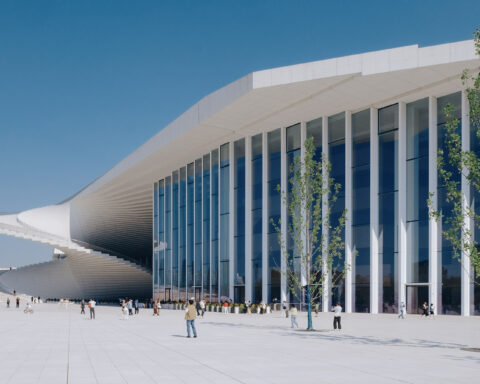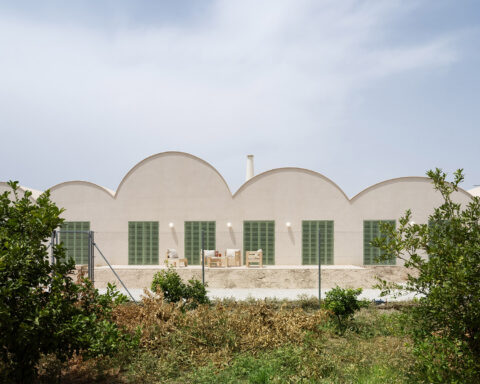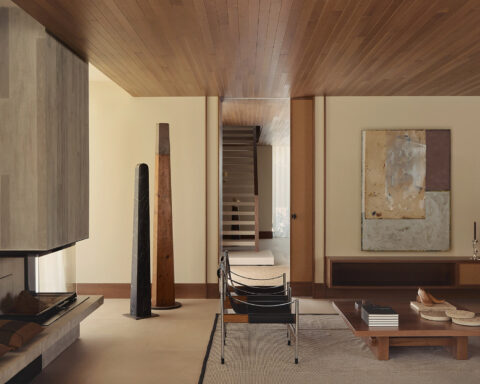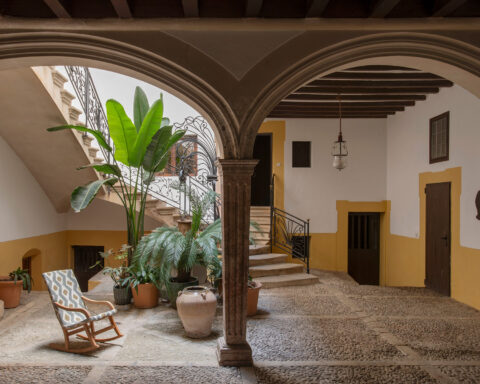


The awarding of the Pritzker Architecture Prize 2026 to the Chilean architect Smiljan Radić has brought renewed attention to a singular trajectory within contemporary architecture. His work deliberately positions itself at the margins of dominant architectural languages: it neither responds to a recognisable aesthetic nor seeks formal spectacle.
Instead, Radić has spent more than three decades constructing a personal architectural universe in which intuition, material experimentation and a direct relationship with the landscape coexist. His projects — from small houses to cultural facilities — often appear to emerge from a patient observation of the territory and from an architectural imagination nourished both by modern culture and by more primitive ways of inhabiting.
To understand his architecture is to recognise a number of constants that recur throughout his work, a series of attitudes that surface again and again in his projects.
Architecture as object in the landscape
One of the most recognisable features of Radić’s work is the way his buildings occupy the territory. Rather than dissolving into their surroundings or asserting themselves as monumental gestures, many of his architectures appear as almost autonomous objects within the landscape. This deliberate presence establishes a relationship of contrast that allows the scale of the territory to be perceived more clearly.
In projects such as Casa Pite or Casa Prisma, architecture appears as a clear figure resting on the ground. The building does not attempt to mimic the landscape, yet it does not ignore it either: it is placed within it with a certain distance, as if it were a carefully deposited object within the site.


Matter as language
In Radić’s architecture, materials constitute the true language of the project — something more than a mere constructive medium. Concrete, stone, wood, copper or translucent materials appear in his work with an immediate physical presence. They are often used without finishes, allowing time, light and climate to transform their appearance.
This approach reveals a strongly sculptural understanding of architecture. It is no coincidence that the architect has maintained a long-standing collaboration with the Chilean sculptor Marcela Correa, his wife. In many of his projects, the building appears almost modelled rather than constructed, as though it were a material piece placed within the territory.
Between the archaic and the contemporary
Another key aspect of his work lies in the tension between apparently opposing references. The forms that appear in his architecture — domes, shelters, compact volumes or elementary structures — often evoke primitive constructions. Yet these figures are realised through contemporary techniques and materials.
This combination produces an architecture that is difficult to classify. In the pavilion he designed for the Serpentine Galleries in London, for example, a large translucent shell rested on blocks of stone, as if it were either an ancient ruin or a futuristic artefact. Radić seems particularly interested in this ambiguous territory where past and present overlap.


Spaces conceived through experience
Although some of his architectures possess a strong presence as objects, spatial experience remains central to his work. In many of his houses, circulation unfolds through clear sequences of rooms, courtyards and openings that frame the landscape. His architecture, beyond fulfilling its function, constructs situations in which the body perceives light, material and distance in relation to the surrounding environment. This attention to everyday use explains why, even in experimental projects, his buildings retain a recognisable domestic dimension.
An architecture open to imagination
Perhaps the most difficult quality to describe in Radić’s work is its capacity to suggest stories. His buildings often seem to belong to a world slightly displaced from everyday reality. A translucent shell resting on rocks, a house emerging from the forest or a red volume illuminating the edge of a river are images that evoke a narrative dimension. Yet this imaginative layer never dominates the project. It emerges instead from the way architecture relates to place, to matter and to the scale of the human body.

A trajectory recognised by the Pritzker
The recognition of the Pritzker Architecture Prize confirms the relevance of an architectural practice that has developed with remarkable independence. In a global panorama often driven by the search for media icons, the work of Smiljan Radić demonstrates that architecture can also advance through a quieter form of exploration.
His work proposes a way of observing the territory and of building within it where intuition, material culture and imagination continue to play a fundamental role. In that balance between reflection and freedom lies, perhaps, the reason why his architecture continues to attract attention around the world: because each of his projects returns to the same essential question, approached differently every time — how to inhabit the landscape.
Project by Smiljan Radić