

With refined sensitivity, De la Villa Studio delivers a masterful intervention in a home located in Glorieta de Bilbao, one of the urban epicentres of historic Madrid. This 1920 building, with three additional levels added in 1945, retains the architectural style of the period—so characteristic of the Chamberí district—evident in the morphology of its walls and the patina of its materials.
As in other similar projects, the challenge was twofold: to preserve the dignity of the past while shaping a present that is livable, warm, and contemporary. The response to this tension comes with the elegance we have come to expect from the designers at De la Villa, allowing materials to speak for themselves. The original Mellis pine floors, with their rare diamond pattern, were restored like an ancient tapestry. Mouldings, high ceilings, and restored solid wood carpentry become the narrative thread where classical architecture merges with clean lines and modern solutions.


The original layout, defined by a long hallway and compartmentalised spaces, was entirely reimagined. The new layout unfolds as a fluid sequence of interconnected rooms, where each space seems to anticipate the next. The entrance leads to a generous living room with a fireplace, a kitchen conceived as the heart of the home, an intimate and elegant library, and two distinct sleeping areas that ensure privacy without disconnection. The primary suite, with its sculptural dressing area and a stone-framed shower reminiscent of a domestic altar, is one of the project’s most remarkable spaces.
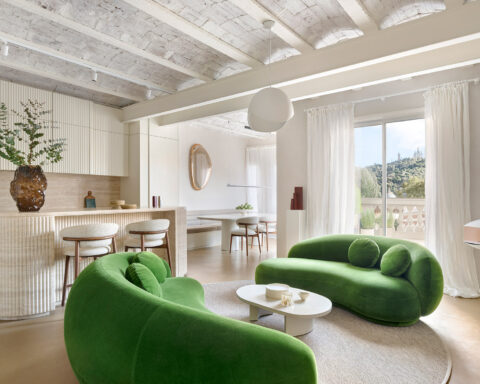
The interior design, coherent and subtle, relies on a palette dominated by warm whites, natural stones, and woods crafted with artisanal precision. In the kitchen, the studio plays with the geometry of stone materials, combining travertines and limestones in a custom pattern that emphasises volume. The Taj Mahal stone island takes centre stage, surrounded by fully concealable cabinetry and a small, original, and welcoming breakfast nook.
Another distinctive signature appears in the custom-designed furniture by the studio’s designers: coffee tables, the dining table, the main bedroom’s headboard, bedside tables, and two oak and Travertino Olivillo stone washbasins that elevate everyday gestures into ceremony. The result is an atmosphere of sophisticated calm, where classical and contemporary elements engage in a natural conversation. Artworks and carefully selected objects, many sourced from antique dealers or local galleries, complete a serene domestic universe, full of character and nuance.


True to their style, the team at De la Villa Studio has transformed this home into a work that does not seek to dazzle at first glance, but rather to move those who inhabit it. This project is a lesson in attentive listening: to the existing architecture, to noble materials, and to the way of life today demands. In this restored home, everything flows with ease, as if it had always been this way. And yet, everything has changed.


Project: Bilbao.
Location: Glorieta de Bilbao, 4. Madrid.
Interior design: De la Villa Studio.
Surface area: 213 m2.
Photography: Germán Saiz.
Source: De la Villa Studio.
De la Villa Studio
De la Villa Studio is a young practice born from the shared passion for architecture and interior design of its founding partners: Alberto Espejo, interior designer, and architects Miguel Otero and Juan Esteve. The studio stands out for its deep interest in the natural essence of materials and a profound appreciation for how they age over time. This philosophy has led to a constant exploration of innovative and creative ways to use those materials. Read full studio biography.
De la Villa Studio
Santa Teresa 3
28004 Madrid
+34 607 505 079
info@delavillastudio.com
delavillastudio.com
@delavillastudio

Project by De la Villa Studio