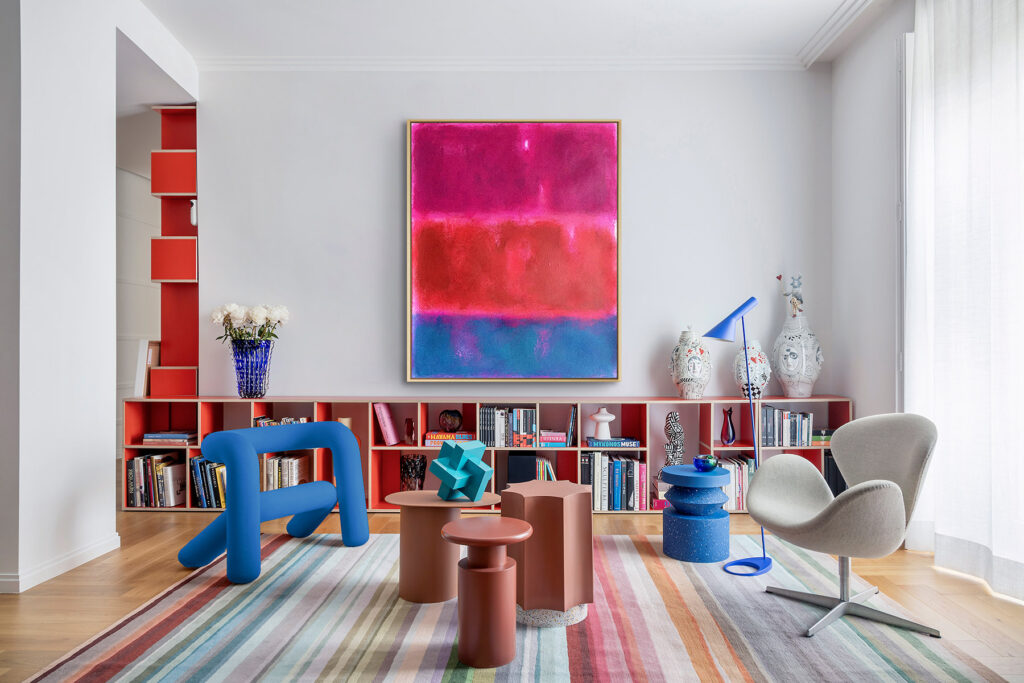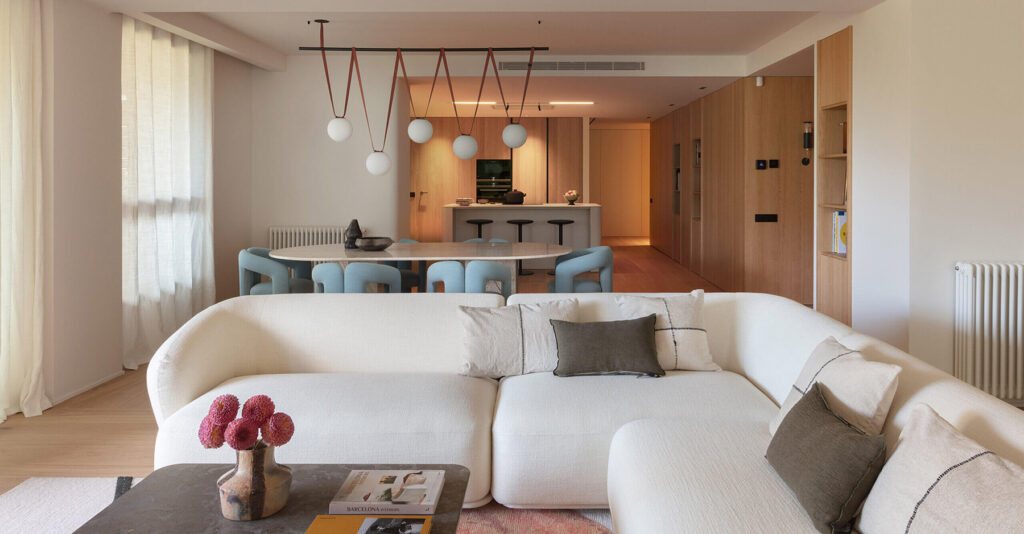

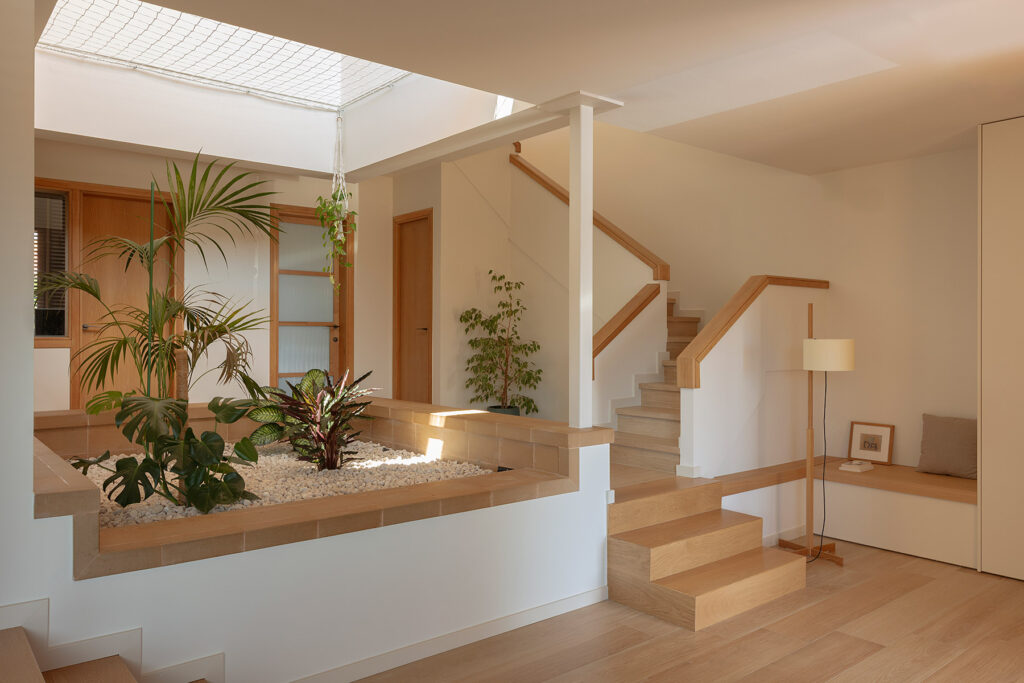
Idearch Studio transforms a Madrid apartment with a rigid layout into a home with natural light, cross ventilation, and not a single conventional wall separating the spaces.
In the Salamanca district, Ana Arana and Enrique Ventosa transform a 1934 dwelling into a deeply personal project where architecture, interior design and everyday life intertwine.
In the historic centre of Valencia, the architect transforms this dwelling into a luminous and flexible home where the original architecture —vaulted ceilings, exposed brick and generous proportions— enters into dialogue with a contemporary way of living.
Designed by architect Rolf Blakstad with interior design by Toni Espuch. White volumes, essential materials and a constant dialogue with the outdoors shape a space conceived for rest and contemplation.
In 2026, Susanna celebrates the 25th anniversary of her studio, and at Exágono Magazine we mark the occasion with this monograph dedicated to her, her practice, and some of her most iconic projects.
Rather than replacing what existed, the intervention explores displacement and continuity, developing what was already there. The result is a home that activates relationships between past and present, inherited structure and contemporary life, memory and everyday use.
The value of this project lies in the precision of its decisions, in the way restoration and contemporary design intertwine to create a space that feels coherent, serene, and deeply connected to the building’s history.
Attention to detail and the functional logic developed by the interior designers at Deleite Design come together to offer a harmonious reading of domestic life.
The Estrela – Lucky Star project offers a profound reinterpretation of space, geometry and the relationship with light, adapting them to contemporary ways of living.
Far from proposing an ornamental renovation, the project focuses on organising, updating and giving coherence to the spaces through real use, responding both to family life and to the reception of guests.
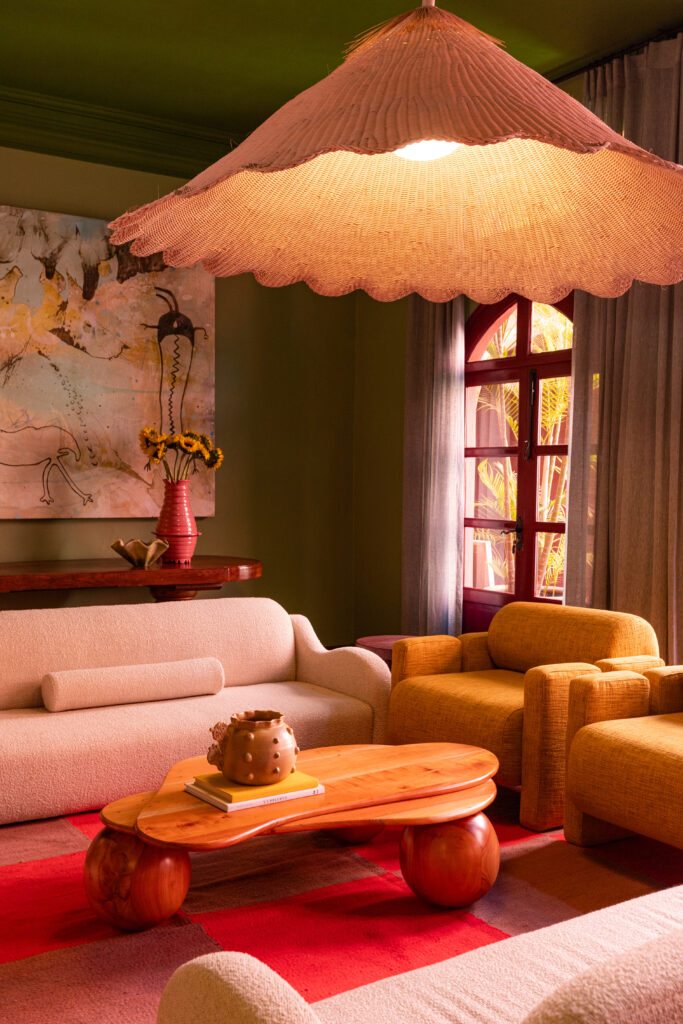
Within the framework of a historic architecture marked by neo-Gothic expressiveness, the interior designer creates a home where curve, matter and light converse with ease, shaping a warm and profoundly human space.
The interior designer has managed to let the house speak, allowing its story to keep beating beneath the house’s renewed surfaces of natural materials and the white Mediterranean light.
Here, the architect and interior designers have unfolded a form of luxury that does not seek ostentation but rather comfort, spatial quality, the emotion it awakens and the calm it conveys.
An architecture simmered from values shared with their ceramist friend: the fascination with light, the flexibility of spaces, chromatic sobriety, material austerity, and the beauty of craftsmanship.
Inspired by beaches and mountains, by the outdoor life that defines Los Angeles culture, Vilucchi creates a retreat where contemporaneity merges with the organic.
The Pigalle Apartment celebrates intimacy and conviviality with equal intensity, unfolding a chromatic and material universe that reflects the identity of Atelier HA.
Surrounded by a lush mediterranean garden, an olive grove, and abundant vegetable patches, the house draws inspiration from the simplicity and warmth of traditional village homes, expressing a deep connection with its splendid natural surroundings.
In this project, she reveals her vision of interior architecture as a total art form, where every line, every shadow, every object contributes to a unified vision: one that seeks beauty through the authenticity of materials and a deep listening to space.
This project is a lesson in attentive listening to the pre-existing architecture, to noble materials, and to the way of living that our current times call for.
Without altering structural elements or undertaking major renovations, the interior designers achieved a deep transformation—both discreet and revealing.
Far from the noise and bustle of the city, the new apartment breathes spaciousness and clarity thanks to a layout that eschews traditional compartments in favor of an open and continuous flow.
This thoughtful intervention recovers a historic dwelling, turning it into a warm, flexible, light-filled refuge that responds to contemporary ways of living without compromising the spirit of the place.
“I consider myself a lover of austere design that highlights what is essential. I always seek the simplicity of form and the nobility of natural materials to shape calm, warm and pure environments,” says the architect.
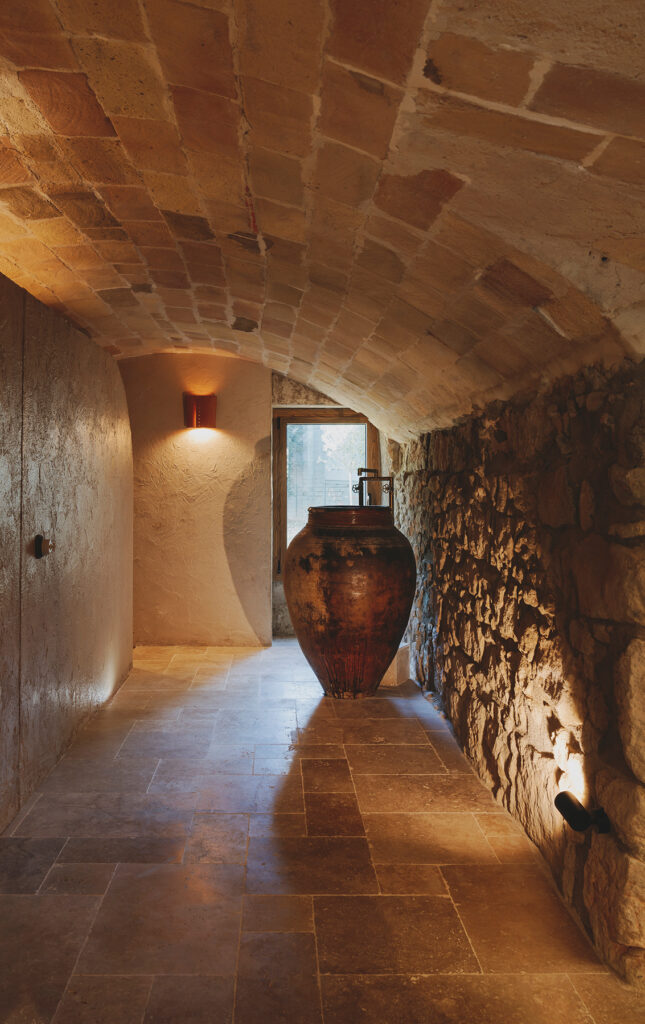
In the heart of Palma, a 16th-century casal is reborn as a refined residential ensemble where history, design and craftsmanship coexist in harmony—with reverence for memory, noble materials, and timeless elegance.
“We wanted a truly Mediterranean home, in the traditional architectural style of the area: reddish stone walls, lime render, curved edges and pitched roofs,” says Paloma Bau.
The renovation balances tradition and modernity with bright, fresh and authentic spaces. A new layout, strategic openings that link indoors and outdoors, and a thoughtful material palette enhance functionality while maintaining the home’s original spirit.
The studio reinvented the house with a new conceptual approach tailored to a young couple and their family, designing every space for daily living and joyful gatherings.
The result is a spacious home with interconnected rooms, generous corridors and elegant antechambers, all bathed in natural light that brings the city into the interior landscape.
The project embodies the studio’s design style: minimalism, flowing curves, textured elements, a love for arches, expressive use of colour, and lighting conceived as artistic objects.
This project reflects Febrero Studio’s passion for creating unique, personalised spaces where original architecture and contemporary design coexist in harmony—a celebration of the past and a gentle welcome to the future.
“In this project, tradition and modernity merge in perfect balance. Original details—meticulously recovered and updated—dialogue with contemporary design elements that highlight the house’s character. Every decision was made to preserve its soul while adapting it to modern needs,” explains interior designer Mireia Torroella.
The art of poets—of objects or of words—lies in naming and shaping without losing meaning. Here, metaphors take form in space, materials and language, opening new paths to expression and experimentation.
“We loved the idea of being part of such an intimate family story, built on solidarity between generations and a deep feminine understanding,” say the interior designers.
The Valencian studio presents exquisite interior design in the renovation of this 1980s apartment in the Salesas neighbourhood of Madrid, inspired by the verses of José Bergamín: “Anocheció Madrid.”
Interior designer Clara Joly d’Aussy recreates in each space the architectural style developed by architect Damian Ribas, based on natural materials and seamless integration into a privileged setting.
The interior designers chose clean-lined pieces that add elegance and functionality to every room, without overwhelming the space. A neutral, soft colour palette creates a serene and welcoming atmosphere.
Casa Aliso is now a modern, comfortable and highly functional home with custom solutions and a seamless flow between spaces that meets all the needs of its owners.
The biggest challenge for the designers was to transform the rustic and austere house into a cosy and functional home for a family with five children. "We had to respect the privacy of each of the family members while at the same time creating spaces that would allow them to live together," explain Hugo and Adèle.
The project focused on reconfiguring the existing layout to create larger, light-filled spaces, complemented by custom-designed furniture that enhances both functionality and aesthetic coherence throughout the home.
It is a newly built apartment where the interior design studio carried out a complete interior and decoration project, full of carefully thought-out details, balancing aesthetics and functionality with great affection.
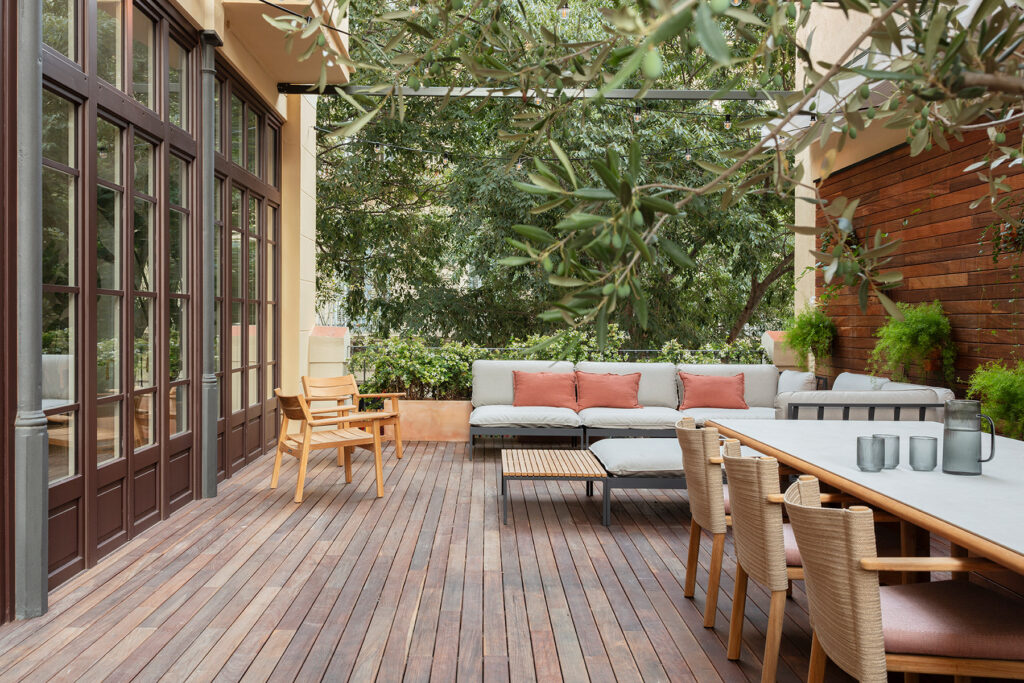
The designer carried out a comprehensive renovation, including spatial redesign and planning, as well as structural, aesthetic, and energy efficiency improvements. The result is a home immersed in an organic atmosphere, where spaces flow and communicate seamlessly—achieving both visual harmony and functionality.
A home that evokes calm, encourages connection with nature, and reflects the simple and timeless elegance of Japanese culture through Mediterranean natural materials.
The interior designers bring a complex but refreshing mix of materials and colours that contrast with the traditional skeleton of the house and make it unique. Dark ceilings, unique marble, oak timbers and a black herringbone wood floor are some of the elements that give character to the space.
An experimental project that offers the opportunity to push the boundaries of design, testing new ideas and materials, in which form, function and play converge harmoniously.
An example of the new Mexican design that offers unique, contemporary and attractive spaces that reflect the vibrant personality of the house and its inhabitants.
The interior designer has achieved modern spaces full of comfort that connect with its rural past, taking care of all the details with an exquisite result.
Against a crisp white backdrop, the interior designer curates deluxe materials, exclusive furnishings, and carefully chosen artworks to craft a serene, eloquent zen-like atmosphere.
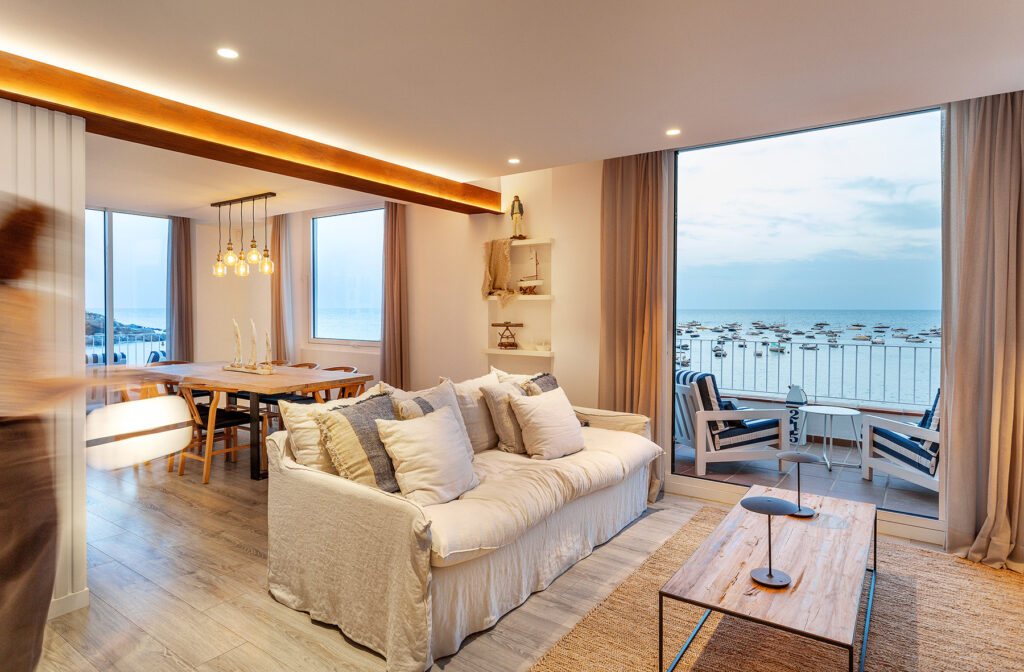
A space that breathes in shades of white and blue, accented with nautical touches and soft lighting—creating a serene, inviting atmosphere to bask in the moonlight and wake with the rising sun.
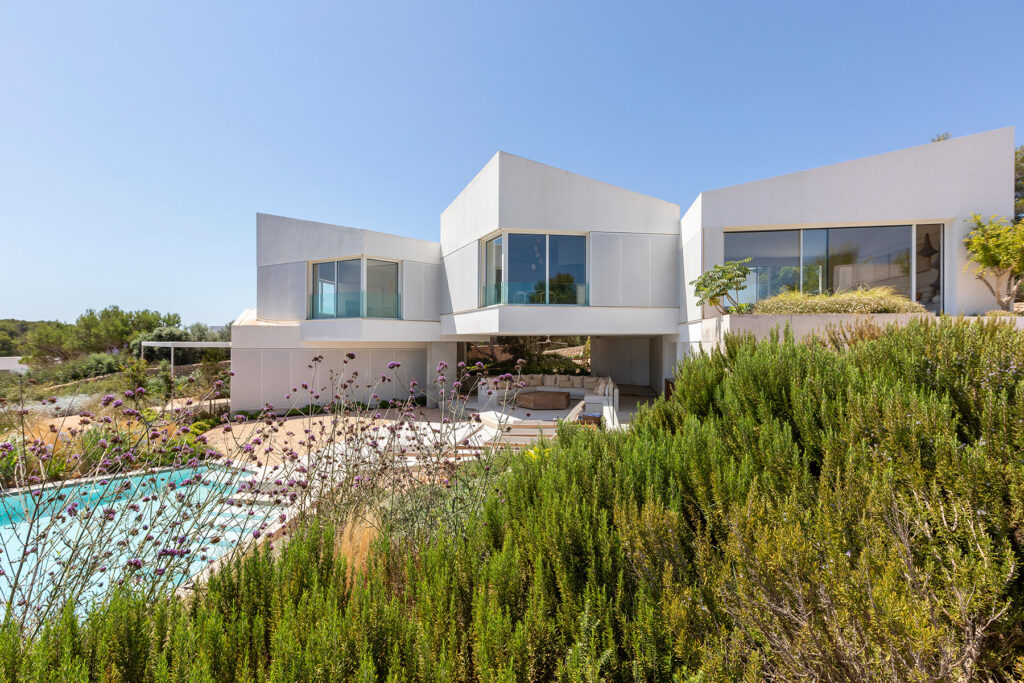
This home is located in the Pleta Arriu development, a residential complex of 38 light-filled houses with spectacular views over the Aran Valley, just opposite the Baqueira ski slopes.
A two-storey house with a beautiful and spacious garden where the swimming pool and an original greenhouse allow you to enjoy meeting with family and friends.
"Returning to the purity of nature has involved a process of acceptance and respect. Understanding that there is no right angle in this house helps us to appreciate and value the beauty of imperfection and to exalt it", Susanna Cots tells us.
The interior designers have prioritised multipurpose and open-plan spaces by choosing natural materials with a spectacular use of wood. The aim was to achieve a "very liveable" space for a married couple with a young daughter.