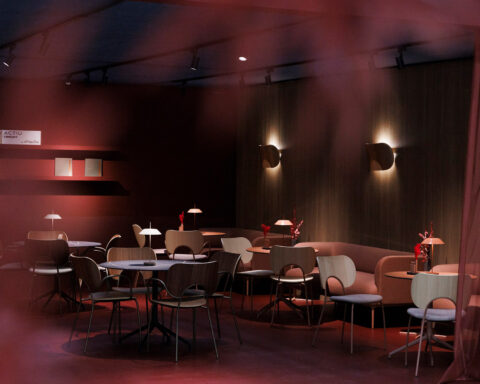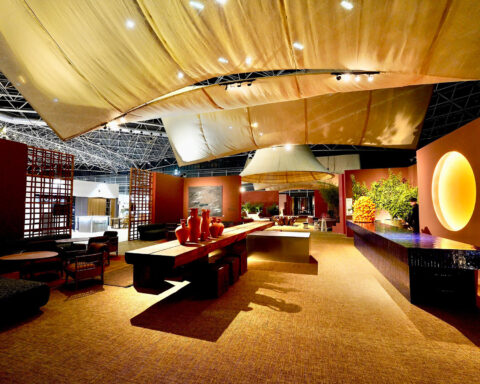


In the recent history of the Salone del Mobile.Milano, each new initiative has tended to respond to a real shift within design culture. Over the decades, the fair has been, above all, the territory of industry: a place where major brands present collections conceived for large-scale production, and where furniture is defined by its ability to circulate, to be reproduced, and to become part of the everyday life of millions of homes
Contemporary design, however, no longer operates solely at that scale. Alongside mass-produced objects, a more singular form of production now coexists—one that is closer to the cultural fields of art and craftsmanship. Unique pieces, limited editions, experimental objects, and historical reissues form part of an ecosystem that has grown quietly in recent years.
It is within this context that Salone Raritas emerges, a new platform introduced in the 2026 edition of the Salone. Conceived as a curated path dedicated to collectible design, this initiative acknowledges something architects and interior designers have long understood: certain spaces require objects that cannot be found within a conventional catalogue—objects capable of introducing a narrative, material, and cultural dimension.
Beyond a new section within the fair, Raritas signals a shift in perspective. Design is no longer defined solely by its capacity for production, but also by its ability to generate meaning.


The role of galleries
If the Salone has historically been the domain of industry, design galleries have played the role of laboratories. Within them, designers can work with a degree of freedom that rarely exists within industrial systems. A piece does not need to respond to large production volumes or optimised manufacturing costs. It can instead explore complex materials, artisanal processes, or forms that demand an almost sculptural approach.
In this context, the gallery operates as a space for research, where design approaches art without abandoning its functional dimension. Many of the pieces that today appear in museums or institutional collections were born precisely within this intermediate territory.
Over the past two decades, several international galleries have built a cultural network that has redefined the place of contemporary design. Exágono Magazine will dedicate a series of articles to these galleries; here, we simply acknowledge them.
Founded in London in 2006 by Loïc Le Gaillard and Julien Lombrail, Carpenters Workshop Gallery represents a roster of authors who approach the object through a sculptural lens, with production ranging from collectible furniture to monumental-scale pieces. Its activity extends across its spaces in London, Paris, New York, and Los Angeles.
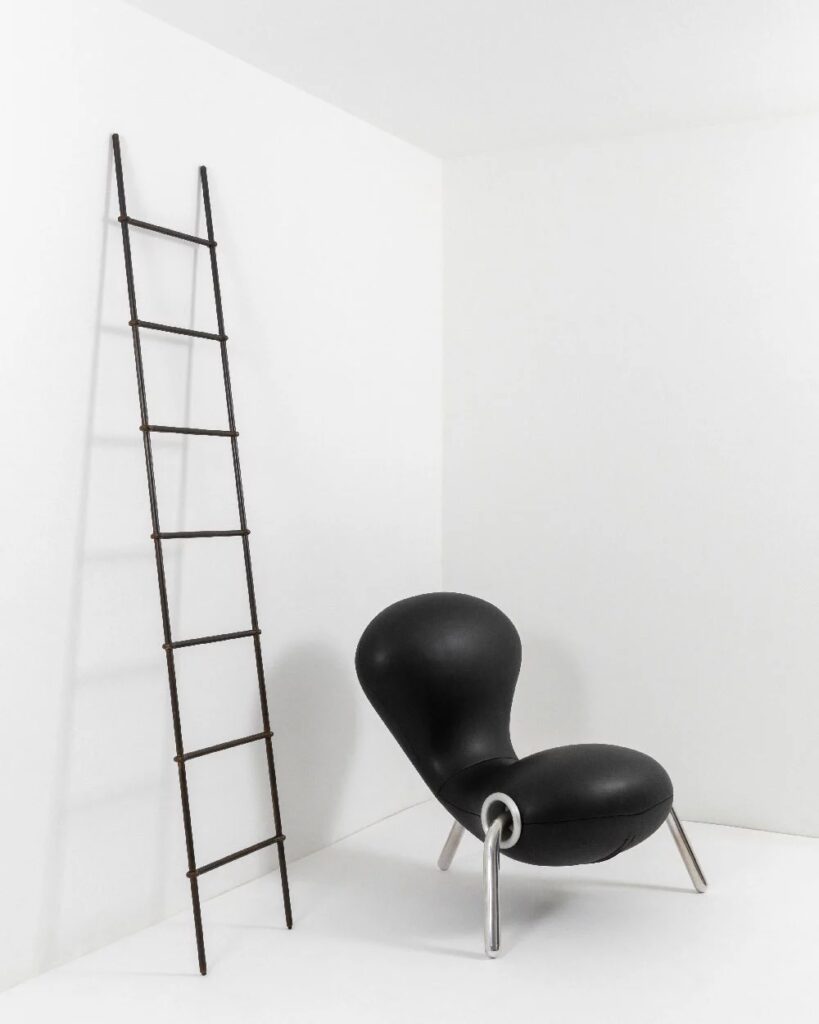
In Paris, Galerie kreo opened its doors in 1999 under the direction of Didier Krzentowski and Clémence Krzentowski. Conceived from the outset as a laboratory for experimental design, it has collaborated with figures who have shaped recent design history—Ronan Bouroullec and Erwan Bouroullec, Marc Newson, Pierre Charpin, among others—and since 2014 has operated a second space in Mayfair, London.
Milan finds in Nilufar Gallery, founded by Nina Yashar in 1979, one of its most solid cultural references. The gallery’s programme articulates historical design, contemporary pieces, and emerging international voices within installations where each object enters into dialogue with interior architecture. Its original space on Via della Spiga was joined in 2015 by Nilufar Depot, a 1,500-square-metre venue on Viale Lancetti inspired by the structure of Teatro alla Scala.
David Gill Gallery, founded in London in 1987, has supported for nearly four decades designers who explore furniture through a sculptural dimension. Its programme has brought together names such as Fredrikson Stallard, Daniel Libeskind, and Chris Schanck, alongside historical works by Alberto Giacometti, Diego Giacometti, and Émile-Jacques Ruhlmann.
In the United States, The Future Perfect has occupied a singular position since its opening in Brooklyn in 2003, under the direction of David Alhadeff. Its current locations—a townhouse in New York’s West Village, Goldwyn House in the Hollywood Hills of Los Angeles, a villa in Little Haiti in Miami, and a space in Pacific Heights, San Francisco—propose an encounter with the object within a domestic context, where furniture, art, and interior design are read as a whole.
Platforms such as The Invisible Collection have transformed the circulation of collectible design. Founded in 2016 by Anna Zaoui, Isabelle Dubern-Mallevays, and Lily Froehlicher, the initiative connects collectors and interior designers with pieces originally conceived for private projects, produced in limited editions by European craft workshops. Its online presence coexists with a network of physical galleries in London, Paris, New York, and Los Angeles, where this curatorial universe takes form within inhabited interiors.




Design and interior architecture
The growth of collectible design cannot be understood without considering the evolution of interior architecture in recent decades. Increasingly, residential, hospitality, and institutional interiors incorporate unique pieces or limited productions capable of constructing a specific identity for a space. These are objects that enter into dialogue with architecture and contribute to defining its character.
Some contemporary projects function almost as small private collections, where art, site-specific furniture, and gallery-acquired objects coexist. Within this context, the designer approaches the figure of the artist, while the architect or interior designer also assumes the role of curator of the space.
A new territory for design
Collectible design and industrial design respond to complementary logics. Industry enables objects to reach the everyday lives of many people; the gallery opens a territory where design explores its limits and tests materials, techniques, and forms at its own pace. Much of contemporary design culture now moves between these two conditions.
The emergence of Salone Raritas consolidates this movement within the industry’s most emblematic stage. It acknowledges an increasingly visible reality: contemporary design is also a cultural territory in which the object acquires the value of a singular work. In Milan, this dialogue between industry, craftsmanship, and experimentation finds, for the first time, its own place within the Salone.
Salone Raritas
Fiera Milano Rho
Strada Statale del Sempione 28
20017 Rho (MI)
Hall 9
Viewing and press hours: 8:30 – 16:30